Weed Control in Detroit Landscapes: Why Fabric Fails & How to Do It Right
Why Fabric Fails & How to Do It Right
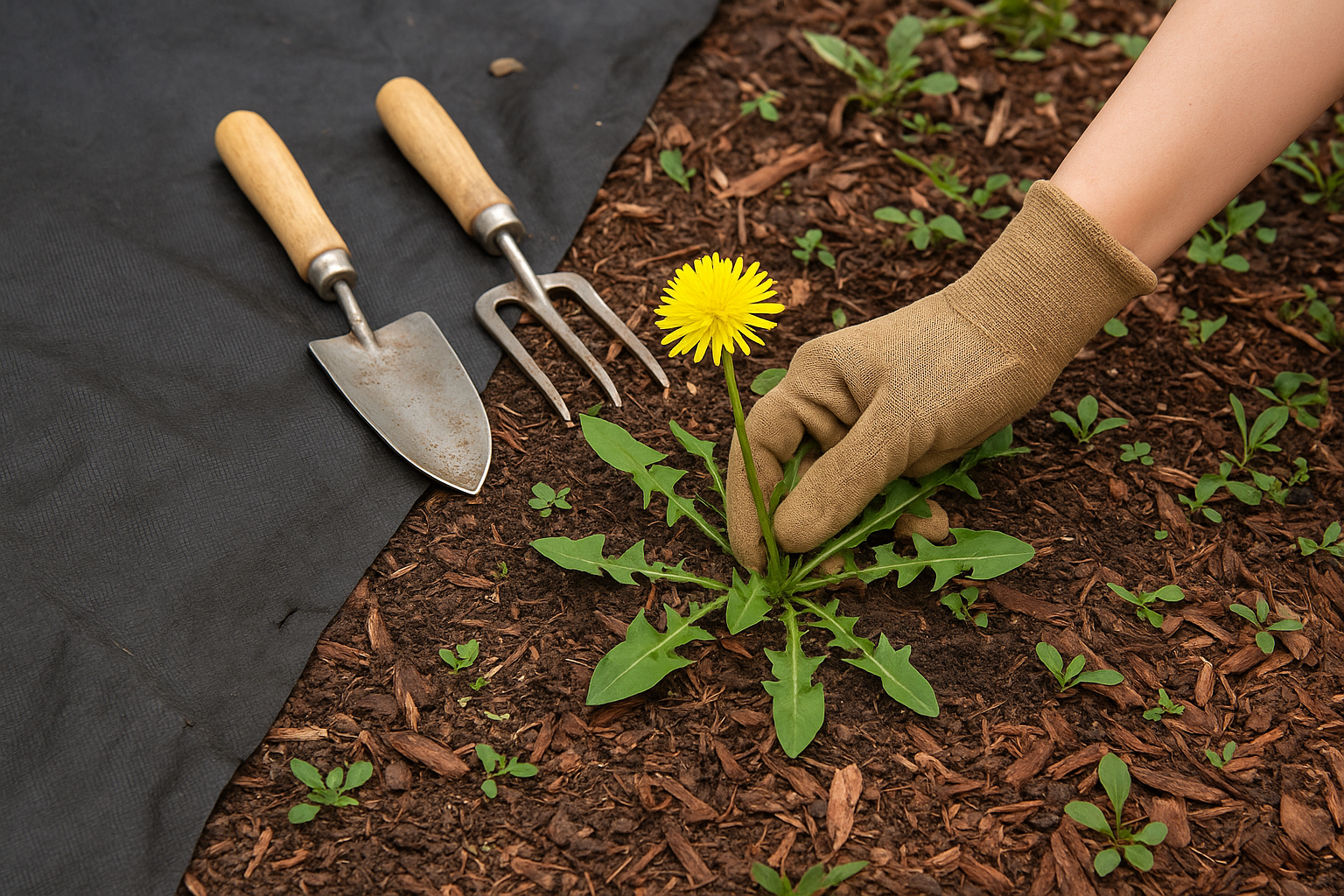
If you’ve searched for landscaping in detroit mi tips because weeds keep breaking through “barrier” fabric, you’re not alone. In a true four-season city, windblown seeds, clay-rich soils, and freeze–thaw cycles make shortcuts fail fast—especially in front yard beds that anchor detroit landscaping. This guide shows an intentional, step-by-step approach that outperforms fabric while improving soil and curb appeal.
Detroit First: Why Weeds Win (Even When You Use Fabric)
Detroit and its close suburbs sit in a climate where spring winds deliver fresh seeds and winter heave opens seams in beds. Add clay soil (slow drainage, compaction) and de-icing salt near drives and sidewalks, and you’ve got perfect conditions for weeds to colonize mulch that sits atop fabric. Here’s what’s really happening:
- Seeds germinate on top of the fabric in the thin layer of fines and decomposed mulch.
- Fabric tears and seams create narrow openings that weeds exploit.
- Soil health declines when organic matter can’t mix down and soil life is choked off.
- Plant roots girdle against the fabric over time, weakening expensive ornamentals.
- Freeze–thaw movement lifts staples and creates gaps, inviting more weeds.
Luxury landscapes aren’t won by barriers; they’re won by biology, timing, and detail.
If the goal is low-maintenance residential landscaping that stays clean, we replace “barrier” thinking with a living, layered system: better soil, precise mulch, dense plantings, clean edges, and a seasonal routine.
The Smarter Strategy: Build a Living Weed Defense
Mulch That Works With (Not Against) Soil
Aim for 2–3 inches of shredded hardwood or a comparable organic mulch. Too thin = light reaches seedlings; too thick = plants struggle and water sheds off. Replenish lightly each year (½–1 inch) instead of burying beds.
Pro moves
- Keep mulch off crowns and trunks (2–3″ buffer).
- Break crusts after heavy rain so oxygen reaches roots.
- Use pre-shredded mulch that knits together and resists wind.
Dense “Green Mulch” With Groundcovers
Nothing suppresses weeds like shade and competition. Layer low, spreading plants between shrubs and perennials to cover bare soil.
What to look for:
- Spreads to form a mat (but manageable)
- Suits sun/shade pattern of each bed
- Tolerates Detroit winters and occasional salt drift near walks
- Staggers bloom/texture for four-season interest in
garden landscaping
Soil Building Beats Fabric Every Time
Healthy soil collapses the weed seed bank. Blend compost into planting zones, top-dress in spring/fall, and avoid working soil when wet (prevents compaction). Over 6–12 months, you’ll see fewer opportunistic weeds, stronger roots, and less watering.
Numbered Steps: Your Detroit Weed-Control Build Sheet
- Remove fabric completely (including staples) and haul away.
- Reset bed grades: slope lightly away from structures; add topsoil only where needed to correct grade.
- Blend compost (1–2 inches) into the top 4–6 inches of soil in planting zones; rake smooth.
- Plant structure first: evergreens and anchors; then shrubs; then perennials; finally groundcovers.
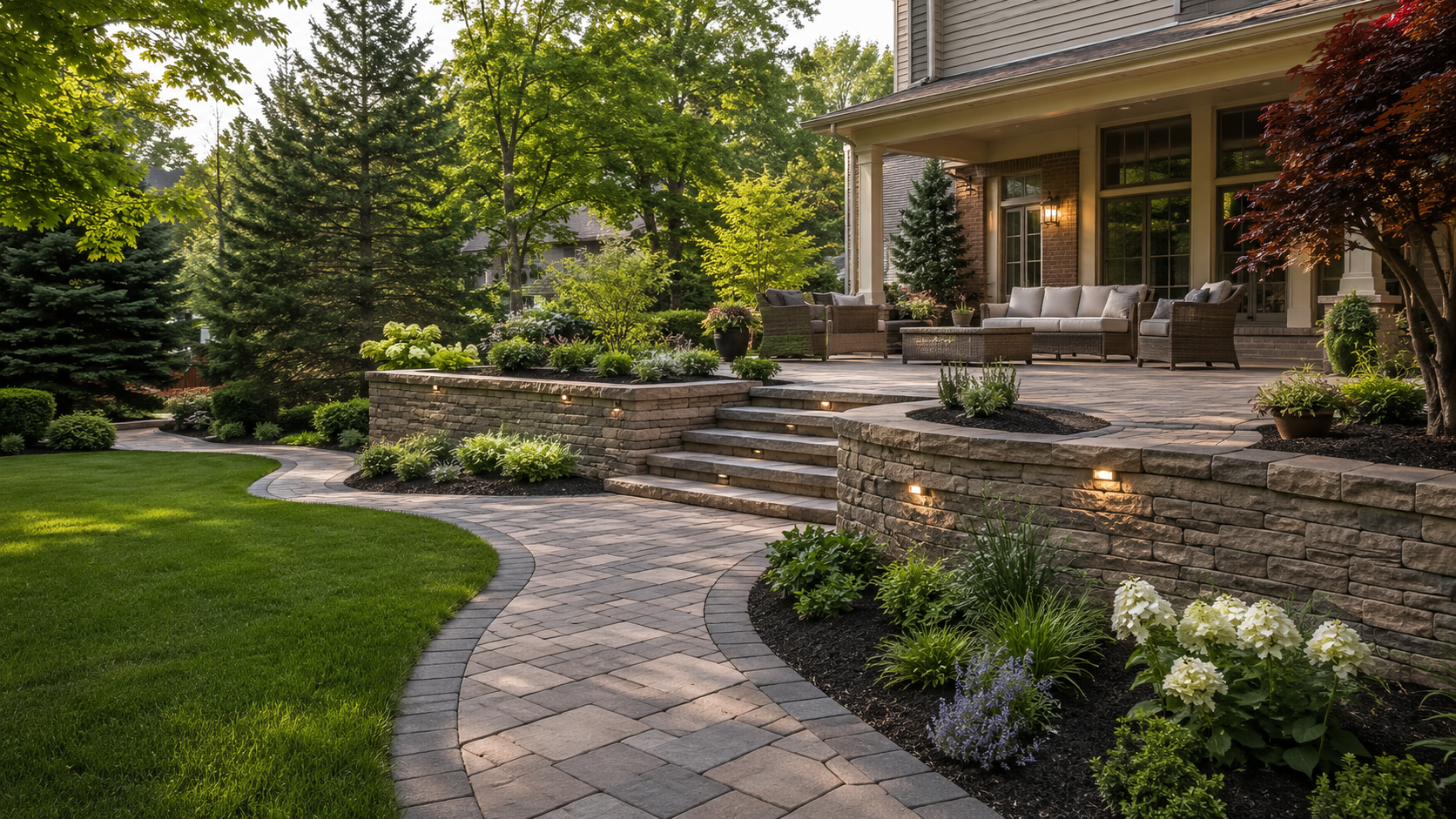
- Edge the bed: choose steel, paver, or a crisp spade edge; avoid wavy, weak lines.
- Apply mulch at 2–3 inches, pull back from crowns, and water to settle.
- Spot pre-emergent only where appropriate (paths, non-plant zones); avoid broadcast use in mixed beds.
- Set a weeding cadence: fast passes in early spring and after summer rains; never let seedlings set seed.
Edges, Paths, and Hardscape Transitions
Weeds love fuzzy borders. Clear, durable transitions make maintenance faster and beds sharper.
- Steel edging for long, modern lines around lawns.
- Paver soldier courses along walks to tighten the edge and resist heave.
- Gravel/stone paths with compacted base (no fabric under planting beds) to drain and deny weeds a foothold.
- Where you’re updating paths, coordinate with Rohto’s
hardscape design & installation team so edging, step treads, and drainage unite.
Seasonal Game Plan (Metro Detroit Rhythm)
- Late winter/early spring: Cut back perennials, top-dress compost, pre-edge beds, mulch refresh.
- Late spring: Quick weeding sweep after first two big rains. Plant groundcovers once soil warms.
- Mid-summer: Light weeding + spot mulch touchups; irrigate deeply in dry spells.
- Early fall: Add/shift plants; divide perennials; final compost top-dress.
- Late fall: Protect tender plants, mark snow storage, and do a last pre-winter edge pass.
When Fabric Can Still Make Sense (Narrow Use-Cases)
- Under loose gravel in non-plant zones (drive/rubbish alleys) as a separation layer—not a weed shield.
- Between base and subgrade in certain hardscape details as geotextile (engineering purpose).
- Temporary erosion control during construction.
Never use it across mixed planting beds where you want healthy, evolving soil.
Short Q&A
Is landscape fabric ever a good idea in planting beds?
No. In mixed beds, it starves soil, traps roots, and fails as a weed “barrier.” Use compost + mulch + plants.
What’s the best mulch for Detroit gardens?
Shredded hardwood (or comparable organic mulch) at 2–3″. It knits, blocks light, feeds soil, and looks refined.
How often should I refresh mulch?
Annually with a light ½–1″ top-up. If mulch depth is correct but color is faded, consider a raking “fluff” instead.
Can I use pre-emergent safely in ornamental beds?
Spot-use only and follow labels. In dense, well-mulched beds with living groundcovers, you often won’t need it.
Compact Checklist: Fast Wins That Last
- Remove every square inch of fabric (no buried scraps).
- Compost + mulch before weeds sprout; don’t chase them later.
- Plant in groups—shadows stop seedlings.
- Edge once, maintain lightly all season.
- Water deeply, not daily; stress favors weeds.
- Carry a weeding knife on “walk-around” days.
- Keep crowns/mulch separate (2–3″ gap).
- Photograph beds each season to spot thin areas early.
Mini Case: Royal Oak Front Beds, Fabric Tear-Out → Clean & Low-Maintenance
A Royal Oak homeowner inherited weed-choked beds lined with landscape fabric. Each rain brought a fresh flush of seedlings on top of the fabric. Rohto’s crew removed the fabric and staples, corrected the grade (slight fall to the street), blended compost into planting zones, and reset a crisp steel edge along lawn panels. We installed layered shrubs and low, spreading groundcovers to shade the soil, then topped with 2–3″ shredded hardwood mulch. A simple two-visit weeding cadence and annual ½″ mulch refresh kept the beds clean. One year later, the client reported minutes—not hours—of weeding per month and a far more refined look consistent with a luxury detroit landscape home.
Why This Approach Converts Better (And Ages Better)
Fabric sells a promise of “set it and forget it.” Reality: it shifts, tears, and suffocates the very soil that should be doing the weed-fighting for you. A living system—soil building, correct mulch depth, dense plantings, crisp edges—creates compounding returns. It’s the difference between chasing weeds and preventing them.
For a whole-property plan that ties planting to patios, steps, and lighting, explore our residential landscaping services and browse the latest ideas on our blog.
Local Expertise, Clear Deliverables
Rohto is a detail-driven landscape company delivering complete landscape company services—from design and bed preparation to landscape installation and seasonal tune-ups. As a michigan landscape company rooted in Metro Detroit, we plan around freeze–thaw, clay soils, and snow operations so your yard performs, not just looks good. If you’re comparing firms for a luxury detroit landscape project, ask to see soil prep, edging details, and post-install care plans—this is where quality shows.
Mini Glossary
Weed seed bank — The reserve of viable weed seeds in soil; smart maintenance keeps it from replenishing.
Crown — The transition point between a plant’s stem and roots; keep mulch off it.
Compaction — Soil particles pressed together, limiting air and water movement; common in clay.
Pre-emergent — A product that prevents seeds from germinating; use selectively and label-compliantly.
Geotextile — Engineered fabric used for separation/reinforcement in hardscapes, not as a garden “barrier.”
Freeze–thaw — Repeated winter freezing and spring thawing that shifts soil and opens seams.
Green mulch — A living groundcover layer that shades soil and suppresses weeds.
Edge restraint — A mechanical edging that holds a crisp line and keeps mulch/soil where it belongs.
Top-dress — Applying compost/mulch to the soil surface to feed and protect without turning soil.
Salt drift — Airborne de-icer that reaches beds near walks/drives; choose tolerant plants in those zones.
What to Do Next (DIY vs. Pro)
- DIY: Great for small beds. Follow the numbered steps, pace yourself, and set a seasonal cadence.
- Pro: Ideal when you’re also reworking paths, steps, or walls; combine bed renovation with hardscape refresh through our
hardscape design & installation team to fix grading, edging, and drainage in one sequence.
When you’re ready for a comprehensive plan from a detroit landscape company that treats weed control as part of whole-property stewardship, we’re here.
Closing Statement
Fabric is a shortcut that costs you twice—first in the install, then in the teardown. Detroit’s best gardens win with a layered system that respects soil, light, and seasonality. Build beds the right way once, and weeds stop running the show. If your goal is a luxury landscape that looks composed in July and clean in November, partner with the team that ties planting, edging, drainage, and maintenance into one elegant plan.