Hardscape Installation That Survives Michigan Winters: Base, Drainage, and Jointing Explained
Michigan winter is a truth serum for outdoor work. A surface that looks flawless in July can shift, crack, or separate after a few months of freeze-thaw cycles, heavy snow loads, and de-icing salts. When that happens, people often blame the visible material. Most of the time, the cause is underneath: water moving where it shouldn’t, a base that wasn’t built as a system, or joints that were treated like an afterthought.
This guide is written for homeowners in the consideration stage, people who are planning a significant upgrade and want to avoid paying twice. It explains what actually determines whether a project holds together: excavation discipline, base preparation, drainage strategy, edge restraint, and jointing. If you understand those fundamentals, you can evaluate proposals with clear eyes and ask the questions that separate a confident build from a seasonal gamble.
If you want a site-specific plan before you commit to scope and materials, schedule an on-site assessment.
Hardscape Design and Installation in Detroit
The Three Forces That Break Hardscapes in Michigan
A winter-resistant outcome isn’t about finding a magic material. It’s about building a stable system that manages water and movement.
1) Freeze-thaw finds the weak point
Water expands when it freezes. If moisture collects in the wrong place—under a surface, inside a joint, or alongside an edge—it will search for relief. That relief often looks like heaving, a widened joint, a settled corner, or a surface that no longer sits flat. Once movement starts, each subsequent season can amplify it.
2) Water moves more than people expect
Water doesn’t just fall straight down. It can run across a surface, track under it, migrate through soil, and collect in low spots you can’t see. When a base becomes saturated, it loses the predictable stiffness that keeps a surface stable. Even a small “soft zone” can act like a hinge that allows shifting.
3) Salt exposure accelerates stress
De-icing products and winter grit are tough on the entire system. They can attack surface finishes over time, but they also impact joints and edges by increasing moisture cycles and encouraging small gaps to open. The goal is not to eliminate exposure, Michigan makes that unrealistic, but to build in a way that tolerates it.
Base Prep: What It Means When a Patio or Walkway Is “Built,” Not Just Placed
There’s a reason experienced crews talk about the base more than the surface. The base isn’t filler. It’s the structure that carries the load, resists movement, and keeps water from turning your investment into a repeating repair.
Excavation depth is a decision, not a guess
The right excavation depth depends on the existing soils, the expected use, and the build-up required for base and bedding layers. Problems begin when excavation is treated as “good enough” rather than engineered for performance.
Shallow excavation often produces the same pattern:
- the surface looks fine at handoff
- small settlement shows up near edges or transitions
- joints begin to open
- water collects where it didn’t before
- seasonal movement compounds the issue
The difference between a stable project and a future rebuild frequently comes down to how seriously the ground was prepared before any visible work began.
Base material matters, but compaction matters more
People often reduce base prep to a single word: gravel. That oversimplifies what actually holds a project in place.
A reliable base is typically built in controlled lifts. Each lift is compacted to create a uniform, dense layer that behaves consistently under load. If compaction is uneven, the base will not respond evenly, and the surface above it will telegraph those weaknesses.
Edge restraint keeps the system tight
Edges are where movement announces itself first. When an edge is poorly restrained, the surface can spread laterally over time. That spreading is subtle at first, but it leads to widening joints, misalignment, and uneven transitions.
A strong edge detail is not cosmetic. It’s structural. It locks the surface into the geometry of the plan and helps protect the joints that keep everything aligned.
The base is where durability becomes predictable
A well-built base doesn’t guarantee a project will never move, nothing outdoors is immune to physics, but it dramatically improves the odds that normal seasonal stress won’t turn into visible failure.
This is why homeowners who care about long-term performance should ask detailed questions about excavation approach, base build-up, and compaction methods before approving scope.
Drainage: The Problem You Can’t Ignore Without Paying for It Later
Drainage is the part of outdoor work that feels easy to postpone because it’s not always visible on day one. It’s also the reason many projects have issues by year two.
Surface water needs a clear path
A surface should be pitched so water moves away from the home and away from places where it will pool or refreeze. That doesn’t mean aggressive slopes or uncomfortable walking angles. It means intentional pitch that takes local conditions seriously.
If water lingers, it will infiltrate. If it infiltrates, freeze-thaw will do what it does.
Subsurface water is just as important
Some sites shed water quickly. Others hold it. Soil composition, existing grades, and surrounding runoff patterns can change the behavior of the ground under a patio or walkway.
When the subsurface stays wet, it’s harder for a base to remain stable. This is where planning matters: in some cases, the correct solution includes drainage provisions that keep the structure from sitting in saturated soils.
Downspouts and snowmelt create predictable stress points
A common failure zone is where roof runoff concentrates near hard surfaces. Another is where snow is routinely piled and then melts. Those areas experience repeated moisture cycles and can introduce water into places it should never routinely occupy.
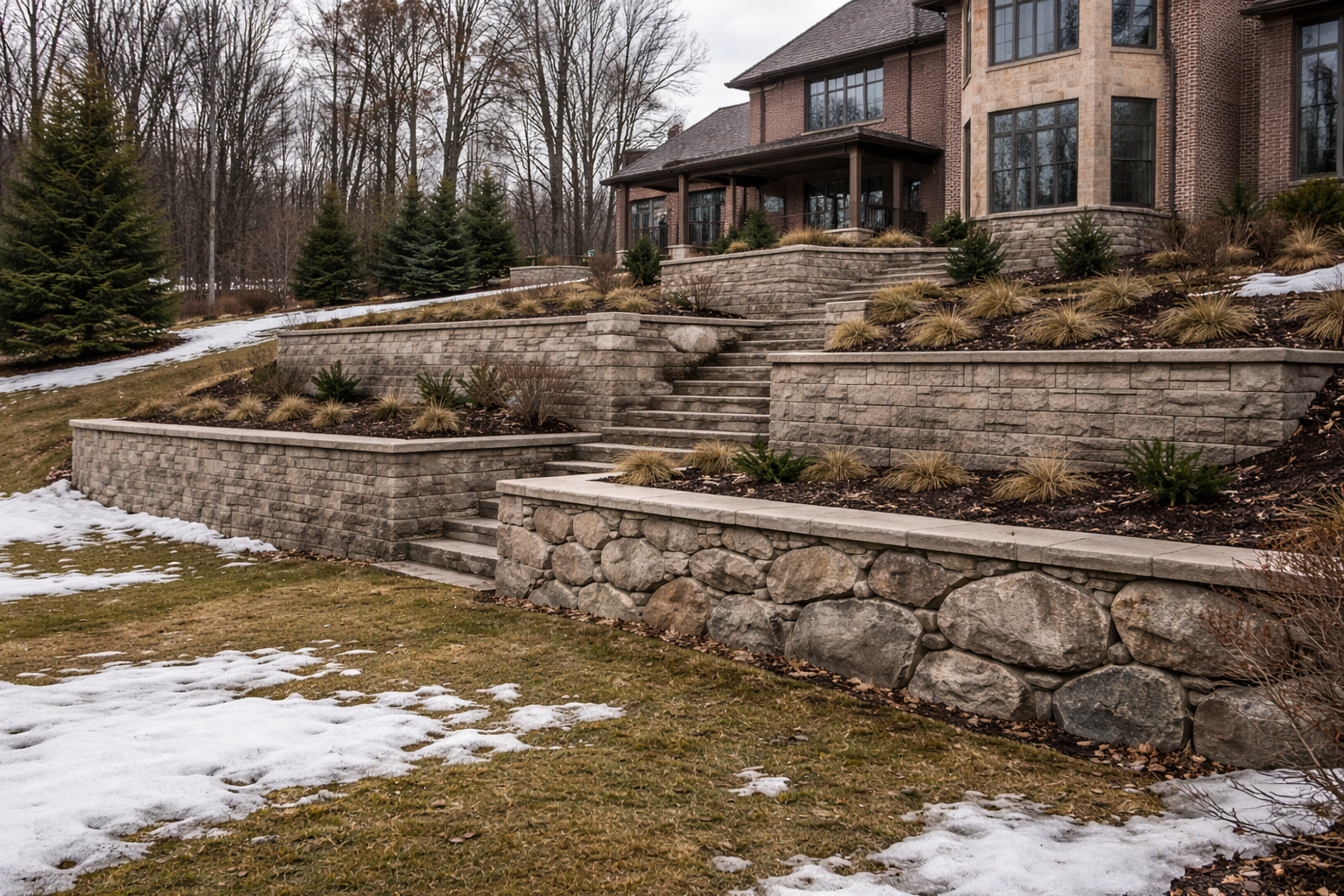
This is why hardscape design is not just aesthetics. It’s the planning discipline that decides where water goes, where it is allowed to infiltrate, and how the site behaves in winter—not just on sunny days.
Jointing: The Small Detail That Determines Whether the Surface Acts Like One Piece
When joints are done well, the surface feels unified. When they’re done poorly, movement becomes visible quickly.
Consistency matters more than most people realize
Inconsistent joint widths create inconsistent behavior. Wider gaps can collect more debris and water. Tight gaps can bind or crack when the system tries to move. A stable surface typically relies on consistent spacing and controlled jointing across the field.
Joints are a performance component
Joints manage the micro-movement that outdoor surfaces experience. When they are neglected, filled incorrectly, or left vulnerable to constant washout, the system loses its ability to stay tight.
Widening joints are an early warning sign
A widening joint is rarely “just a joint issue.” It is often the symptom of a base that’s not behaving uniformly, water movement under the surface, or edges that aren’t restrained well enough.
In other words, joint problems are often structural problems showing up in a place you can see.
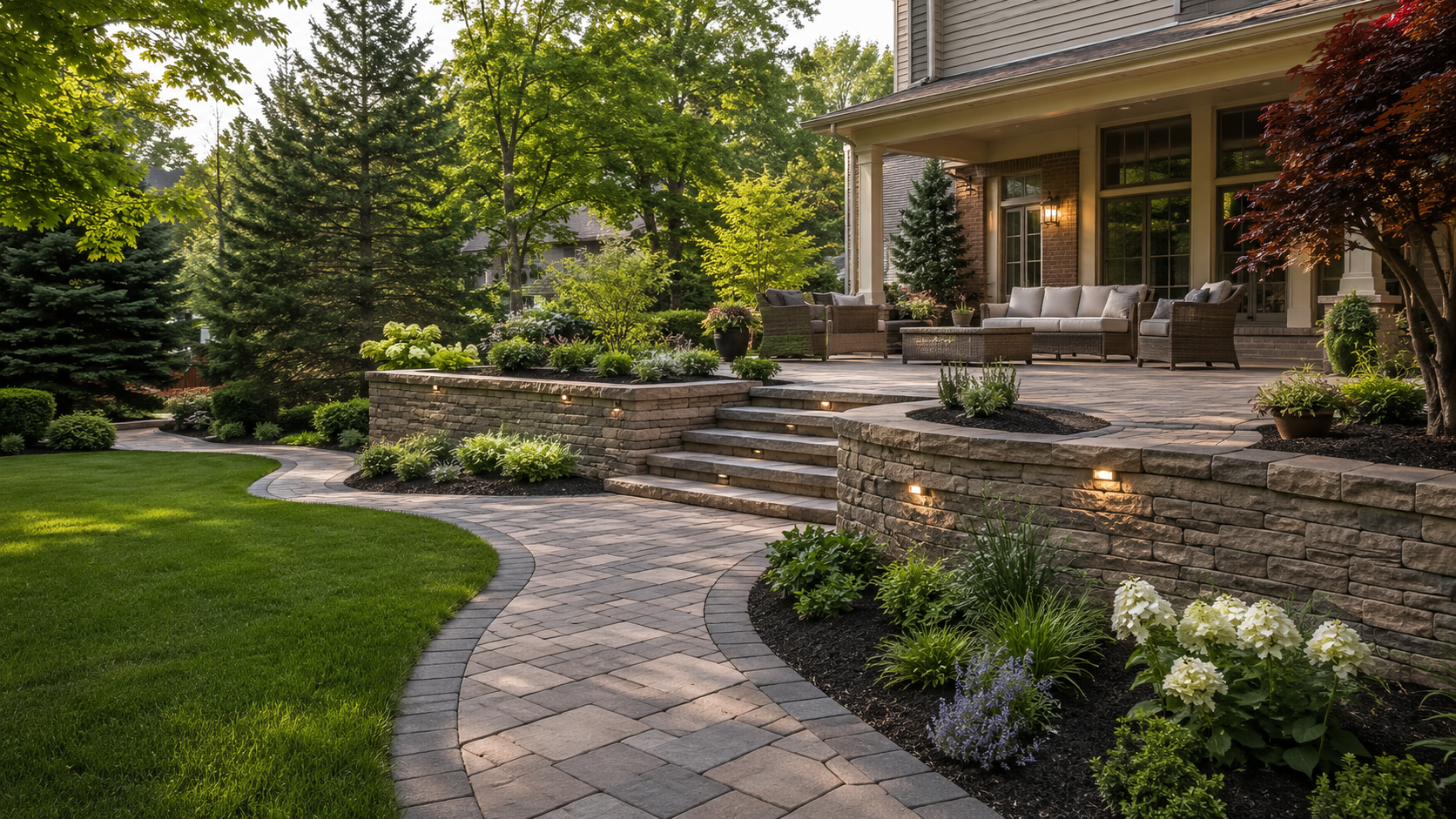
Stone Walkways: Common Failure Patterns and How Strong Builds Prevent Them
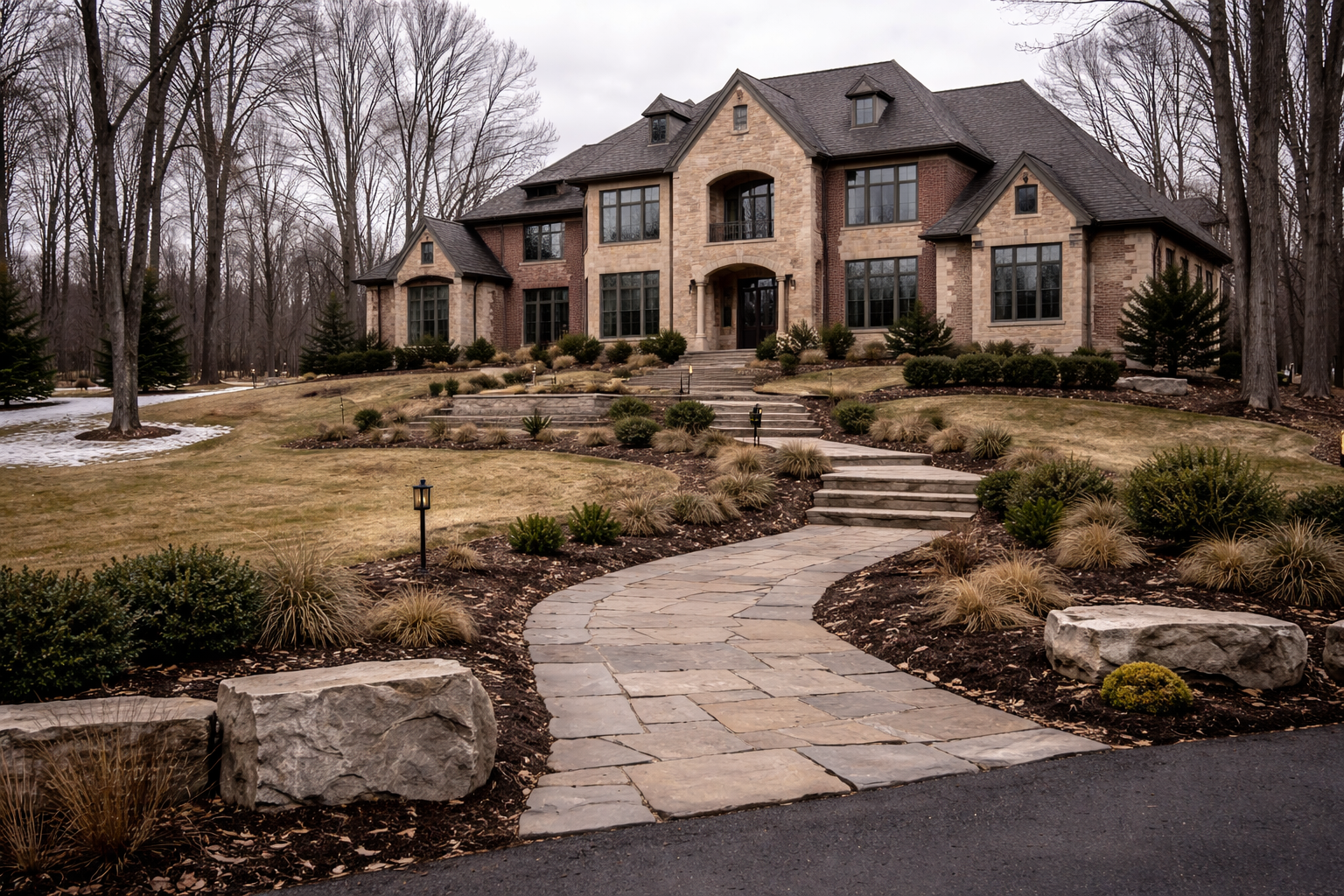
Stone walkways are one of the most visually satisfying upgrades a home can make. They’re also unforgiving when the build is rushed.
Here are the failure patterns that show up most often, and what typically drives them.
Uneven stones and “lip” edges
When adjacent stones sit at different heights, it creates a tripping hazard and a constant visual reminder that the surface moved.
This is frequently caused by uneven compaction, an inconsistent bedding layer, or localized saturation under part of the walkway. If one zone behaves like firm ground and another behaves like sponge, the surface above it will not stay even.
Edge creep and spread
Walkways are narrow structures. Their edges take stress from foot traffic, snow shoveling, and lateral pressure from freeze-thaw movement. Without reliable restraint, spreading can begin at the edges and work inward.
Once spreading happens, it can affect alignment, joint consistency, and the visual crispness that makes the walkway look finished.
Water pooling and ice sheets
Even a small depression can become a winter hazard. Pooling water freezes, expands, and encourages repeated stress in the same spot.
A walkway that sheds water properly is safer and more stable over time.
If you’re investing in stone walkways, the smartest move is to evaluate the base and drainage plan with the same seriousness you evaluate the stone selection.
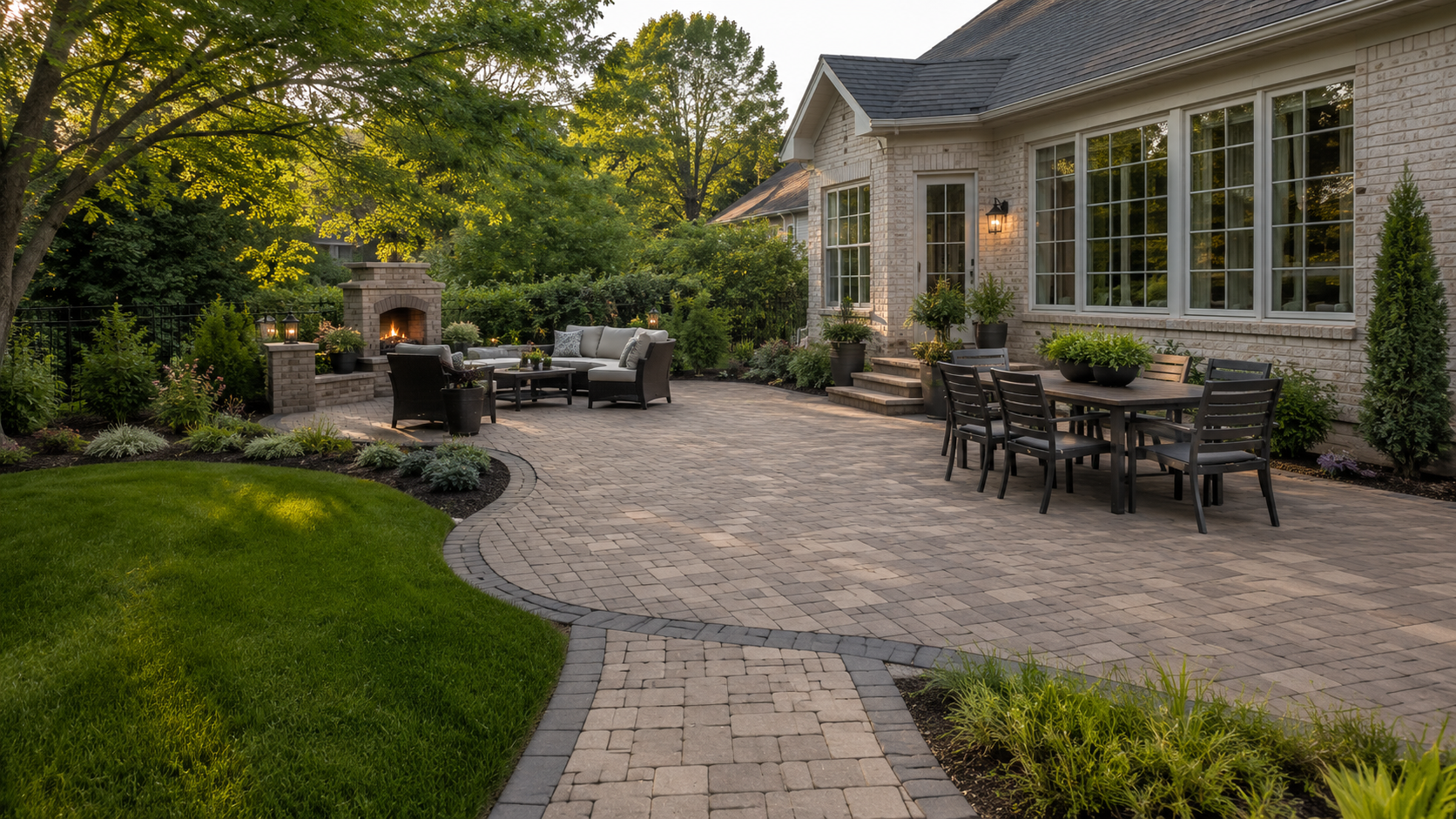
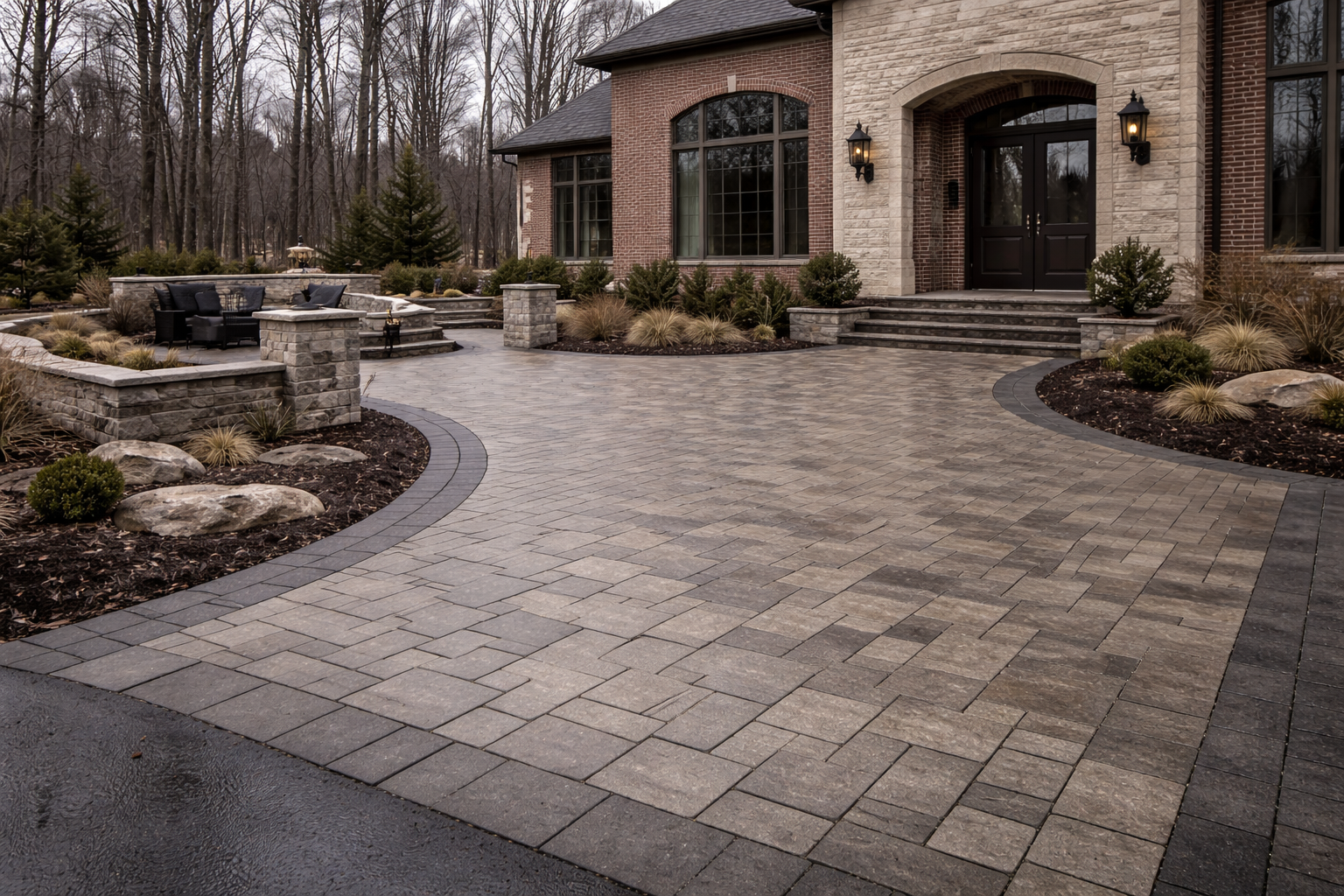
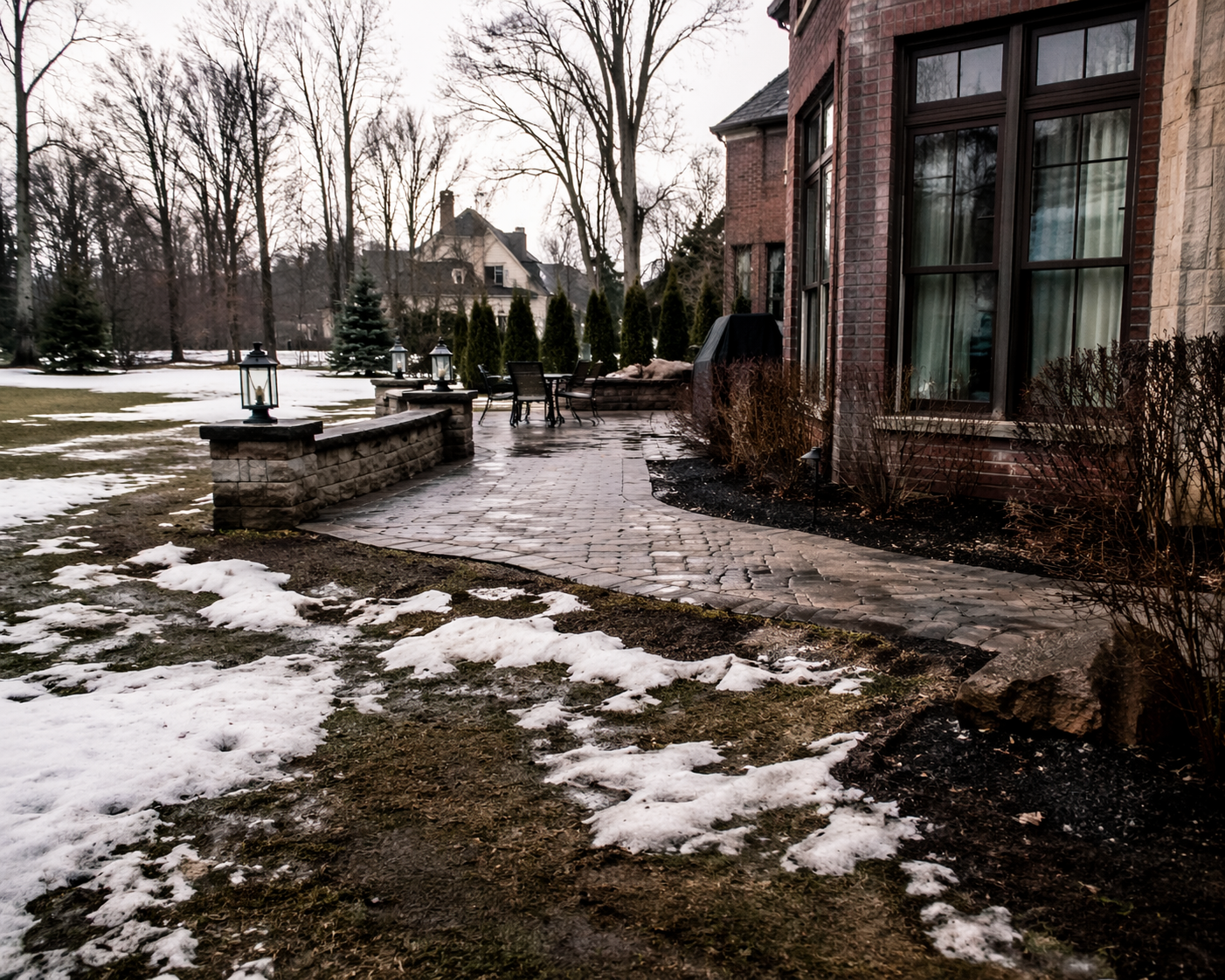
Patio Construction in Michigan: What Separates “Looks Great” From “Lasts”
Patio construction often gets framed as an aesthetic decision—layout, materials, and how the space feels for entertaining. Those things matter, but in Michigan the durability details matter just as much.
Use case changes the structural demands
A small patio used occasionally has different demands than a large outdoor living space with heavy furniture, frequent foot traffic, and high use in shoulder seasons. A build that’s meant to last should match the structure to the real use, not just the photo inspiration.
Transitions are where movement shows up first
Where a patio meets steps, door thresholds, or other hard edges is where small settlement becomes visible early. These junctions need careful planning so that if the site moves slightly—as sites do—the result doesn’t become an awkward lip, a trip hazard, or a water trap.
Snow management is a design constraint
Where snow is shoveled or piled is not a minor detail. The repeated weight, meltwater, and salt exposure at those zones can create stress that a summer-only plan will miss.
This is another place where patio construction benefits from a winter-first mindset: build decisions that respect the season you can’t avoid.
“Luxury” Is a Standard of Execution, Not a Style
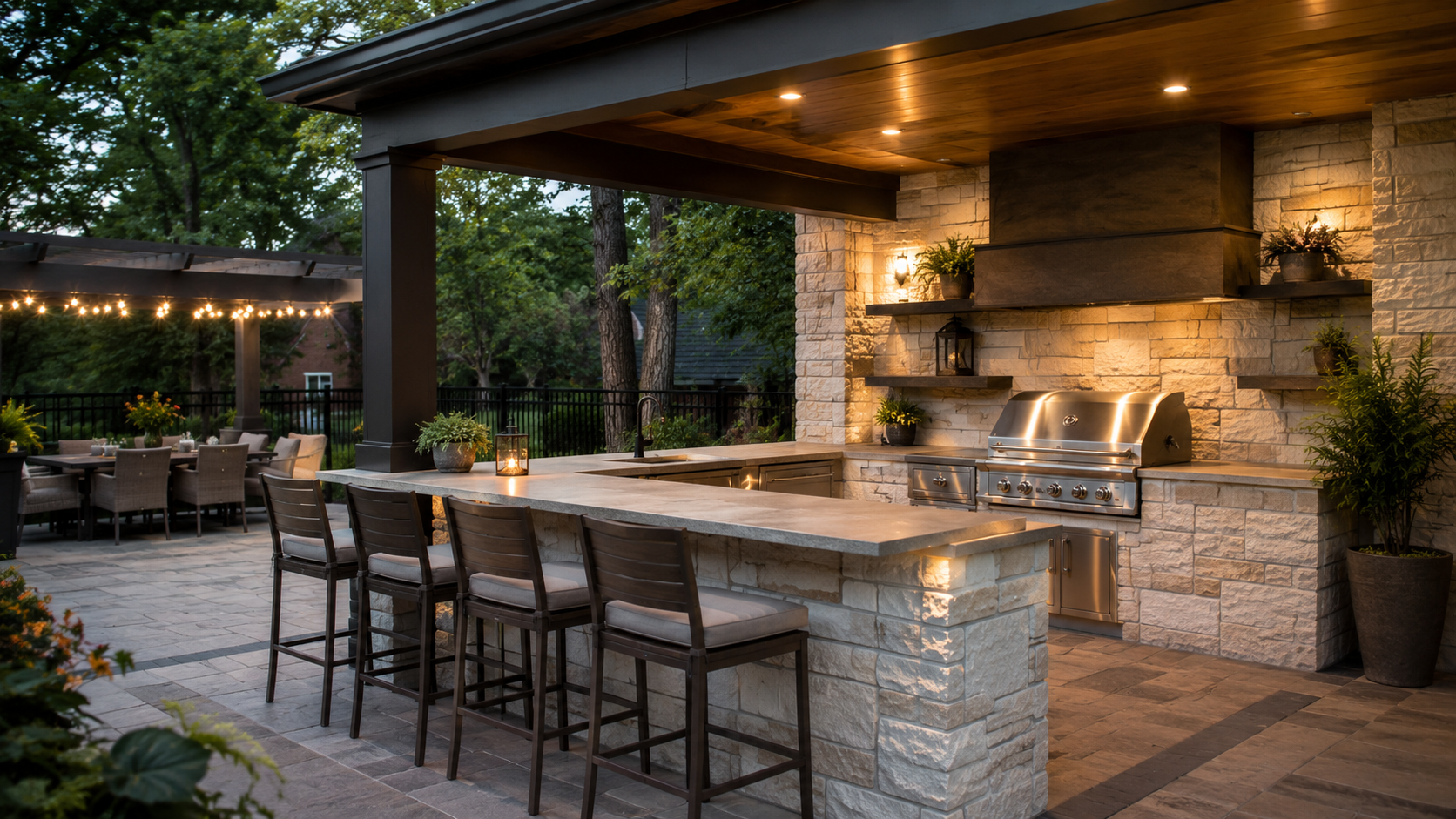
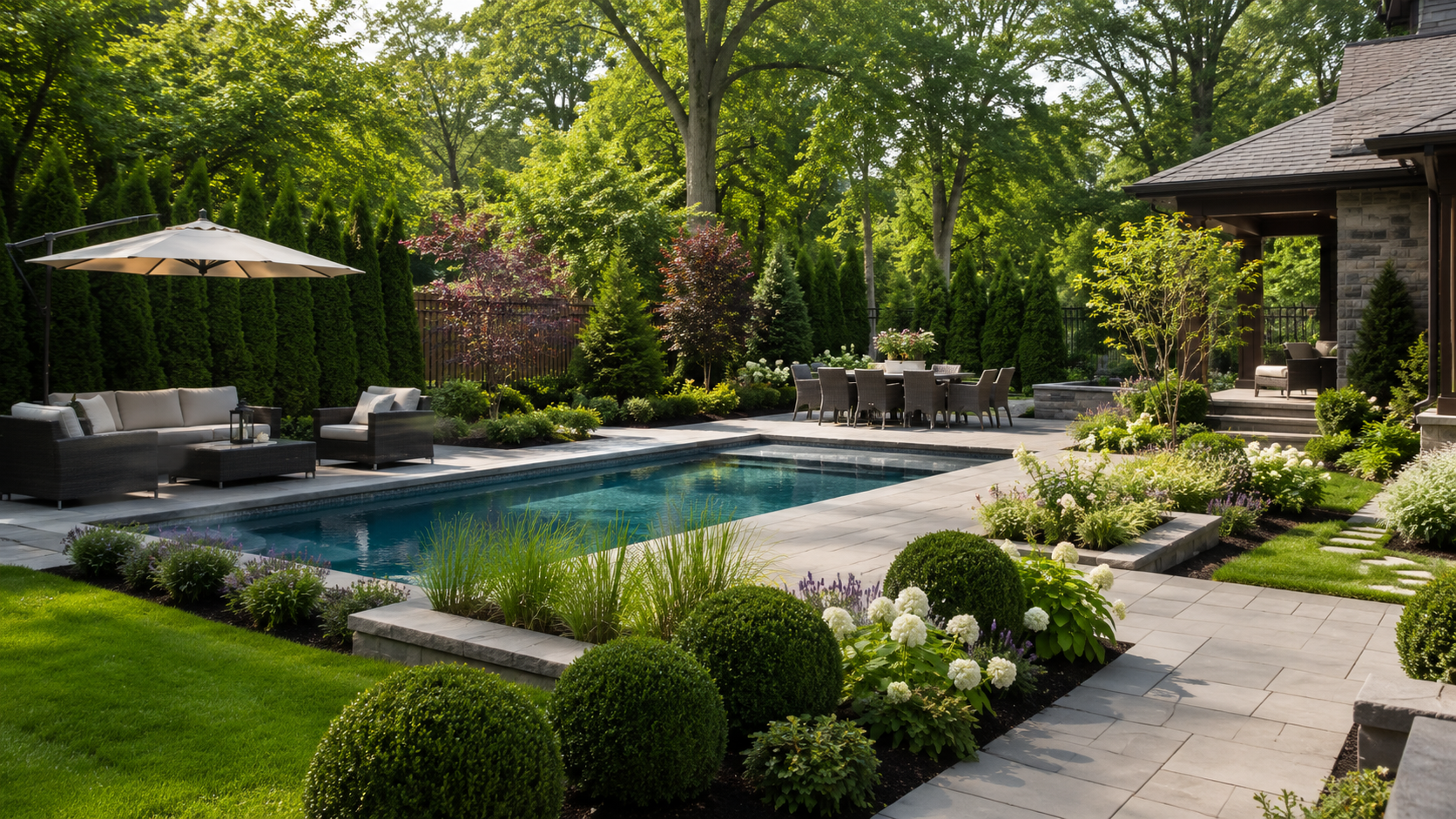
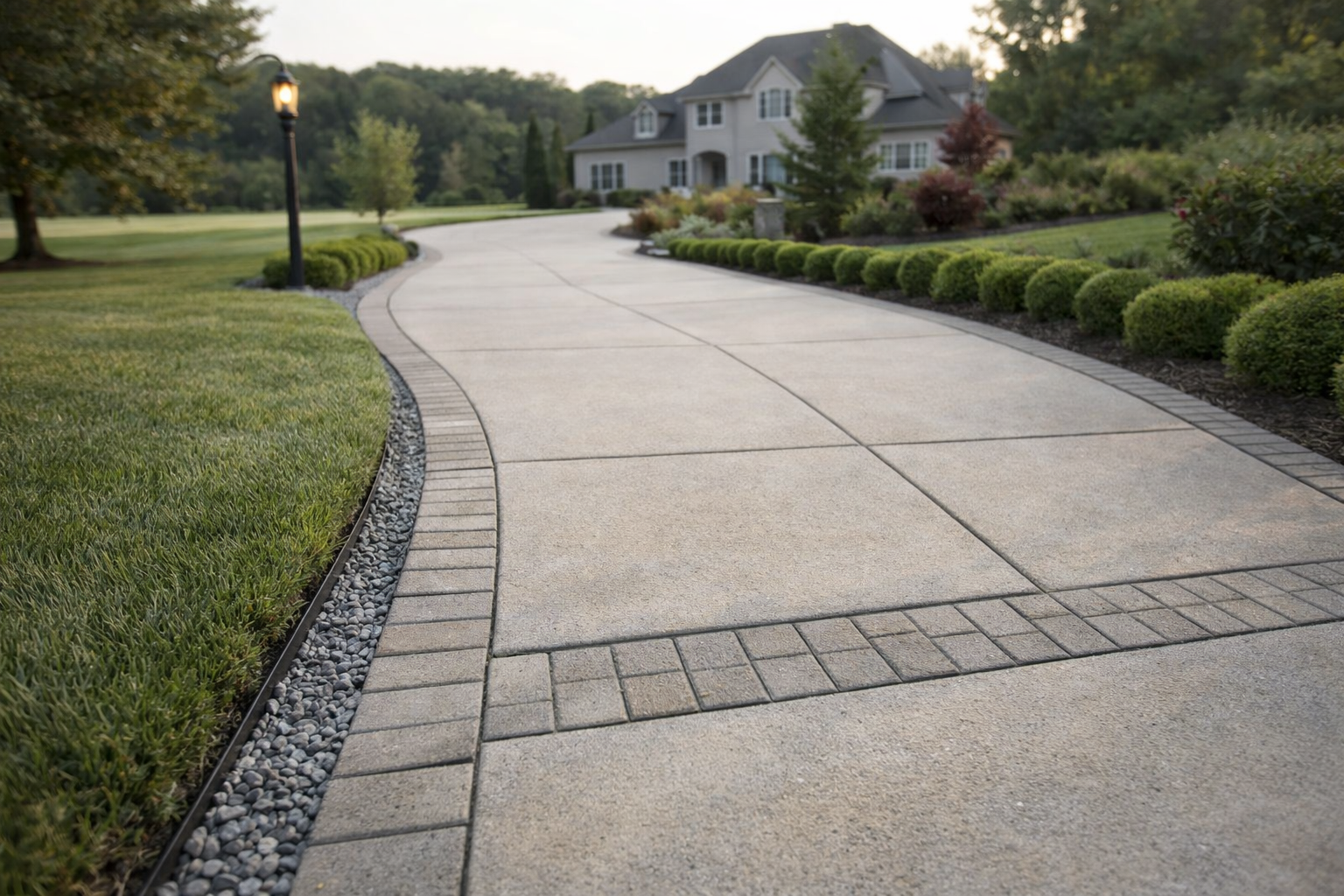
Plenty of projects look expensive on day one and feel disappointing two winters later. That’s why “luxury” should be treated as a standard of execution—tight tolerances, clean transitions, and a system designed to tolerate real conditions.
This is the difference between a project that impresses in a listing photo and one that continues to impress when you live with it.
True luxury hardscapes are recognizable in the details:
- alignment that stays clean across long runs
- edges that remain tight
- transitions that feel intentional
- water management that keeps the structure stable
If that sounds like a higher bar, it is. But it is also the bar that prevents costly do-overs.
A second point matters just as much:
luxury hardscapes should feel composed, not complicated. Luxury is often the ability to simplify, then execute perfectly.
Hiring Checklist: Questions That Protect Your Investment
A good proposal should explain what will be built and how it will behave over time. If you’re comparing options, these questions help you separate confident planning from vague assurances.
Ask about base preparation in specific terms
- How will excavation depth be determined for this site?
- What is the plan for base build-up and compaction?
- How will compaction be verified or controlled across the project?
Ask about water like it’s part of the design
- Where will surface water go during snowmelt?
- Are there runoff areas that should be addressed before building?
- What measures are planned to prevent saturation under the structure?
Ask about edges and joints as structural elements
- What edge restraint method will be used, and where?
- How will joint consistency be achieved and maintained?
- What does ongoing joint maintenance look like for the homeowner?
This is the practical side of hardscape design, not the visual mood board. It’s the part that keeps the project intact when winter pressures arrive.
If you want these questions answered on your property, not in abstract, schedule an on-site assessment.
Three Real-World Scenarios That Change the Build Plan
Winter-resistant work is site-specific. Here are three situations where the right planning can prevent predictable failure.
Scenario 1: A low area where water lingers
If water consistently collects near a walkway or patio zone, the surface is likely to suffer. Repeated pooling increases infiltration, encourages freezing, and concentrates movement in one spot.
A durable plan focuses on correcting grades and directing water away so the structure isn’t forced to live in constant moisture cycles.
Scenario 2: Concentrated roof runoff near hard surfaces
Downspouts and roof valleys can deliver a surprising volume of water. When that water hits the same edge repeatedly, it can undermine the stability of the base over time.
A strong plan addresses water routing early so runoff doesn’t become the “hidden” force that breaks the project.
Scenario 3: Heavy salt and shovel traffic along drive-adjacent edges
Edges next to a driveway often see the highest exposure: salt, grit, plow pressure, and repeated shoveling. Those edges need robust restraint and a plan that acknowledges the abuse they’ll take.
None of these scenarios require perfection. They require honesty. The build should be designed around the conditions that will actually exist.
FAQs
Why does a patio or walkway shift after winter?
Most shifting traces back to water and movement: moisture infiltration, freeze-thaw expansion, and a base that isn’t uniform. When the structure beneath the surface behaves inconsistently, the surface above it can settle, heave, or open at joints.
Is base prep more important than the surface material?
In many cases, yes. Surface material influences appearance and wear, but base stability and drainage largely determine whether the surface stays level and tight through repeated seasons.
How do joints affect freeze-thaw durability?
Joints manage the small movements outdoor surfaces experience. When joints are inconsistent, poorly filled, or vulnerable to washout, water can infiltrate and freeze in ways that encourage separation and shifting.
What should I ask about drainage before a project begins?
Ask where surface water will go during rain and snowmelt, and how the structure will avoid sitting in saturated ground. Drainage planning should be explained in clear, site-specific terms, not vague reassurance.
Do all sites need the same build approach?
No. Soil behavior, existing grades, and runoff patterns vary widely. A plan that works well on one property can fail on another if conditions differ.
What does an on-site assessment clarify?
It clarifies the constraints that determine performance: how water moves across the property, where it collects, how the ground behaves, and which build choices best reduce long-term risk.
Are luxury hardscapes only about aesthetics?
No. Luxury hardscapes are defined by execution and longevity as much as appearance. Tight transitions, stable edges, and water management are part of what makes the result feel finished, and stay finished.
The Next Step: Build for February, Not Just for the Reveal
The most expensive outdoor mistake is paying for a surface twice, once for the install, and again for the rebuild. Michigan doesn’t reward shortcuts. Water will find gaps. Freeze-thaw will exploit weak zones. Salt exposure will accelerate whatever wasn’t resolved during planning.
The good news is that most failures are preventable when the project is treated like a system: base preparation built with discipline, drainage handled with intent, edges restrained properly, and joints treated as performance components.
If you want to know what your property needs before you spend on materials and scope, schedule an on-site assessment. You’ll get clarity, not guesswork, and a plan that’s meant to look good in July and still sit tight after February.