Detroit Driveways And Hardscapes: A Homeowners Guide To Paver Driveways And Outdoor Layout
If you are looking at a cracked concrete drive, sinking edges, or a narrow walk that never quite works for guests, you are not alone. Many Detroit and Metro Detroit homeowners reach a point where patch repairs are no longer enough and a full refresh of driveways and walkways becomes the smart move.
At that point the questions begin. Are paver driveways really worth the investment. How deep does the base need to be on clay soil. What is the right way to connect the driveway to front steps, side entries, and any backyard hardscapes so everything feels like one well planned system instead of separate projects.
This guide is written to answer those questions clearly. Instead of tossing around product names or one size fits all advice, it walks through how to plan a full driveway and hardscape upgrade from first sketch through completed landscape installation. You will see how materials behave in Detroit freeze thaw cycles, what good base preparation actually means, and how to think about the whole network of driveways and walkways that move people around your property.
Quick answer
What A Good Detroit Driveway And Hardscape Plan Includes
Before you get lost in endless material options, it helps to understand what a strong plan has in common, no matter which surfaces you choose.
A complete plan treats the driveway, the paths leading to every door, any front steps, nearby brick paver patios, and the way water moves across all of those surfaces as one system. If any piece is ignored, that is usually where cracking, pooling, or awkward traffic patterns show up later.
A reliable driveway and hardscape design in Detroit rests on three pillars.
Structure
- Adequate base depth for the use
- Correct patio construction methods for clay soil and repeated freeze thaw
- Proper compaction and edge restraint so surfaces do not creep or rut
For paver driveways and main walks, structure is everything. Even an attractive pattern will fail early if it sits on a thin or poorly compacted base.
Function
- Driveways and walkways sized for real life vehicles, strollers, carts, and foot traffic
- Logical routes from driveway to door, and from front of house to side yards and back yard
- Safe slopes that stay comfortable in rain and winter conditions
Function answers questions like where people actually walk when they arrive, where trash bins roll, and how snow is plowed or shoveled. If these routes are ignored, people create their own muddy shortcuts across lawn and beds.
Appearance
- Materials and colors that suit the home and neighborhood
- Patterns that reinforce entries and guide the eye
- A consistent language between front hardscape and any visible patios or walls
Appearance is not only about looks. It balances real style with clarity. Well planned driveways and walkways help visitors find the front door without confusion and make the property feel finished from the street.
In short, paver driveways and walks provide flexible, repairable surfaces that respond well to movement when built correctly. Plain concrete or asphalt can still work, but cracks and patches are more visible over time. The sections that follow break all of this into practical steps tailored for Detroit conditions. This guide focuses on layout and planning decisions. For how a driveway is built to survive Michigan winters, see how to keep a Michigan driveway from heaving and sinking. For the long-term value question, see why paver driveways are a smart investment.
Start With Use And Layout
How You Plan To Drive, Park, And Walk
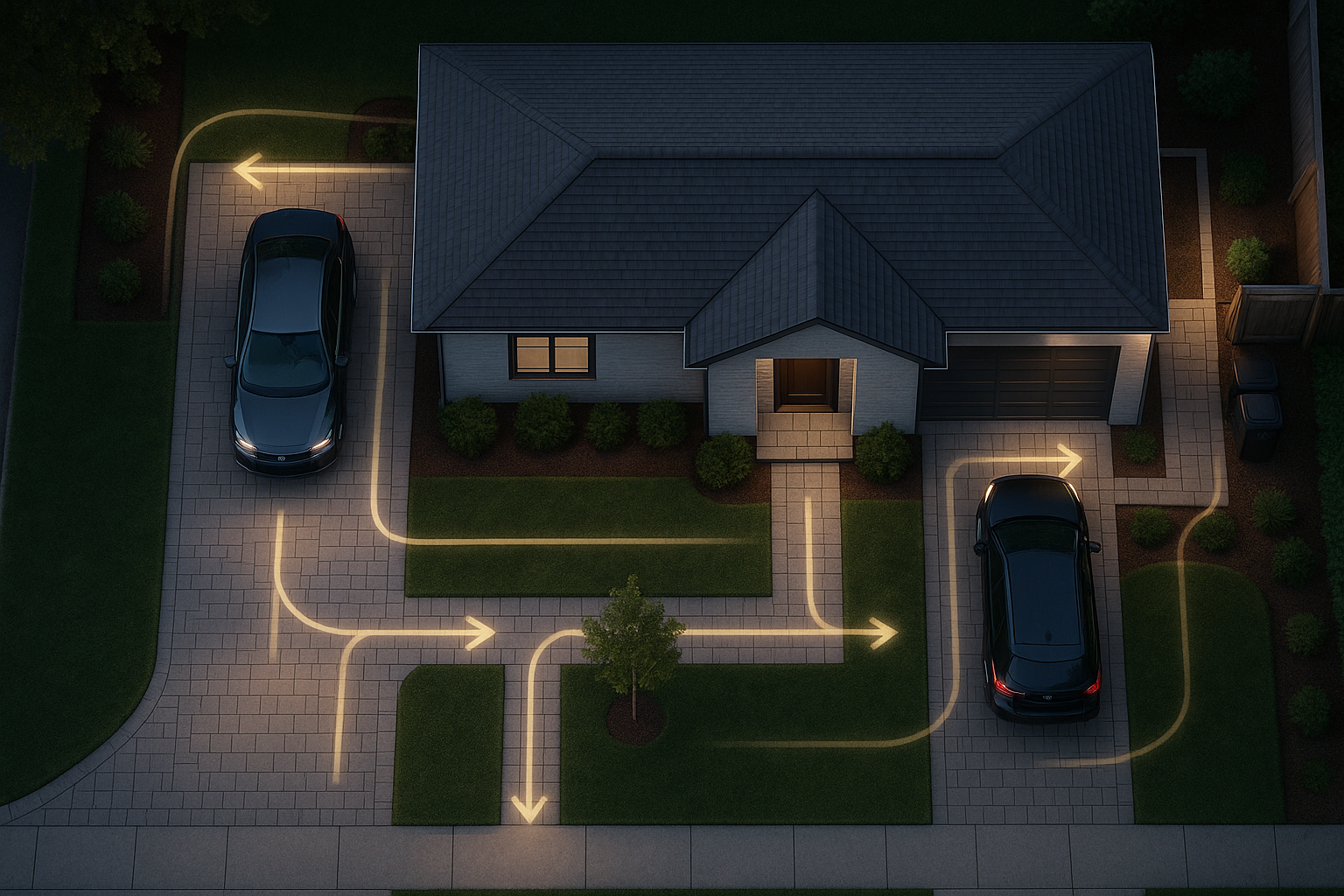
Before choosing any surface, you need a clear picture of how the space will be used day in and day out. Layout decisions are much easier once traffic patterns are understood.
Begin with a few direct questions.
- How many vehicles regularly park on the property.
- Do you need room to turn around or only straight access to the street.
- Where do drivers actually step out of vehicles.
- Which door do most people use, front entry, side entry, or garage entry.
- Do you often handle deliveries, contractors, or visitors who need extra temporary parking.
The answers decide the basic footprint of paver driveways and where drive areas should widen or remain narrow. A home that regularly juggles several vehicles will usually benefit from a wider drive section near the garage or a small parking bay, along with clearly defined walks that separate people from car routes.
Next, think about walking routes.
- A primary route from driveway to front door that needs to be wide, direct, and well lit.
- Secondary routes from driveway to side gate, trash storage, or backyard patios.
- Tertiary routes such as utility paths along the side yard that can be narrower and more informal.
When driveways and walkways are designed together, the property feels intuitive. People arrive, park, step onto a clear surface, and follow a natural line to the correct entry. When they are planned separately, gaps appear, and that is where mud, trampled lawn, and last minute stepping stone fixes tend to show up.
Outline the layout on paper first. Mark drive areas, turning areas, and each walk. Once this is clear, material selection becomes a targeted decision instead of guesswork.
Detroit Climate And Soil
What They Do To Driveways And Walkways
Hardscape in Detroit lives in a demanding environment. Winter temperatures, snow, and the nature of local soil all combine to move and stress any surface you install. Understanding that reality up front is the best way to avoid disappointment later.
Frost, water, and movement under hardscapes
Freeze thaw cycles are one of the main forces working on driveways and walkways. Water always finds tiny openings in the base and between units. When temperatures drop, that water freezes and expands. As it expands, it exerts upward pressure on anything above it. When it thaws, it can leave small voids if the base was not fully compacted.
Over time, this cycle can create:
- Ruts where tires always follow the same track.
- Tilted pavers or slabs at the outer edges of the drive.
- Low spots in front of garage doors or at main entries where water collects and then freezes into slick patches.
Hardscape does not fail because winter exists. It fails when the structure below the surface does not account for winter movement.
Clay soil and base depth
Many Detroit area neighborhoods sit on heavy clay soil. Clay holds water far longer than sandy soil and changes volume as it gets saturated and then dries out again. This movement must be factored into base thickness and preparation.
There is a big difference between the demands on a light garden path and those on paver driveways.
- Walks that only carry foot traffic can have a shallower compacted base than a drive, as long as they are built correctly.
- Driveways that support vehicles, delivery trucks, and sometimes work vans require deeper base layers and more rigorous compaction to spread loads and resist rutting.
Quality patio construction and driveway construction share the same principle. The visible pavers, stone, or concrete are only the top layer. The real strength lives in the layered compacted stone beneath. Simply placing units over a thin layer of sand or stone dust on top of native clay invites future movement and failure.
Drainage and snow management
Water that cannot leave a surface always causes trouble. In hardscape design, drainage is not an afterthought. It is part of the basic plan.
Good driveways and walkways in Detroit will:
- Pitch water away from the house, garage, and foundation.
- Avoid directing concentrated runoff to neighboring properties.
- Provide logical snow storage areas where plowed or shoveled snow can sit without blocking walks or creating dangerous refreeze zones.
In some cases, permeable paver systems or channel drains are used to collect and move water safely. These solutions only work when paired with an overall layout that respects where water naturally wants to travel.
Material Options For Detroit Driveways And Walkways
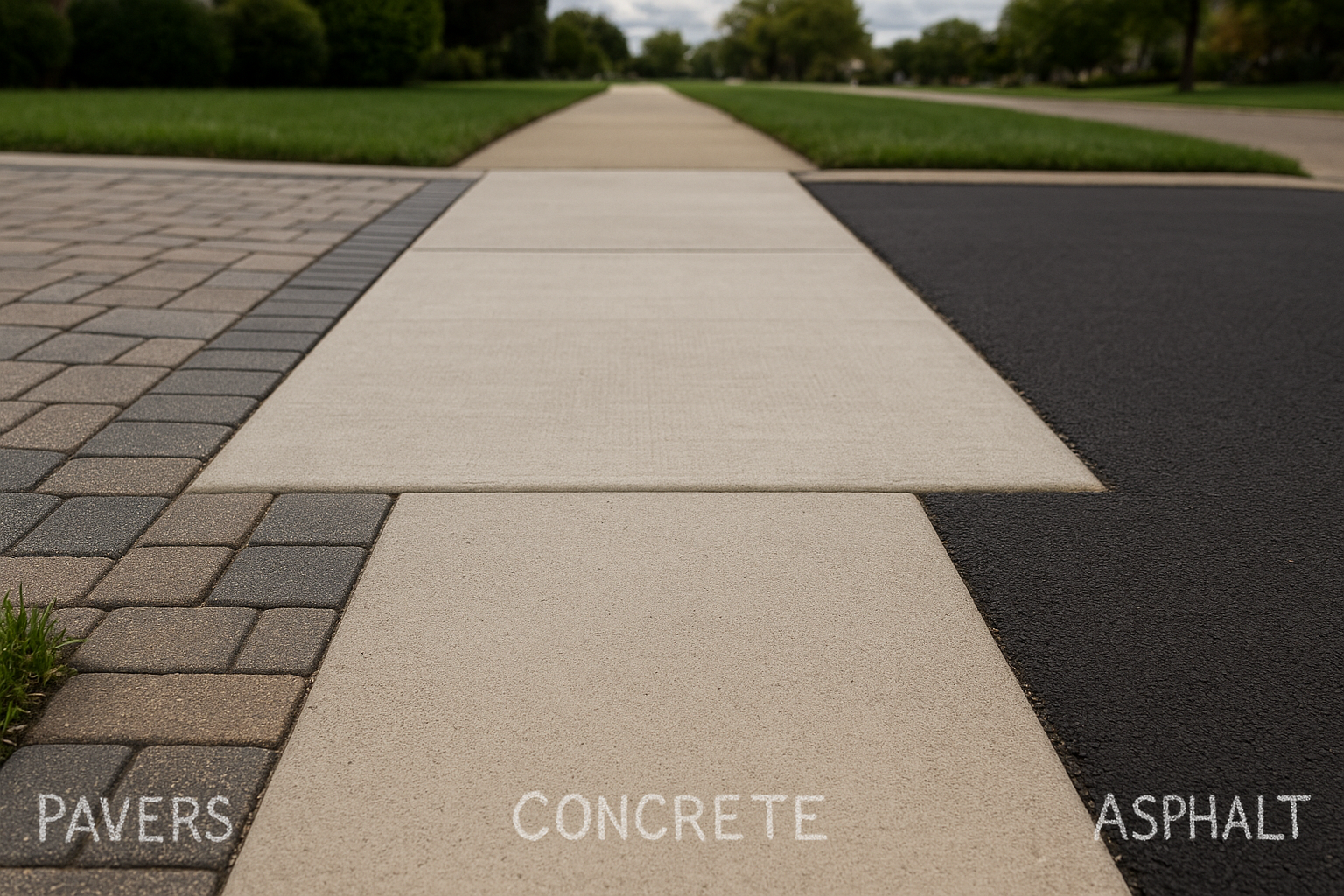
Once structure and climate are understood, you can look at surface choices with a more realistic lens. The three most common categories are interlocking concrete pavers, poured concrete, and asphalt, with variations in pattern and finish.
Paver driveways and entry walks
Interlocking concrete pavers are individual units designed to work together as a flexible surface over a compacted base. They are manufactured with consistent thickness, edge profiles, and surface textures, which makes them ideal for vehicle loads and freeze thaw climates.
Key advantages include:
- High strength under repeated vehicle traffic when installed over the correct base depth.
- Many colors, textures, and patterns to match different architectural styles.
- Borders and inlays that help define parking bays, turn areas, and main walks.
- Repair by lifting and resetting units in a localized area if a small section settles or utilities need access.
Important considerations:
- Paver driveways require careful edge restraint to prevent units from spreading under load.
- Joints need periodic attention. Joint sand or polymeric sand should be present and functioning to help lock units and manage water.
When constructed correctly, pavers act as a continuous surface that can flex slightly along with the base instead of cracking in single slabs.
Concrete and asphalt surfaces
Poured concrete and asphalt are more traditional driveway surfaces. They create a continuous slab or mat rather than an interlocking system.
Pros:
- Often a lower initial cost for basic straight drives compared with more intricate paver work.
- Familiar materials that many homeowners already understand at a basic level.
- Quick installation for simple layouts.
Cons:
- Movement in the base tends to produce visible cracks. Even when control joints are used, random cracks can still appear.
- Patches and repairs rarely match the original surface perfectly. Over time multiple repairs can create a noticeably patched appearance.
- Recoloring or refreshing the surface usually calls for more intensive processes like overlays or full replacement.
Concrete and asphalt can still be part of a smart plan, especially when combined with paver accents, but it is important to weigh their long term appearance and repair options.
Tying drive surfaces to brick paver patios and walks
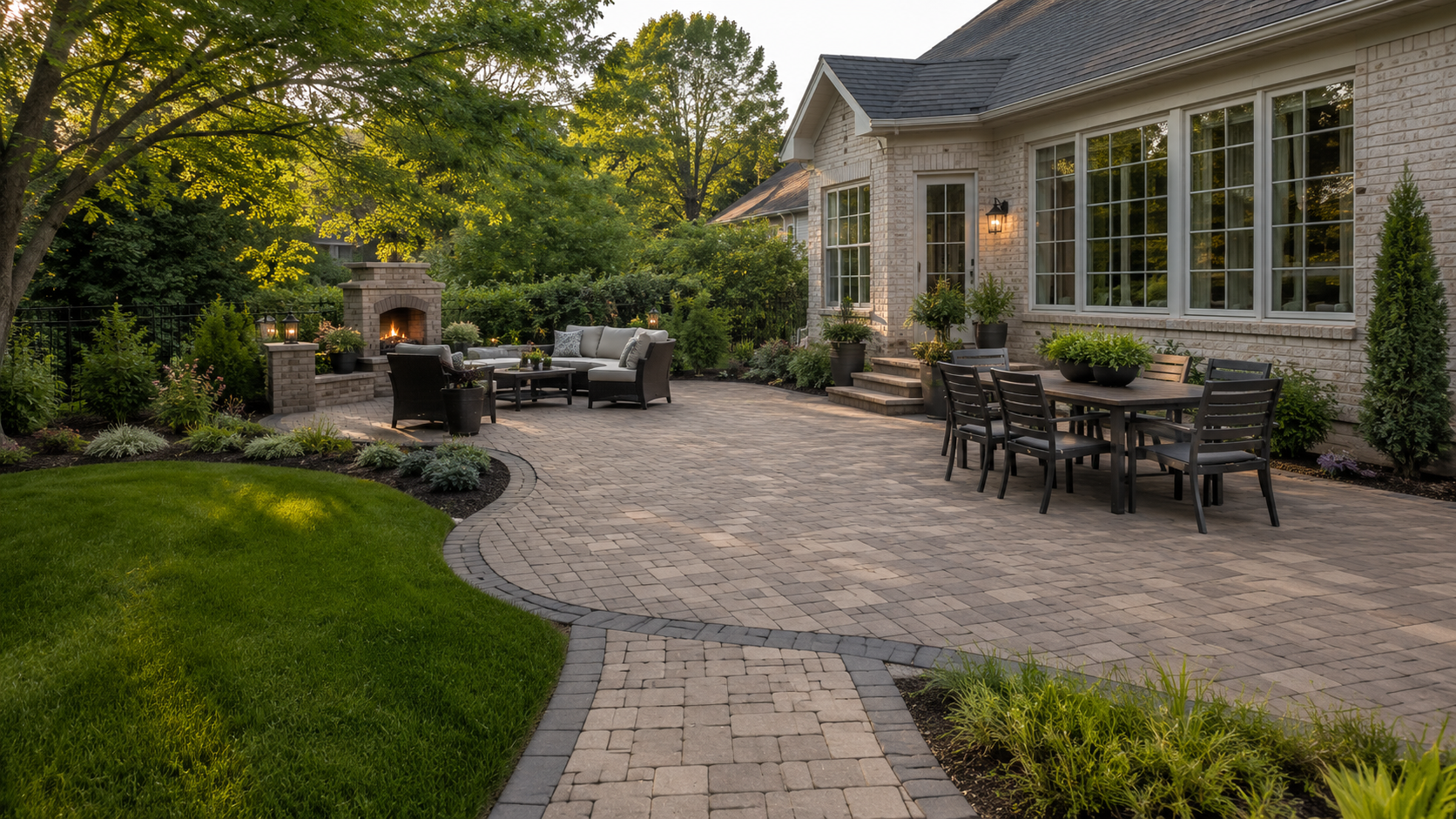
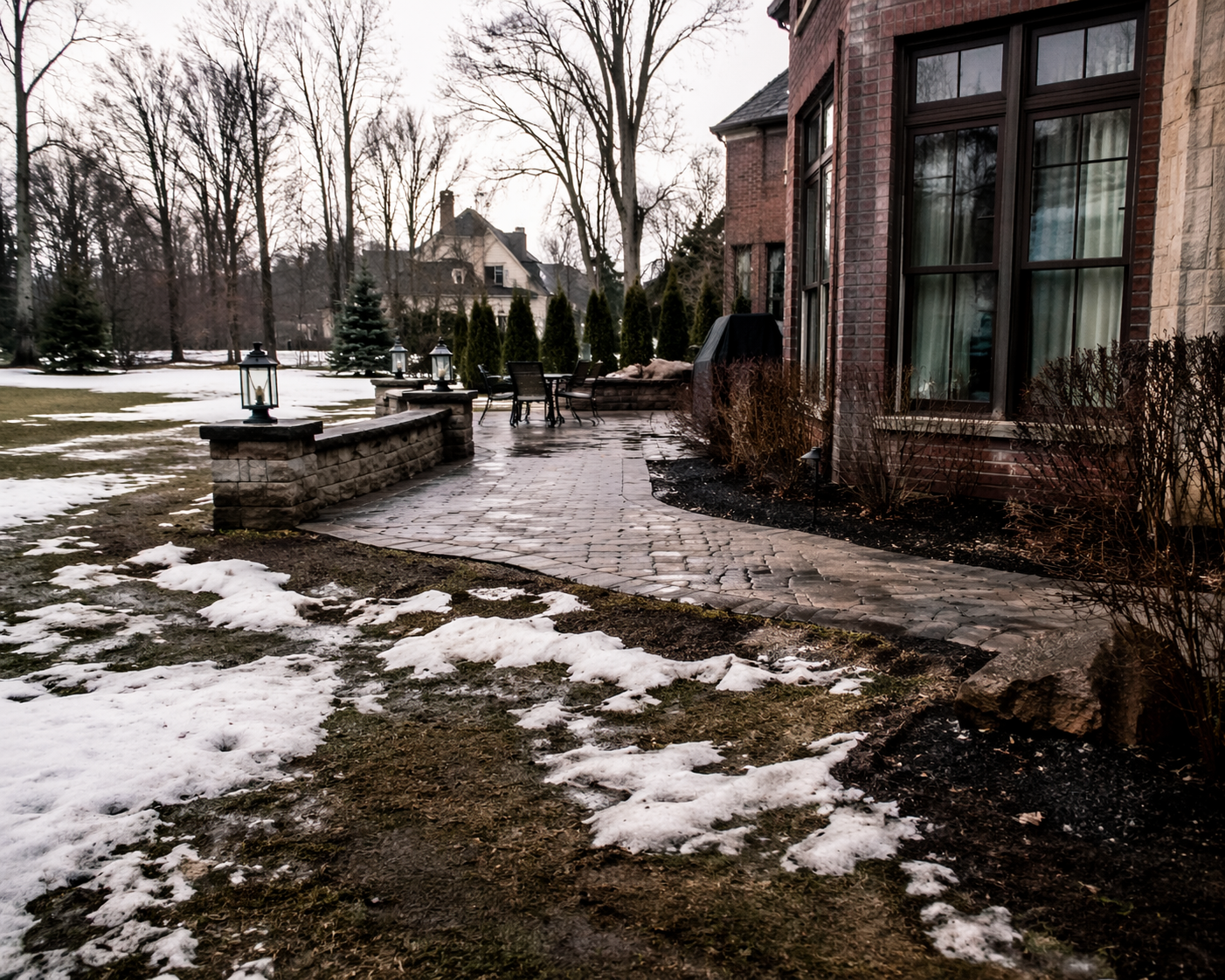
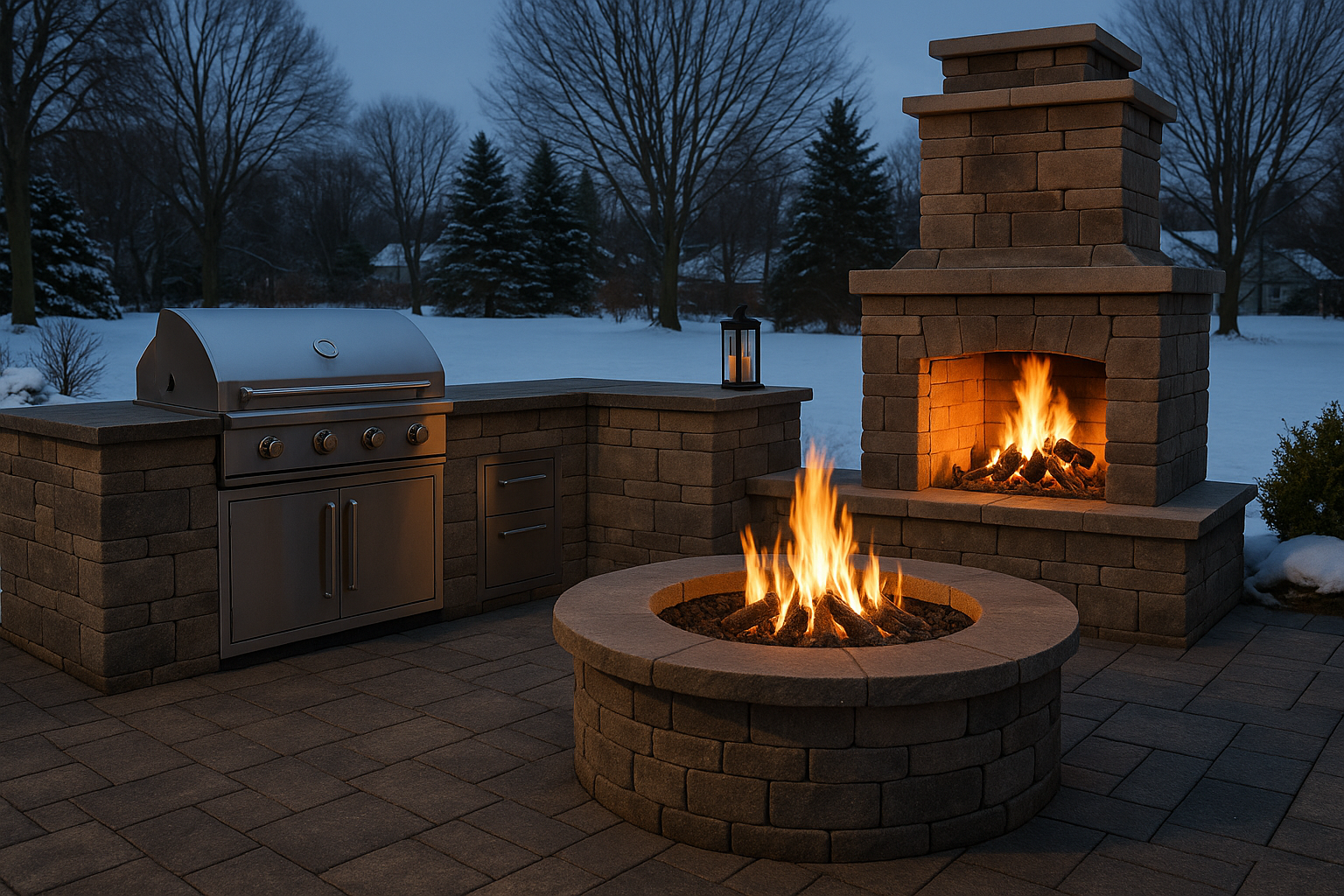
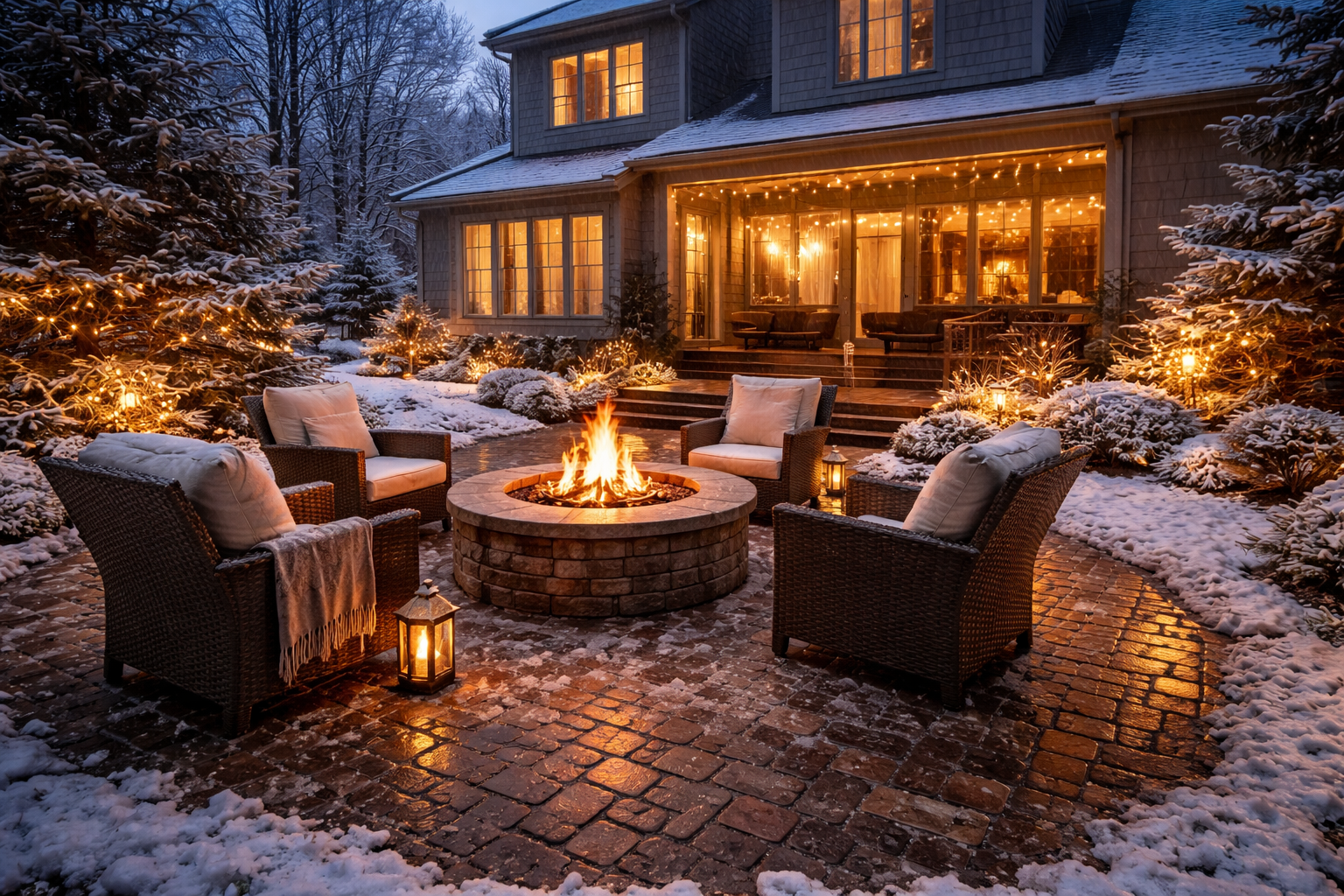
Whatever material you choose for the main driveway, it should be coordinated with other visible hardscape, especially front walks and any brick paver patios.
Options include:
- Using the same paver family in different patterns for drive, entry walk, and patio.
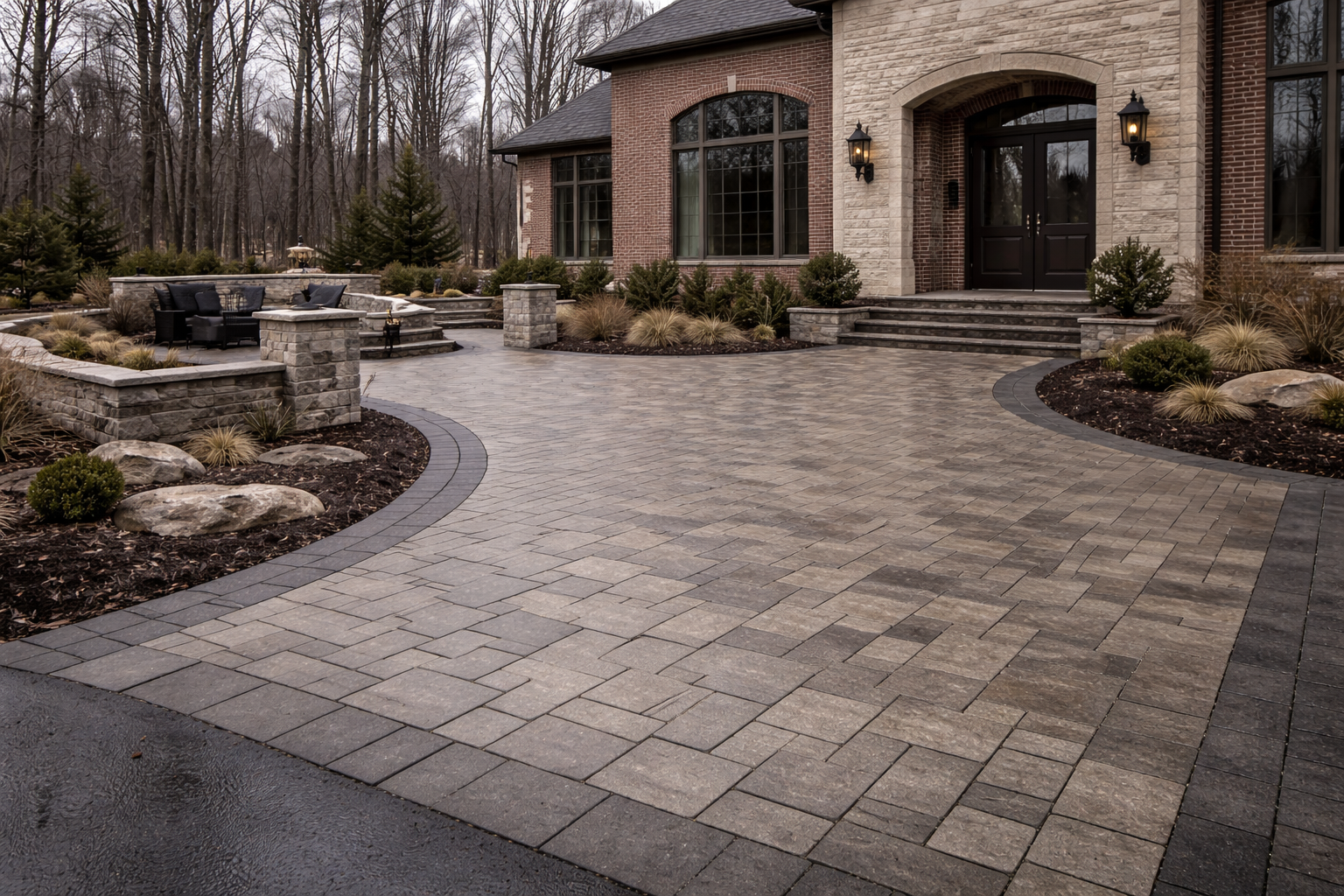
- Pairing a concrete or asphalt drive with a wide paver border that matches a full paver front walk and backyard patio.
- Keeping a consistent color palette so that surfaces feel like parts of one design rather than separate projects.
Thinking this way makes it easier to connect front and back spaces and to add new elements later without creating a patchwork effect.
Base Prep And Patio Construction Fundamentals
Surface materials get the attention, but base preparation and construction technique determine whether a driveway or walk performs for years or starts to move after a couple of winters. This is where professional process matters most.
Excavation and subbase preparation
Proper excavation removes enough soil to make room for the full base, bedding layer, and surface without leaving the finished hardscape perched above surrounding grades.
In simple terms, the layers typically look like this:
- Compacted aggregate base stone, built in lifts and compacted thoroughly.
- A thin bedding layer, often sand or fine aggregate, leveled but not used to compensate for a weak base.
- The visible pavers, stone, or concrete.
The required depth of the base depends on use.
- Walkways and light paths can work with a thinner base, as long as they are not expected to support vehicles.
- Drives and parking areas require a deeper base to handle heavy loads and to spread those loads across the soil.
On clay subsoil, this depth is even more important, because the base acts as a buffer between moving native soil and the finished surface.
Compaction, edges, and jointing
Compaction is what turns loose stone into a solid foundation. Each lift of base material is compacted before the next is added, using appropriate equipment. Skipping this step or rushing through it is one of the fastest ways to guarantee future rutting and settlement.
Edge restraint is equally critical for paver driveways and walks. Without solid edges, pavers can slowly spread under traffic loads, leading to gaps and unevenness. Edges may be created with concrete, mortared units, or robust plastic edge restraints anchored into the base.
Joint materials play their own role.
- Standard sand joints allow drainage and some flexibility.
- Polymeric sands can offer additional stability and weed resistance when installed correctly.
Healthy joints help transfer load between pavers, shed water, and protect the bedding layer below.
Why process matters more than product label
Many product lines promise premium performance, but no block or paver can make up for poor base work. The best looking surface will fail early if placed over a thin, poorly compacted base without drainage planning.
Reliable contractors treat patio construction and driveway construction with equal seriousness. Walks, courtyards, and parking areas all receive a structural approach that suits their use, instead of a quick cosmetic fix over existing soil.
Designing A Cohesive Hardscape Plan
Driveways And Walkways As One System
Once structure and materials are understood, it is time to see the property as a single connected layout instead of separate projects.
A cohesive hardscape plan considers:
- The main driveway from street or alley to garage or parking area.
- The front walk and entry landing where guests pause and knock.
- Side paths connecting the drive to gates, utility areas, and back yard.
- Any courtyard or small sitting area that acts as a transition between house and yard.
The goal is to create clear, comfortable movement.
- Guests should have an obvious route from where they park to the appropriate door, without crossing mud or squeezing past plantings.
- Household members should have direct, practical paths to trash storage, sheds, and backyard spaces.
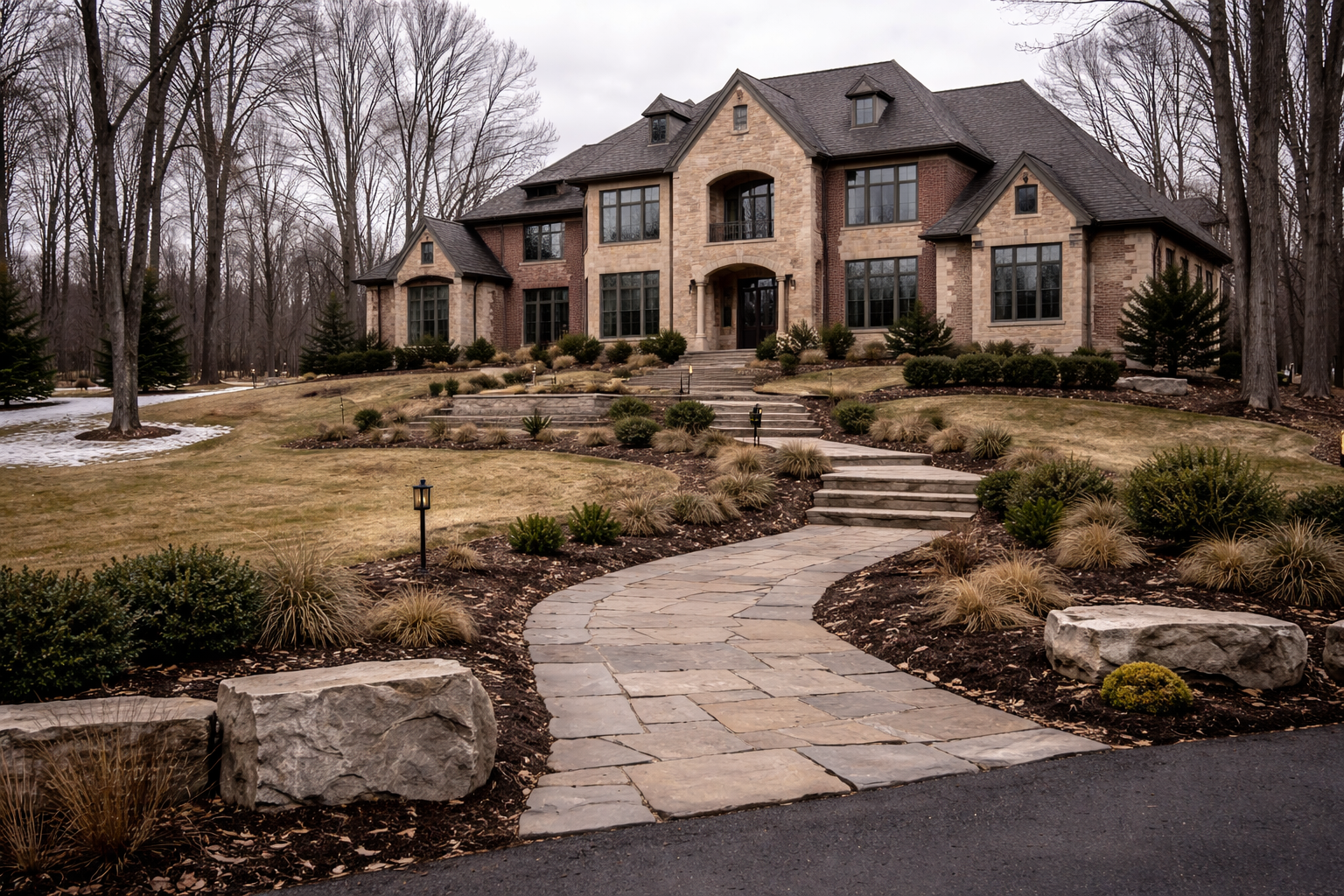
This is where landscape design becomes a practical skill rather than a marketing term. A strong front yard layout combines hardscape, planting beds, and lighting so that your home feels organized and welcoming in a way that suits local architecture and climate.
Visual strategies assist with that.
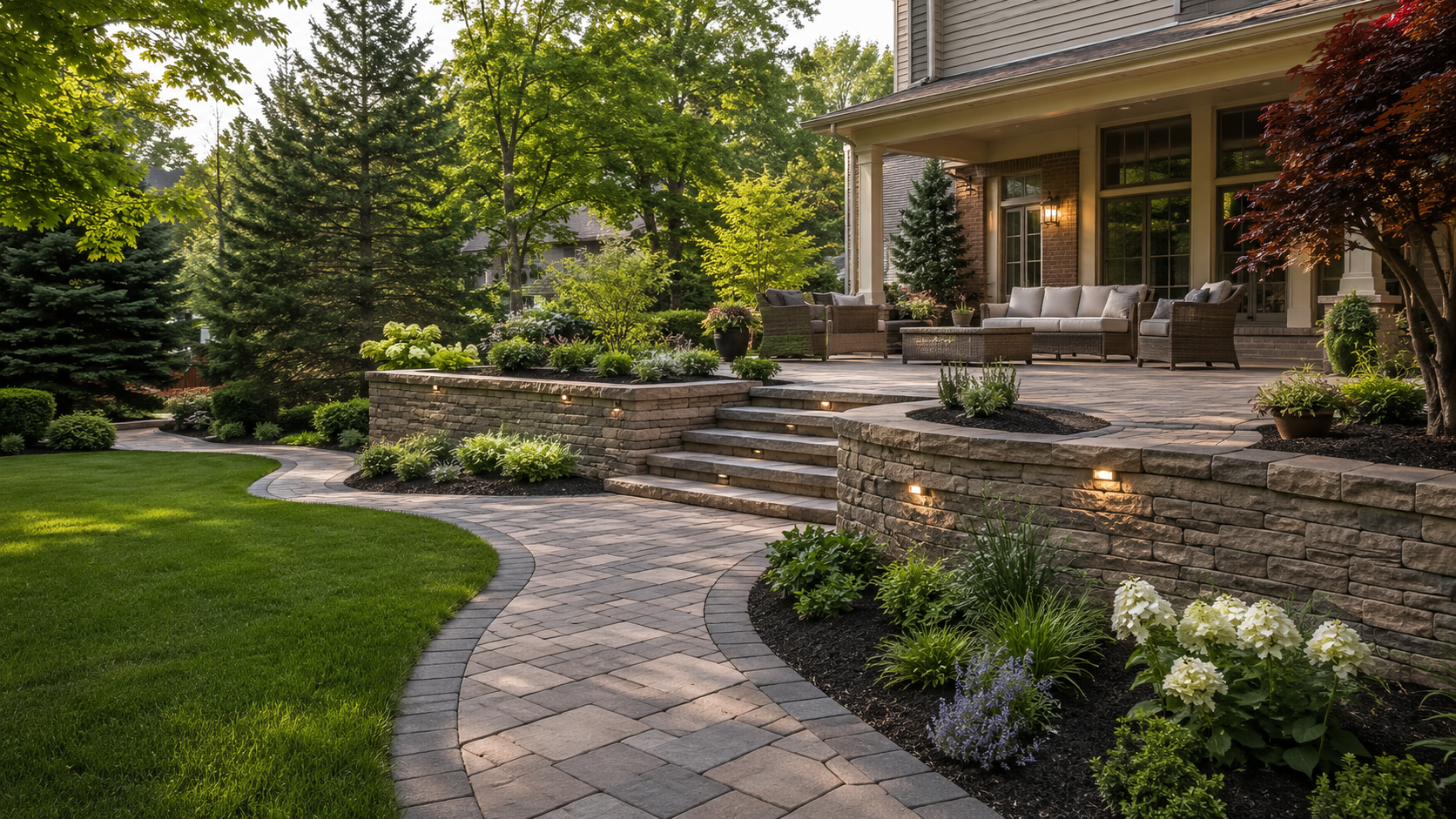
- Repeating a banding detail, such as a darker paver border, across drive edges, walks, and steps ties everything together.
- Aligning joints or main lines between driveway and walk helps the eye move smoothly across the property.
- Keeping material choices limited but coordinated prevents the space from feeling busy or disjointed.
Thinking in terms of a system rather than disjointed surfaces results in a property that is easier to navigate, easier to maintain, and more impressive from the curb.
Planting, Lighting, And Finishing Touches Around Hardscapes
Hardscape delivers structure, but planting and lighting bring it to life. They also influence how easy it is to live with the finished space.
Planting along drives and walks
Planting near hard surfaces should be attractive and practical.
Key considerations include:
- Tolerance for road splash and winter salt near the street side of the driveway.
- Height control so plants do not block driver sightlines backing out of the garage or approaching the sidewalk.
- Root behavior, since aggressive rooting right under paver edges or slab joints can lead to lifting or cracks.
Well chosen shrubs, ornamental grasses, and perennials soften the edges of paver driveways and walks without overwhelming them. Plant bed shapes can echo the lines of the hardscape, reinforcing the layout and framing views to the front door.
Lighting for safety and appearance
Lighting is both a safety tool and a design tool.
For functional safety:
- Install low fixtures along the edges of driveways and walkways to define boundaries in the dark.
- Light any steps, changes in grade, or tight turns so that users do not trip.
- Provide sufficient light at doors and garage entries without creating glare for drivers.
For appearance:
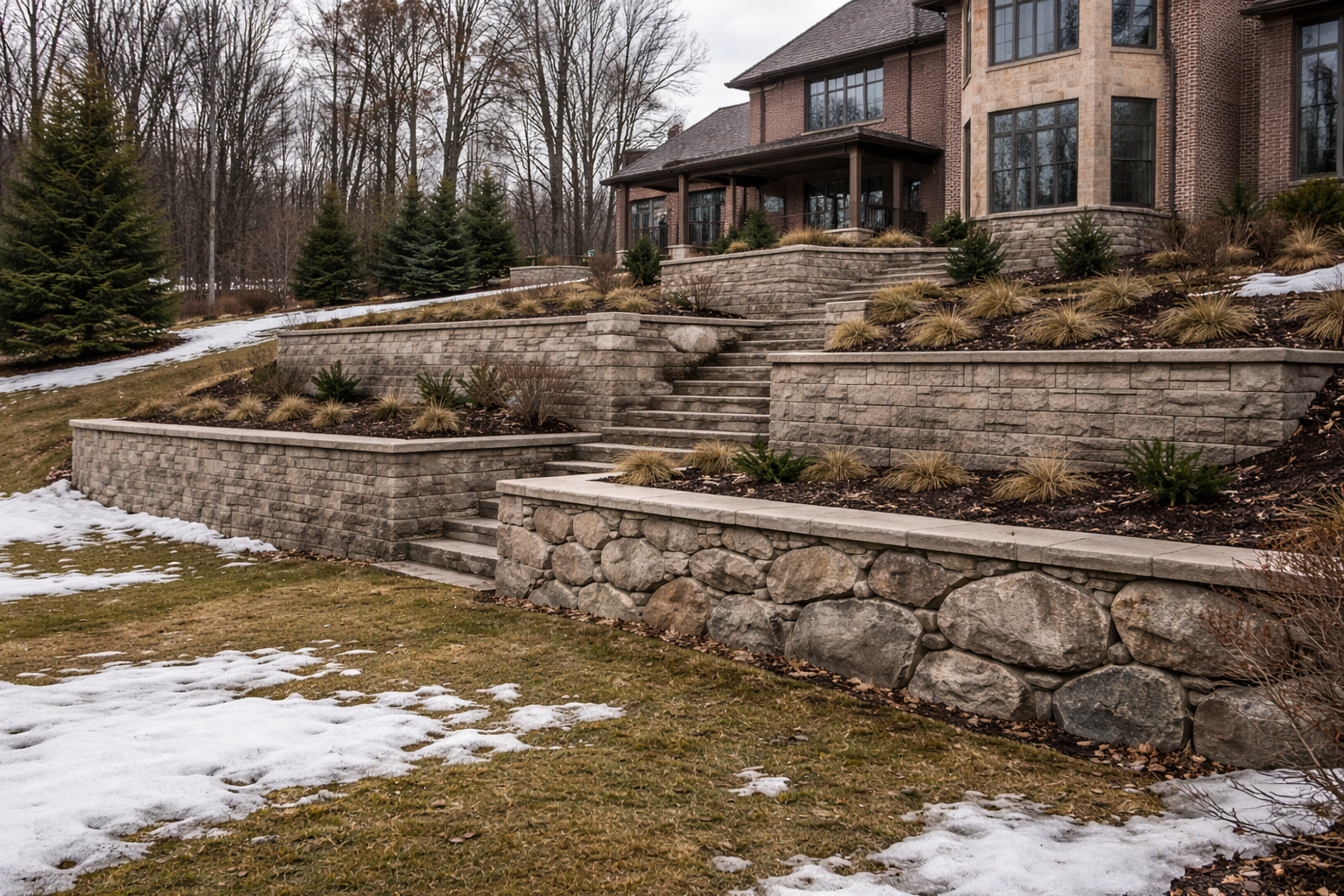
- Use accent lighting on specimen trees, stone walls, or architectural features to draw the eye up and give night time depth.
- Wash gentle light across key surfaces so textures and patterns are visible after dark.
When lighting is planned alongside hardscape, conduit and fixtures can be integrated cleanly into the project instead of added later in a more disruptive way. This is part of complete landscape installation rather than a separate afterthought.
Maintenance And Lifespan
Keeping Your Hardscape Investment Performing
Every surface requires some level of care. The goal is not maintenance free, which does not truly exist, but maintenance smart.
For any driveway and walk system, plan on:
- Periodic sweeping or blowing to remove grit that can scratch surfaces over time.
- Seasonal removal of leaves and organic debris that can stain or become slippery when wet.
- Regular inspection for early signs of settlement, loose edges, or joint loss so that small issues are addressed before they become trip hazards.
Paver specific care often includes:
- Checking joint sand and replenishing or reactivating it as needed to keep joints filled and supportive.
- Adjusting small localized areas if slight settlement occurs, especially in the early years as the base fully stabilizes.
- Using appropriate cleaners for any stains so that paver color and surface are preserved.
Concrete and asphalt surfaces typically need:
- Sealing at intervals recommended for the material and local conditions.
- Prompt attention to cracks to reduce water intrusion into the base.
- Monitoring of any significant settlement so that drainage patterns do not change for the worse.
Properly built paver driveways and walks can serve for many years with sensible maintenance. Ignoring drainage issues, allowing standing water to persist, or postponing simple repairs shortens the lifespan of any surface, regardless of material.
Choosing A Contractor For Driveways And Hardscapes In Detroit
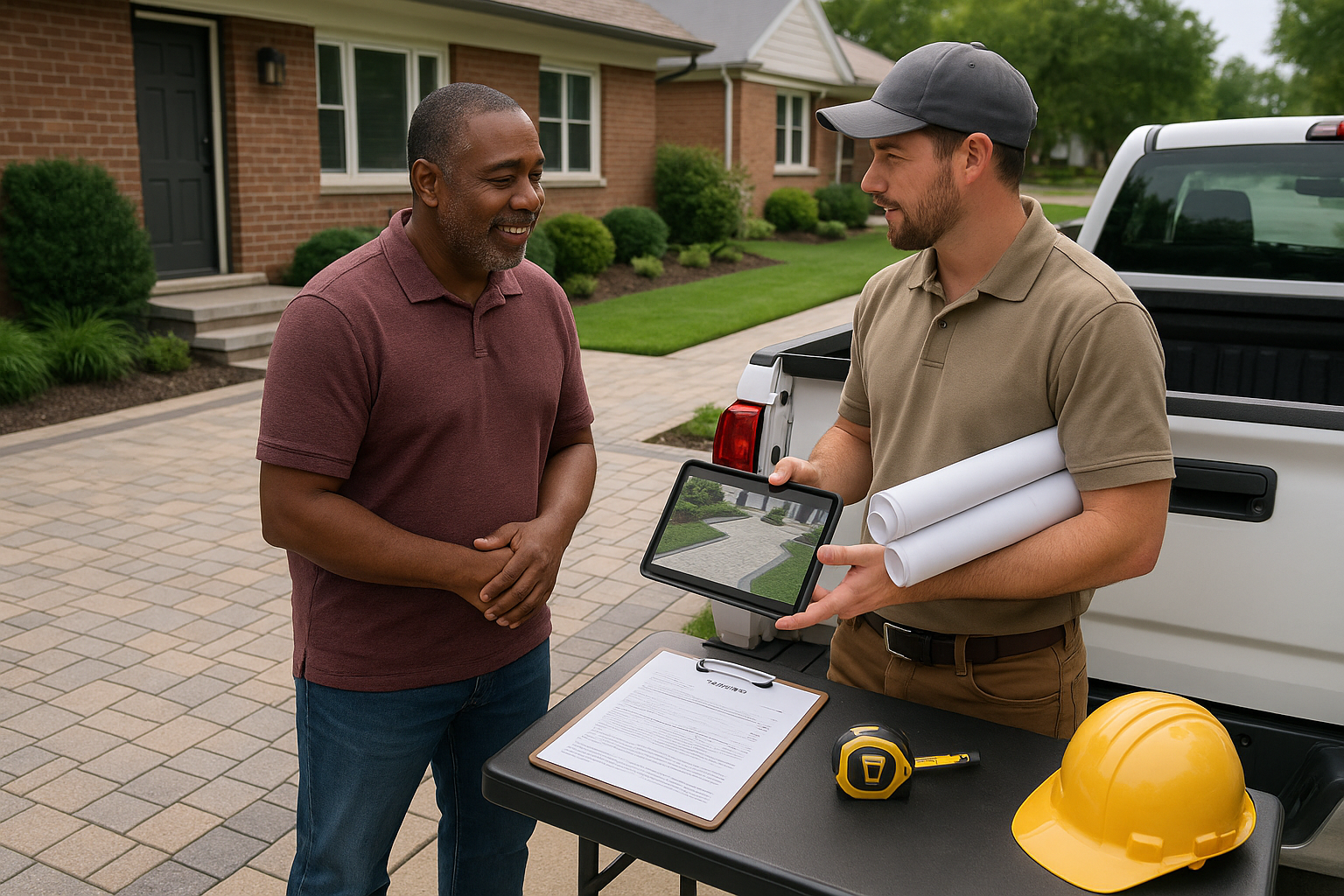
The best design and material choice can be undermined by poor execution. Selecting the right contractor is as important as selecting the right pavers.
Look for a team that offers more than basic paving. Key signs include:
- Proven experience with full landscape installation, not only single surface replacement.
- Understanding of grading, drainage, and how hardscapes tie into patios, steps, and planting beds.
- A portfolio that shows paver driveways, brick paver patios, and connected walks in a variety of neighborhood settings.
Practical criteria to check:
- Proper licensing and insurance for the scope of work you plan.
- Clear written proposals that specify excavation depth, base thickness, aggregate type, compaction standards, and edge restraint methods.
- Straightforward communication around timelines, access needs, and how the crew will protect existing features during work.
When comparing quotes:
- Be cautious of very low bids that seem out of line with others and that do not spell out base depth or compaction steps. Shortcuts often hide there.
- Consider the value of warranties and service after completion. A slightly higher price from a contractor who stands behind their work is often better than a bargain that leaves you alone when issues appear.
Asking detailed questions about process is a good way to see whether a contractor understands local conditions or is simply selling a surface.
Decision Checklist
Is A Paver Driveway Or Another Surface Right For You
To bring everything together, it helps to run through a simple decision checklist. The goal is not to push one answer for everyone, but to match materials to priorities.
Ask yourself:
- How long do I plan to stay in this home.
- Do I want the new surface to coordinate with existing or future brick paver patios and walks.
- Am I mainly concerned with lowest initial cost, or with long term repair options and appearance.
- How much winter traffic and snow clearing will this surface see.
- Do I prefer a clean modern look, a traditional pattern, or a mix of both.
- How important is it that the surface can be repaired in small sections rather than replaced in one large project.
If you lean toward long residence, value a coordinated look with other hardscapes, and care about repair flexibility, a well built paver system is often the most balanced solution for driveways and walkways. If you only need a short term improvement or are managing a very tight budget, plain concrete or asphalt may still have a place, as long as you understand the tradeoffs in cracking, patch visibility, and future replacement.
The checklist is not a test. It is a way to clarify what matters most before you meet with a contractor.
Frequently Asked Questions About Detroit Driveways And Hardscapes
Homeowners planning major hardscape work often ask the same core questions. Addressing them up front can save time and reduce uncertainty.
How much does a paver driveway cost in Detroit?
There is no single number that fits every property. Cost depends on several factors, including total area, shape and pattern complexity, access for equipment, required base depth on your soil, and any added features such as borders or inlays. Paver driveways that are built to handle Detroit winters will generally cost more than basic concrete or asphalt in the same footprint, but they offer different long term value. A site visit and a detailed written scope are necessary for accurate pricing.
How thick should the base be for a driveway compared with a walkway?
Driveways that carry vehicles need a significantly deeper compacted base layer than walkways that only see foot traffic. The exact depth depends on soil conditions and expected loads, but the principle is simple. Vehicle areas need more stone and more compaction to spread the weight and reduce movement. Professional crews size base depth to use, soil, and local climate, and they treat base work as non negotiable, whether the surface will be paver or slab.
Are paver driveways harder to plow than concrete?
When installed correctly, with level surfaces and proper edge restraints, paver driveways can be plowed just as routinely as concrete surfaces. The key is to use appropriate plow blades or shovel edges and to avoid digging into joints or catching edge units. Many commercial lots and residential drives with pavers are cleared every winter without issue because the surfaces are stable and the equipment is used correctly.
Can I add new brick paver patios later that match my driveway?
Yes, as long as material families are planned with that in mind. Choosing pavers and colors now that are part of a broader collection makes it easier to add matching or coordinating brick paver patios, side walks, or courtyards later without creating a patchwork appearance. This is another reason to plan the whole property rather than treating each project as isolated.
What if water already pools near my garage or front steps?
Existing drainage problems are a warning sign and should be addressed as part of any new patio construction or driveway work. Simply replacing the surface without correcting slopes or adding appropriate drains usually means the problem will return, sometimes worse. A thorough design will look at how water currently behaves, then adjust grades and add any necessary drainage structures so that standing water no longer collects where it should not.
Conclusion And Next Steps
Designing driveways and hardscapes in Detroit is not only a choice between concrete, asphalt, and pavers. It is a process of matching structure, function, and appearance to local soil, climate, and the way your household actually lives.
The best results come from treating driveways and walkways as one connected system, built on a solid base and coordinated with steps, patios, planting, and lighting. Both quality paver systems and well constructed slab surfaces can perform, but they demand thoughtful planning and real attention to base preparation and drainage.
A practical way to move forward is simple.
- Walk your property with a critical eye and note where surfaces crack, hold water, or feel awkward to use.
- Sketch how you want to drive, park, and walk, and how those routes should connect to any future brick paver patios or outdoor living areas.
- Collect a few images that show the overall feeling and materials you like, not just isolated driveway shots.
- Speak with a contractor who understands full landscape installation and whole-property design, so hardscape and planting work together instead of competing.
When you understand how materials, base depth, and layout work together, planning your driveway and hardscape upgrade becomes far less risky. With a clear plan and an experienced team, you can turn a cracked, tired surface into a durable, attractive framework that supports the rest of your landscape for many seasons to come. When you are ready to talk through your property, see how we approach
paver driveway design and installation. Your first conversation is free.