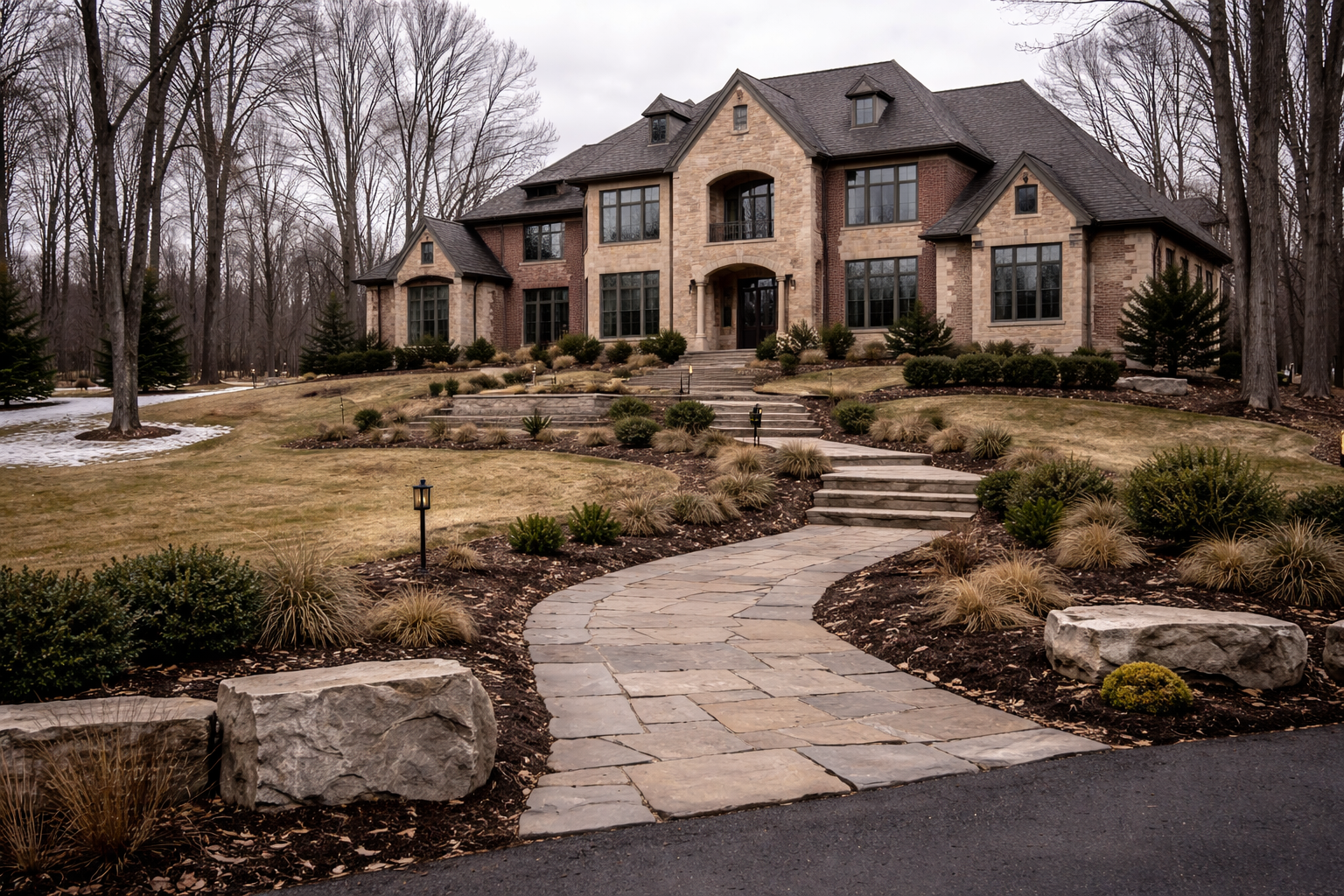
Poolside Landscaping In Detroit: How To Design A Year Round Luxury Outdoor Living Space
If you own a pool in Metro Detroit or you are planning to add one, you already know the dream. Warm evenings, soft lighting on the water, friends gathered around a fire feature, kids drifting between the pool and the lawn. Then reality shows up in the form of clay soil, heavy snow, and a pool that sits covered for several months of the year.
That gap between dream and reality is exactly where smart poolside landscaping comes in. A well planned pool yard in southeast Michigan has to do a lot at once. It must look beautiful in peak summer, stand up to chlorinated or salted water, survive freeze and thaw cycles, and still feel intentional when the pool is closed. It has to function as true luxury outdoor living, not just a concrete pad around a rectangle of water.
This guide walks through how to plan that kind of space. You will see how to think about structure, surfaces, and plants, how Detroit climate affects every decision, and how to tie everything together with lighting, fire, and simple maintenance habits. By the end, you will have a clear framework to start designing a pool area that feels like a resort in summer, stays safe and solid through winter, and welcomes you outdoors in every season.
Someone searching this wants to design a pool area that feels like a resort in summer, is safe and durable, and still looks intentional once the pool is closed for the winter.
What A Year Round Poolside Landscape Needs In Detroit
Before you dive into materials and plant lists, it helps to understand what success looks like for a pool yard in this region. In simple terms, a year round poolside landscape in Detroit needs to deliver three things.
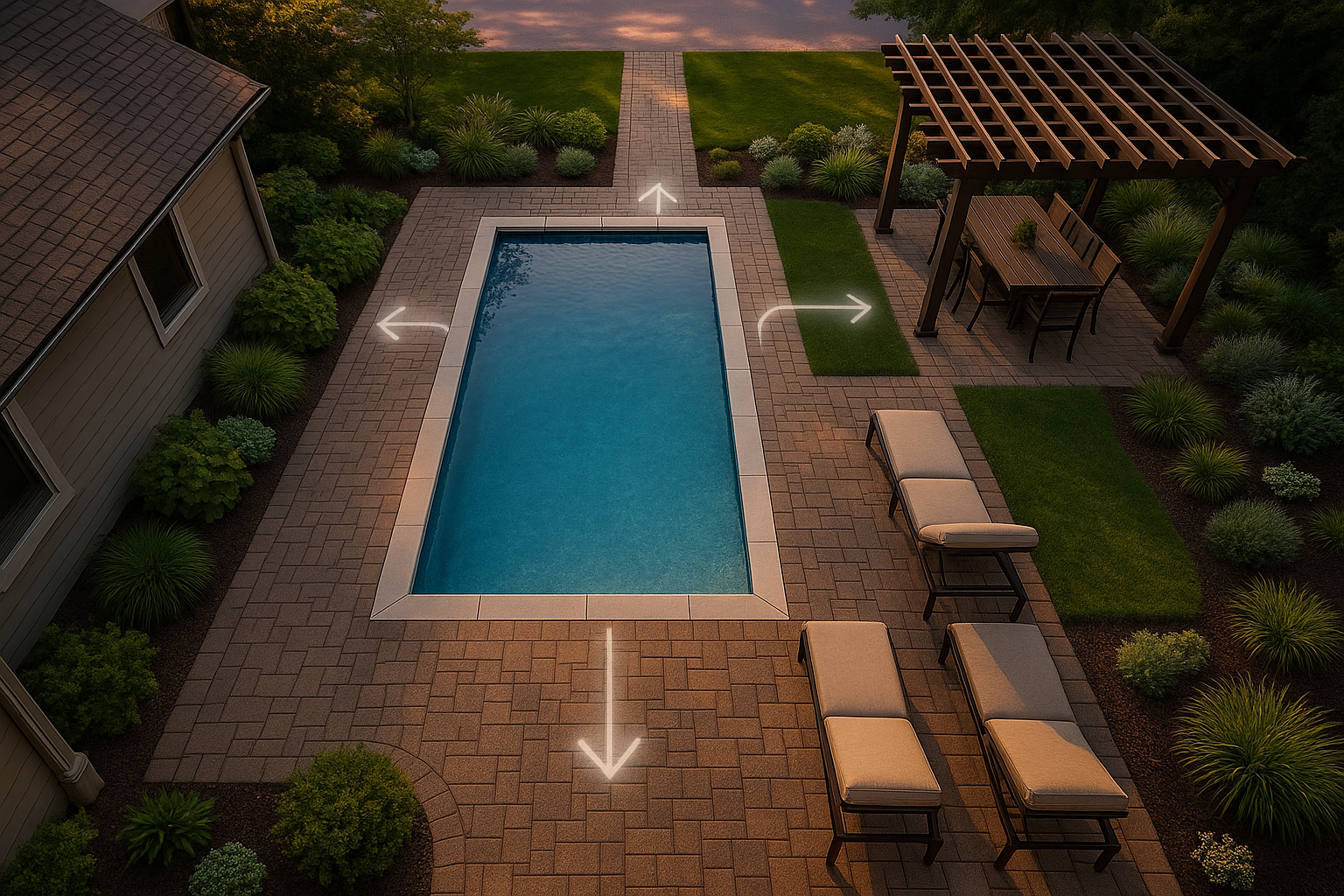
First, it must be safe and comfortable to move through. That means slip resistant surfaces with good drainage so water does not sit on steps and walkways. It means clear transitions between the house, the pool, and the lawn. It means enough space around the water for people to walk past loungers, open gates, and carry food without squeezing through tight spots.
Second, it needs plantings that can handle both water and weather. Around a pool you have splashing, higher humidity, and sometimes salt from certain systems. In Metro Detroit you also have real cold, snow loads, and long periods without active growth. The right poolside landscaping plan uses plants that tolerate those conditions without turning into a messy cleanup job every weekend.
Third, and most important for many homeowners, the space should support luxury outdoor living, not just swimming. That includes dining areas, places to sit with a drink, shaded zones for midday, and warm gathering spots for evenings. Lighting, outdoor speakers, fire features, and even simple storage all play into whether the pool area feels like an outdoor room or just a pool in a yard.
A lot of glossy photos online come from warm climates where plants never fully go dormant and surfaces rarely see ice. Those references are useful for inspiration but do not translate directly to Detroit. Here you need structure in the layout, thoughtful patio construction, planting that looks good even when cut back, and lifestyle features that continue to work after the pool is covered. When you plan with those pillars in mind, the end result is a pool yard that serves you in every season instead of only a few hot weekends.
How You Want To Use The Pool Area: Designing For Real Life, Not Just Photos
The best pool projects start with honest questions about how you live, not with a random layout from a photo gallery. Before you commit to materials or shapes, take a step back and think about how you actually want to use the space.
Ask yourself a few simple questions.
- Is the pool mostly for kids and family play, for adult entertaining, or for quiet relaxation
- Do you picture big gatherings with many guests, or a few close friends on a regular basis
- Do you grill and cook outside often, or only occasionally
- Would you use a quiet morning coffee spot by the water if it existed
- Do you want strong sun for tanning, or more shade and cooler seating
Your answers will drive the layout. Families with active children usually appreciate a generous brick paver patio with clear sightlines from the house, safe play zones, and soft lawn edges where kids can run and dry off. A wide, open layout with minimal tripping hazards is more important here than complex shapes.
If you love to host, the focus shifts toward bar seating, an outdoor kitchen, and multiple seating groups around the pool. That might mean a main dining table near the house, a lounge area around a fire feature, and a few smaller pairs of chairs tucked in near planting beds. The goal is to encourage people to spread out while still feeling connected.
For homeowners who want a calm retreat, tucked away loungers, layered planting for privacy, and a more restrained color palette can make the pool feel like a spa. Sound becomes important here. A simple cascade or subtle water feature landscaping can soften street noise and create a more restful atmosphere.
In every case, remember that the water is only one element. The real goal is to create luxury outdoor living that wraps around the pool. When you think in terms of outdoor rooms and everyday routines, you make better decisions about where to place each feature and how much space to give it.
Detroit Climate And Poolside Design: What Winter And Freeze Cycles Do To Your Pool Yard
Metro Detroit is not a gentle climate for outdoor structures. Winters are long, freeze and thaw cycles are frequent, and many neighborhoods sit on heavy clay soil. Those realities shape every aspect of poolside design.
Freeze and thaw around the pool
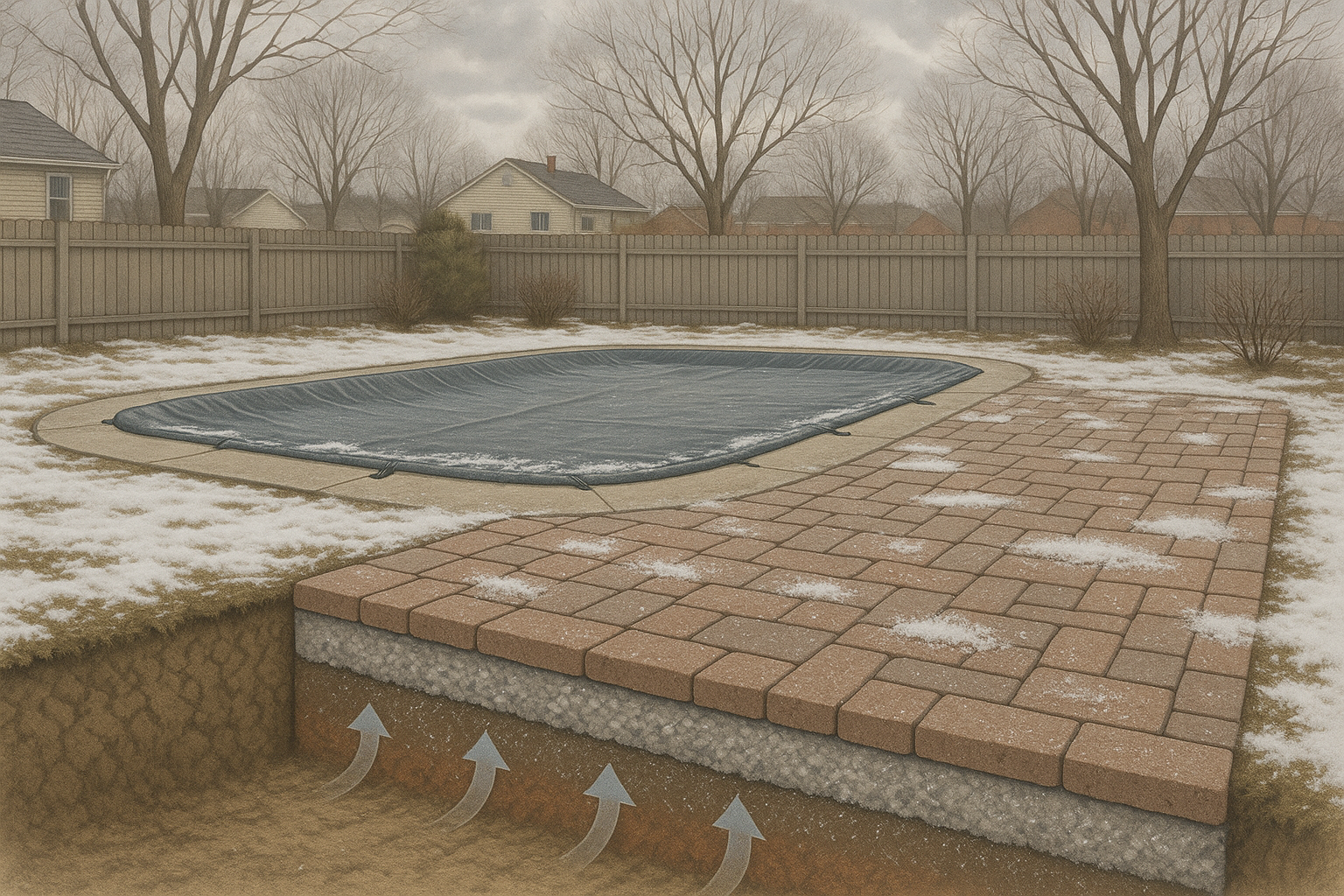
Whenever water finds its way into tiny gaps between materials, you have the potential for trouble. In late fall or early spring, that water can freeze overnight, expand, then thaw again during the day. Over time those small movements add up.
In a pool yard that is not built for this, you see raised corners on paving, cracked grout along the coping, and uneven steps. These are more than cosmetic issues. They become tripping hazards and make the entire space feel neglected.
Good patio construction near a pool anticipates this from the start. That means a well compacted base at the right depth, drainage layers that keep water moving instead of trapped, and joint materials that can flex a little as conditions change. When you use systems like brick paver patios or other modular surfaces, individual units can be lifted and reset if needed instead of tearing out an entire slab.
Clay soil and drainage around pools
Many Detroit area yards have clay rich soil that holds water instead of letting it soak away. Around a pool this is a major concern. If water sits against the pool shell or the house foundation, you increase the risk of seepage, frost heave, or uncomfortable soft spots in the lawn.
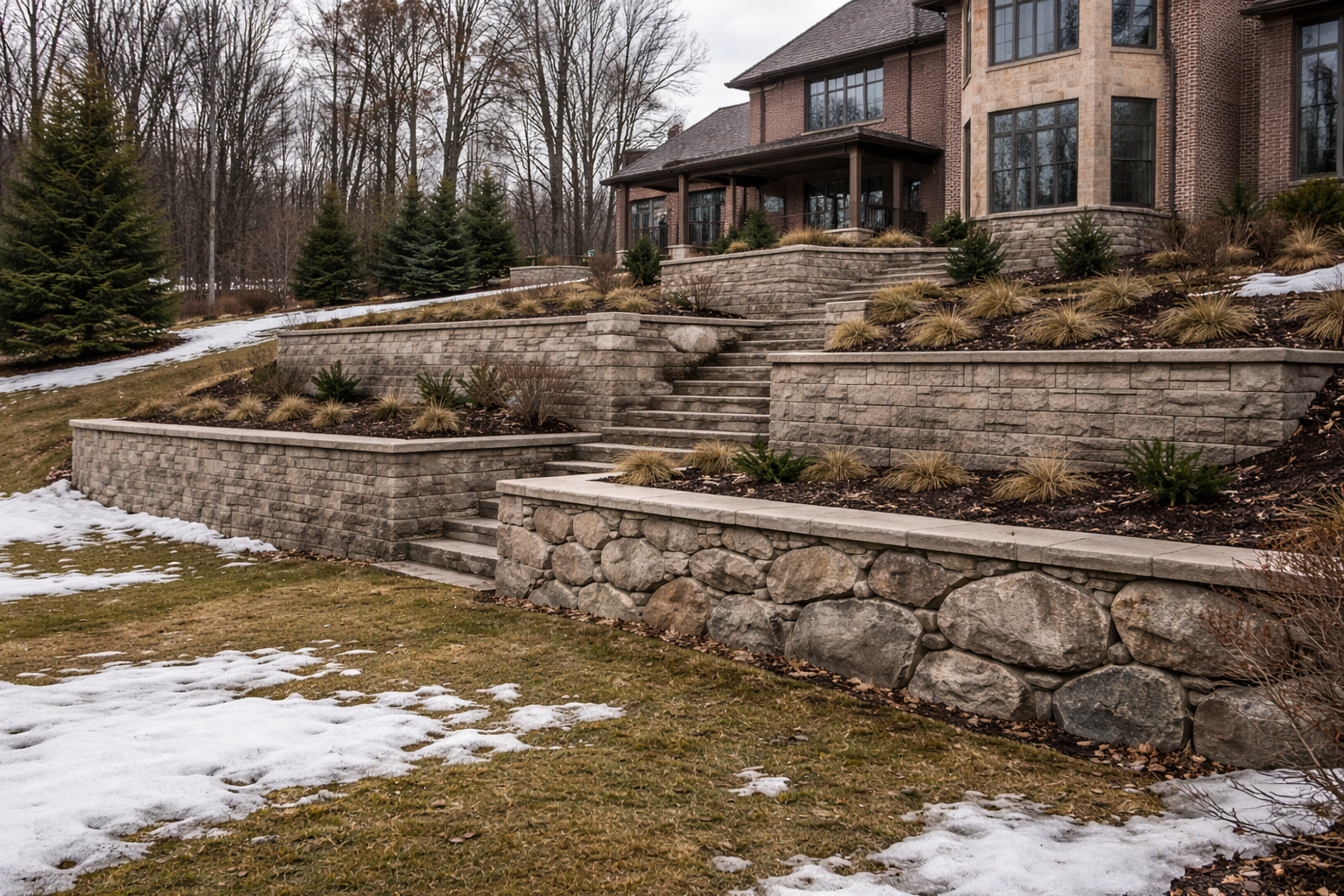
A smart design grades the surrounding ground away from the pool and the house. It often includes drains along the back of retaining walls, under decks, or between the home and the water to catch and redirect runoff. When you design brick paver patios or custom patios around a pool, you want to think carefully about where water will go during storms and when snow melts. Shallow low spots that seem harmless in summer can turn into icy patches in shoulder seasons.
Winter closures and how the space looks off season
For several months each year, your pool will be covered. That reality is often ignored during the design stage, which leaves homeowners with an impressive scene in July and a depressing one in January.
Think about what remains visible in winter. The water surface disappears under a cover. Many perennials are cut back. What is left are the bones of the space.
To keep the area attractive off season, you can rely on a few simple strategies.
- Use evergreen shrubs and small trees to anchor corners and key views
- Include structural grasses and shrubs that hold their shape through much of winter
- Add fire features and lighting that you will still use when the water is closed
- Plan simple sightlines from interior windows so the view of the pool yard still feels composed
When you treat winter as a real design season rather than an afterthought, your poolside landscaping works visually all year, not only when guests are outside.
Choosing The Right Poolside Patio Surface: From Plain Concrete To Brick Paver Patios And Custom Patios
The surface around your pool does a lot of work. It supports furniture, handles splashes, guides traffic, and sets the overall style. In Detroit, it also has to handle ice, snow, and shifting temperatures.
Concrete versus brick paver patios around a pool
Poured concrete is the most familiar option. When done well, it provides a clean, continuous surface that is easy to hose off and simple to frame with a coping edge. It can be textured for slip resistance and tinted for color.
The challenges come later. Concrete is rigid. When the ground shifts or water finds a way into small cracks, you can end up with visible lines and patches. Repairs often look like exactly what they are: one color or texture poured next to an older one. Over a few cycles, a once smooth deck can start to feel uneven or look tired.
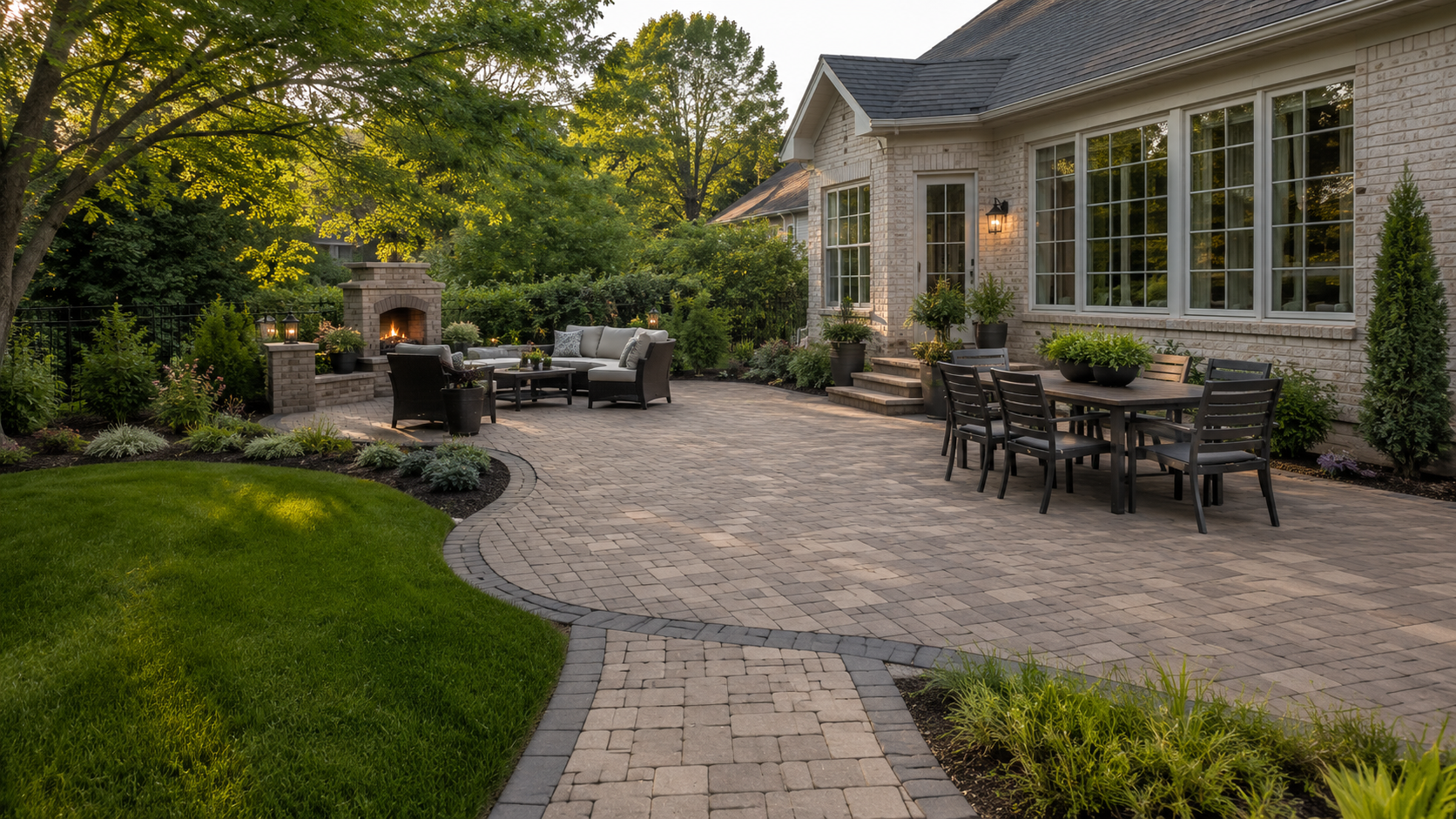
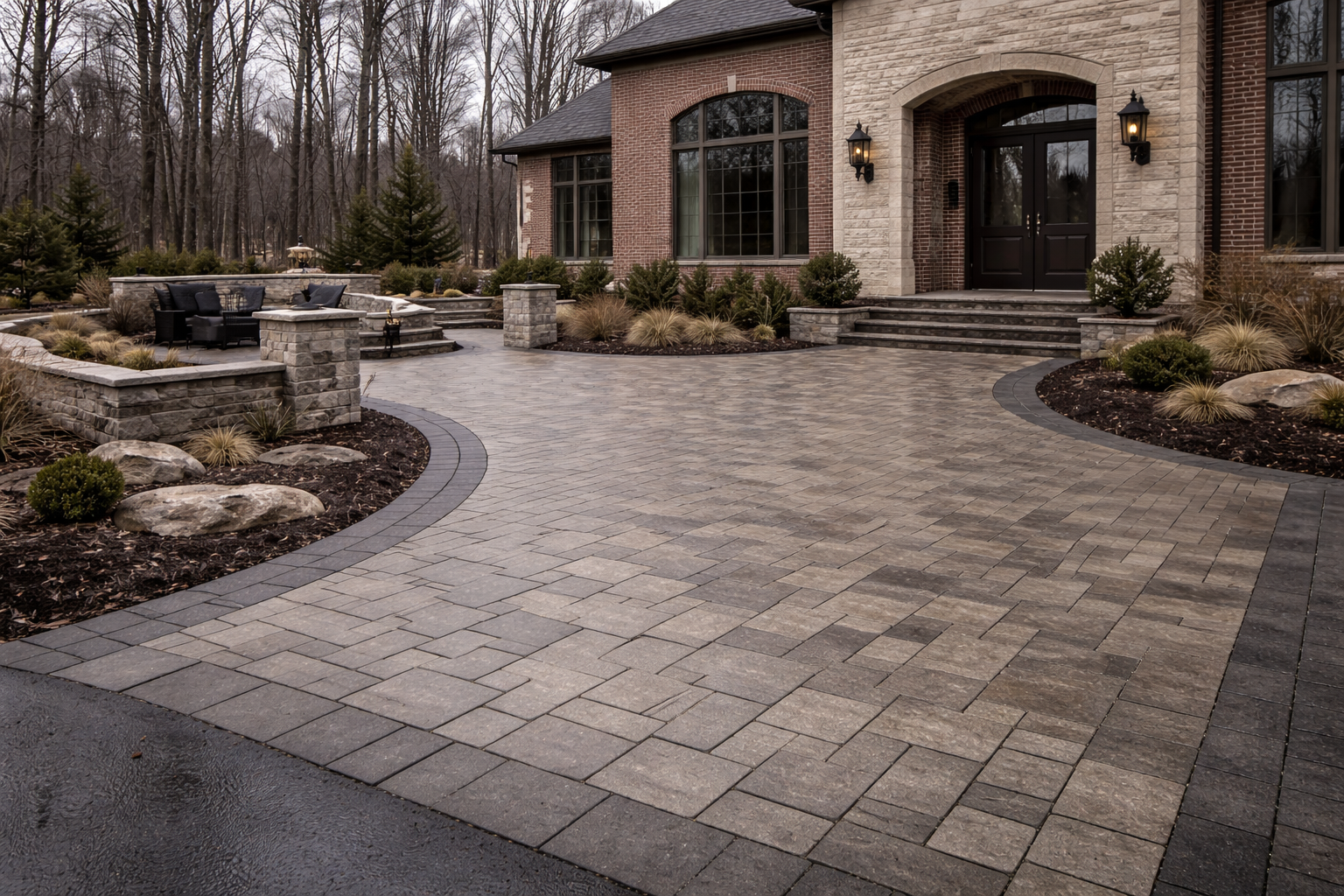
Brick paver patios, and other modular paver systems, respond differently. They consist of individual units supported by a properly compacted base. Joints between units allow for tiny movements without visible cracking. If a small area settles or sustains damage, those pieces can be lifted, the base corrected, and the same pavers reinstalled.
Pavers bring design advantages too. You can create borders, inlays, and subtle pattern changes to define zones such as lounge areas, dining spaces, and walking routes. Many paver lines offer textures that stay comfortable under bare feet and reduce slipping around water.
Custom patios that match your pool shape and house
Once you choose a modular surface, custom patios become possible. Instead of a simple rectangle, the patio can follow the exact curves of your pool, step gently around a spa, or wrap a fire feature. You can widen walkways where traffic is heavy and pinch in closer where planting beds soften the edge.
Material choices let you tune the style. Tumbled pavers create a relaxed, traditional look that pairs well with older brick homes. Larger format units, often in mixed sizes, can create a clean, modern feel that fits contemporary architecture. Coping around the pool edge can either match the patio or deliberately contrast it, as long as the transition feels intentional and smooth to walk across.
What matters most in patio construction near water
No surface choice can overcome poor construction. Around a pool, base preparation is especially important. The subgrade should be excavated to the proper depth, compacted in lifts, and built up with the correct type of base stone. Drainage paths should be planned so water does not sit beneath the patio.
Joint materials matter as well. Sand or stabilizing products need to be suitable for a wet environment. Borders and edge restraints should be installed to keep the field of pavers locked together through many seasons.
When you invest in good patio construction one time, you avoid constant patching later. The result is a solid platform for all the other elements of your luxury outdoor living space.
Plants That Thrive Around Detroit Pools: Color, Texture, And Easy Cleanup
Great hardscape makes a pool yard functional, but plants bring it to life. Around a pool, though, not every plant is a good neighbor. You want beauty without constant mess, resilience without harsh maintenance.
What poolside plants need to handle
The microclimate around a pool is different from the rest of the yard. Plants may face:
- Frequent splash from chlorinated or salted water
- Higher humidity near the water line
- Extra heat reflected from surfaces and the water itself
- Occasional strong winds across an open yard
- Heavy snow piled on beds during winter clean up
Sensitive plants can struggle with leaf burn, root issues, or broken branches. The goal is to choose varieties that shrug off these conditions instead of demanding constant attention.
Planting strategies that work
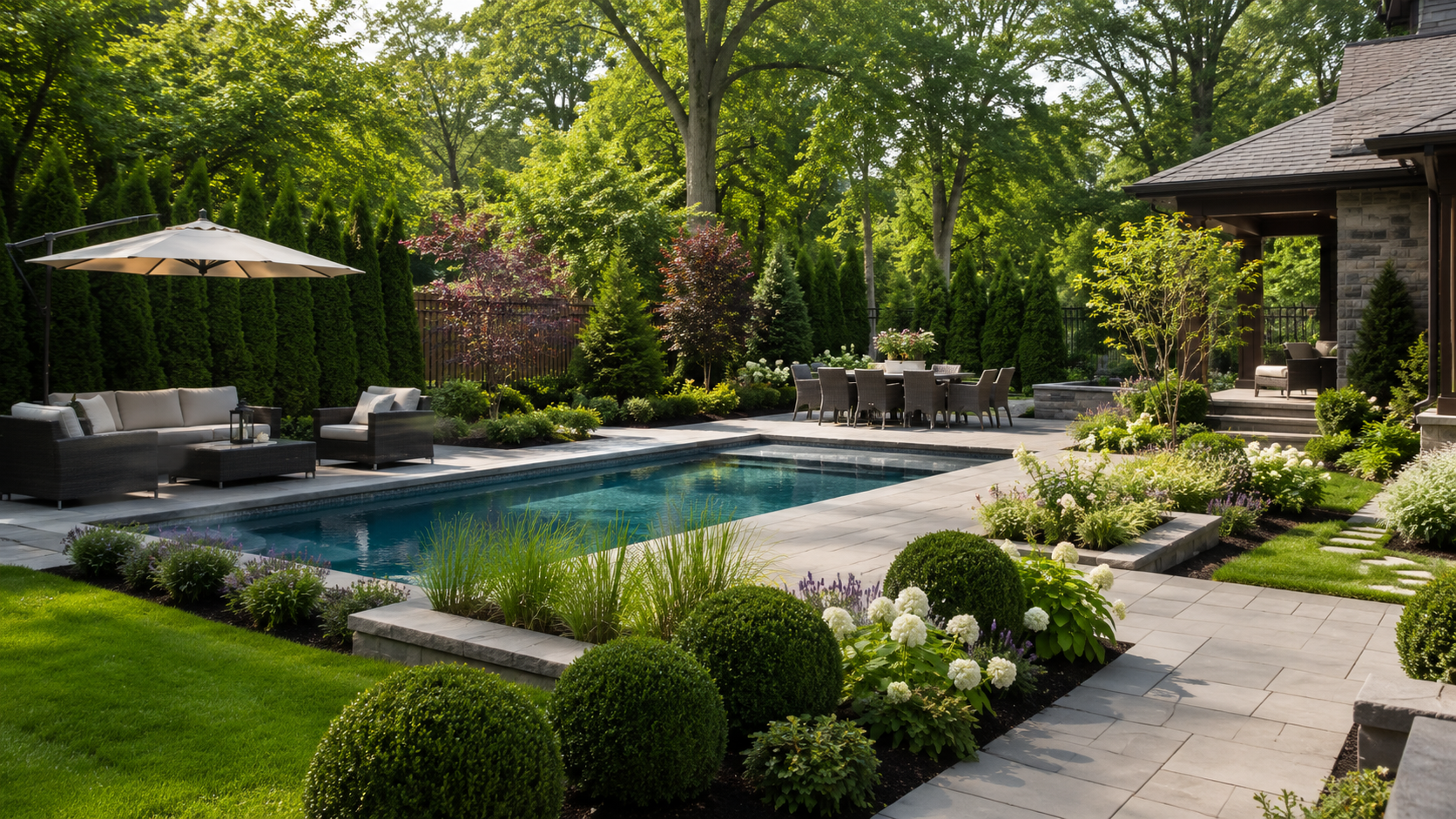
For many Metro Detroit pool projects, a mix of native and well adapted ornamental grasses is a smart starting point. Grasses provide movement, texture, and seasonal interest. Most can be cut back once a year in late winter or early spring, which keeps maintenance simple. When grouped in larger arcs rather than scattered one by one, they create a resort like feel and are easier to clean around.
Shrubs should hold shape and avoid dropping messy fruit into the water. Compact evergreens, certain boxwood varieties, and sturdy flowering shrubs placed away from the immediate splash zone can provide structure.
Perennials bring color but are best set a step back from the pool edge. This keeps flower petals, pollen, and spent blooms out of the water and makes it easier to trim and deadhead without leaning over the coping. Choose varieties that can be cut back cleanly and that do not flop onto walkways.
Evergreens, both large and small, are essential for winter structure. A few well placed specimen evergreens can frame key views and keep the pool area from looking empty during the off season. The trick is to use them thoughtfully so they do not cast deep shade on the water during the brief summer months.
Privacy without creating a wall
Many homeowners want privacy around a pool, especially in close neighborhoods. The instinct is often to install a solid wall of tall plants along a fence line. That can feel heavy and trap moisture or create constant shade.
Layered planting works better. Taller trees or shrubs can sit at the back, with medium sized shrubs and grasses in front, then lower perennials closest to the patio. Gaps between groups let breezes move through and create more interesting views. From inside the pool area, you experience filtered privacy rather than a harsh green wall. From neighboring yards, the plantings look intentional instead of defensive.
Lighting, Safety, And Evening Atmosphere Around The Pool
Once the sun goes down, lighting decides whether the pool area still feels inviting or becomes a dark zone you ignore. Good lighting is both practical and atmospheric.
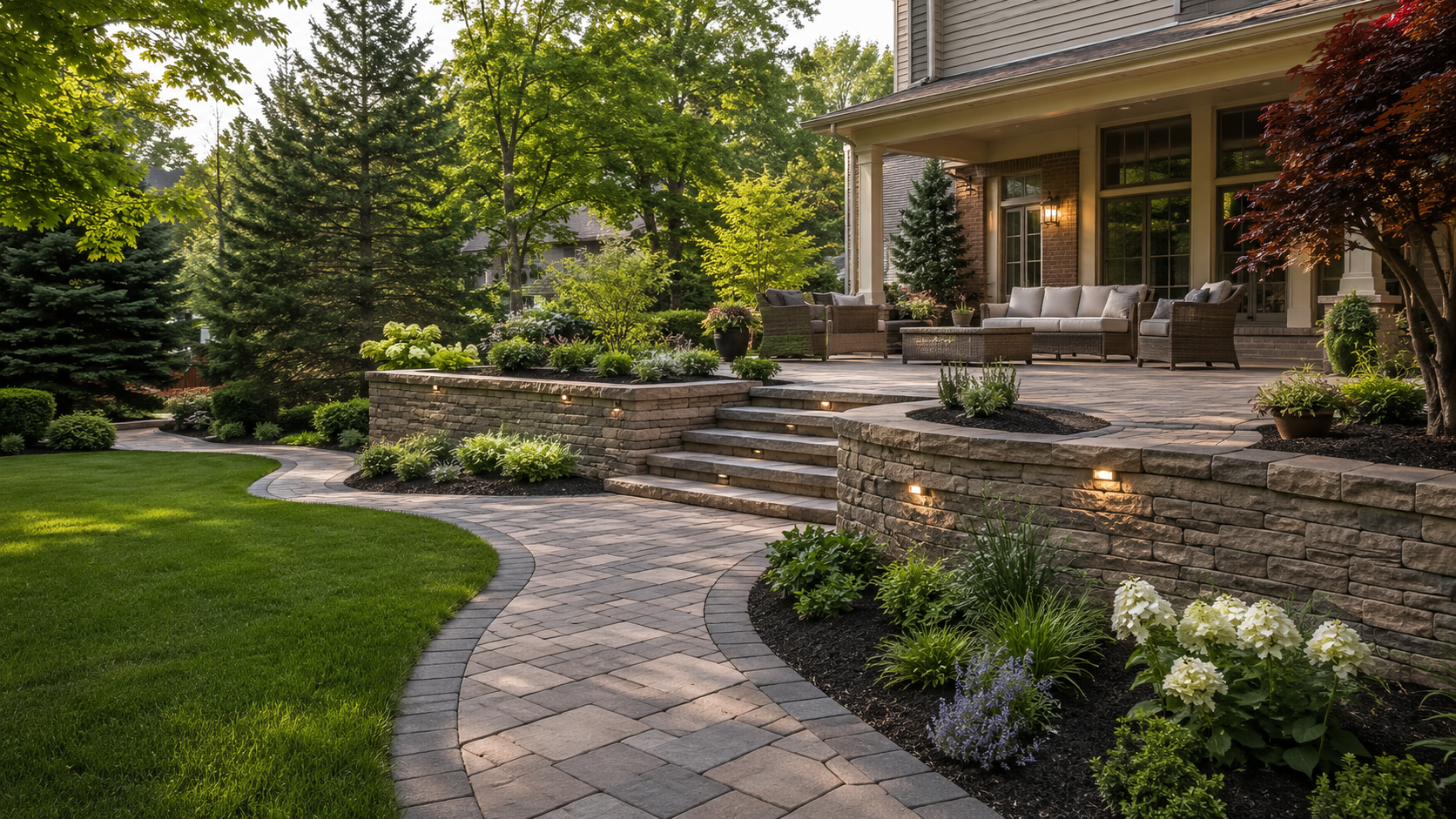
Start with safety. Steps, changes in level, and key transition points between the house and the pool should be gently lit. Low glare fixtures on posts, riser lights on steps, and small path lights along main routes help people move comfortably without feeling like they are on a stage. Outlets and power should be planned with code and convenience in mind so that temporary lighting or devices do not require extension cords across walkways.
Then layer in atmosphere. Soft light washing across brick paver patios can highlight the texture underfoot. Up lighting on feature trees or privacy planting adds depth and vertical interest. A small number of well placed fixtures can make water shimmer even when you are not swimming.
This is also a perfect place to highlight water feature landscaping. Gentle lights above or below a cascade, on the face of a raised spa, or within a sculptural rill can turn moving water into a focal point at night. The goal is not brightness but balance, with light levels that feel comfortable on a summer night and still pleasant on cool evenings by a fire.
Well planned lighting extends the usefulness of the space and supports luxury outdoor living long after daytime swimming ends.
Water Feature Landscaping: Integrating Spas, Waterfalls, And Decorative Water Elements
Many homeowners want more than a simple pool rectangle. Spas, waterfalls, and modern water features can all become part of a coordinated design if treated thoughtfully.
Raised spas with spillways are common additions. They provide warm soaking outside the peak swimming season and add visual interest through moving water. The surrounding patio should allow for safe access in and out, with enough space for people to sit nearby without crowding steps. Stone choices for the spa face and cap should relate to the main patio and coping so the feature feels built in rather than tacked on.
Rock waterfalls and modern sheet falls create sound and visual drama. They can soften views of a fence, create a focal point at one end of the pool, or help define a lounge zone. Good water feature landscaping places plants where they frame the structure without clogging filters with falling leaves. Lower plantings near the edges and taller elements set back slightly maintain sightlines and make maintenance easier.
Some designs include narrow rills or channels that lead water toward the main pool, sometimes crossing the patio via stepping stones. These features demand careful planning so that children and guests can move safely without confusion about where to step.
All of these elements require service and winterization. Access for technicians, safe drainage, and clear shutoff points should be built into the initial design. When those needs are considered early, the features are easier to own and enjoy over many years. Water feature landscaping that looks beautiful but is impossible to service quickly becomes a burden, so a practical mindset is part of a truly luxury plan.
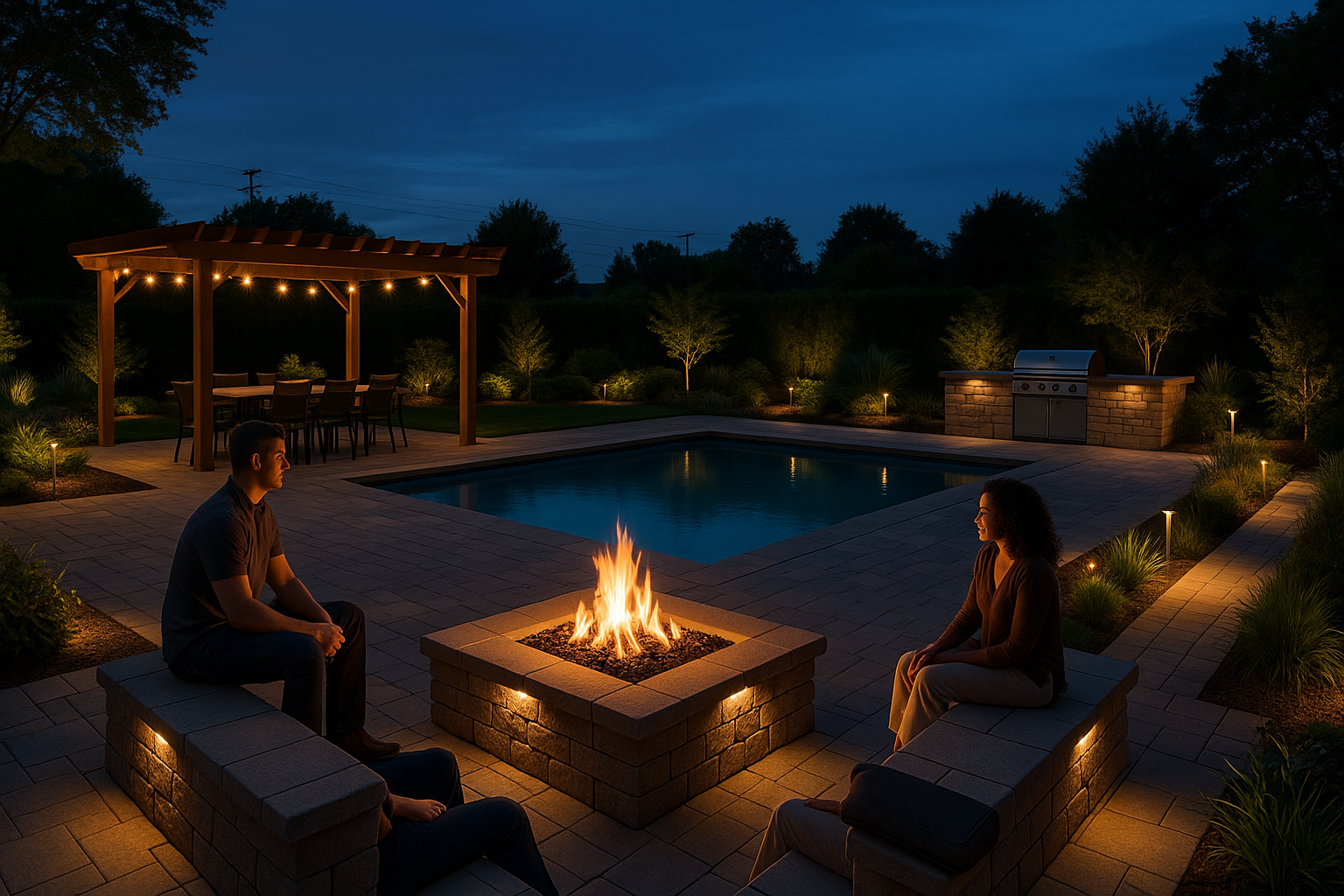
Year Round Luxury Outdoor Living: Fire, Shade, Dining, And Everyday Comfort
A pool is a strong anchor for a backyard, but it is the surrounding amenities that turn it into a lifestyle. When you design for luxury outdoor living, you think about comfort in every season, not just hot afternoons.
Fire features that work with a pool
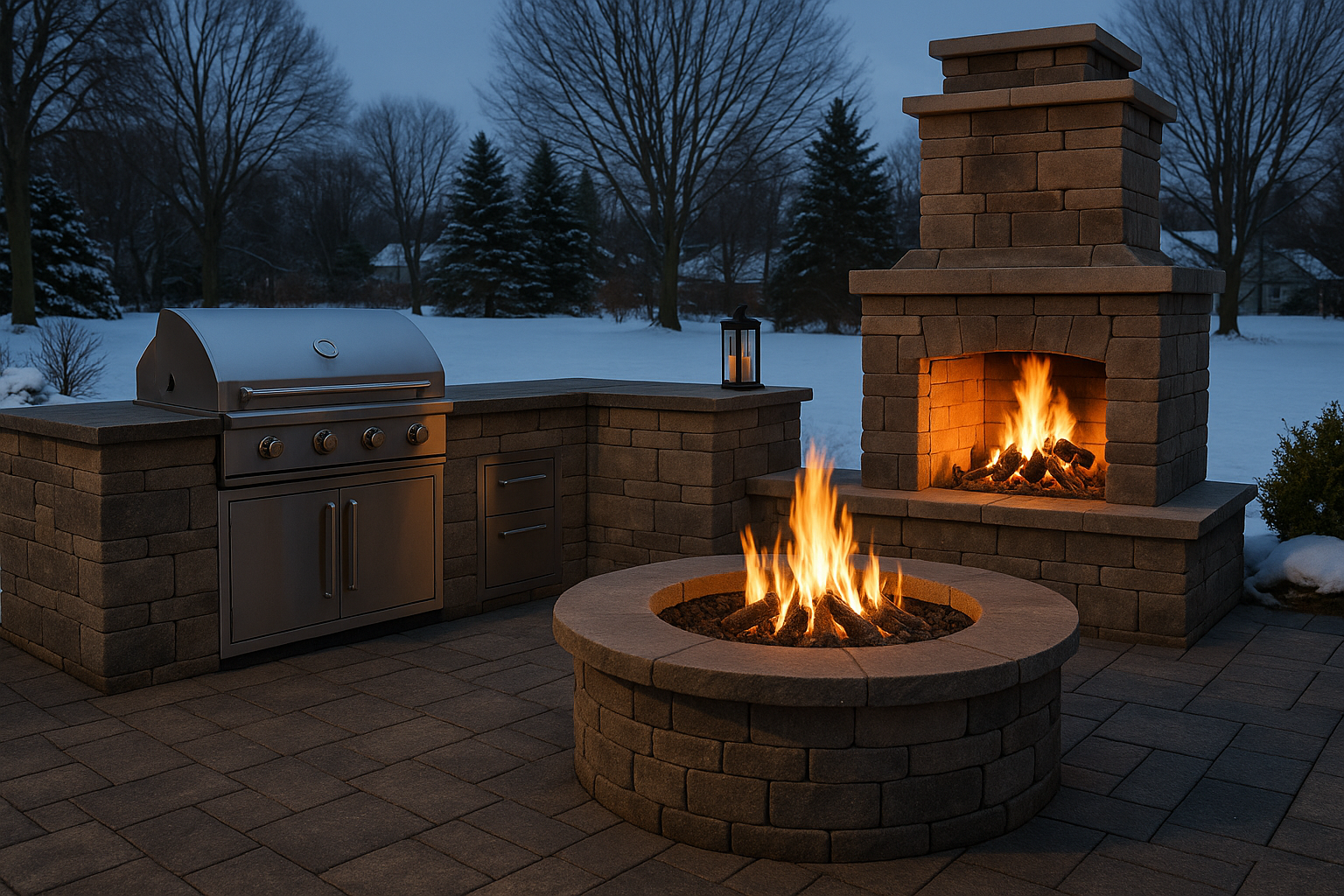
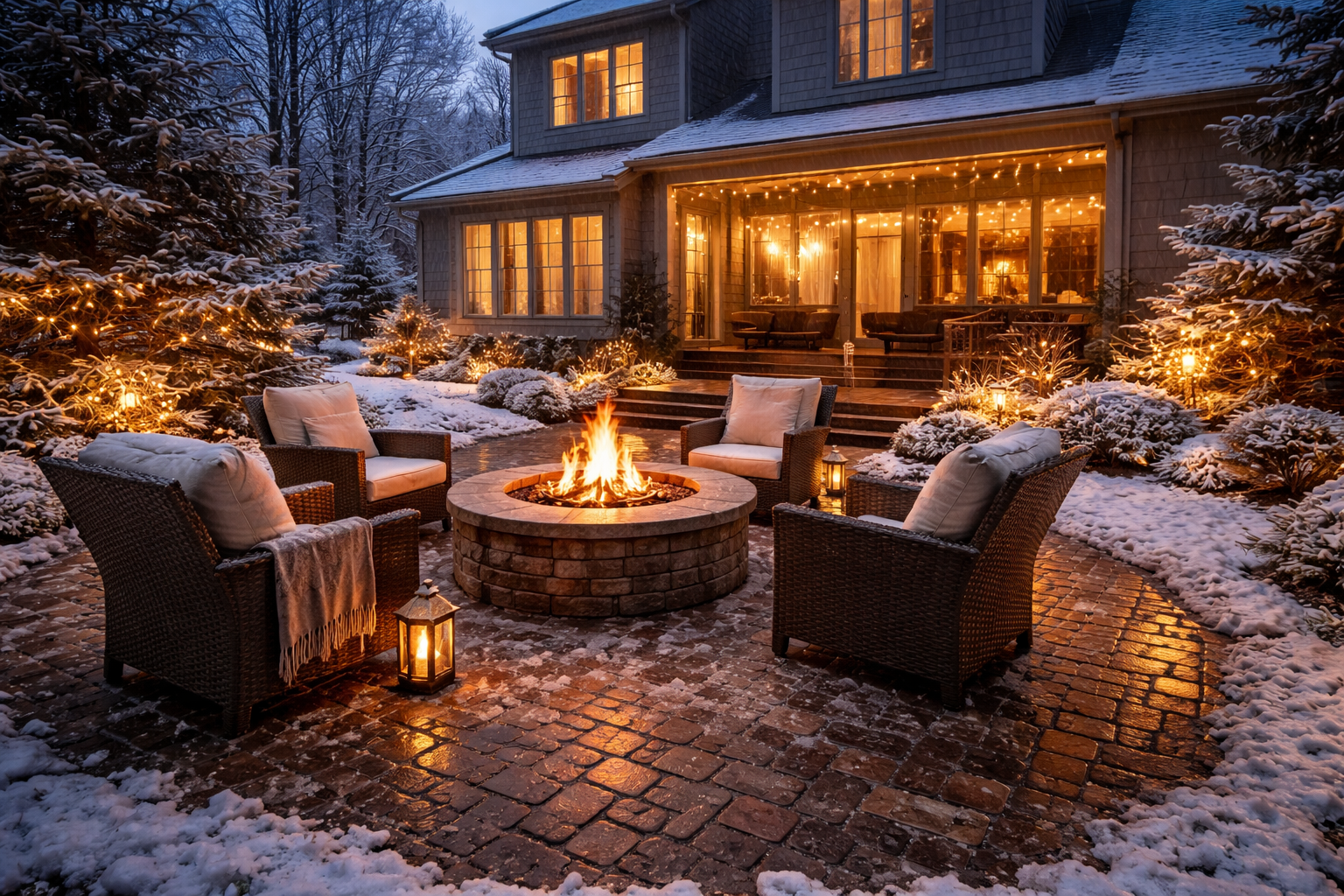
Fire draws people together. Around a pool, a fire pit, fire bowl, or outdoor fireplace can become the natural gathering point once the sun dips. Placement matters. A fire feature should sit where smoke will not blow directly into the main seating area or across the pool surface. It should be far enough from the water to feel safe, yet close enough that people can enjoy both at once.
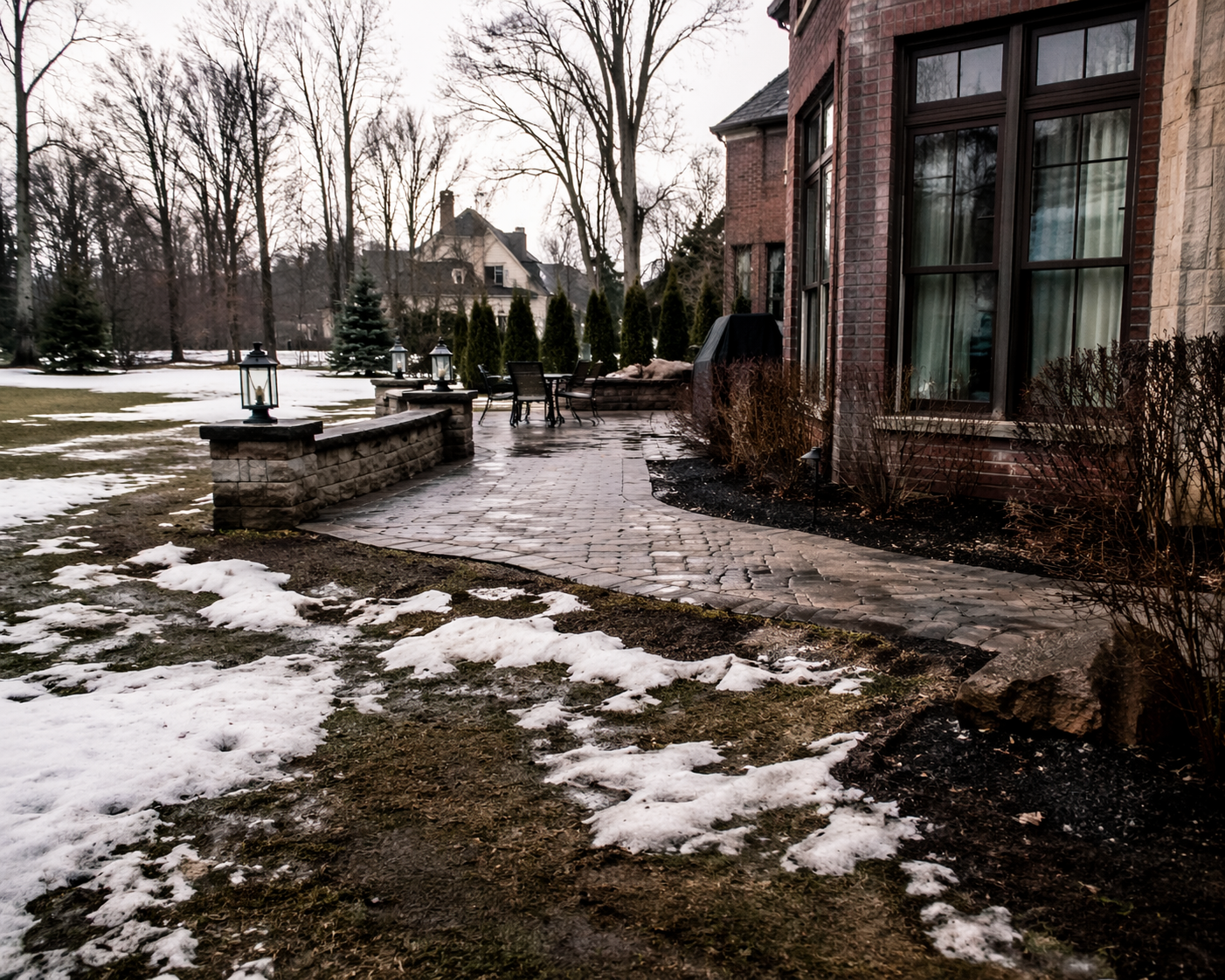
Seating walls built from the same materials as your custom patios can wrap around the fire area and help retain grade changes. Moveable chairs and loungers can be layered in to give guests options. When the temperature drops in early fall, this zone keeps the backyard active long after daily swimming slows down.
Shade, structures, and weather protection
Summer sun on a pool can feel great in short doses, but most people also want shade. Pergolas, shade sails, and solid roof pavilions all offer different levels of coverage. The right choice depends on your house architecture, views, and how you intend to use the area.
Shade structures placed on one side of the pool can protect dining and lounge zones while leaving other areas open to full sun. In shoulder seasons, a covered pavilion can still be comfortable with the addition of a heater or simply a well placed wind break. When planning posts and beams, think ahead about furniture layout and line of sight so that structural elements do not block the best views.
Outdoor kitchens and dining by the pool
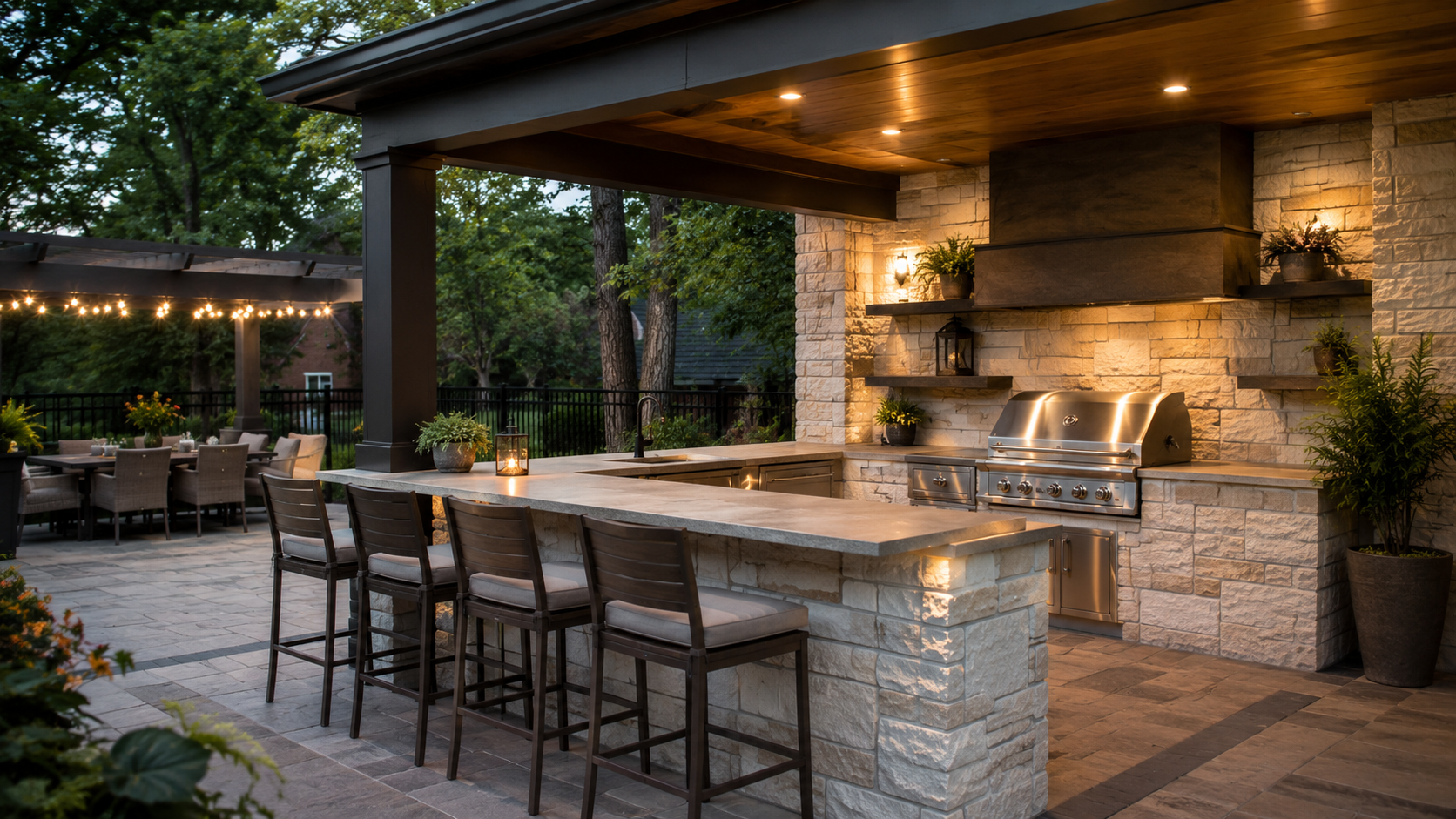
If you like to entertain, an outdoor kitchen near the pool can keep the entire gathering in one place. Grills, side burners, refrigerators, and storage can all be built into a low wall that shares materials with the main patio. Countertops and cabinets should be specified in materials that handle weather swings and regular use.
Position the cooking zone so that smoke drifts away from the main seating areas and away from doors and windows. Walkways between the house, the kitchen, and the pool should be clear and wide enough for two people to pass without bumping into each other. A well planned dining table location, perhaps on a slightly different section of the patio, lets guests enjoy food with views of the water without feeling as if they are in the splash zone.
When you look at all these elements together, you start to see the pool area as an extension of your home. The water is one feature among many, and the entire composition supports your version of outdoor life in every month of the year.
Maintenance And Care For A Poolside Landscape
No outdoor space is truly maintenance free, especially one that includes water, hardscape, and planting. The key is to design a poolside landscape that aligns with the amount of care you are willing to invest.
During the swimming season, main tasks include skimming and cleaning the pool itself, but landscape choices affect how much debris reaches the water. Beds placed at the right distance from the coping, with plants chosen for tidy habits, reduce the amount of leaves and petals that need to be fished out. Occasional checks on joint sand in paver areas and quick sweeps of surfaces keep brick paver patios looking sharp and safe under bare feet.
Trimming plants to keep paths open and sightlines clear is another regular task. When plantings are grouped rather than scattered, this work becomes faster. Irrigation, if included, should be adjusted through the season so that water is not wasted on surfaces or sent into the pool.
Off season maintenance has its own rhythm. Leaf cleanup around the pool cover prevents rot and reduces the risk of debris blowing into water when covers are opened again. Grasses and many perennials can be cut back at the end of winter. This often takes place in a single focused session rather than constant small jobs if the original design is efficient.
After freeze and thaw cycles, it is wise to walk the patio and steps to check for any lifted corners or minor settling that can be corrected before they become bigger issues.
Many homeowners choose to pair their pool project with a professional maintenance plan for beds and hardscapes while handling basic pool care themselves. Others prefer to do all of it personally. Either way, a clear plan keeps the space looking polished instead of slipping quietly into clutter.
Frequently Asked Poolside Landscaping Questions
Which patio surface is best around a pool in a cold climate
There is no single correct answer, but some surfaces perform better than others when winters are long. Poured concrete can work if it is installed correctly and joints are planned, yet it is rigid and can crack as the ground moves. Natural stone looks beautiful, but certain types can flake or become slick when wet and icy. Brick paver patios and other modular pavers are often a strong choice for Detroit because they combine durability with flexibility. A well built base and quality pavers give you a surface that can be adjusted if small areas settle, instead of needing full replacement.
What kind of plants will not make a huge mess in my pool
Look for plants with tidy habits near the water. Ornamental grasses that are cut back once a year, compact shrubs that hold their leaves or needles, and perennials that do not drop large, mushy flowers into the pool are all good candidates. Place the most delicate or messy plants farther from the coping so that wind and routine growth do not constantly send debris into the water.
Can I update the landscaping around an existing pool without rebuilding everything
Often you can. Many pool refresh projects focus on replacing cracked or dated concrete with custom patios, adding steps or a seating wall, and redesigning the planting beds. As long as the shell and basic structure of the pool are sound, the surroundings can usually be transformed without a full rebuild. A site visit is the best way to understand what is possible and where it is smart to invest.
How do I make my pool area feel useful outside of summer
Think about features that you will enjoy even when no one is swimming. Fire features, comfortable seating, well planned lighting, and attractive planting give you reasons to visit the space in spring and fall. A spa or hot tub that can run in cooler weather can also keep the area active. The more your design supports sitting, eating, and relaxing in different conditions, the more you will use the space year round.
Conclusion And Next Steps
A great pool yard in Detroit is not just about the water. It is the product of careful poolside landscaping, smart patio construction, resilient plants, and a clear plan for how you want to live outdoors in every season. When you combine solid structure, thoughtful materials, and a layout that fits your routines, you end up with a backyard that feels like a personal resort rather than a project that only looks good on opening weekend. If your project includes the pool itself, learn more about custom luxury pool construction in Detroit.
You do not need a final blueprint before you start. What you need is an honest look at your yard, your climate, and your lifestyle. Walk the space and note where the sun falls, what you see from your windows, where you wish you had shade or privacy, and how far you want to carry food or towels. Collect a few reference photos that capture the feeling you want, not just the exact shape of a pool.
From there, a designer or contractor with real experience in Detroit can help you translate that vision into a plan. As you refine it, keep returning to the same questions. Will this be safe and comfortable to move through. Will it still look composed when the pool is closed. Will it support the kind of luxury outdoor living you actually want day to day.
If the answers are yes, you are on your way to a poolside landscape that delivers that resort feeling every time you step outside, no matter what the calendar says.