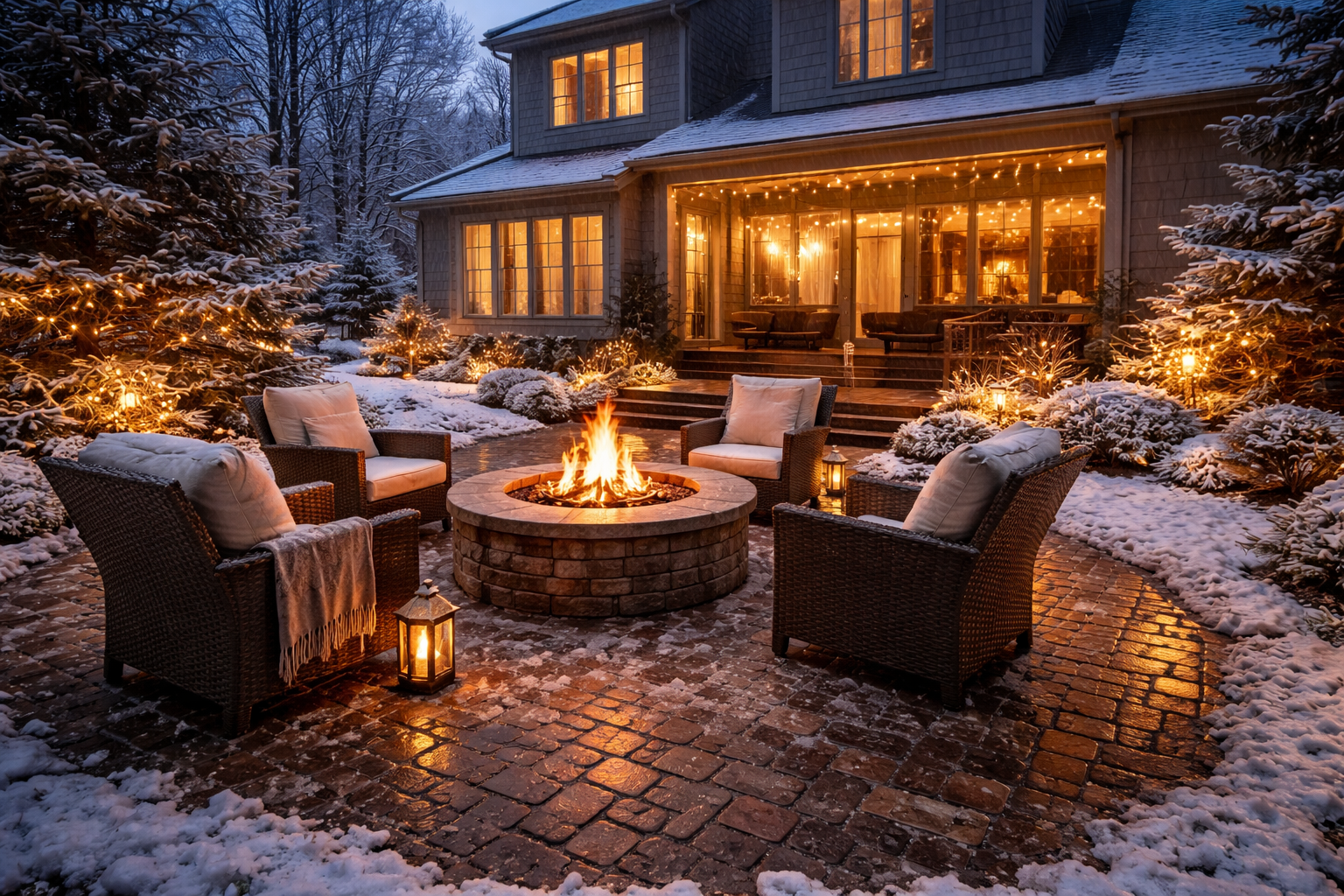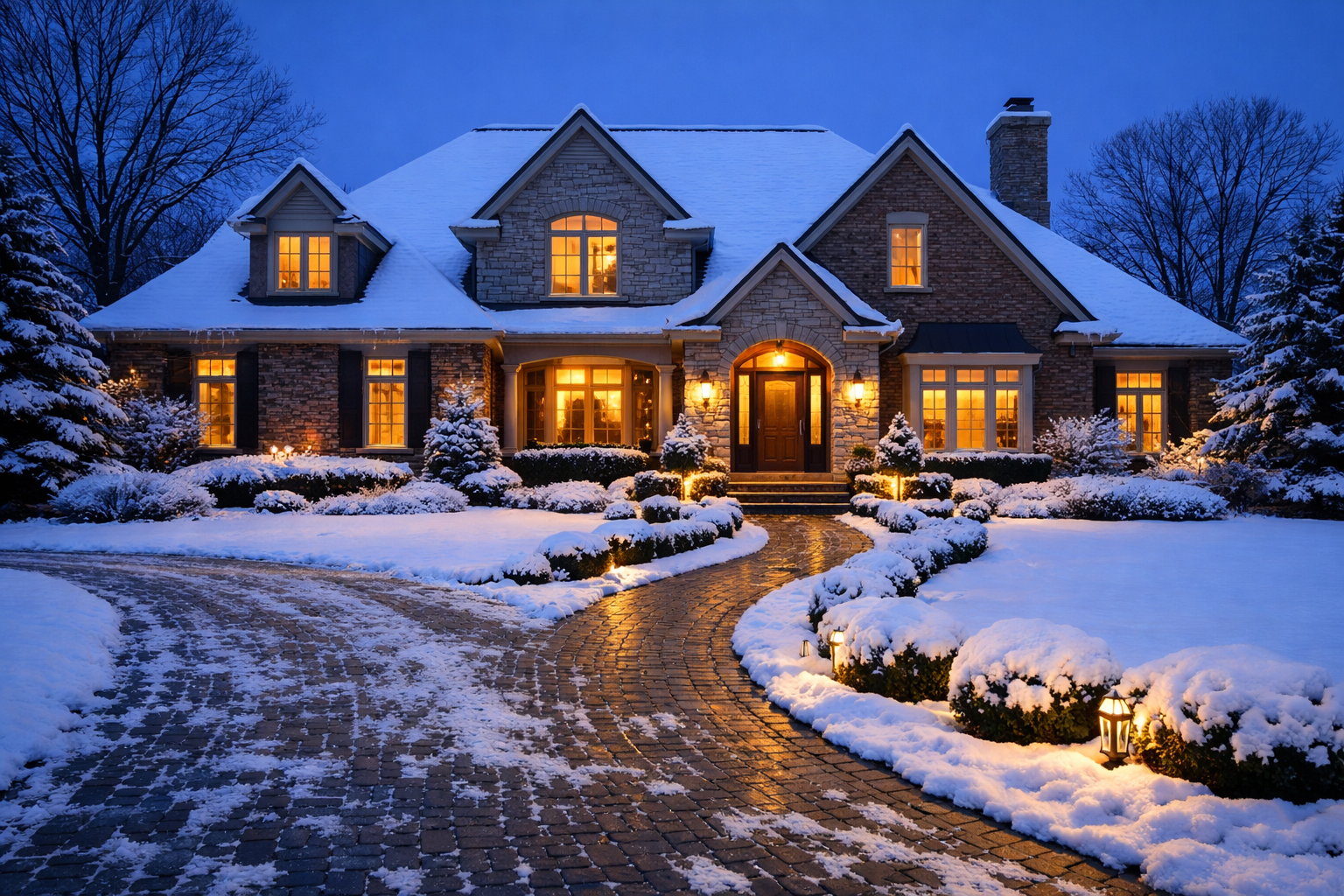
Hardscape Design in Metro Detroit: How Patios, Walkways, and Walls Come Together as One Plan
Hardscape design is the planning work that turns patios, walkways, walls, steps, materials, and elevation changes into one connected outdoor plan. Before any stone is set or any patio is built, the design decides how the space should move, function, drain, connect, and feel. For Metro Detroit homeowners, that planning matters because outdoor spaces have to work with real grade changes, existing architecture, seasonal use, and long term durability. The best hardscape projects are not built as separate features. They are designed as one complete system first.
What Hardscape Design Means Before Anything Gets Built
A hardscape plan answers the questions that become expensive or frustrating when they are left for the jobsite. Where should the patio sit? How should people move from the house to the yard? Where do steps belong? What materials should repeat across the project? Which elevations need to be resolved before construction begins? Good design makes those decisions before the build starts.
A connected design is more useful than a collection of individual features. A patio designed without considering the walkway that leads to it can end up at the wrong elevation. A wall designed in isolation can interrupt sightlines or block the natural way a homeowner moves through the yard. Designing each piece separately tends to produce a yard that has nice elements but no flow.
A unified plan does the opposite. It treats the patio, walkway, wall, and surrounding landscape as parts of one system, with circulation, elevation, and material choices working together. This is where professional hardscape design and installation in Metro Detroit should begin, because a resolved plan gives the finished space a sense of order from the first day it is used.
Reading the Property Before Anything Is Drawn
Good design starts with reading the property. Before any sketch is drawn, a designer looks at how the land already behaves. Where does the grade fall, where does water move, where do people enter the yard, and how does the home shape the way the space gets used? Those answers shape every decision that follows.
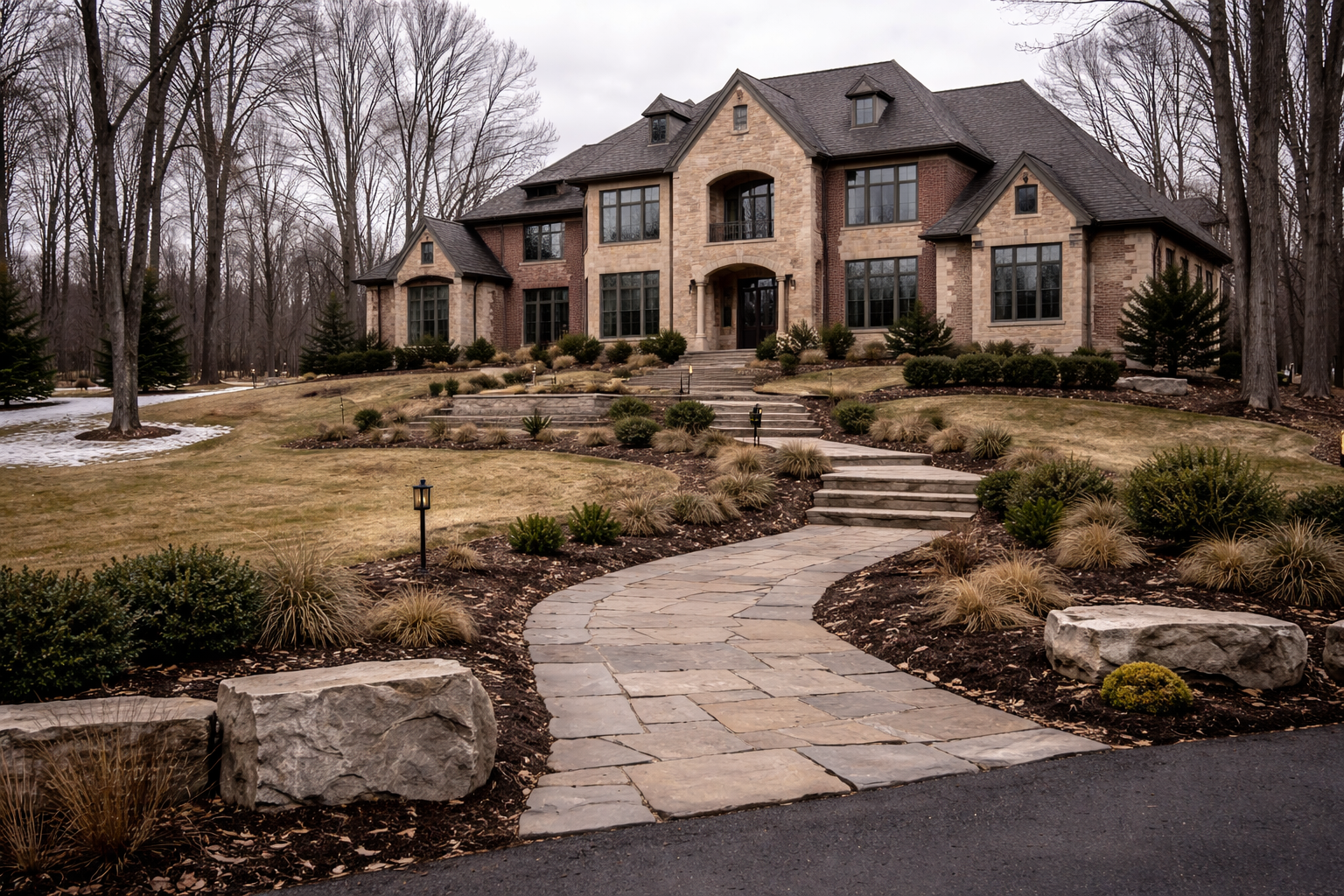
Grade is one of the most important inputs. A property that slopes from the house toward the back yard creates one set of opportunities. A property that slopes toward the home, or sideways across the lot, creates another. The design has to respect the grade that exists and shape the project around it.
Sightlines and access matter just as much. The view from the kitchen window, the path from the side gate, and the connection between the back door and the patio all influence layout. In Metro Detroit, where many properties have mature trees, defined entry points, and established home architecture, the design should respond to what is already there.
How a household uses the yard matters too. A family that entertains every weekend needs different circulation than one focused on quiet evenings. A strong design responds to both the property and the way the homeowner actually plans to use it.
How Patios, Walkways, Walls, Steps, and Transitions Work as One System
A well designed hardscape behaves like one space, not several separate features. Patios create gathering zones. Walkways control movement. Walls and steps manage elevation. Transitions are the small details where one element hands off to the next. When these are designed together, the whole space feels intentional.
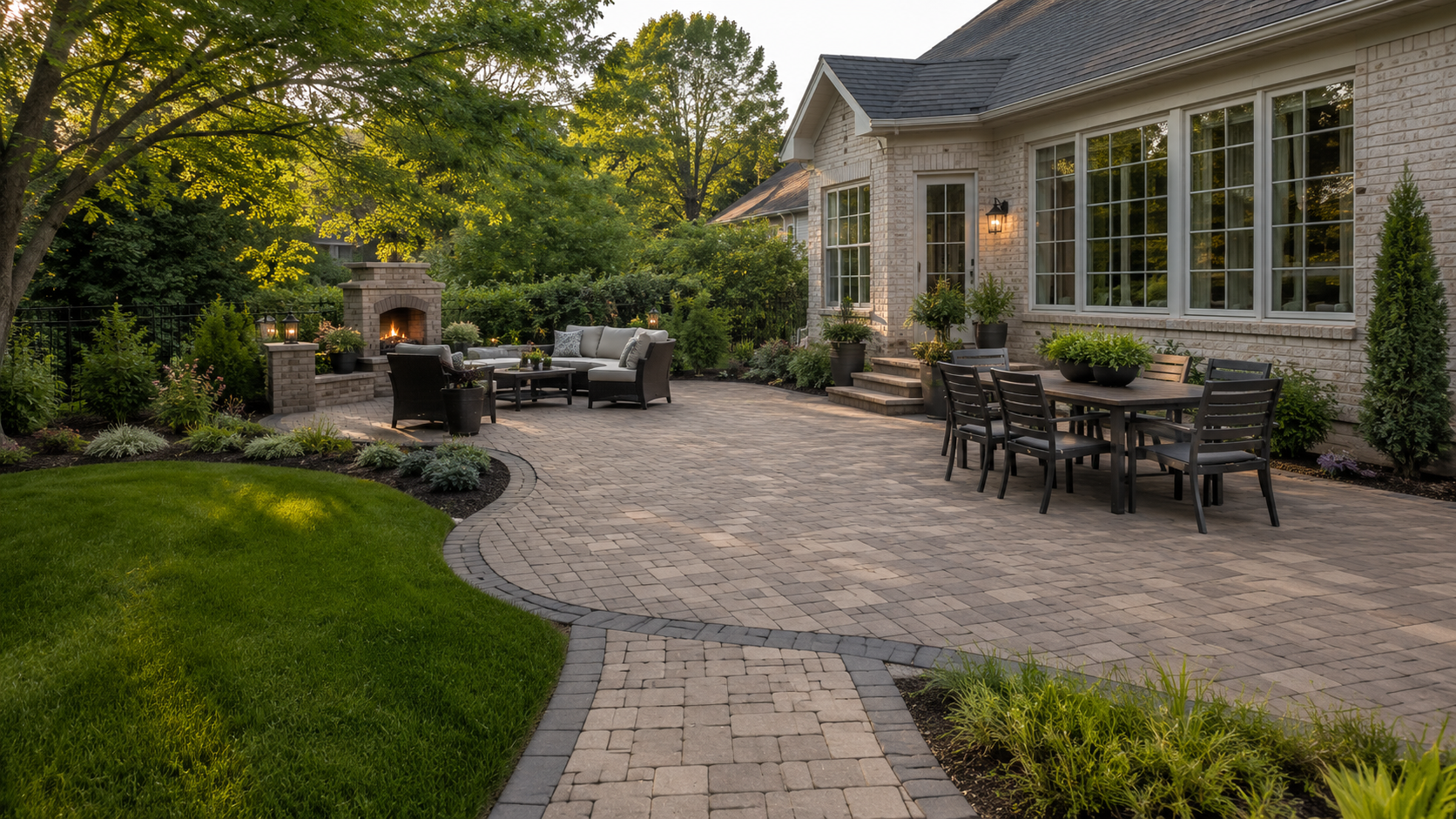
Patios usually anchor the plan. They are the largest hardscape footprint and define where the household lives outside. Their size, shape, and connection to the house drive many of the surrounding decisions.
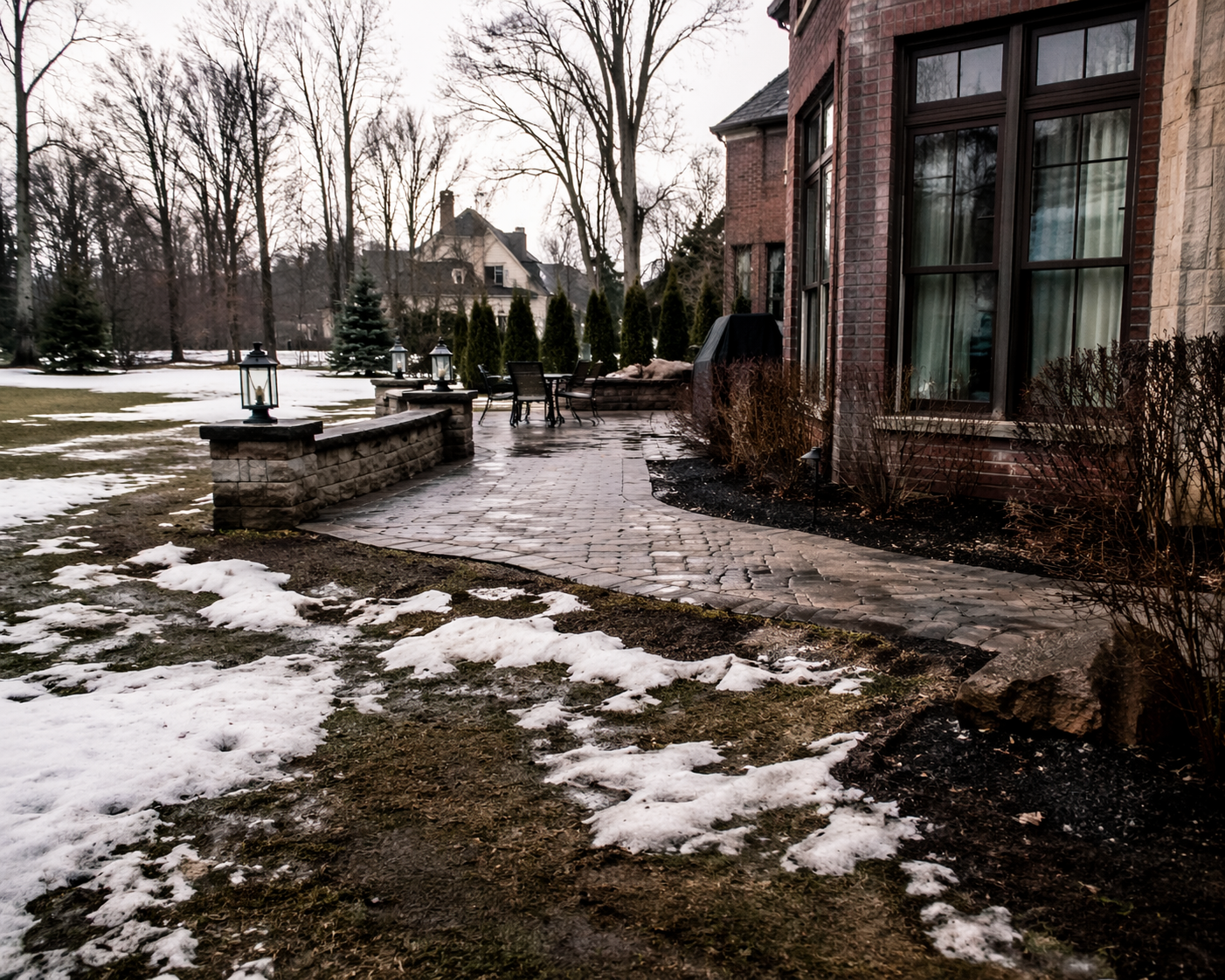
Walkways thread the rest of the design together. A walkway is more than a path. It is a directional choice that shows guests how to arrive and shows the household how to move from one zone to another. Strong design uses walkways to control pacing and visual rhythm.
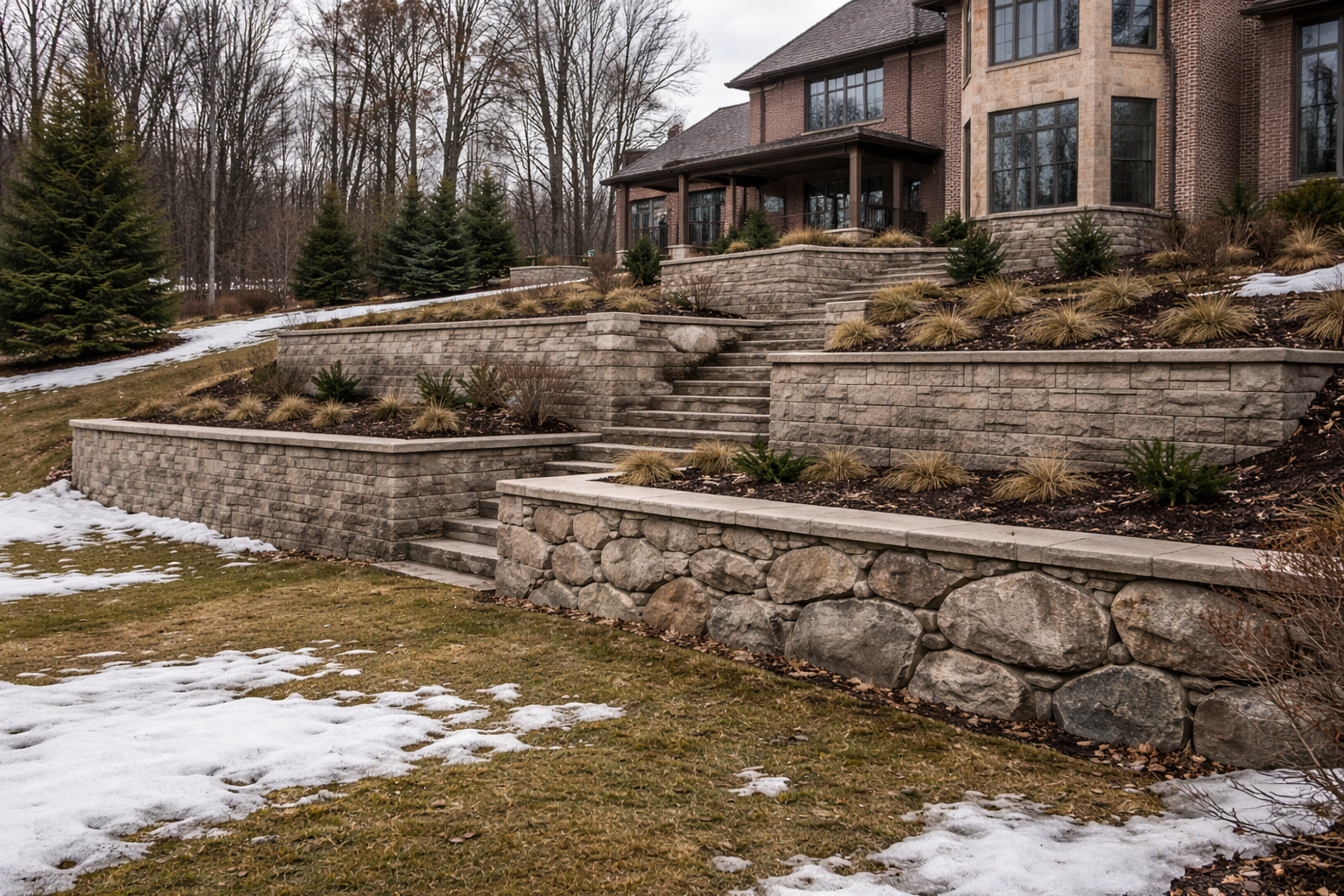
Walls and steps handle elevation. On lots with real grade changes, they are often what make a usable outdoor space possible. A wall can hold back soil, create a level patio platform, or define a seating edge. Steps connect zones and set the scale of an entry sequence.
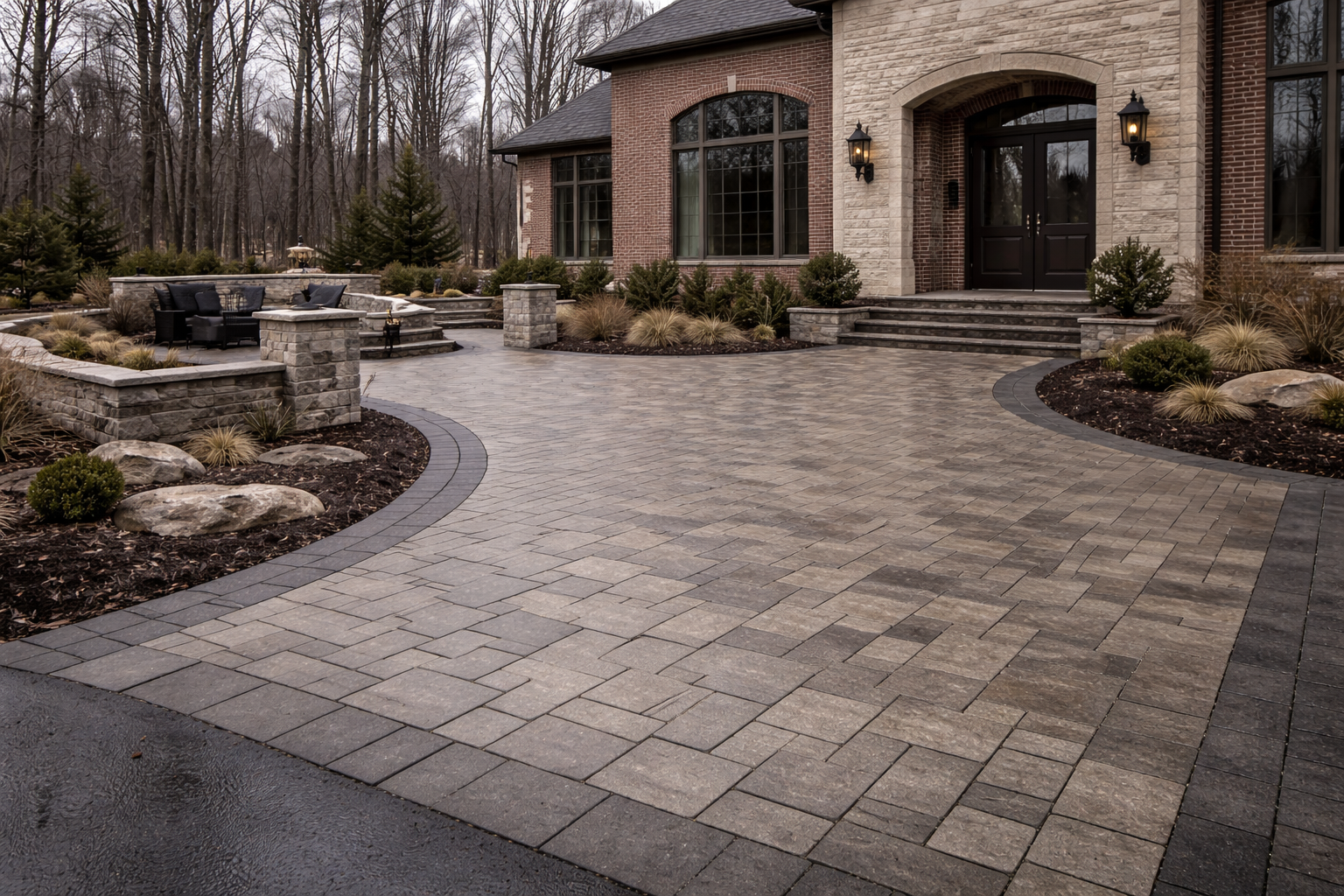
Transitions tie everything together. The way a step meets a patio, or a walkway meets a driveway, is what makes a project read as a single composition. When patios connect cleanly to brick paver patios and stone walkways and related elements as part of one unified design, the transitions become quiet and natural rather than abrupt.
Material Cohesion: What Makes Luxury Hardscapes Feel Designed
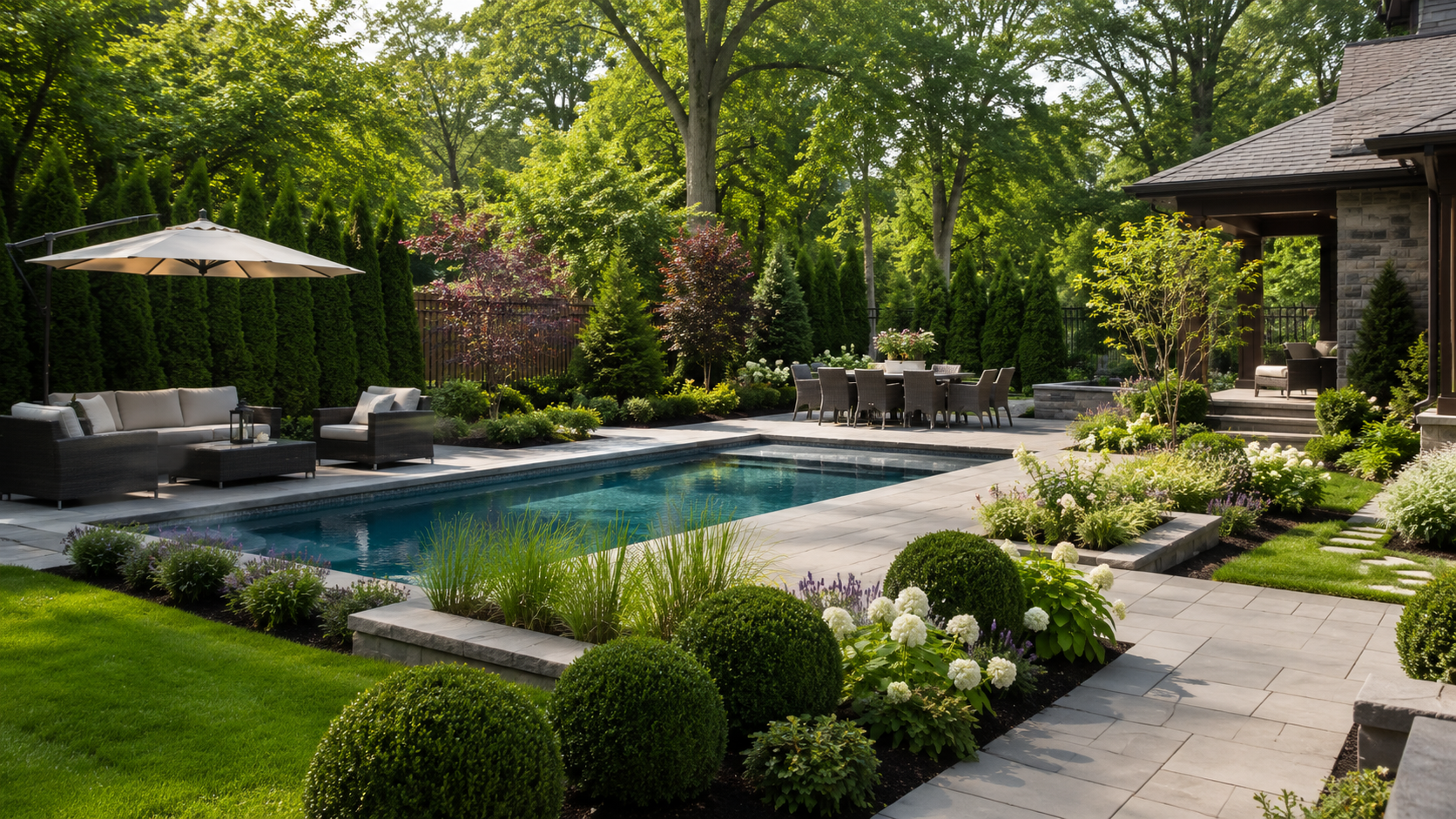
Luxury hardscapes do not come from the most expensive material. They come from cohesion. A single well chosen material family, used with restraint and good proportion, almost always reads as more refined than a yard packed with premium products that do not relate to each other. The discipline is in choosing fewer materials and using them well.
A unified palette is one of the clearest signs of strong design. When the patio pavers, walkway, wall caps, and step treads share a coordinated material story, the eye moves easily across the space. Repetition gives the design rhythm. Restraint gives it confidence.
Mismatched materials produce the opposite effect. A patio in one style, a walkway in another, and a wall in a third can make a yard feel assembled rather than designed. Even when each element is high quality, the lack of cohesion reads as unintentional.
Proportion matters just as much. A small patio with oversized pavers can feel cramped. A long walkway in narrow units can feel busy. Luxury hardscapes get the relationship between scale and material right, so the space feels calm rather than crowded.
How Design Decisions Shape Installation Quality
A resolved design protects the install. When the plan is clear, the installer is not solving major layout problems in the field. Elevations are set, transitions are defined, materials are specified, and the project moves forward without the kind of on the fly decisions that lead to compromises. Good hardscape installation begins with good design.
Elevations are a common pressure point. If the patio elevation, door threshold, walkway approach, and any steps are not coordinated in advance, the crew may have to choose between several less than ideal options on site. None of those options match a plan resolved on paper.
Transitions tell the same story. A clean transition between a patio and a walkway, or between a step and a wall, depends on the design specifying how they meet. When the design leaves those moments unresolved, the install becomes guesswork.
Material decisions also affect install quality. Certain materials require tighter cuts or coordinated borders. A design that selects materials thoughtfully and shows how they fit together makes the build cleaner and more predictable. The downstream durability story, including how hardscape installation holds up through Michigan winters, is easier to deliver when the design is sound from the start.
Phasing a Larger Hardscape Project Without Creating Rework
Not every homeowner wants to build everything at once. The right approach is to design the full vision first, then build it in stages. A complete design plan lets later phases connect to earlier ones cleanly, so nothing has to be torn out or redone when the next stage arrives. Phasing only works when the design treats the whole project as one system.
Design dependencies decide the build order. A retaining wall that creates the level platform for a future patio has to come before the patio. Steps that align with a future walkway need to be planned now. Utility runs, drainage routing, and access points are easier to handle when they are anticipated in the design.
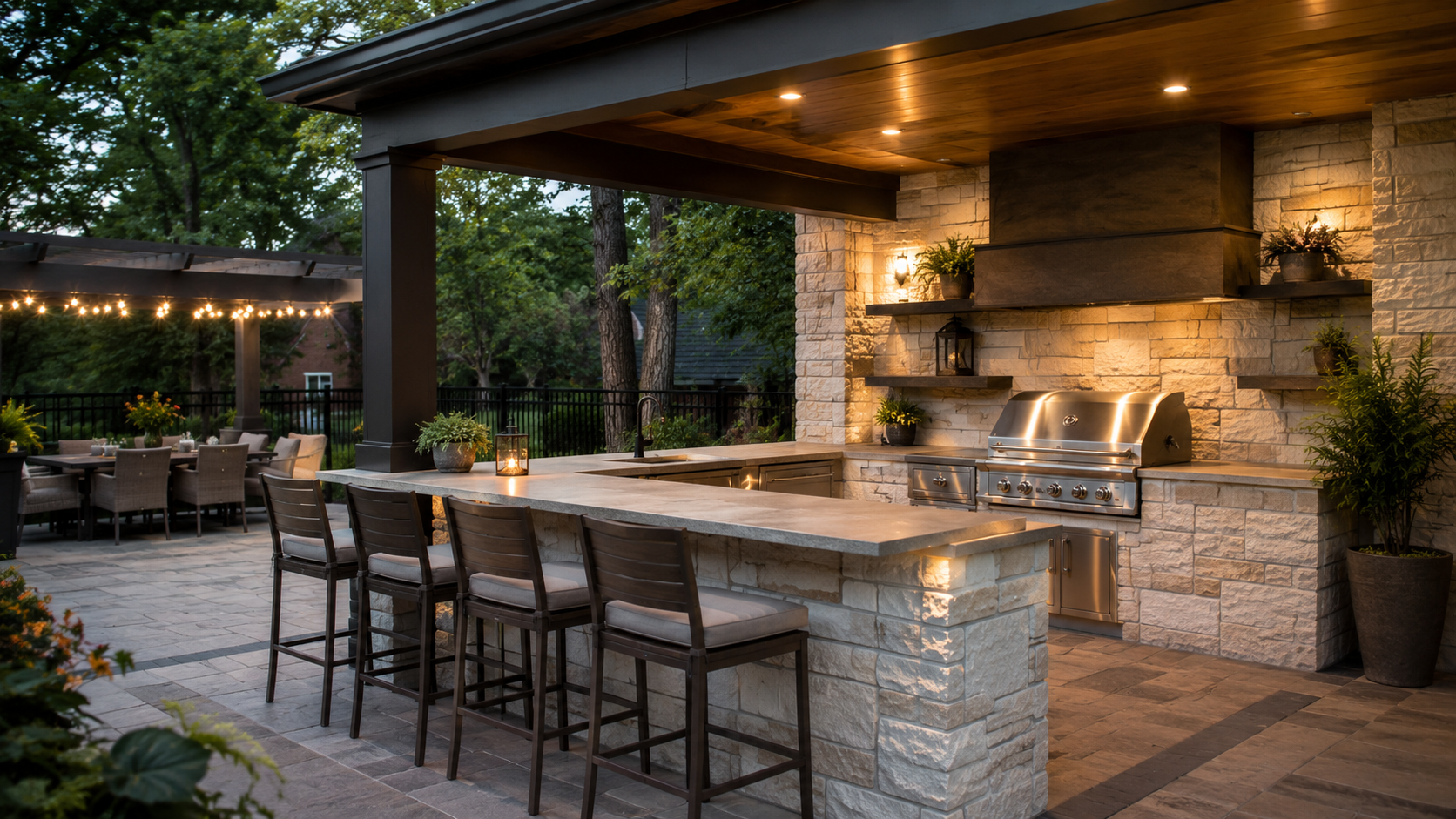
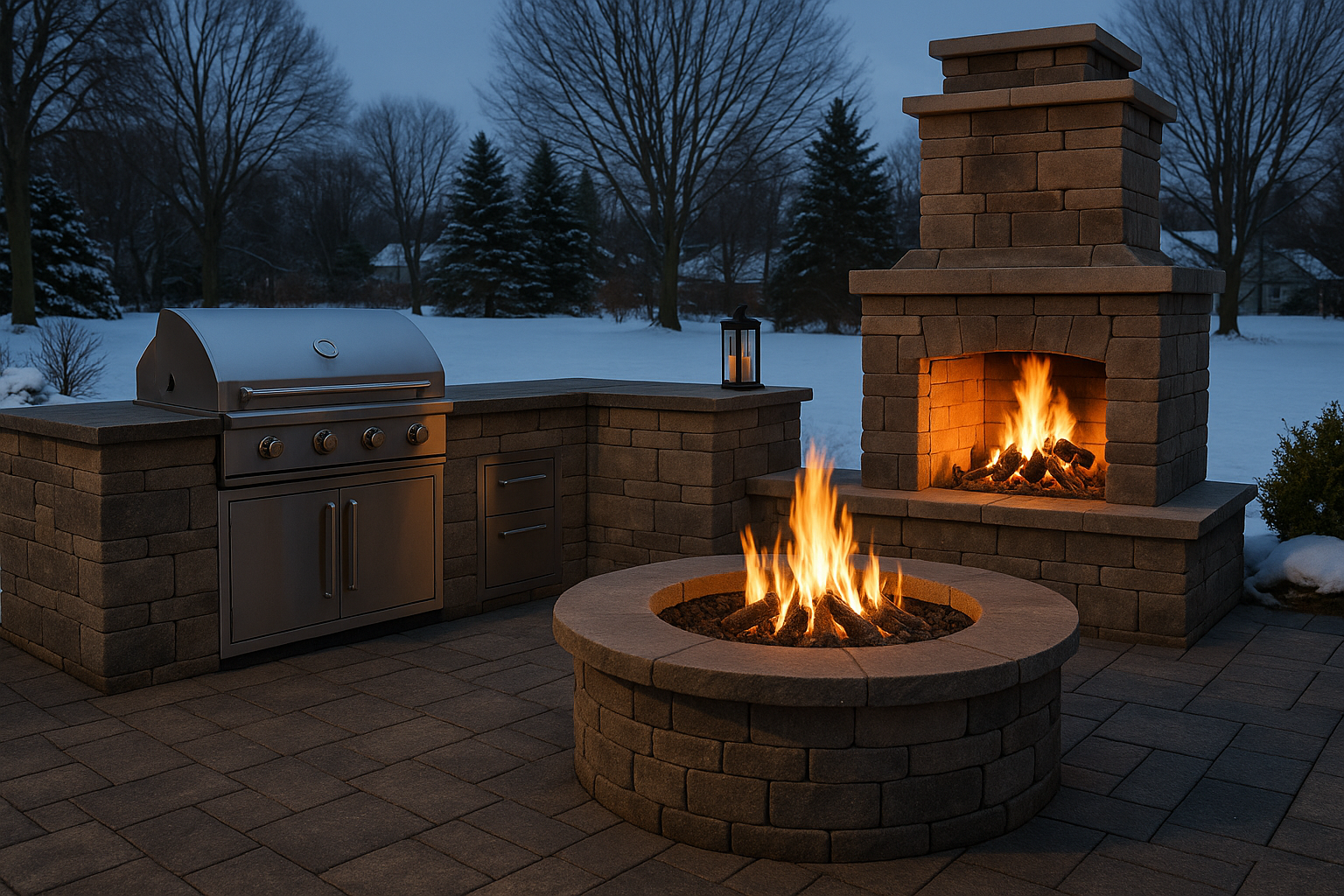
Skipping the full plan and adding features over time is what creates rework. A patio built without considering a future outdoor kitchen may need to be cut into later. A walkway placed without knowing where a future wall will sit can end up misaligned. When project scope and phasing raise cost questions, homeowners can review what hardscape projects actually cost in Metro Detroit separately without turning the design plan itself into a pricing exercise.
A larger landscape installation is easier to manage when the sequence is clear. For homeowners who want a closer look at how the work unfolds from planning to handoff, how a project moves from design to final walkthrough explains the process. Phasing inside that framework is a design decision first.
Hardscape Design Mistakes Homeowners Should Avoid
Most hardscape problems are design problems, not build problems. The same mistakes show up again and again, and they are easiest to prevent when design is taken seriously. Knowing the common pitfalls helps a homeowner ask better questions before any work begins.
Designing one feature in isolation is the most frequent mistake. A patio sketched without the walkway that will reach it, or a wall placed without considering the patio it will support, creates a chain where each later decision has to compensate for the first.
Skipping the site read is another. Treating the property as a blank slate, rather than reading its grade, water movement, sightlines, and access, leads to designs that do not fit the land.
Choosing materials before the layout is understood is a third. Materials should follow the design, not lead it. Picking pavers from a showroom and then forcing the layout to match often produces a project that looks good in pieces but not as a whole.
Treating walls, steps, and transitions as afterthoughts also weakens a project. These features carry the elevation and connect the zones, so they deserve as much design attention as the patio surface.
Adding features year after year without a master plan is the slowest version of the same problem. A new patio one year, a wall two years later, and a walkway after that can produce a yard with nice pieces and no overall design language.
Hardscape Design FAQs for Metro Detroit Homeowners
What is hardscape design? Hardscape design is the planning stage that comes before construction. It defines how patios, walkways, walls, steps, materials, and grade work together as one connected outdoor plan. The work focuses on getting the layout right before anything is built.
What is the difference between hardscape design and hardscape installation? Design is the plan. Installation is the build. Hardscape design is where elevations, transitions, materials, and the relationships between features are decided. Hardscape installation is the physical work of constructing those features once the plan is settled. Good design protects the quality of the install.
Why should patios, walkways, and walls be designed together? Because they share the same space and depend on each other. A patio relies on the walkway that reaches it, walls often create the level ground a patio sits on, and steps connect everything. Designing them together produces a unified yard. Designing them separately produces a yard that does not fit together.
Do I need a full hardscape design plan if I am only building one part now? In most cases, yes. A full design lets you build in phases without rework. Walls, walkways, and patios are connected even when they are built years apart, and a complete plan keeps each phase aligned with what comes next.
What makes a hardscape look high end? A high end hardscape usually comes from cohesion, restraint, and proportion. Luxury hardscapes use a coordinated material family, well chosen scale, and intentional transitions. They feel calm rather than busy. The premium feel comes from the discipline of the design, not the price of the products.
How does hardscape design affect installation quality? A clear design removes guesswork from the build. When elevations, transitions, and materials are resolved on paper, the crew can install with precision instead of solving layout problems in the field. Sound design is the foundation that allows the install to perform well over time.
When should I start hardscape design for a summer project in Metro Detroit? Earlier than most people expect. May and early summer are the active planning window. Design takes real time to do well, and installation has its own lead times. Starting design early is what makes a summer ready finished space realistic.
Planning a Hardscape Project This Summer? Start With the Design
May and early summer are the planning months in Metro Detroit. Homeowners are looking ahead to patio season, backyard entertaining, and the kind of outdoor use that defines summer. The projects that land cleanly before peak season are almost always the ones where the design was settled early.
If you are considering a patio, walkway, wall, step system, or a larger outdoor plan, the right place to begin is with the design. A connected plan protects the build, the materials, the timeline, and the long term experience of the space. It also helps you make decisions with confidence rather than under pressure.
When you are ready to plan a patio, walkway, wall, step system, or larger outdoor living space, schedule a hardscape design consultation. The right conversation turns separate ideas into one buildable outdoor plan.