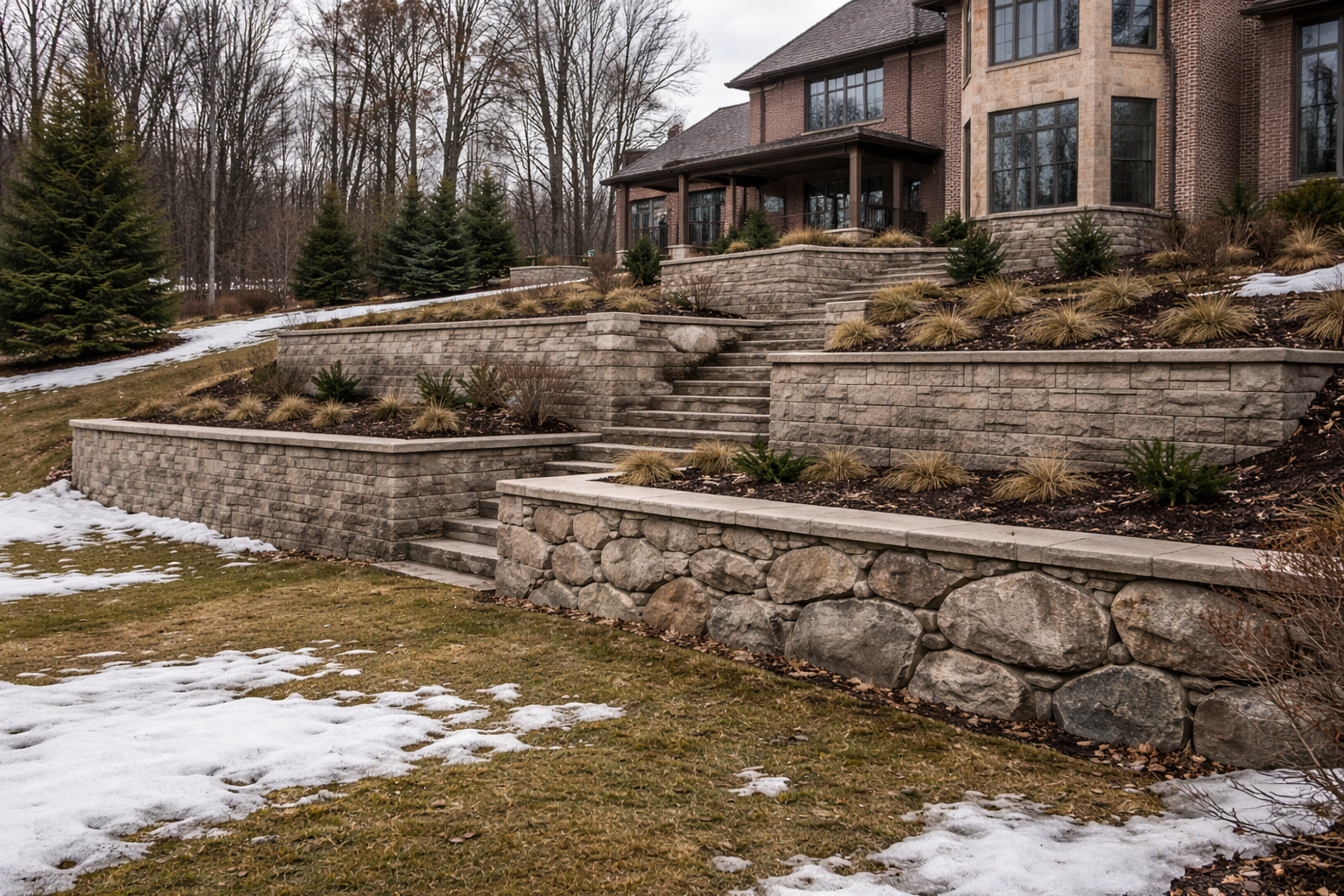
Detroit Spring Yard Prep: What to Check Before Landscaping Season
When spring arrives in Metro Detroit, most homeowners are ready to move quickly. The snow recedes, the days get longer, and attention shifts almost immediately to fresh mulch, greener grass, new planting, and the outdoor projects that felt impossible in January. The problem is that winter often leaves behind damage that is not obvious at first glance. What looks like a tired lawn may actually be compaction. What looks like a small paver issue may point to movement below the surface. What seems like a harmless wet patch may be the early sign of a grading or drainage problem that will affect anything built on top of it.
That is why a proper spring inspection matters before new work begins. In Southeast Michigan, freeze thaw cycles, snowmelt, salt exposure, and saturated ground all put pressure on lawns, planting beds, walkways, patios, and transitions around the home. If those conditions are ignored, homeowners can end up spending money on surface improvements before the underlying issues are addressed.
This article is designed to help Metro Detroit homeowners assess what winter did to their property before they invest in outdoor work. It is not a generic spring cleanup checklist. It is a practical framework for identifying what should be repaired, what should be monitored, and what should be prioritized first so new work has a stable foundation. That is especially important for any residential landscaping project, because the quality of the finished result depends heavily on what the site is doing before installation begins.
Why Spring Inspections Matter Before You Spend on Outdoor Work
One of the most common spring mistakes is treating everything as a cosmetic issue. A homeowner sees thin turf, shifted pavers, eroded mulch, or standing water and assumes the solution is to refresh the surface. In reality, spring is often the season that reveals what needs to be corrected before any visible improvement should begin.
The order of operations matters. If a patio edge shifted because the ground moved through winter, resetting the surface without addressing the cause may only create the same problem again. If lawn areas are staying wet because water is collecting where it should not, seeding alone will not fix the issue. If planting beds are eroding along their edges, adding fresh mulch without understanding water flow only covers the problem temporarily.
Spring is the right time to assess the property because the evidence is still visible. Snowmelt, saturated ground, and early rain events expose drainage behavior, grade changes, turf stress, and hardscape movement more clearly now than they will later in summer. A careful inspection helps homeowners separate what can wait from what should be handled first.
Winter Can Hide More Than It Reveals
During the colder months, many problems are concealed under snow cover, frozen soil, and dormant plant material. Once temperatures rise, those hidden issues become easier to identify. That is why early spring often reveals more about a property’s condition than any other point in the year.
What to Fix First vs. What Can Wait
The smartest spring projects start with stability. Drainage and structural issues should come first. Surface recovery and cosmetic improvements should follow. That sequence protects the work that comes later and prevents homeowners from spending in the wrong order.
Lawn and Turf: What Winter Really Did to the Grass
Winter leaves most lawns looking rough, but not every rough looking lawn has the same problem. Some damage is seasonal and temporary. Some points to deeper site issues that need to be corrected before a lawn can recover properly. This is where many spring decisions go wrong, especially when homeowners rush into fertilizing or seeding before they understand what caused the damage.
Normal Winter Stress vs. Real Lawn Problems
A Metro Detroit lawn can look patchy in spring for completely normal reasons. Snow cover flattens grass. Ice compresses the surface. Long periods of moisture can leave turf matted and discolored. In many cases, a lawn will recover once temperatures rise, mowing resumes, and airflow improves.
The more important question is whether the damage is only seasonal or whether it reflects an ongoing problem. If certain areas remain weak year after year, especially near walkways, driveways, downspouts, or low spots, winter may simply be exposing a condition that already existed. In that case, the lawn is not the only thing that needs attention.
Bare Spots, Dead Patches, and Salt Damaged Edges
Bare zones near pavement deserve a closer look. Salt exposure is a common issue along driveways and walkways, especially where runoff carries residue into the soil. Grass in these zones may appear scorched, thinned, or slow to recover. Other dead patches may be tied to compaction, drainage, pet traffic, or deeper soil issues rather than winter alone.
This is where practical observation matters. If the same areas repeatedly fail, surface treatment is unlikely to solve the real problem. Stronger recovery begins with understanding why those areas are underperforming in the first place, which is a core part of effective lawn care detroit homeowners often overlook in early spring.
What to Do First Before Seeding or Feeding
Before putting down seed or fertilizer, assess timing and conditions. Soil that is still cold and unstable is not ready for aggressive input. If the lawn is heavily compacted or staying wet, seeding may struggle. If the turf is still waking up from dormancy, fertilizer applied too early may push weak top growth before roots are ready to support it.
The better first move is to inspect, wait for stable conditions, and identify whether compaction, runoff, or salt damage needs to be addressed before any recovery work begins.
Hardscape Surfaces: Checking Pavers, Walkways, and Driveways After Freeze Thaw
Hardscape damage often becomes obvious in spring because winter movement tends to show up at the joints, edges, and transitions first. Even minor shifts deserve attention, because they may indicate water infiltration or movement below the surface.
How to Spot Frost Heave in Patios and Walkways
A few raised pavers or uneven edges can be easy to dismiss, especially after a long winter. But spring is the right time to determine whether what you are seeing is minor seasonal movement or something more structural. Frost heave often appears as lifted units, uneven transitions, or spots where the surface no longer feels level underfoot.
The key is not just what moved, but where. Localized movement may be correctable with surface adjustment. Repeated movement in the same zone can suggest base instability, drainage problems, or grade conditions that should be addressed before any new landscape installation is planned nearby.
What Winter Does to Jointing Sand and Edge Restraints
Joint sand loss is one of the clearest signs that moisture and movement affected the surface. Open joints allow water to re-enter more easily, which can increase future movement. Edge restraints may also loosen over time, particularly where the perimeter is exposed to runoff or repeated freeze thaw stress.
These issues matter because surfaces rarely fail all at once. They usually start at the edges and joints, then worsen season after season. Spring is the best time to catch that pattern early.
Entry Steps, Seat Walls, and Mortared Features
Mortared features often tell a similar story. Hairline cracking, joint separation, or surface spalling may seem minor, but they often signal moisture entry points. In Michigan conditions, that is not just cosmetic. Water works into those openings, freezes, expands, and gradually makes the damage worse.
This is why detroit landscaping projects that include masonry, steps, seating walls, and paver transitions should always be inspected after winter, especially before new enhancements are added around them.
Drainage and Grading: What Spring Melt Reveals Fast
If there is one category that homeowners should pay close attention to in early spring, it is water movement. Summer can make a property look stable even when drainage is weak. Spring does the opposite. It exposes runoff paths, low spots, pooling areas, and grade shifts quickly.
How to Identify Standing Water Patterns
Not every puddle is a crisis. The important question is how long water remains and where it collects. Short term pooling after a major melt or storm may be normal. Water that sits for days, returns repeatedly in the same zone, or saturates a lawn edge every spring usually points to something more than surface inconvenience.
The best time to inspect is shortly after major thaw events or rain, when the site is showing its natural behavior. Look at where water stops, where it crosses hard surfaces, and whether it is moving away from the home the way it should.
Driveway Runoff, Roof Runoff, and Saturated Low Spots
Many drainage issues begin because runoff is concentrated rather than dispersed. Driveways shed water quickly. Roof discharge adds volume in specific locations. If those flows are not managed well, they can push water into lawn areas, planting beds, patio edges, or even toward the foundation.
This becomes especially important on clay heavy properties, where infiltration is slower and the ground remains saturated longer. In those conditions, spring runoff can reveal why some areas fail year after year despite repeated repair.
Why Spring Is the Best Time to Catch Drainage Problems
A property may look perfectly manageable by June, but that does not mean the drainage is sound. Spring is diagnostic. It shows what summer hides. If a homeowner is considering improvements to a patio, lawn, garden bed, or larger outdoor project, this is the time to identify whether grading and water management need to be handled first.
Planting Beds and Garden Areas: Early Signs of Erosion, Salt, and Soil Stress
Planting beds often reveal winter damage in quieter ways. The issues may not look dramatic at first, but they influence how well the landscape performs through the rest of the year.
Bed Edges, Washed Mulch, and Compacted Soil
Mulch movement is one of the easiest signs to spot. If mulch has washed downhill, thinned out along edges, or collected in corners, it may indicate runoff pressure or erosion. Bed lines that looked clean last fall may now be soft, irregular, or undermined.
The soil beneath can tell an even more important story. If the bed feels sealed over, compacted, or crusted after winter, it may not be receiving or holding moisture the way it should. That affects plant performance even before new material is installed.
Salt Exposure Near Walks and Driveways
Salt damage is not limited to turf. Shrubs, evergreens, and perennials near traffic surfaces can also show stress. Browning, dieback, and weak growth near pavement often reflect repeated exposure through winter. This is especially relevant on properties where road salt, driveway melt products, or plowed snow accumulate near planting zones.
What to Cut Back Now and What to Leave Alone
Spring cleanup in garden areas should be measured, not rushed. Ornamental grasses and many perennials can be cut back once winter risk has eased. Other material benefits from waiting slightly longer, especially if new growth is just beginning or if the plant is sensitive to late cold swings.
A good spring cleanup should make the site clearer and healthier, not overwork it.
Signs You Should Call a Professional Before Starting Spring Work
Some spring issues are routine. Others deserve a closer look before any do it yourself correction or new installation begins. If you are seeing major paver movement, recurring standing water, erosion along slopes, saturated soil against the home, or visible movement in walls or steps, the smarter move is evaluation before action.
The same applies if multiple symptoms are showing up together. Weak lawn areas, shifting hardscape, and washed out beds often point to a site problem rather than three separate maintenance issues. In those cases, cleanup alone is not a solution. It only delays the real one.
How to Prioritize Your Spring Outdoor Budget
The most effective spring budgets are built in sequence. Homeowners get better outcomes when they spend first on what protects the property, then on what improves appearance.
Start With What Protects the Property
If water is moving incorrectly, if surfaces are shifting, or if erosion is active, those issues belong at the top of the list. They affect everything that comes after. Drainage corrections, grade adjustments, and structural stabilization are not always the most exciting spring projects, but they are often the most important.
Then Move to Lawn Recovery and Visual Improvements
Once the site is stable, recovery work makes more sense. Lawn repair, planting bed refreshes, seasonal cleanup, and cosmetic enhancement all perform better when they are not fighting unresolved site conditions. This is where many homeowners go off track. They improve the visible layer without fixing the layer beneath it.
Why Sequence Matters
A well planned spring season protects both budget and performance. The goal is not to do everything at once. The goal is to do the right things in the right order so each improvement supports the next.
Final Walk Through: A Smarter Way to Start Landscaping Season
The best spring yard prep is not about rushing into visible change. It is about understanding what winter left behind and making decisions based on what the property actually needs. In Metro Detroit, that means checking turf, hardscape surfaces, drainage behavior, and planting beds before committing to new work.
Homeowners who take this step usually make better use of their spring budget. They avoid building over preventable issues, they correct the conditions that would compromise new work, and they start the season with a clearer plan. If your property is showing signs of winter damage, runoff issues, surface movement, or stressed planting areas, a professional site review is often the best first move before larger work begins.
Spring Yard Prep Questions Detroit Homeowners Ask Every Year
When should I start spring yard cleanup in Metro Detroit?
That depends on ground conditions, not just the calendar. Cleanup is most effective when the site has thawed enough to avoid compaction and when plant material can be handled without exposing it to unnecessary risk from late cold swings.
How do I know if pavers shifted from frost or poor installation?
Minor winter movement can happen, but repeated lifting, widespread unevenness, or movement tied to wet areas may suggest a deeper base or drainage issue. Spring is the right time to inspect those patterns before they worsen.
Should I seed my lawn right away in early spring?
Not always. If the soil is still cold, compacted, or overly wet, seeding may perform poorly. It is better to understand the site condition first and avoid rushing inputs before the lawn is ready.
Is standing water after snowmelt normal?
Short term pooling can be normal after heavy thaw or rain, but water that stays for days or repeatedly appears in the same places usually points to a grading or drainage concern.
What should I fix before starting a new landscape project?
Start with anything structural or water related. Drainage, grade correction, paver movement, and erosion should be handled before surface upgrades, planting, or decorative improvements.