Lawn Care Detroit: A Premium Seasonal Plan for Thick Turf (Without Overcorrecting)
A thick, healthy lawn in Detroit isn’t built by chasing every new product or reacting to every brown patch. Most lawns that struggle here don’t need “more” — they need better timing, calmer decision-making, and a plan that respects how turf actually behaves through freeze-thaw, spring flush, summer stress, and fall recovery.
This article is a premium seasonal framework for homeowners who want consistent curb appeal without overcorrecting. It focuses on the few actions that reliably build density, the common moves that quietly weaken turf, and how to decide when DIY is enough versus when professional help makes the most sense.
What “premium” lawn care actually means in Detroit conditions
“Premium” doesn’t mean intense. In practice, it means disciplined: mowing done correctly, watering done with purpose, and seasonal work done when the lawn can actually respond. It also means avoiding the two extremes Detroit homeowners fall into — doing nothing until problems explode, or doing too much too fast and stressing the lawn further.
A premium plan is built around turf biology and local conditions. Detroit lawns experience a short spring growth window, a mid-summer stress period, and a strong fall recovery window. If the plan ignores that cycle, the lawn becomes unpredictable no matter what products are applied.
The difference between thick turf and “pushed” turf that collapses mid-season
Thick turf is built from stable growth — steady mowing at the right height, consistent watering that supports root depth, and nutrition applied with restraint.
“Pushed” turf is what happens when the lawn is forced into fast top growth early in the season, often with aggressive inputs and short mowing. It can look great briefly, then thin out under heat, disease pressure, and shallow roots. The collapse often shows up in July and August, when the lawn can’t keep up with stress.
Why most lawn problems here are a timing problem, not a product problem
The most common failures are seasonal mismatches:
- Seeding at the wrong time, so seedlings fight heat or frost.
- Cutting too low just as temperatures rise.
- Overwatering in summer, which encourages disease and weak roots.
- Trying to “fix” summer dormancy instead of managing it.
Detroit lawns respond best when work is matched to the season’s real growth potential.
How to set realistic expectations based on sun, soil, and traffic
A premium plan starts by accepting reality. A heavily shaded front yard will not behave like a sunny backyard. Compacted soil will not support thick turf until it is addressed. High foot traffic will require ongoing strategy — not constant patching.
Realistic expectations prevent overcorrection. The goal is a lawn that stays dense where it can, improves steadily where it should, and remains manageable year after year.
Start with diagnosis: the three variables that control everything
Most lawn care decisions become clearer once you evaluate three variables: sun exposure, soil condition, and what your weeds and thin spots are signaling.
Sun map: where the lawn can realistically be dense (and where it can’t)
Make a simple sun map. Identify areas that receive strong direct sun, partial sun, and heavy shade.
Dense turf is easiest in areas that receive consistent sunlight. In heavy shade, turf becomes a different project: mowing height must stay higher, watering must be more careful, and the lawn may never achieve the same thickness as full-sun zones.
If you treat shade like sun, you’ll keep chasing thin patches with short-term fixes.
Soil and compaction: why Detroit lawns often struggle even when watered
Compaction is one of the quietest lawn killers. It reduces oxygen to roots and limits how water moves into the soil. The result is paradoxical: the lawn may look dry even when you water, because moisture isn’t penetrating evenly.
If puddling appears after rain, if soil feels hard underfoot, or if grass pulls up easily in weak mats, compaction is likely part of the problem.
Weeds and thin spots: what they’re telling you about the underlying issue
Weeds aren’t random. They often indicate a condition the turf can’t compete in — thin density, compacted soil, poor drainage, inconsistent mowing, or too much moisture.
Thin spots also have a cause: shade, pet traffic, grubs, poor soil, or repeated scalping. A premium plan treats weeds as feedback, not as the only problem.
The seasonal framework: what to prioritize and what to stop doing
A stable lawn plan is not complicated, but it is specific. Each season has a different priority.
The guiding idea is “do less, better.” Instead of overreacting with aggressive inputs, focus on the few actions that consistently build density and resilience.
The “do less, better” approach that keeps turf stable
A Detroit lawn typically responds best to:
- consistent mowing height that protects roots,
- deep, infrequent watering that trains roots,
- and major renovation work done in the fall.
Most overcorrection comes from reacting to short-term appearance — pushing growth when the lawn should be conserving energy.
Early spring (late March–April): wake the lawn up without shocking it
Early spring is about cleaning the surface and reestablishing consistent mowing. It is not the season for drastic changes.
Clean-up that actually helps turf (and what to leave alone)
Spring cleanup should focus on what smothers grass: heavy leaf layers, matted debris, and compacted piles from winter.
Avoid aggressive raking that tears out living turf. If the lawn is saturated, wait. Working wet soil compacts it further.
First mow timing and height: the easiest way to prevent stress later
The first mow sets the tone for the season. Start mowing when growth is active enough that you can remove a small amount without scalping.
Keep height on the higher side early. Turf that is cut too low in early spring often develops shallow roots, then struggles when temperatures rise.
When to address bare areas vs. wait for soil temps to rise
Not all bare areas should be seeded immediately. In early spring, soil temperature and weather swings can make germination inconsistent.
If you seed too early, you can lose progress to cold snaps and heavy rain. A premium approach is patient: address surface conditions and prepare for the strongest renovation window later.
Late spring (May–early June): build density without forcing growth
Late spring is where a lawn can thicken — if it is managed with discipline.
Mowing cadence and height for thickening—without scalping
The fastest path to thickness is not fertilizer. It is mowing consistency.
Frequent mowing at the correct height encourages lateral growth and discourages weeds. Scalping does the opposite: it exposes soil, stresses roots, and invites weeds into open space.
Watering strategy that trains roots deeper (and reduces disease risk)
Watering should be purposeful. Deep watering less often encourages roots to grow downward. Light daily watering trains shallow roots and increases disease pressure.
In late spring, the goal is to build root depth before summer arrives.
Weed pressure: how to respond without overcorrecting
Weeds spike when turf is thin or stressed. The best response is targeted and calm: fix the conditions that create openings.
This is where the keyword lawn care detroit fits naturally because local success depends on timing and restraint. Detroit lawns do better when the plan prioritizes density-building habits over quick cosmetic fixes.
Summer (mid-June–August): keep turf alive, not perfect
Summer is not the season to chase perfection. It is the season to protect the lawn so it can recover in fall.
Heat-stress rules: what to do when the lawn slows down
When temperatures rise, turf growth slows. That’s normal.
The best summer strategy is protective:
- keep mowing height higher,
- avoid aggressive fertilization,
- and water deeply enough to prevent severe stress.
A lawn that is slightly less green but stable is healthier than a lawn pushed into soft growth that collapses under heat.
How to avoid the classic summer mistakes: short mowing and overwatering
Two mistakes weaken lawns quickly:
Cutting too short exposes soil and reduces the lawn’s ability to shade itself.
Overwatering creates constant moisture, which encourages disease and weakens roots. Summer watering should support the lawn, not saturate it.
Patchwork lawns: when to accept dormancy vs. when to intervene
Some lawns go dormant in summer — especially during hot, dry periods. Dormancy is a survival mode, not failure.
Intervene only when the lawn shows signs of severe stress that won’t rebound. Otherwise, focus on keeping the lawn stable and ready for fall renovation.
Spot fixes that don’t create new problems
Spot fixes should be minimal in summer. Repairing small areas can be fine if conditions support it, but heavy seeding and major changes typically perform better in fall.
In summer, your best “fix” is preventing damage: manage mowing height, avoid heavy traffic on stressed areas, and keep watering steady.
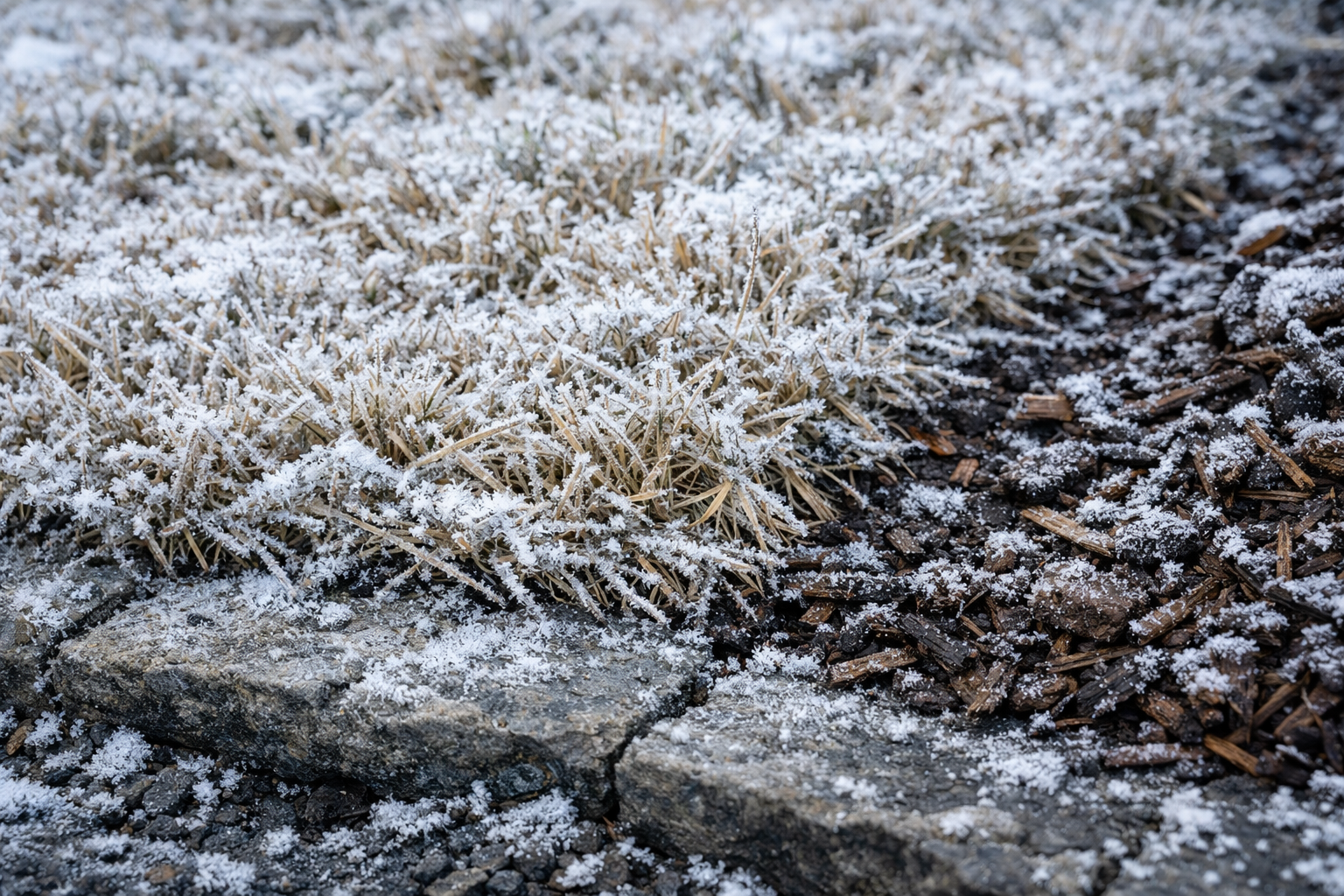
Early fall (September–mid October): the real growth window in Detroit
Fall is the most important season for building a thick lawn in Detroit. Cooler temperatures and more consistent moisture create ideal conditions for root growth and repair.
Aeration and overseeding strategy based on lawn condition (not a template)
Aeration and overseeding are not one-size-fits-all. The approach depends on soil compaction, current density, and the type of turf you have.
A premium plan matches the strategy to the lawn:
- Compacted lawns benefit from aeration to open soil and improve water penetration.
- Thin lawns benefit from overseeding to increase density.
- Healthy lawns may only need minor corrective work and consistent mowing.
What “success” looks like after overseeding (and what it doesn’t)
Success does not mean instant uniformity.
In the weeks after overseeding, you should expect a gradual thickening and improved texture. Some variability is normal, especially in shade zones.
Failure is usually caused by drying out the seedbed, mowing too soon, or traffic before seedlings establish.
Fertility timing: how to build thickness without soft growth
Fall feeding should support root development and steady thickening. The goal is not a quick green surge. It is durability.
A lawn that enters winter with strong roots and stable density will rebound more reliably in spring.
Late fall (late October–November): set up next spring without dumping inputs
Late fall is about closing the season well, not adding complexity.
Final mowing height and cleanup: what actually matters
Keep mowing until growth slows enough that the lawn is no longer actively pushing new blades.
Avoid ending the season with overly tall grass that mats under snow. The goal is a clean, stable turf canopy going into winter.
Leaf management: how to prevent smothering without overworking the lawn
Leaves left in thick layers will smother turf and create spring problems.
Leaf management does not require perfection. It requires consistency: remove heavy coverage and prevent wet mats from sitting on the lawn.
Winter prep mindset: what to stop doing before freeze-up
Late in the season, stop trying to “fix” aesthetic issues. Focus on stability.
Avoid aggressive changes that the lawn cannot respond to before winter. A premium plan respects timing.
Premium curb appeal without overcorrecting: the restraint checklist
The most stable lawns are often the ones managed with the most restraint.
The most common “too much” moves and how they backfire
Overcorrection typically shows up as:
- mowing too low because the lawn looks “cleaner,”
- watering too frequently because the surface looks dry,
- and applying aggressive products without fixing underlying conditions.
These moves can create short-term cosmetic improvement and long-term instability.
How to spot when a lawn needs a process change—not another product
If the lawn repeatedly thins in the same areas, the problem is usually systemic: shade, compaction, drainage, or mowing inconsistency.
A process change might mean adjusting mowing height, changing watering frequency, or planning fall renovation rather than adding more inputs.
When to call in help vs. when DIY is genuinely fine
DIY is genuinely fine when the lawn is mostly healthy and needs consistency.
Professional help makes sense when the lawn has recurring compaction issues, widespread thinning, or when fall renovation needs to be executed cleanly and on schedule.
Hiring a Detroit lawn service: how to evaluate quality beyond the pitch
A service is only as good as its execution. The goal is to find a provider with standards, not just a schedule.
What a good plan includes (timing, mowing standards, communication)
A quality plan includes:
- mowing standards (height, consistency, and cleanup),
- a clear seasonal approach,
- and communication that explains what is being done and why.
Questions that expose cookie-cutter programs
Ask:
- How do you adjust mowing height through the season?
- How do you handle shaded lawns differently?
- What does your fall plan include, and when does it happen?
Cookie-cutter programs tend to rely on a single script. A premium provider can explain adjustments.
What to expect from a reliable schedule and service window
A reliable schedule is not about exact times. It is about consistency and communication.
This is where the keyword detroit lawn service fits naturally: homeowners should choose providers based on standards and responsiveness, not just availability.
Choosing the right lawn service in detroit mi for your property type
Detroit properties vary widely — small city lots, larger lots, mixed shade exposure, high foot traffic. A good plan should match those realities.
Small city lots vs. larger properties: what changes in approach
Small lots often require tighter detail: edging, careful mower turns, and consistent attention to compacted zones.
Larger properties require strategy: efficient mowing routes, targeted repair zones, and consistent seasonal timing.
Shade-heavy lawns vs. sunny lawns: the plan should look different
Shade-heavy lawns need higher mowing height, careful watering, and realistic density goals.
Sunny lawns can support thicker turf but also face more heat stress. The plan needs to shift accordingly.
Pet traffic and kid traffic: how to keep turf thick without constant repairs
Traffic creates wear. The best approach is to plan for it rather than fight it weekly.
That might mean reinforcing certain areas, adjusting use patterns, or planning targeted fall repair.
This is where the keyword lawn service in detroit mi belongs because property type should shape the service approach. If the plan is identical for every lawn, it’s unlikely to deliver premium results.
When people search “lawn care near me”: what they should actually compare
Most homeowners compare price and availability. The better comparison is quality of standards.
Mowing detail and height control: the overlooked differentiator
Mowing height control is one of the strongest predictors of density. Ask what height the service mows at in spring, summer, and fall — and whether they adjust it.
Weed control philosophy: targeted vs. blanket
A targeted approach is often more responsible than blanket treatment. The goal is to control weeds while building turf density, not to rely on repeated broad treatments without addressing underlying issues.
Seeding and repair capability: who can actually fix thin lawns
Many providers mow well but do not execute fall renovation well. Ask about overseeding process, timing, and how they handle seed protection and watering guidance.
This is where the keyword lawn care near me fits naturally: homeowners searching locally should compare standards, not slogans.
Where lawn care fits inside full landscaping services
A lawn doesn’t exist in isolation. Beds, edges, trees, and drainage patterns influence turf performance.
The coordination advantage: beds, edging, trimming, and turf working together
When bed edges are clean and stable, mowing becomes more consistent. When trimming is done correctly, turf edges stay crisp. When planting beds manage water properly, lawns avoid saturation at borders.
Coordinated maintenance creates a more finished look and reduces recurring lawn issues.
When lawn improvements fail because the surrounding landscape is ignored
A lawn can be managed perfectly and still struggle if surrounding conditions are working against it — shade from overgrown trees, downspouts dumping onto turf, bed edges trapping runoff, compacted routes created by foot traffic.
This is where landscaping services can matter: when lawn care is coordinated with the broader landscape, the lawn stops fighting its environment.
Next steps: a simple 30-day plan to stabilize your lawn (then build density)
If your lawn feels inconsistent, the fastest improvement usually comes from stabilizing habits for 30 days, then planning the right seasonal work.
Week-by-week actions based on the season you’re reading this
If it’s spring: focus on cleanup, establish mowing consistency, and avoid shocking the lawn.
If it’s summer: raise mowing height, water deeply but not constantly, and protect the lawn from stress rather than forcing growth.
If it’s fall: prioritize aeration and overseeding if needed, then support steady recovery with consistent mowing and moisture.
If it’s late fall: manage leaves, finish mowing appropriately, and stop aggressive inputs.
What to track so you’re not guessing (mow height, watering, thin spots, weeds)
Track four items:
- mowing height,
- watering frequency,
- where thin spots persist,
- and where weeds consistently appear.
Patterns in these notes reveal root causes faster than any product label.
When to schedule professional help for the best seasonal timing
Professional help is most valuable when it aligns with seasonal windows — especially fall renovation.
If the lawn needs aeration, overseeding, or a full reset of habits, schedule early enough to secure the right timing.
FAQs
How often should I mow for a thick lawn in Detroit?
Frequency depends on growth rate, but consistency matters more than a perfect schedule. In active growth periods, mowing often enough to avoid removing too much at once protects the lawn from stress and supports thickening. The goal is steady maintenance, not aggressive cutting.
Why does my lawn look great in May and thin out in July?
This often happens when the lawn is pushed early — short mowing, heavy inputs, or inconsistent watering — and roots stay shallow. Summer heat stress exposes the weakness. A more resilient plan builds root depth in late spring and protects the lawn in summer rather than forcing growth.
Is it worth watering during summer, or should I let the lawn go dormant?
Dormancy can be normal in Detroit summers. The decision depends on your lawn type, your goals, and local restrictions. Many homeowners aim to keep the lawn stable rather than perfect: water enough to prevent severe stress, but don’t saturate the lawn daily.
When is the best time to overseed in Detroit?
Early fall is typically the strongest window because temperatures are cooler and soil conditions are favorable for germination and root growth. Spring overseeding can work in certain cases, but it often competes with summer stress.
How do I know if compaction is a problem?
Signs include puddling after rain, hard soil that resists infiltration, weak root development, and thin areas that don’t respond to watering. Compaction often requires aeration and a change in watering and mowing habits.
What should I expect from a lawn care service if I want premium results?
You should expect clear mowing standards, seasonal timing that matches Detroit growth cycles, communication about what is being done, and a plan that adapts to shade, soil, and traffic. A premium result comes from execution, not from a generic script.
Closing
A thick lawn in Detroit is built through calm consistency. The winning strategy is not chasing quick fixes. It’s doing the fundamentals well at the right times: mowing height that protects the plant, watering that supports roots, and fall renovation work executed when turf can actually respond.
If you want a premium result without constant overcorrection, the next step is simple: stabilize the basics for the next 30 days, then plan the seasonal work that fits your lawn’s sun exposure, soil condition, and traffic patterns.
If your lawn needs a more structured plan — or if fall renovation is on the table — Rohto can assess the property, identify the real limiting factors, and outline a seasonal approach that builds density without pushing the lawn into a cycle of stress.