Yard Drainage Solutions in Michigan: Fixing Standing Water in Clay Soil Landscapes
Why Standing Water Is So Common in Metro Detroit Landscapes
Homeowners across Southeast Michigan often assume that standing water in their yard is simply a temporary nuisance caused by heavy rain or melting snow. In reality, persistent drainage problems usually reveal deeper issues tied to soil conditions, grading, and the way a property was originally developed.
Much of Metro Detroit sits on dense clay soil that holds moisture rather than allowing it to pass through. When water cannot drain properly, it begins to collect in low areas of the yard, around foundations, and near patios or driveways. Over time, that trapped moisture can weaken turf, damage planting beds, and even undermine outdoor surfaces built as part of a residential landscaping project.
Addressing drainage problems early is important not only for the health of the lawn but also for protecting the long-term stability of outdoor structures. Understanding what causes standing water, how professionals diagnose the problem, and which solutions are appropriate for Michigan conditions can help homeowners make informed decisions before the issue becomes more expensive to correct.
Understanding the Root Cause: Why Water Does Not Drain in Michigan Soil
Clay Soil and Compaction: The Core Challenge for Residential Landscaping
The defining characteristic of many Southeast Michigan landscapes is clay-heavy soil. Unlike sandy soil, which allows water to filter downward relatively easily, clay particles are tightly packed together. When rain or snowmelt reaches the ground, it often remains trapped near the surface.
Compaction makes the situation worse. Construction equipment, repeated foot traffic, and even years of mowing compress the soil further. Once compacted, the ground loses the small air pockets that normally allow water to move downward. As a result, lawns can remain saturated for days after storms.
For homeowners investing in residential landscaping, soil structure is one of the most important considerations during the planning stage. Without addressing compaction and drainage early, even well-designed landscapes can struggle with persistent water problems.
Grading and Elevation: When the Yard Works Against Itself
Another common cause of standing water is improper grading. Ideally, a yard should be shaped so that water gradually moves away from the home and toward safe drainage areas. However, small elevation changes can dramatically alter how water behaves.
If the slope directs water toward the house, patios, or planting beds, moisture will accumulate in those areas. Sometimes these grading issues occur during construction. Other times they develop gradually as soil settles over the years.
During professional landscape installation, careful grading ensures that water flows naturally through the property rather than collecting in unwanted places.
Hardscape Surfaces and Runoff Patterns
Outdoor surfaces such as patios, driveways, and walkways also influence drainage. Hard surfaces do not absorb water, so rain must travel across them until it reaches soil or a designated drainage system.
When hardscape installation is completed without proper runoff planning, water may funnel directly into lawns or low spots. In winter, that runoff can freeze, creating additional hazards and accelerating surface deterioration.
Understanding how these surfaces interact with the surrounding landscape is critical for preventing long-term drainage issues.
Diagnosing a Drainage Problem Before Choosing a Solution
Identifying the Type of Standing Water Issue
Drainage problems do not always appear the same way. Some homeowners notice puddles that form immediately after rainfall and disappear within a few hours. Others see areas that remain muddy for days or weeks.
In some cases, water collects near foundations, patios, or walkways. In others, entire sections of lawn feel soft and unstable underfoot.
Each scenario suggests a different underlying cause, which is why a careful diagnosis is essential before selecting a solution.
The Three Areas Professionals Evaluate First
When experienced detroit landscaping professionals assess drainage concerns, they typically begin by examining three factors.
First, they evaluate the slope of the yard and how water flows during rainfall. Even small elevation differences can reveal where runoff is accumulating.
Second, they study soil conditions. Clay-heavy soil behaves differently than looser soils, and compaction often requires specific corrective strategies.
Third, they review how water moves from roofs, gutters, and hard surfaces. Runoff from these areas often contributes significantly to drainage issues.
Why Drainage Problems Are Often Misdiagnosed
Homeowners sometimes attempt quick fixes such as adding soil to low spots or installing temporary channels. While these measures may appear to help initially, they rarely address the root cause.
Without understanding the full drainage pattern across the property, these short-term solutions can actually redirect water into other areas of the yard.
The Most Effective Yard Drainage Solutions for Michigan Landscapes
Regrading: Correcting the Landscape’s Natural Water Flow
In many situations, the most effective drainage improvement involves reshaping the land itself. Regrading adjusts the slope of the yard so water naturally flows away from structures and toward designated drainage areas.
Because grading affects the entire landscape, it is often addressed during broader landscape installation work. When performed correctly, this adjustment can eliminate many drainage problems before additional systems are required.
French Drains: Moving Water Away From Problem Areas
French drains are one of the most widely used drainage solutions in Michigan landscapes. These systems consist of perforated pipes installed below ground within gravel-filled trenches.
As water enters the trench, it moves through the pipe and is redirected away from saturated areas. This approach is especially effective when lawns remain wet long after rainfall.
Catch Basins and Channel Drains for Hardscape Areas
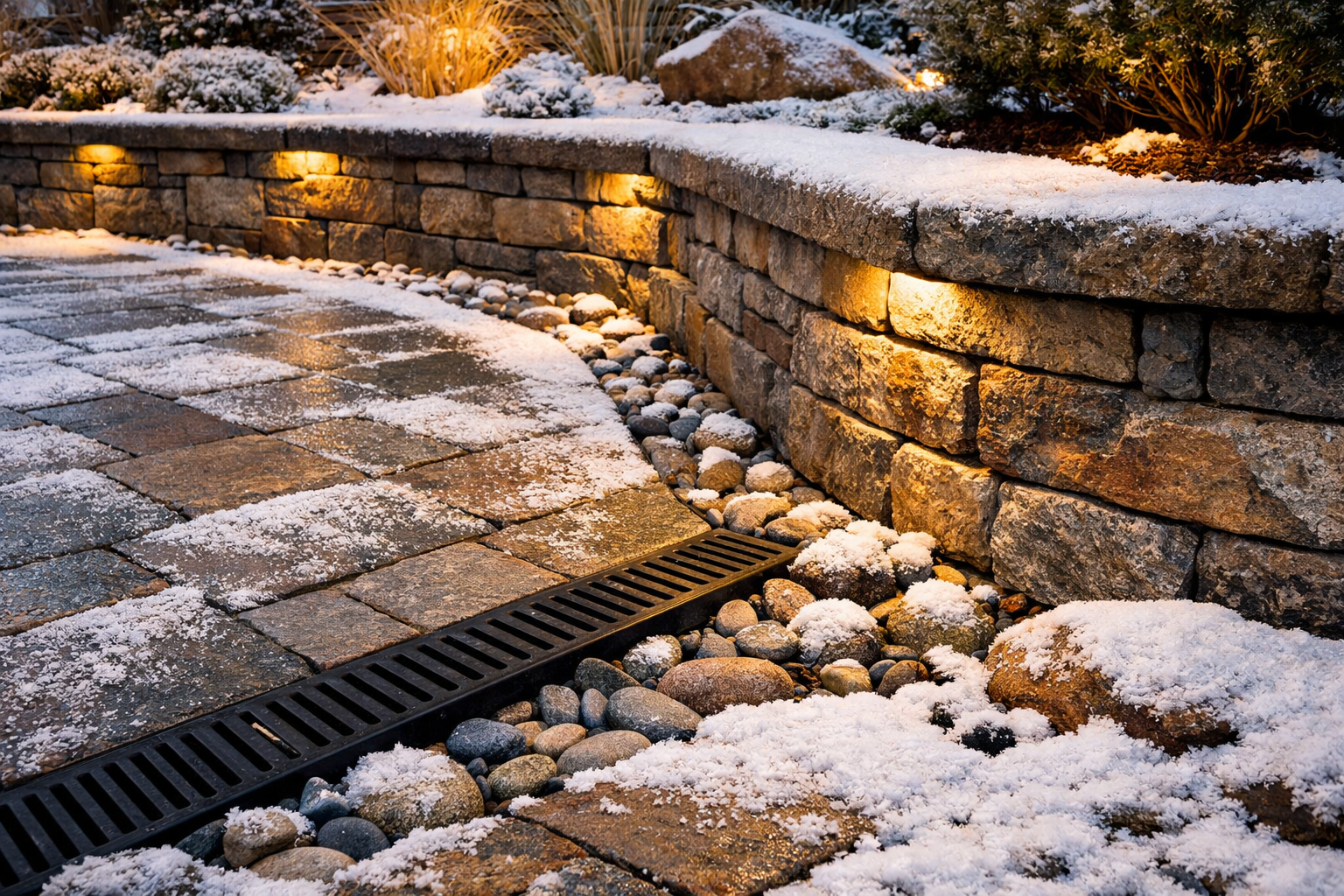
Areas near patios, driveways, and walkways often require more targeted drainage systems. Catch basins and channel drains collect water directly from surfaces and direct it into underground piping.
Integrating these systems during hardscape installation prevents runoff from damaging pavers or undermining the base beneath them.
Permeable Surfaces That Allow Water to Pass Through
Some landscapes benefit from permeable materials that allow water to pass through the surface rather than running across it.
Permeable pavers, gravel systems, and certain stone installations help reduce surface runoff and improve drainage performance. These materials are particularly useful in areas where traditional surfaces would otherwise concentrate water flow.
Drainage Planning for New Landscape and Hardscape Projects
Why Drainage Should Be Addressed Before Construction Begins
Correcting drainage after a landscape is completed can be difficult and costly. Excavating patios or walkways to install drainage systems may require removing and rebuilding large sections of the yard.
Planning drainage during the initial landscape installation process ensures that water management is integrated into the design from the beginning.
Integrating Drainage Into Outdoor Design
Effective drainage planning touches nearly every part of a landscape design.
Patios and walkways should include subtle slopes that direct water away from the house. Driveways must account for runoff patterns to prevent pooling. Planting beds should be placed where they will not trap moisture against structures.
When drainage is considered alongside design, landscapes function more reliably throughout Michigan’s changing seasons.
The Role of Experienced Detroit Landscaping Professionals
Drainage planning requires a clear understanding of soil behavior, grading, and water movement across a property. Experienced detroit landscaping professionals evaluate these factors before construction begins to ensure the finished landscape performs well over time.
Signs Your Landscape May Already Have a Drainage Problem
Lawn Warning Signs
A lawn that remains soft or muddy days after rainfall often signals a drainage issue. Moss growth, thinning turf, and persistent puddles also suggest that the soil is holding too much moisture.
Hardscape Warning Signs
Outdoor surfaces can reveal drainage problems in more subtle ways. Pavers that shift or settle unevenly may indicate water erosion beneath the base layer.
Pooling water on patios or walkways also signals that runoff is not being directed properly.
Structural Warning Signs Near the Home
Water that collects near the foundation should always be taken seriously. Persistent moisture around the base of the house can lead to long-term structural concerns if not addressed.
When Professional Drainage Solutions Are the Right Move
Why Drainage Problems Often Require Structural Fixes
Surface changes alone rarely solve drainage problems when the underlying soil conditions remain unchanged. Clay soil, grading issues, and runoff patterns usually require more comprehensive solutions.
What to Expect During a Drainage Assessment
During a professional drainage evaluation, specialists observe how water moves across the property, analyze soil conditions, and measure slope variations.
This process helps determine whether regrading, underground drains, or additional improvements are necessary.
Choosing the Right Provider for Landscaping Services in Detroit
Drainage planning should be handled by professionals with experience working in Michigan soil conditions. Companies that specialize in landscaping services detroit often understand the regional challenges associated with clay soil and freeze-thaw cycles.
Preventing Future Drainage Issues
Maintenance Practices That Protect Drainage Systems
Drainage systems require occasional maintenance to function properly. Clearing debris from drains and ensuring water channels remain unobstructed helps maintain their effectiveness.
Landscaping Decisions That Improve Water Management
Plant placement, soil preparation, and surface materials all influence how water behaves in a yard. Thoughtful landscape planning allows water to move naturally through the property rather than collecting in isolated areas.
Why Long-Term Landscape Planning Matters
Drainage should never be considered an isolated feature. It works best when integrated into the overall design of the property. A well-planned landscape balances aesthetics with functionality, ensuring the yard remains usable throughout the year.
Addressing Standing Water on Your Property
Homeowners who notice recurring puddles or soggy lawn areas should begin by observing how water moves across the property during rainfall. Identifying the direction of runoff often reveals where drainage improvements may be needed.
If water regularly collects near foundations, patios, or low areas of the yard, a professional evaluation may be necessary. Integrating drainage improvements into a broader landscape installation or hardscape installation project can protect the property while improving overall landscape performance.
For homeowners exploring solutions, consulting experienced landscaping services detroit providers can help determine which drainage strategies are appropriate for their specific property.
Frequently Asked Questions
Why does my yard stay wet long after rain in Michigan?
Clay-heavy soil common throughout Southeast Michigan holds moisture near the surface. When combined with compaction or poor grading, water may remain trapped in the yard for extended periods.
Can standing water damage patios or walkways?
Yes. When water collects beneath hardscape surfaces, it can weaken the base layer and cause pavers or stones to shift over time.
Do French drains work in clay soil?
French drains are often effective in clay-heavy landscapes because they provide an alternative pathway for water to move away from saturated areas.
Is regrading always necessary to fix drainage problems?
Not always. Some properties benefit from targeted drainage systems such as catch basins or underground piping. However, significant slope issues may require grading adjustments.
When should I call a professional for drainage issues?
If standing water persists for days after rainfall, appears near the foundation, or causes lawn damage, a professional evaluation is recommended to determine the most effective long-term solution.