Outdoor Kitchens and Fire Features: Designing Backyard Spaces for Michigan Evenings
Why Outdoor Gathering Spaces Have Become a Core Part of Modern Backyards
Backyards are no longer used only for occasional summer gatherings. Across Southeast Michigan, homeowners are increasingly designing outdoor spaces that function as extensions of the home. Patios now serve as dining areas, fire features become natural gathering points, and outdoor kitchens allow families to cook and entertain without moving back and forth between the house and the yard.
Outdoor kitchens and fire features play a central role in this shift toward fully functional outdoor living environments. These elements transform a simple patio into a space that encourages people to spend more time outside, even after the sun sets or temperatures begin to drop.
When planned correctly, these features are not just decorative additions. They become structural elements within residential landscaping, shaping how outdoor areas are used and experienced. Designing them thoughtfully is especially important in Michigan, where changing seasons and freeze-thaw cycles require durable materials and careful installation.
Understanding how outdoor kitchens and fire features fit into broader landscape planning can help homeowners create outdoor spaces that remain inviting and functional throughout the year.
Understanding the Role of Outdoor Kitchens and Fire Features in Landscape Design
Why Homeowners Are Investing More in Outdoor Living Spaces
Outdoor living spaces have become one of the most significant trends in modern home design. Rather than viewing the yard as separate from the home, many homeowners now treat it as an extension of their indoor environment.
Cooking outdoors, gathering around a fire, and sharing meals on the patio all create opportunities to spend more time outside while still enjoying the comfort of a well-designed space.
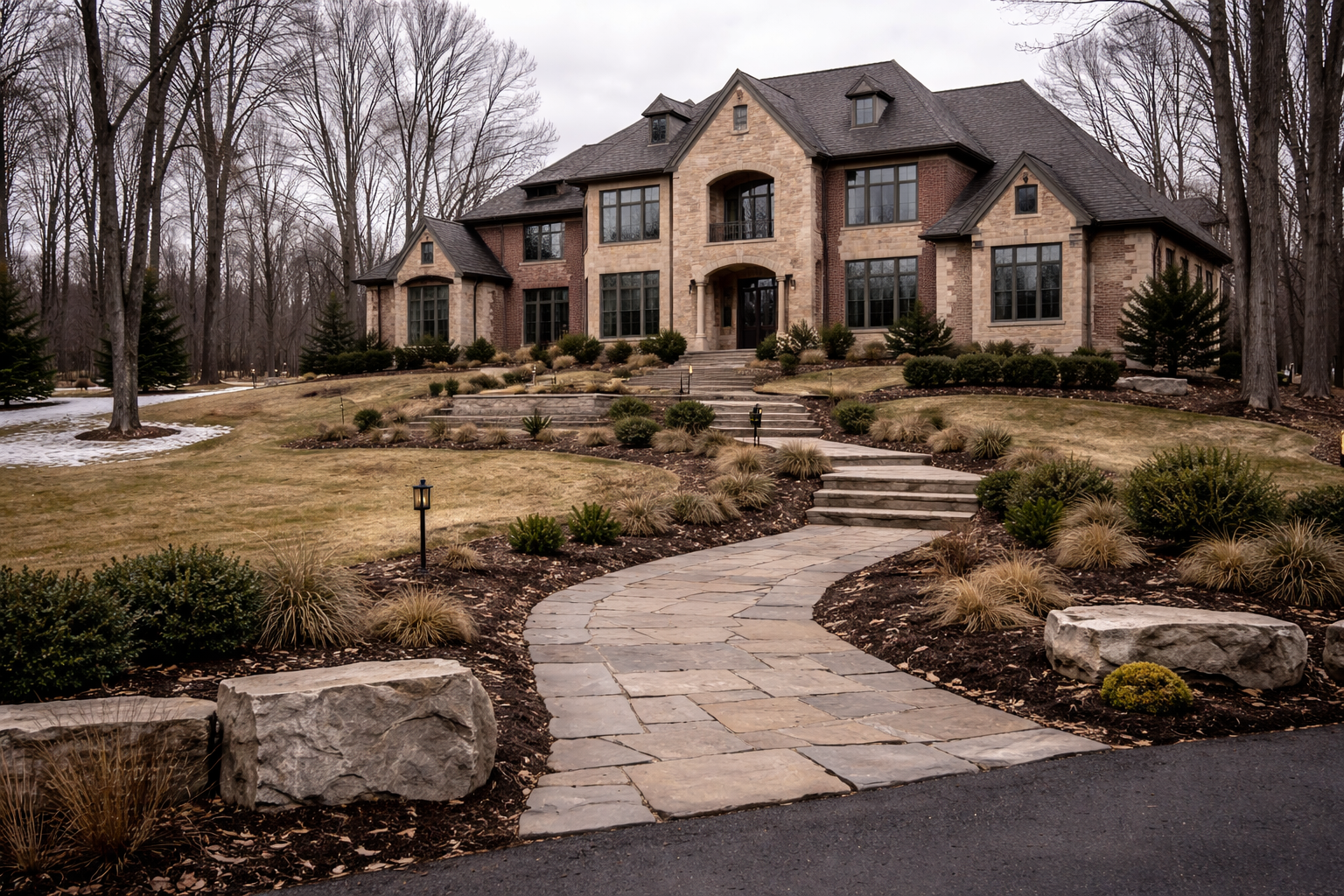
These investments are increasingly common in detroit landscaping projects, where homeowners want outdoor environments that feel intentional rather than improvised.
The Difference Between Basic Patios and Fully Designed Outdoor Living Areas
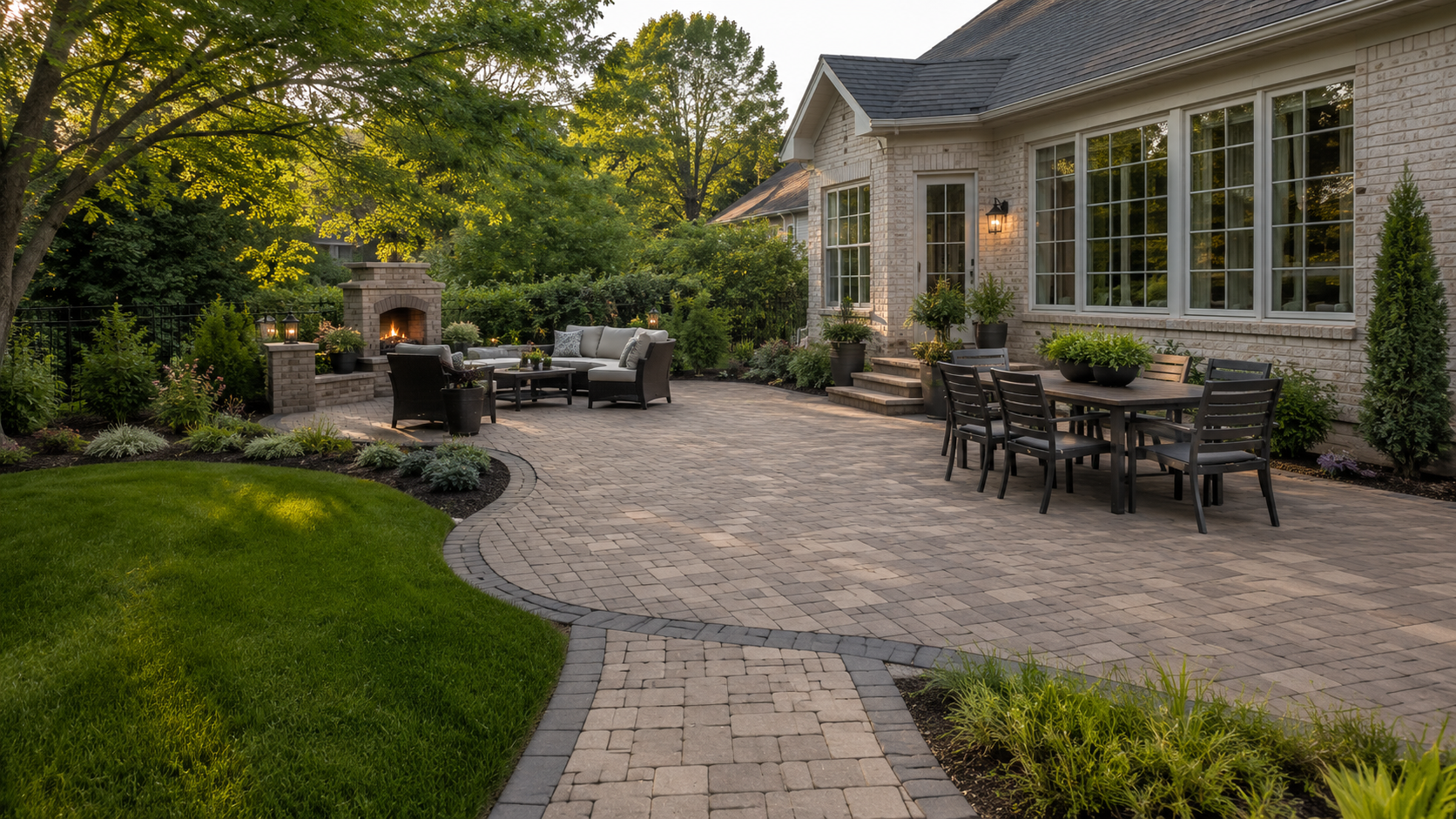
A traditional patio may provide space for seating or a grill, but a fully designed outdoor living area functions more like an outdoor room. Kitchens, fire features, seating walls, and dining spaces work together to create an environment that supports entertaining and relaxation.
These elements also help define the structure of the landscape, guiding how people move through the space and where they naturally gather.
Creating a Backyard That Encourages Evening Use
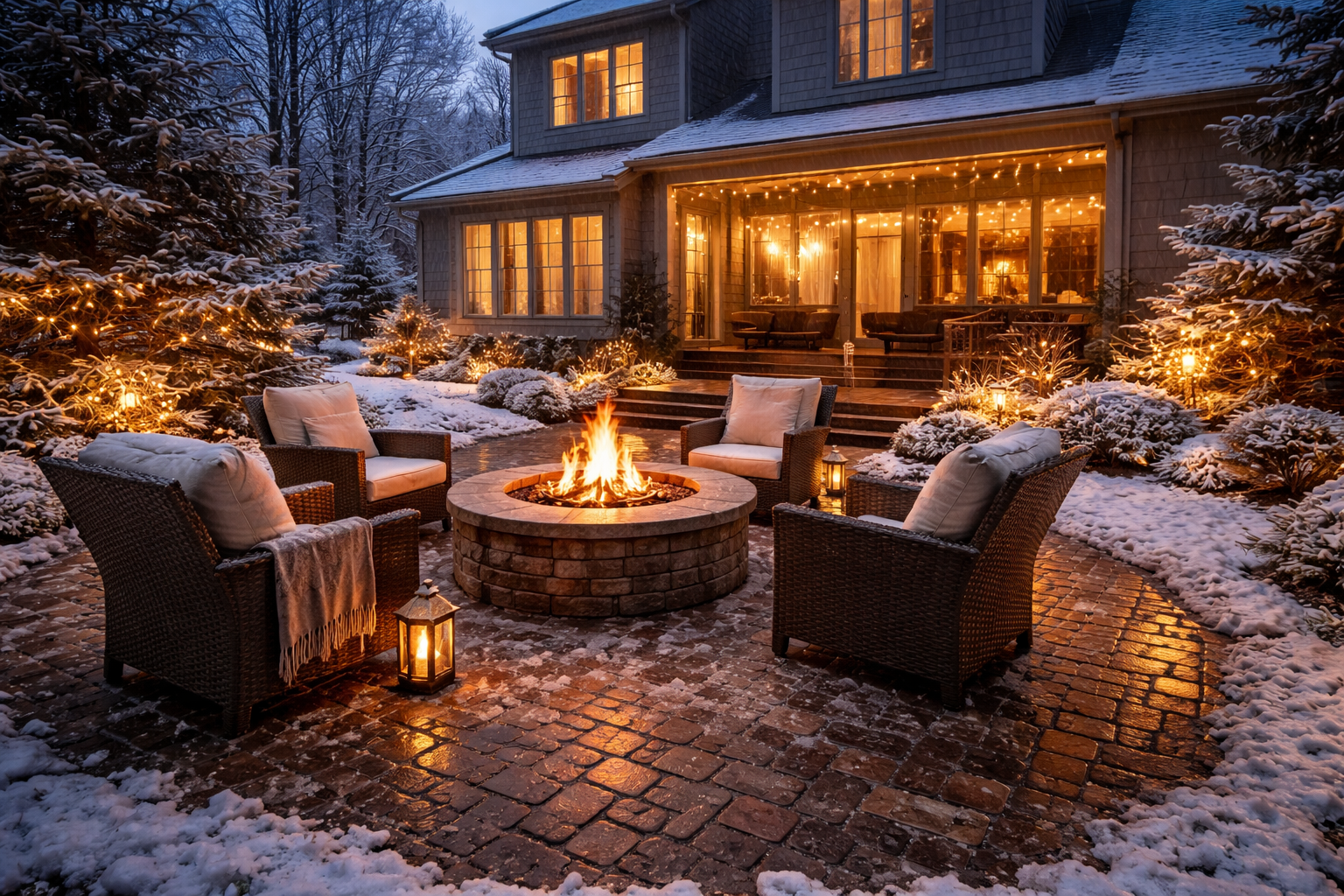
Fire features and lighting extend the usability of outdoor spaces well into the evening hours. When these elements are positioned thoughtfully, they create warm and comfortable gathering areas that invite people to stay outside longer.
In many luxury hardscapes, the fire feature becomes the focal point of the entire design.
Outdoor Kitchens: Planning Functional Cooking Spaces Outdoors
Determining the Purpose of an Outdoor Kitchen
The first step in designing an outdoor kitchen is understanding how it will be used. Some homeowners want a simple grilling station, while others envision a complete cooking environment with preparation areas, storage, and seating.
Clarifying the intended use helps determine the size, layout, and equipment required for the space.
Key Components of Well-Designed Outdoor Kitchens
Outdoor kitchens typically include several core elements that make cooking and entertaining easier.
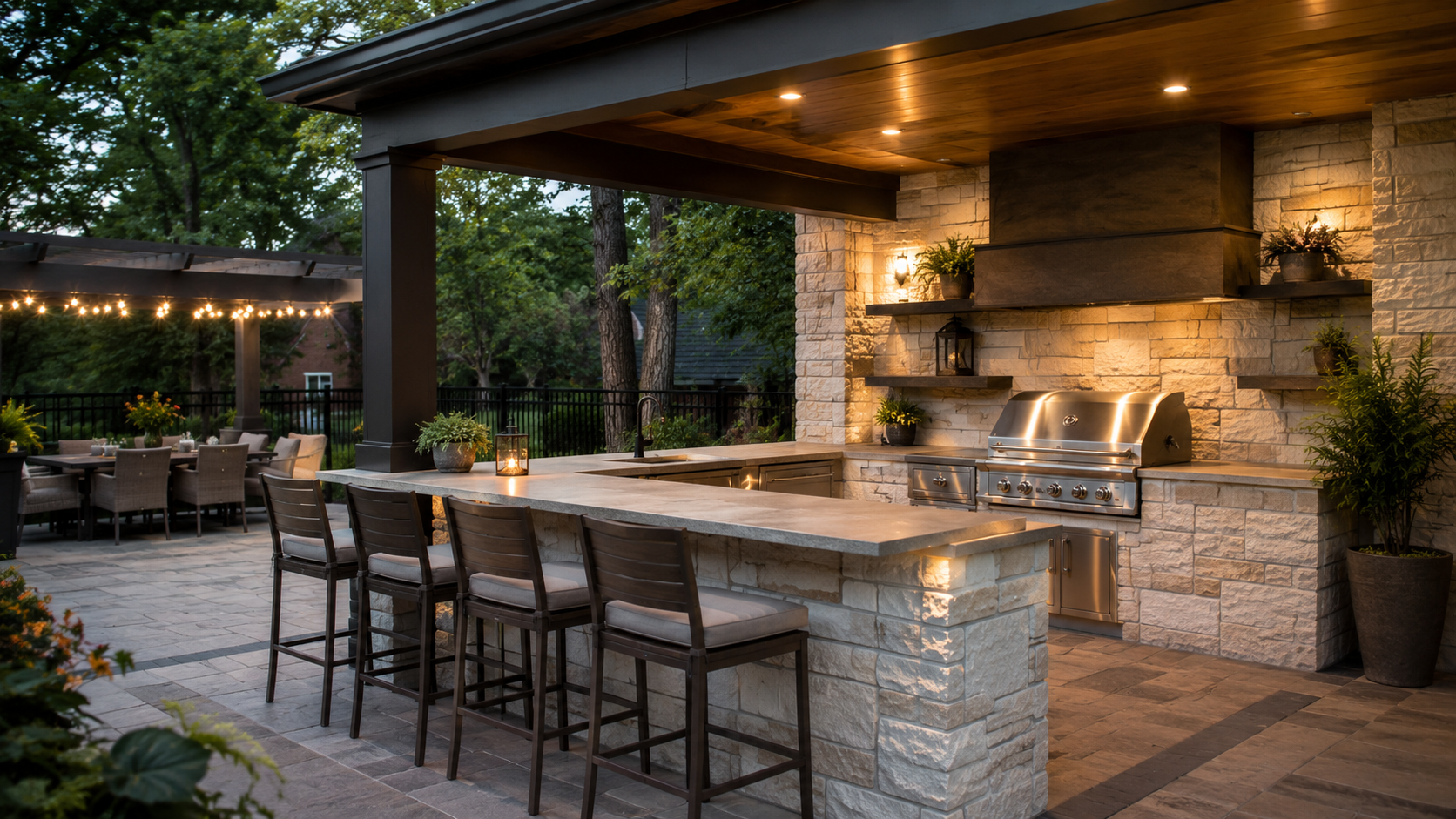
Cooking stations often center around a built-in grill or cooking surface designed specifically for outdoor use. Preparation areas provide space for food preparation, plating, and serving. Storage cabinets allow utensils and supplies to remain outside rather than being carried back and forth from the house.
Seating areas, either nearby or integrated into the design, allow guests to remain engaged with the cooking process.
Integrating Outdoor Kitchens Into Hardscape Design
Outdoor kitchens should never feel like isolated structures placed randomly on a patio. Instead, they should be integrated into the overall hardscape design so that the cooking area connects naturally with seating, walkways, and dining areas.
This integration ensures that the entire outdoor space functions cohesively.
Fire Features That Extend Outdoor Living Into Cooler Months
Fire Pits Versus Outdoor Fireplaces
Fire pits and outdoor fireplaces each create unique gathering environments. Fire pits tend to encourage circular seating arrangements that allow multiple people to gather comfortably around the flame.
Outdoor fireplaces often create a more structured focal point, similar to an indoor living room fireplace, with seating oriented toward a single direction.
The right choice depends on how the space will be used and how the surrounding landscape is arranged.
Designing Fire Features for Comfort and Safety
Proper placement of fire features is critical. They should be positioned far enough from structures and plantings to ensure safety while still feeling integrated into the outdoor seating area.
Wind direction and smoke movement should also be considered during the design phase.
The Role of Fire Elements in Luxury Hardscapes
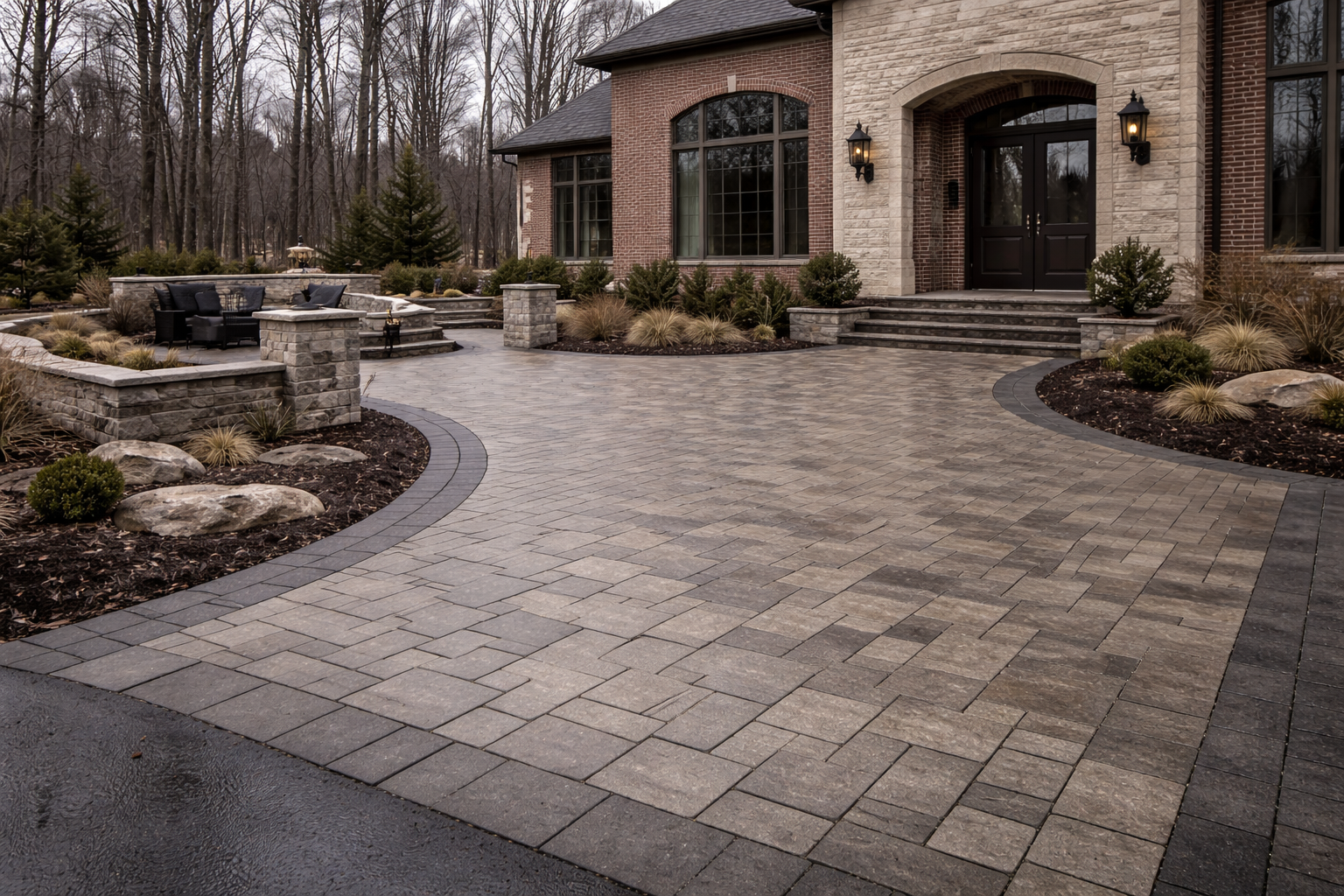
Within luxury hardscapes, fire features often anchor the entire outdoor space. Seating walls, patios, and lighting elements are frequently arranged around the fire to create a natural gathering area.
These designs help ensure the space remains comfortable during cooler evenings.
Materials That Perform Well in Michigan's Climate
Choosing Materials That Handle Freeze-Thaw Cycles
Michigan's climate requires outdoor structures that can withstand repeated freeze-thaw cycles. Materials used in outdoor kitchens and fire features must remain stable as temperatures fluctuate.
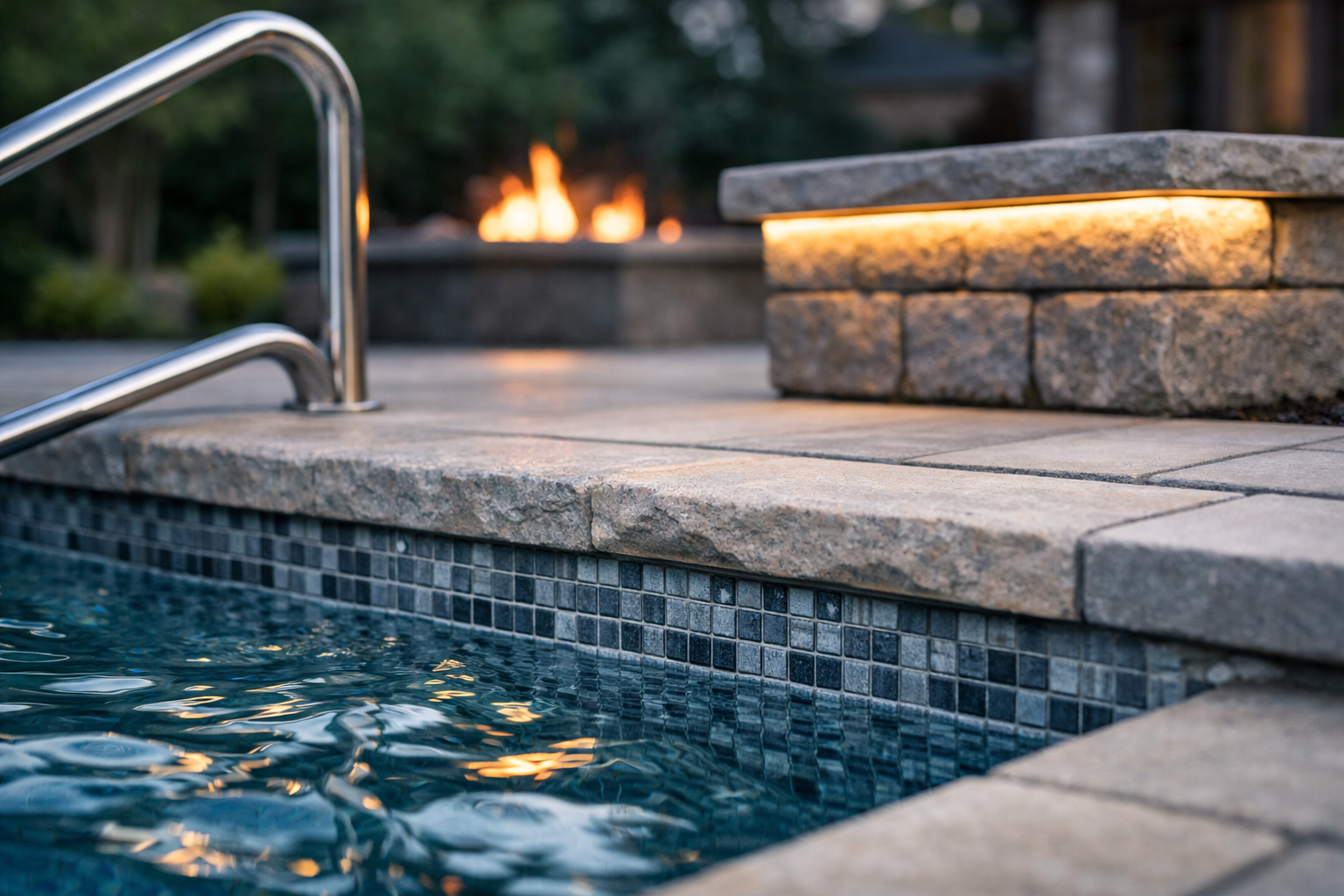
Stone, concrete block, and specialized masonry products are commonly used because they maintain structural integrity during seasonal changes.
These materials are often installed as part of broader hardscape installation projects.
Stone, Brick, and Concrete Options
Natural stone offers durability and a timeless appearance, while brick and engineered concrete materials provide consistent structural performance. Each option presents different visual and functional benefits.
Choosing materials that complement existing landscape features helps create a cohesive outdoor environment.
Countertops and Surfaces Designed for Outdoor Use
Outdoor kitchens require surfaces that resist moisture, temperature swings, and heavy use. Durable countertop materials designed for outdoor exposure help ensure the kitchen remains functional over time.
Designing Outdoor Living Spaces That Function as a Cohesive Whole
Creating Flow Between Cooking, Dining, and Seating Areas
Effective outdoor design ensures that cooking, dining, and seating areas connect naturally. Pathways should allow easy movement between spaces without interrupting conversation or activity.
Connecting Outdoor Kitchens to Existing Patios and Walkways
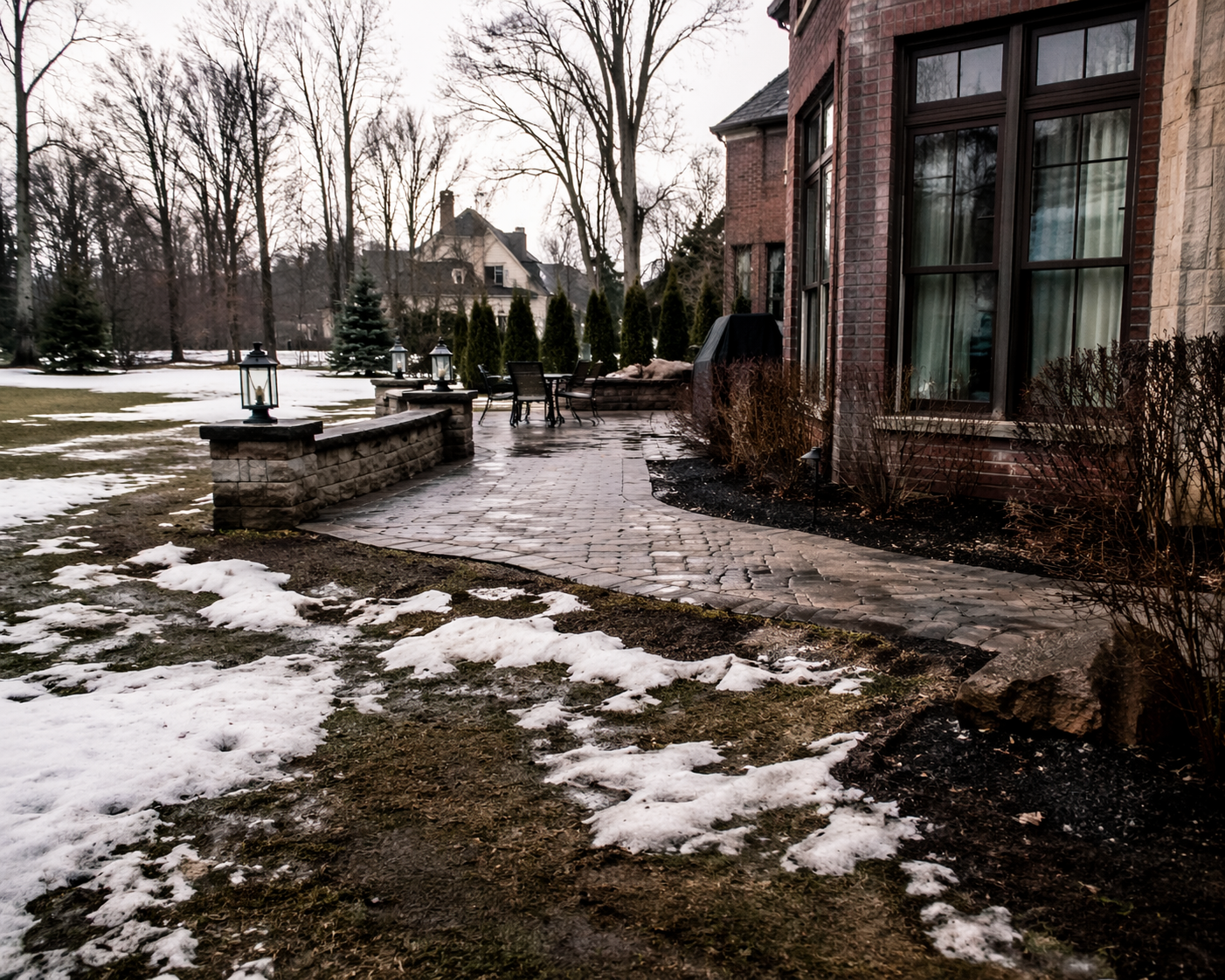
Outdoor kitchens often work best when positioned near existing patios or walkways. Integrating them into ongoing hardscape installation ensures the new features blend seamlessly with the rest of the landscape.
Defining Outdoor Rooms Within the Landscape
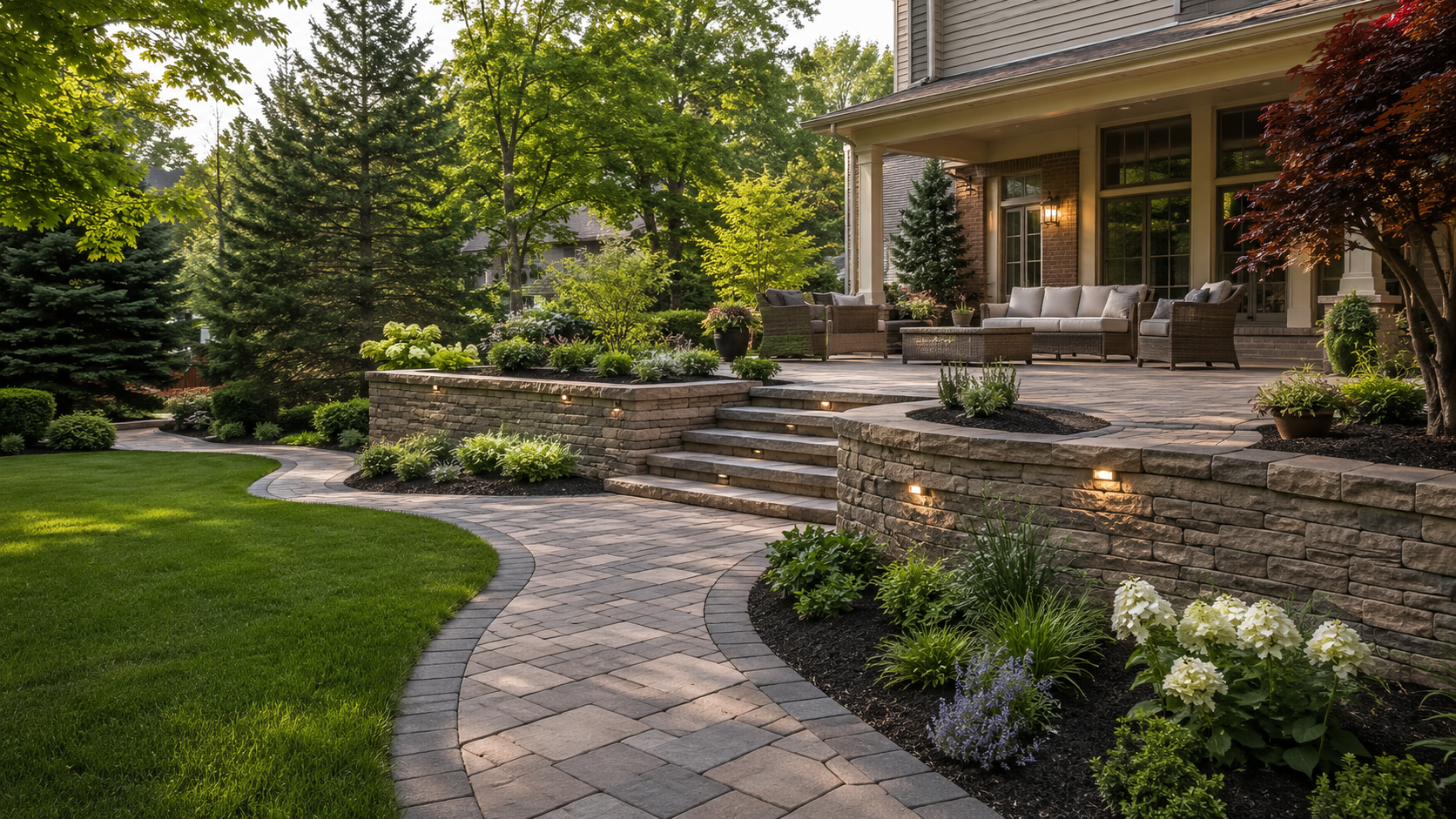
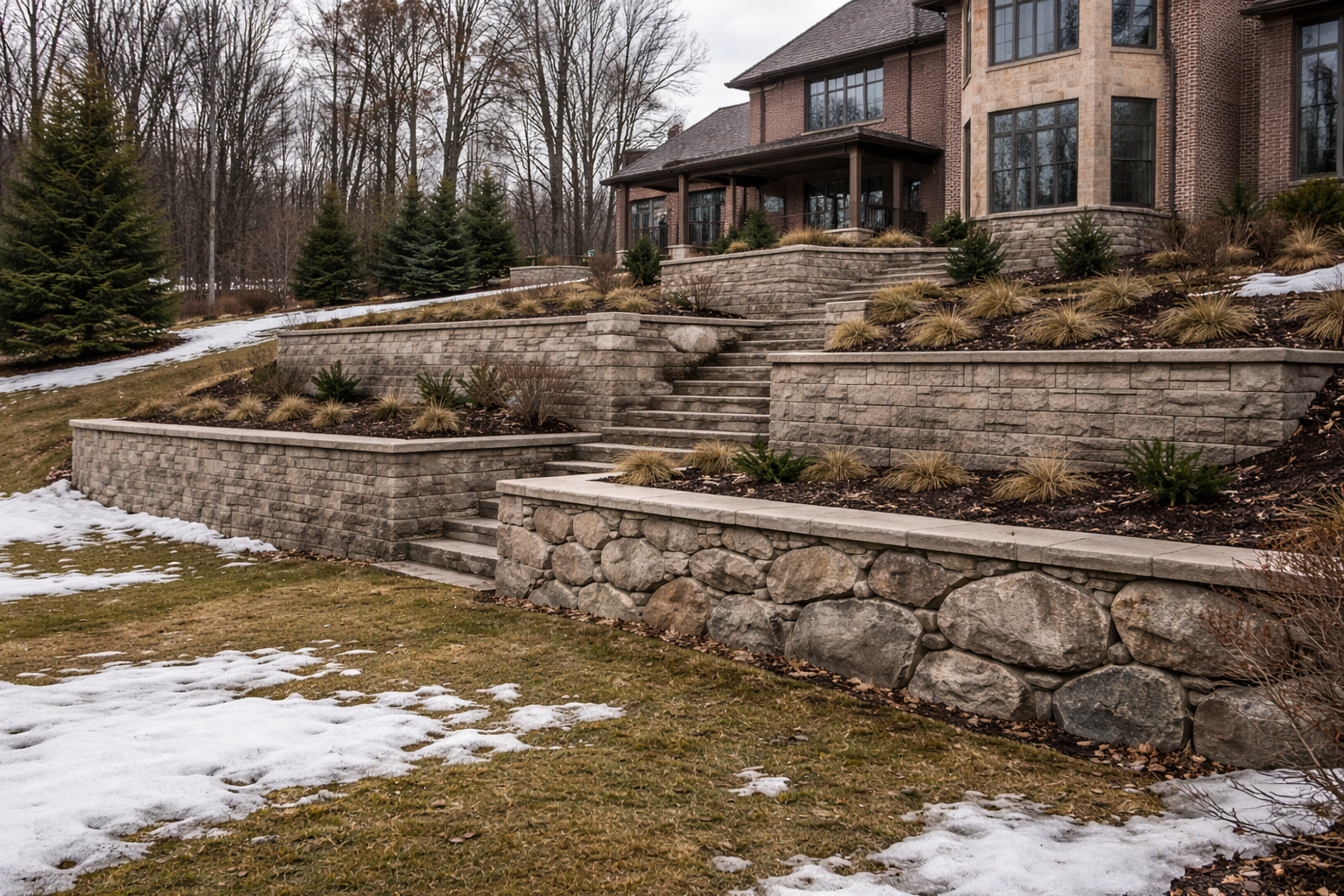
Retaining walls, planters, and elevation changes can help define distinct outdoor "rooms" within the yard. These features add structure and organization to larger landscapes.
Planning for Michigan Weather and Seasonal Use
Designing Spaces That Remain Comfortable in Cooler Evenings
Fire features allow outdoor spaces to remain usable even as temperatures drop. Strategic placement of fire pits or fireplaces ensures heat is distributed where people gather.
Protecting Outdoor Kitchens During Winter Months
Outdoor kitchens should be constructed using materials that tolerate snow and moisture. Covers or protective enclosures can also help extend the lifespan of appliances and surfaces.
Ensuring Year-Round Structural Durability
Proper base preparation and installation techniques help ensure outdoor kitchens and fire features remain stable throughout Michigan's seasonal changes.
Common Mistakes Homeowners Make When Planning Outdoor Kitchens and Fire Features
Oversizing or Undersizing the Space
Spaces that are too large may feel disconnected, while spaces that are too small may limit functionality. Careful planning ensures the layout matches how the space will actually be used.
Ignoring Circulation and Seating Layout
Poor circulation paths can disrupt gatherings and make outdoor kitchens difficult to use.
Choosing Materials Without Considering Climate
Materials that perform well in warmer climates may not withstand Michigan winters. Selecting durable options is essential.
Why Professional Hardscape Design Prevents Long-Term Problems
Experienced contractors offering detroit landscaping services understand how soil conditions, climate, and drainage affect outdoor structures.
When Professional Landscape Planning Makes the Biggest Difference
Evaluating the Property Before Construction
Slope, drainage patterns, and existing landscape features all influence where outdoor kitchens and fire features should be placed.
Integrating Fire and Cooking Features Into the Overall Landscape
Successful projects consider how these features interact with planting beds, walkways, and patios within the broader residential landscaping plan.
Choosing Contractors Experienced in Hardscape Installation
Proper hardscape installation ensures outdoor kitchens and fire features remain stable and safe over time.
Planning an Outdoor Living Space That Lasts for Years
Questions Homeowners Should Ask Before Building
Homeowners should understand the materials being used, how drainage will be managed, and how the new features will connect to existing outdoor spaces.
Combining Outdoor Kitchens With Broader Luxury Hardscapes
Integrating these features into larger luxury hardscapes often produces the most cohesive results.
Creating Outdoor Spaces That Remain Enjoyable Over Time
Well-designed outdoor environments adapt easily to changing needs and seasonal conditions.
Designing a Backyard Space That Works After Sunset
If your backyard currently lacks a comfortable gathering area, outdoor kitchens and fire features may provide the structure needed to transform the space. Evaluating the layout of your existing patio or yard can reveal opportunities to introduce cooking areas, seating zones, and fire elements that bring the landscape to life in the evening.
Working with experienced providers offering detroit landscaping expertise helps ensure these structures are integrated thoughtfully into the broader design of the property.
Frequently Asked Questions
Are outdoor kitchens practical in Michigan's climate?
Yes. When constructed using durable materials and proper installation techniques, outdoor kitchens can remain functional for many years despite seasonal weather changes.
Is a fire pit or fireplace better for a backyard?
The choice depends on how the space will be used. Fire pits often support larger gatherings, while fireplaces create a more defined focal point.
Do outdoor kitchens require permits?
Local building codes may require permits depending on the size and features of the structure. Consulting experienced professionals helps ensure compliance.
How long do outdoor kitchens typically last?
With proper construction and maintenance, outdoor kitchens can last decades.
Can outdoor kitchens and fire features be added to existing patios?
In many cases they can be integrated into existing spaces, although the patio may require structural upgrades to support the new features.
Planning Your Outdoor Kitchen: Zones, Utilities, and Winter-Smart Layout
A great Metro Detroit outdoor kitchen starts on paper, not with the first paver. Plan four working zones - cooking, prep, serving, and seating - and the traffic path between them before choosing appliances, so the space still works when it is full of guests. Place the kitchen where it relates to the house: closer in for convenience and shorter utility runs, or further out as a destination room, and decide early whether a covered structure belongs in the plan.
Run utilities before beauty. Gas, electric, and water lines should be routed before the hardscape goes down, which keeps the finished patio intact and the installation clean. In our climate, orient cooking areas away from prevailing winter wind, keep clear paths for snow, and position fire features with proper clearance and draft so they stay safe and comfortable in cooler months. Resolving these decisions at the design stage is what separates an outdoor kitchen that works in January from one that only works in July.