Brick Paver Patios for Outdoor Living: Zones, Layout, and Materials
The strongest brick paver patios in Metro Detroit are designed as outdoor living spaces before any construction begins. Zones, layout, traffic flow, materials, and transitions are worked out as one connected plan. A patio that looks right on day one and feels right for years afterward is almost always the result of design decisions made on paper, not in the field. The pavers come after the plan.
What a Brick Paver Patio Should Do Before It Is Built
A patio is a room, not a slab. Before any paver is selected, the design should answer a few practical questions: who will use the patio, how often, and for what. Those answers shape every decision that follows, from size and shape to material and edge detail.
Everyday use matters more than the rare large gathering. A patio that serves morning coffee, weeknight dinners, and casual reading lives differently than one built mainly for occasional parties. The design should fit how the household actually spends time outside.
A patio used several nights a week needs comfortable circulation, shade options, and a plan for lighting even if those pieces come later. A patio used occasionally can be simpler and still feel intentional.
This thinking is why planning should come before pavers are chosen. The right material follows the right plan, and a strong approach to brick paver patios and stone walkways starts with how the space will live.
Designing Outdoor Living Zones on a Brick Paver Patio
A brick paver patio works hardest when its space is organized into zones. Naming the zones first makes layout, size, and material decisions easier, because each zone has a job and a footprint. The patio stops being one undefined area and becomes a sequence of places that work together.
Dining zones need clearance, not just a table. Chairs need room to pull out, and the zone should connect cleanly to the kitchen door.
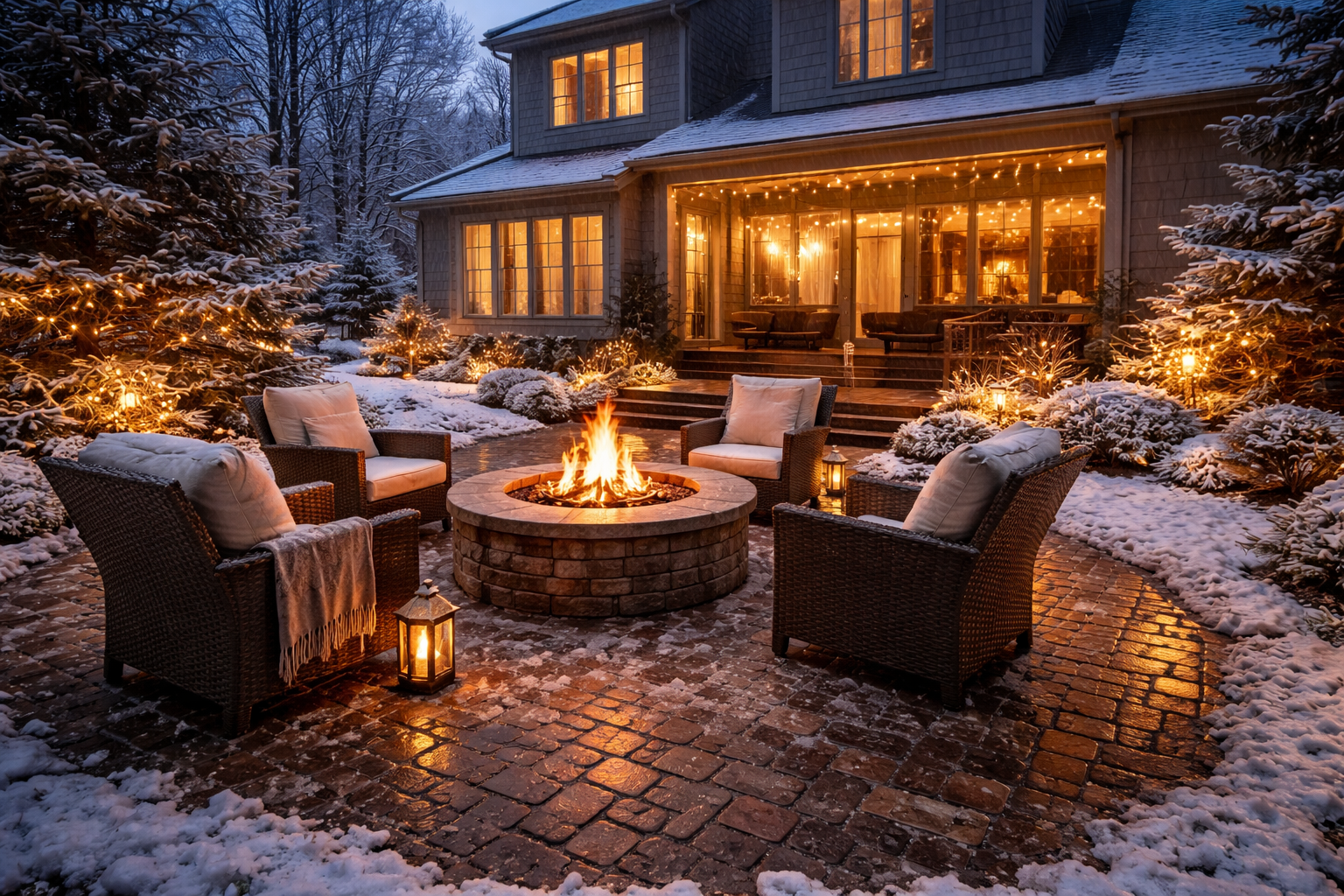
Lounge zones organize around a focal point: a fire element, a view, or a piece of architecture. The lounge footprint and the traffic around it should be planned together.
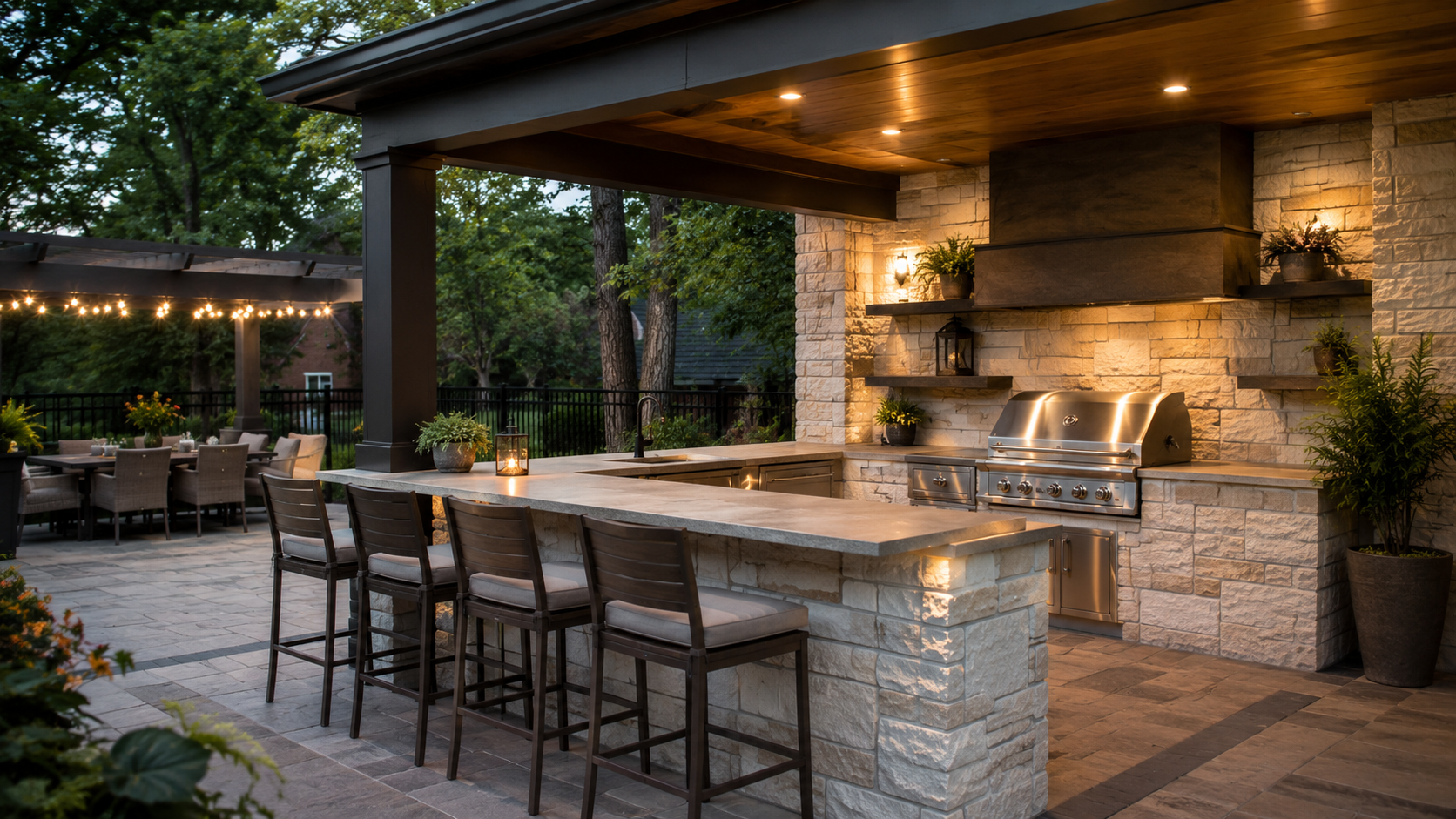
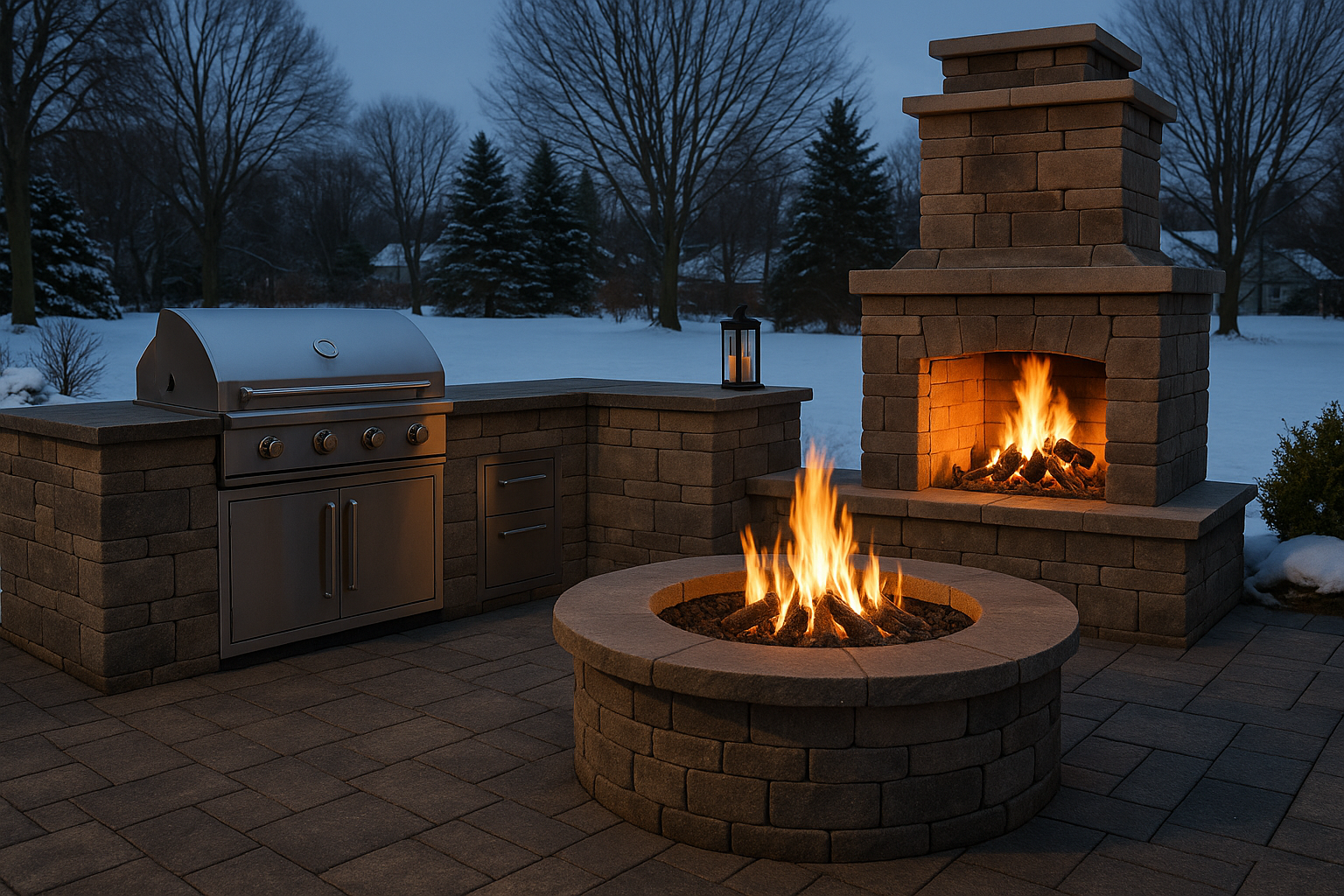
Fire and cooking zones stay high level at this stage. The patio should anticipate them and leave room for them, without trying to design the kitchen or fire feature itself.
Transition zones connect the patio to everything around it: the house, the lawn, the walkway, or a future outdoor feature. Planning transitions as zones, not afterthoughts, is what makes the whole space feel intentional.
Patio Size and Layout: Getting the Proportions Right
Patio size should follow use, not square-footage targets. The right scale holds the zones comfortably, fits the home's proportions, and leaves room for movement. A patio that is too large feels bare. A patio that is too small feels cramped, even with beautiful materials.
"As big as possible" is rarely the right answer. Oversized patios swallow furniture, dilute focal points, and create dead corners that never get used.
Shape decisions follow zones too. A square or rectangular patio reads as formal and clean. An L-shaped patio can separate dining and lounging without breaking the surface. A wraparound layout suits homes with multiple door access.
The home's proportions are the other constraint. A small home with an oversized patio looks unbalanced. A large home with a modest patio can look unfinished. Getting that relationship right is one of the quieter signs of a strong design.
Traffic Flow Between the House, Patio, and Yard
How people get to the patio, move around it, and leave it is part of the design. Traffic flow separates a patio that is used every day from one that gets used a few times a summer. The connection from the house to the patio matters most.
The path from the kitchen or back door is the most important entry. People carrying food, drinks, or guests through that door should not have to step around furniture to reach a seat. The dining zone usually belongs nearest that door.
Side approaches matter too. Many homes have a side yard or driveway path that brings people directly to the patio. Designing those approaches so they connect cleanly keeps the space feeling welcoming.
Walkways should meet the patio at a deliberate point. A walkway that lands at a corner or transition feels intentional. One that interrupts a seating zone feels like a mistake.
Furniture placement is the last layer. Leaving clear lanes between zones is what makes the space comfortable for the household and for guests.
Material Selection and Cohesion for a Luxury Look
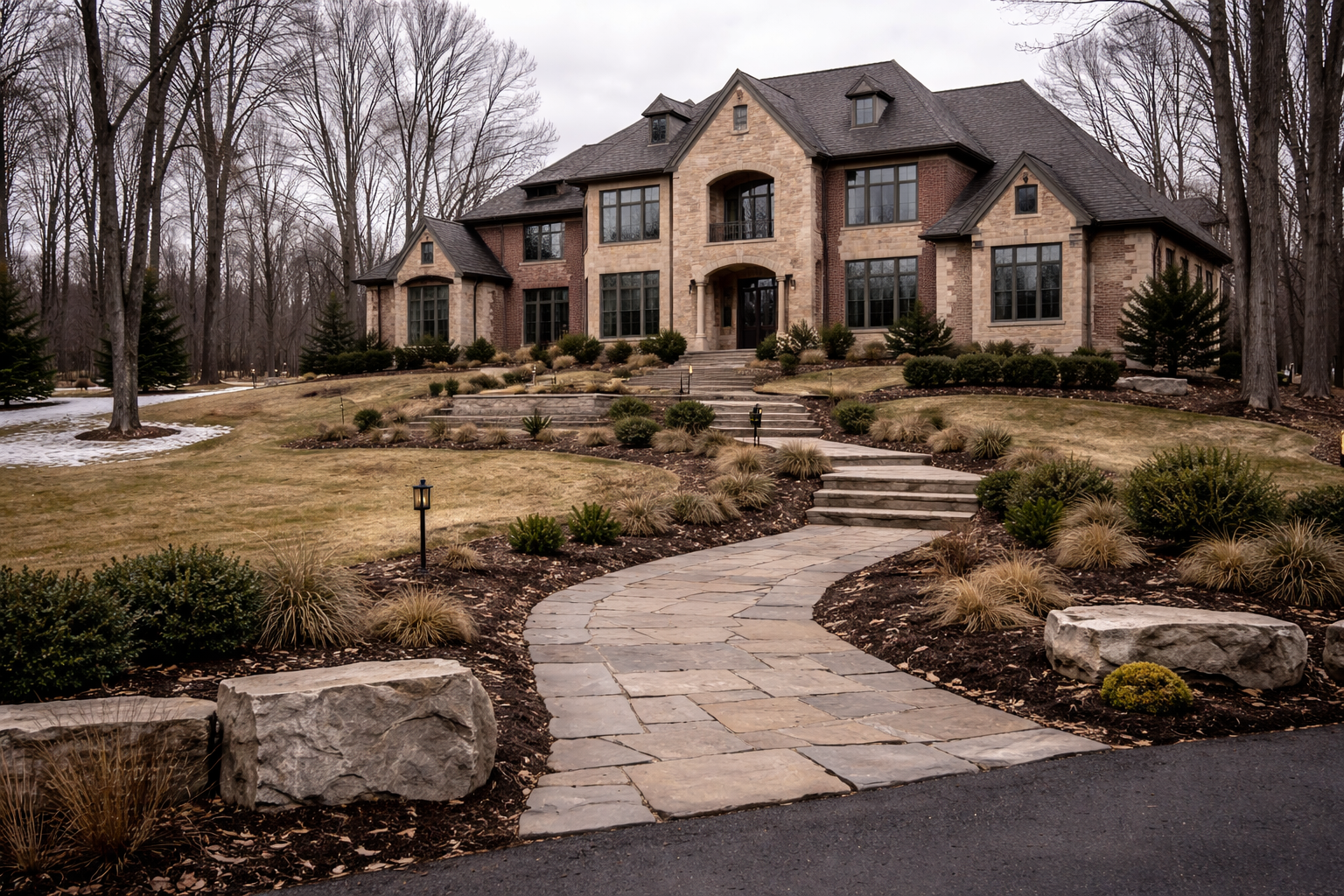
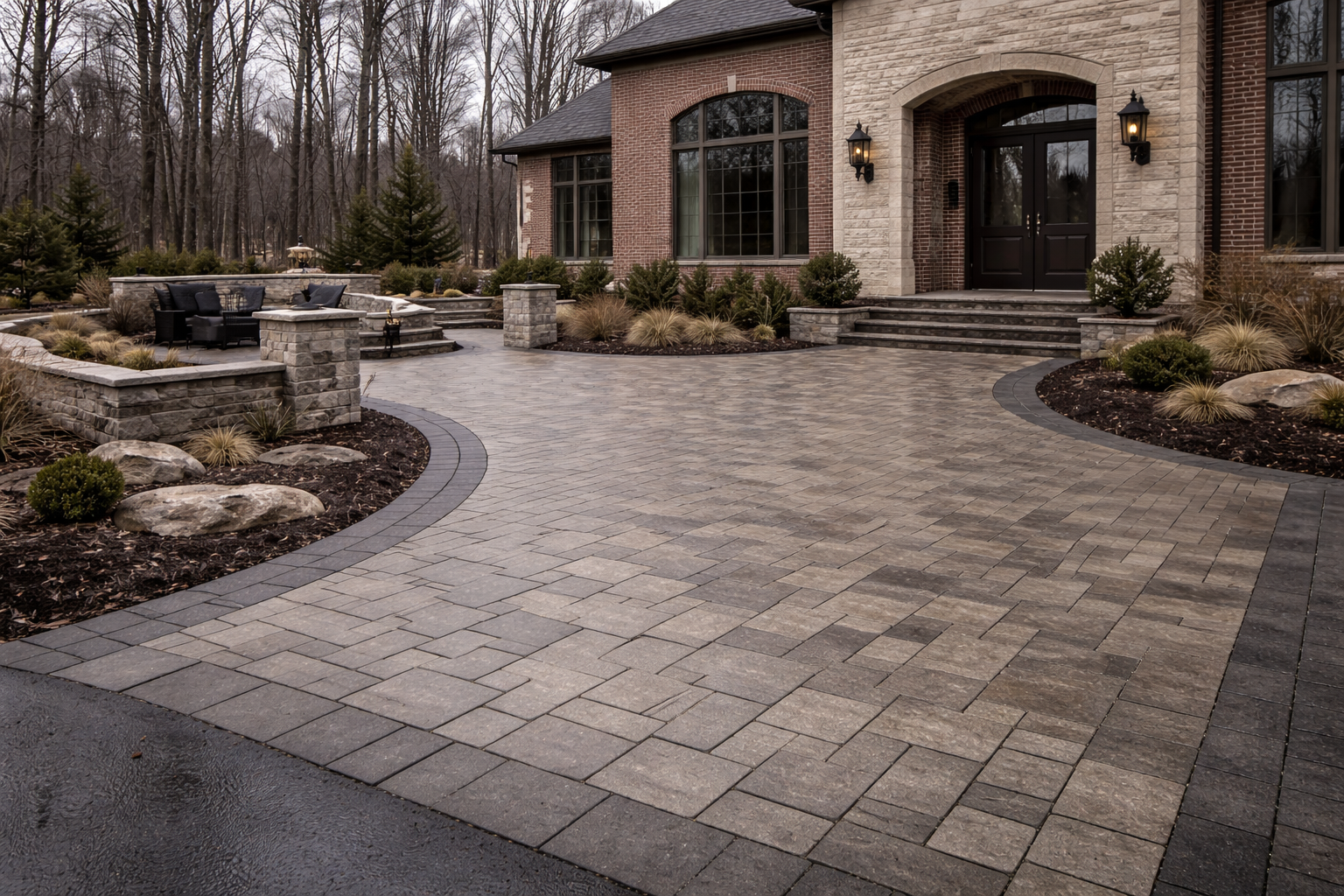
The material for a brick paver patio should fit the home before it fits a trend. The paver family, color range, texture, and finish should respond to the home's brick, stone, siding, and roof, so the patio reads as part of the property rather than dropped onto it.
A coordinated palette is one of the clearest signs of strong design. When the patio's color story relates to the home and to the surrounding hardscape, the eye moves easily across the space. Repetition gives the design rhythm, and restraint gives it confidence.
Luxury hardscapes are not defined by the most expensive material. They come from choosing fewer materials and using them well. A small, well-coordinated palette almost always reads as more refined than a yard packed with high-end products that do not relate to each other.
Texture and scale matter as much as color. Larger units suit broader, modern homes; smaller units suit older or more detailed homes. Those small choices separate a luxury hardscape from a serviceable one.
Borders, Patterns, Transitions, and Edges as Design Decisions
Borders, patterns, and transitions are not decorative add-ons. They are the design choices that make a patio read as one composed surface rather than a field of repeating units. Each of these decisions should support the layout the rest of the patio already commits to.
Borders give the patio visual structure. A simple border in a complementary color, run cleanly around the field, defines the patio's edge without overcomplicating the surface. A heavy border that cuts the patio into too many sub-areas often makes the space feel busy.
Patterns carry their own language. Running bond reads as modern and calm. Herringbone reads as traditional and detailed. Basket weave reads as classic. The right pattern depends on the home, the patio's role, and the surrounding materials.
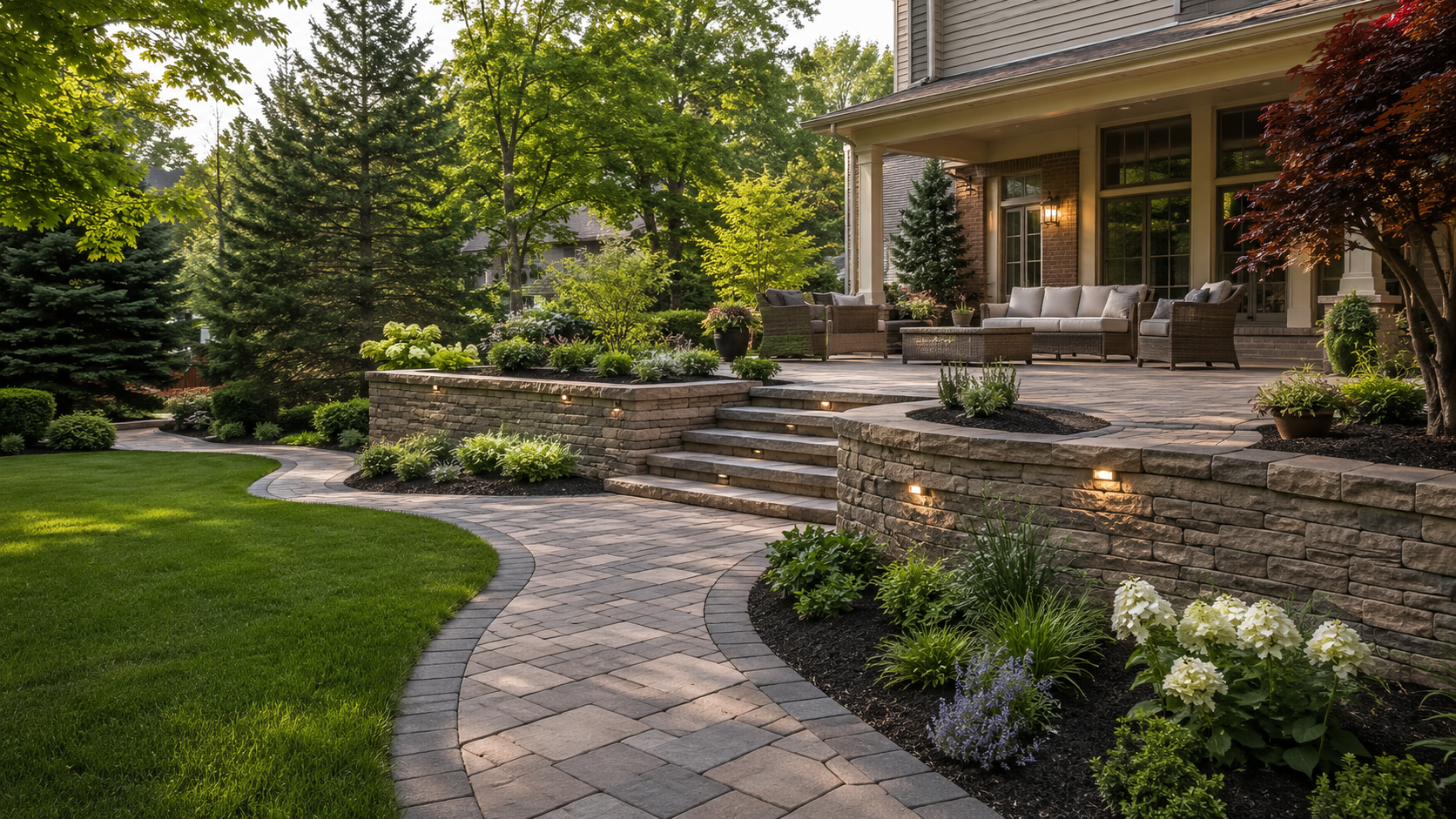
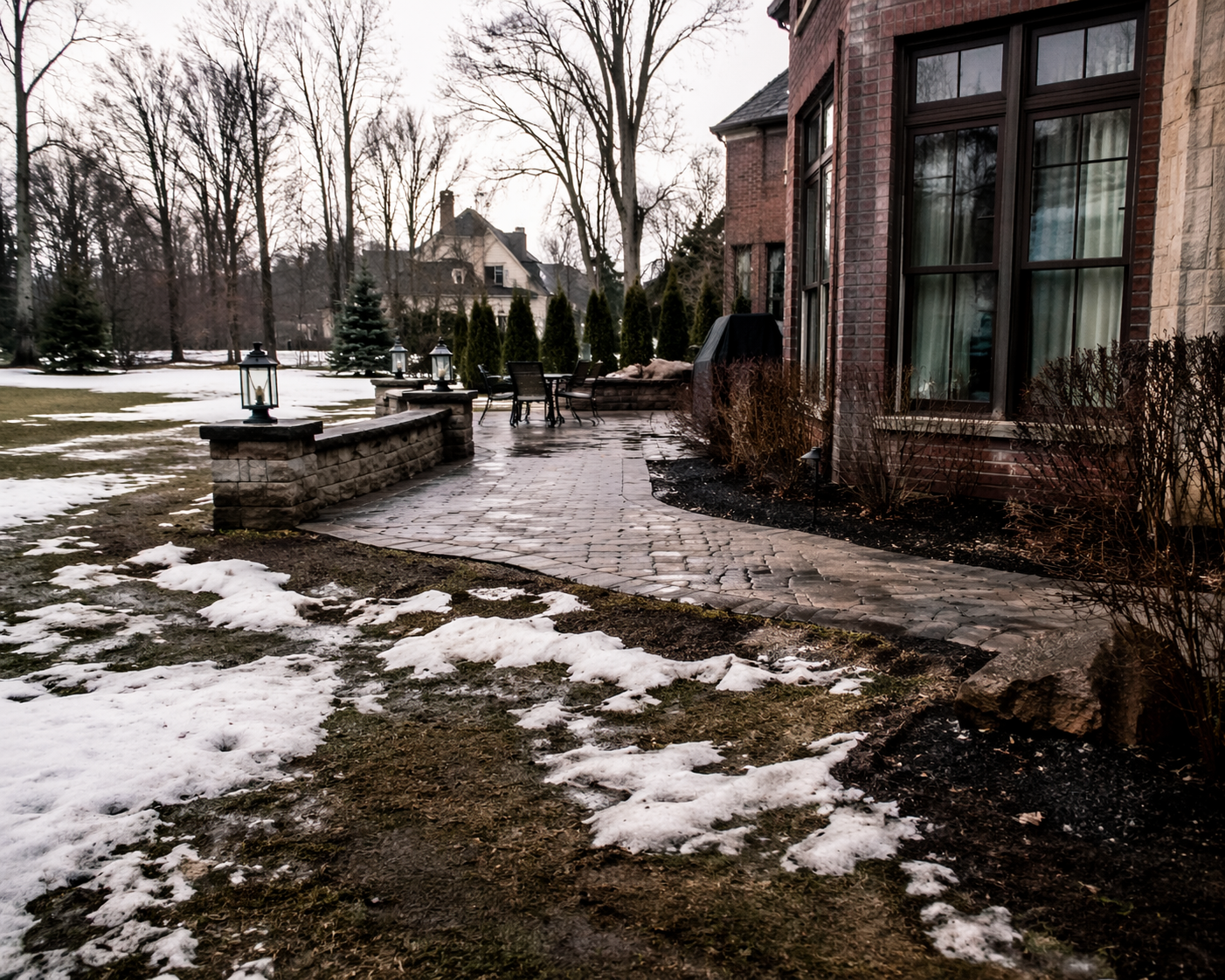
Transitions are where the patio talks to the rest of the property: steps, walkways, lawn edges, and sometimes future features. Each transition should be planned. The way a step lands, a walkway joins, or the lawn line meets the edge influences how the space reads.
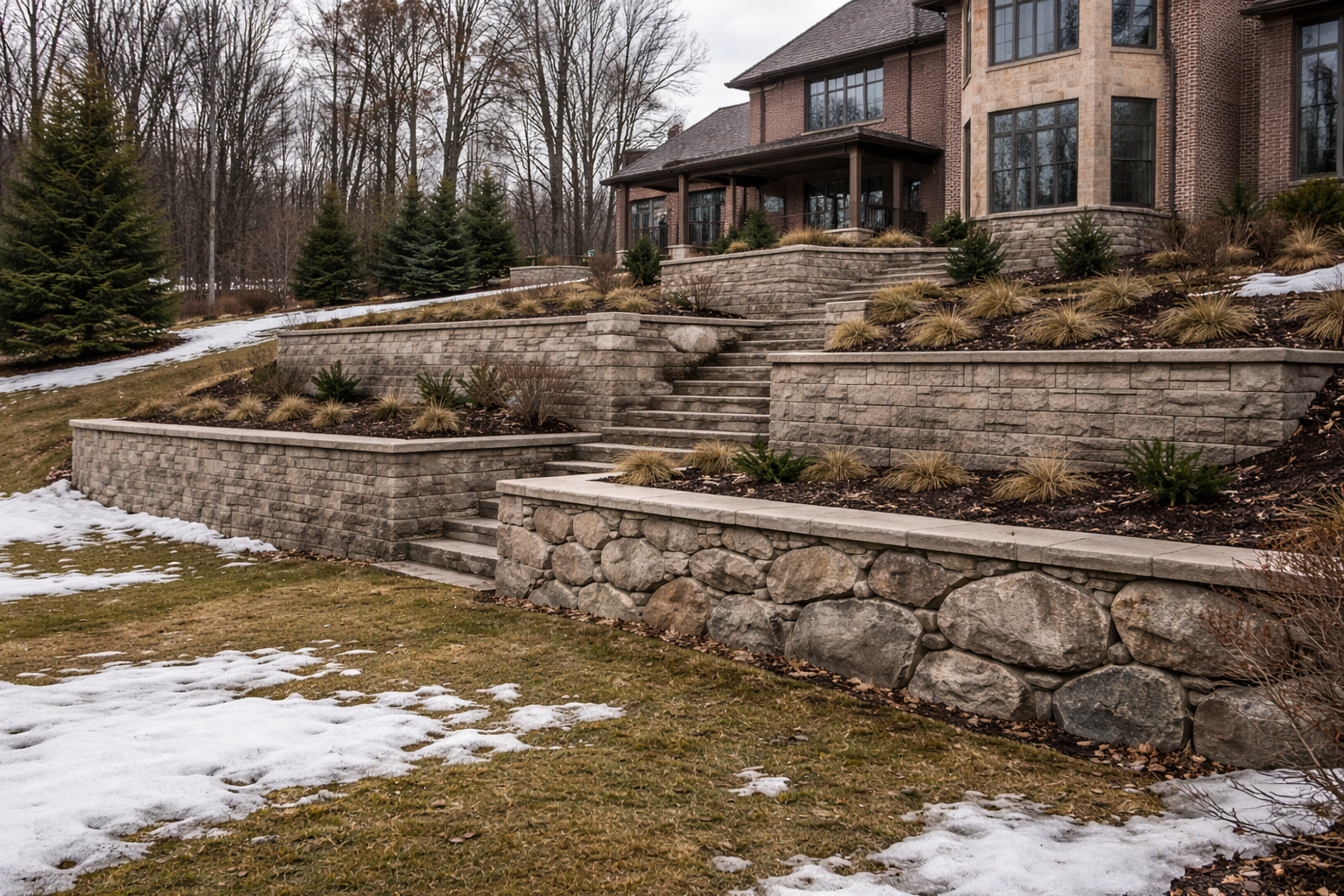
These choices are where the patio joins the wider hardscape composition. A patio that fits cleanly into professional hardscape design and installation in Metro Detroit carries the same language across walkways, walls, and steps.
How the Patio Plan Supports a Cleaner Build
A resolved patio plan removes guesswork from the build. When elevations, slopes, edges, and transitions are decided on paper, the crew is installing decisions rather than making them. That is what gives patio construction the precision a luxury result requires.
Elevations are a common pressure point. Where the patio meets the house, the door threshold, the lawn, and any steps should be coordinated before tools come out. A patio that is even an inch off in one of those relationships can create awkward transitions that show up every day.
Edges and transitions tell the same story. A clean edge between the patio and the surrounding landscape depends on the design committing to how those meetings work. When the design leaves edges open, the field becomes an improvisation.
A solid plan also supports the patio's durability. Patio construction in a four-season climate is easier when the design is resolved first. The downstream story, including what makes brick paver patios last in Metro Detroit's freeze-thaw and de-icing salt conditions, starts with planning that respects the realities of the install.
Planning for Future Outdoor Living Features Without Overbuilding Now
Not every feature a homeowner wants needs to be built at once. The right approach is to plan the full outdoor living vision now and build only what makes sense today. A patio designed with that mindset can leave room for future fire features, an outdoor kitchen, lighting, walkway extensions, or a pool connection without forcing rework later.
Design dependencies are the key. A patio built without anticipating a future outdoor kitchen may need to be cut into when the kitchen arrives. A patio without a planned utility path can require excavation later that disturbs finished surfaces. The fix is to anticipate those connections during the design.
Lighting, shade structures, and seating features do not need to be finalized immediately, but the patio should know where they may belong. That kind of planning keeps later additions from feeling patched onto a finished surface.
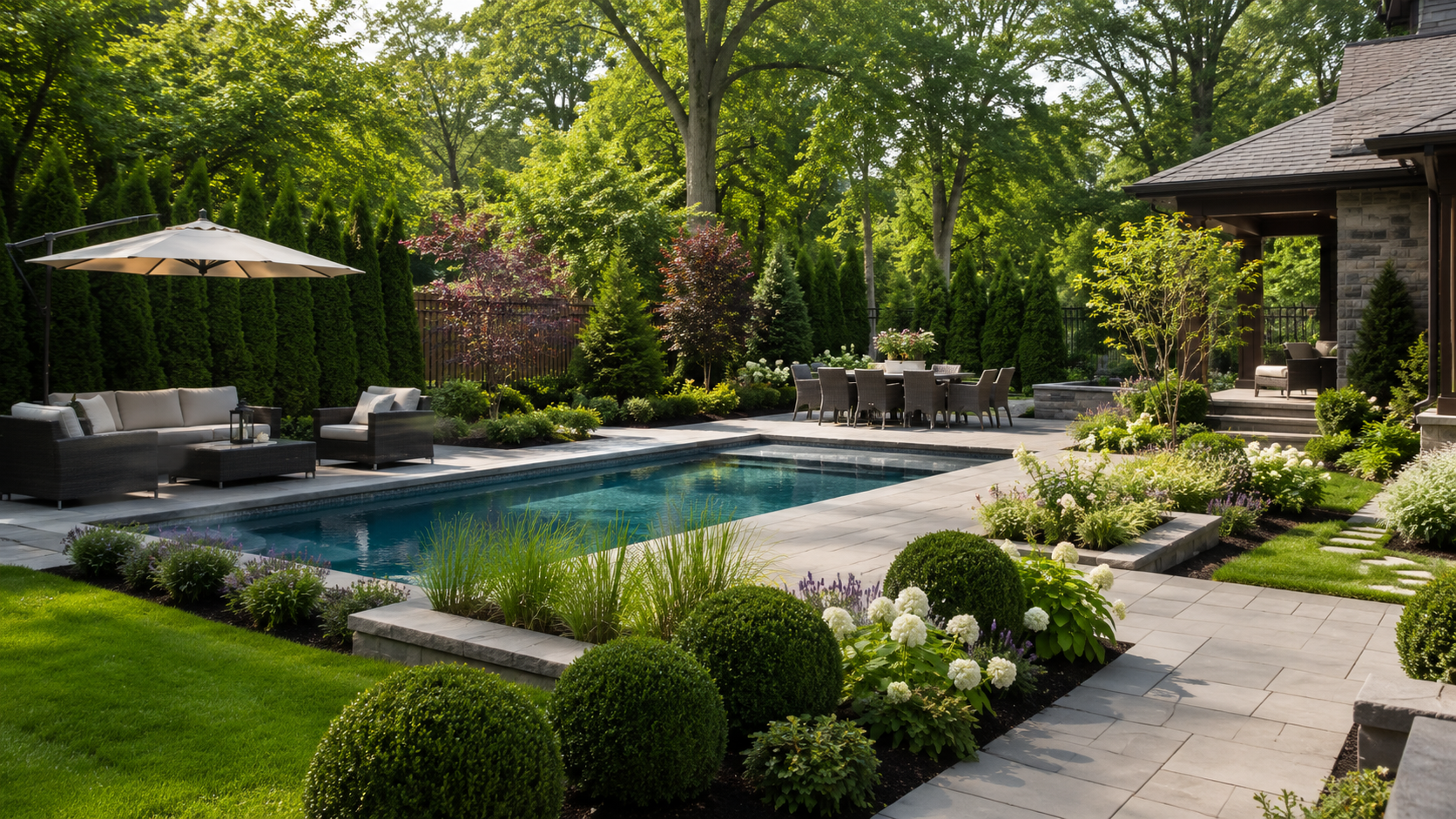
Pool adjacency is another consideration. Homeowners with a pool, or one planned for a later phase, should design the patio so the two surfaces meet cleanly when the time comes. Deeper guidance on poolside landscaping is its own conversation.
Scope and material choices shape the investment over time. A smaller patio with room to expand can be stronger than a finished everywhere layout that has to be cut into later. When those tradeoffs become part of the conversation, homeowners can review what hardscape projects actually cost in Metro Detroit separately.
Brick Paver Patio Design Mistakes Homeowners Should Avoid
Most patio problems start as design problems. The same mistakes show up again and again, and they are easiest to prevent when planning is taken seriously. Knowing the common pitfalls helps a homeowner ask better questions before any work begins.
Picking pavers before planning zones is the most frequent mistake. Materials should follow the design, not lead it. A paver chosen in a showroom and forced into a layout produces a patio that looks good in pieces but rarely as a whole.
Sizing the patio without considering furniture and movement is another. A patio that holds the table cannot always hold the chairs pulled out around it.
Forgetting the path from the kitchen door is a quiet mistake with daily consequences. The most-used entry should land at the most usable zone, not at an awkward corner.
Borders or patterns that fight the home's architecture are easy to spot once installed. A modern pattern on a traditional home, or a heavy border on a simple home, can make the patio feel disconnected.
Ignoring future features shows up only when those features arrive. A patio that did not anticipate a future fire pit, outdoor kitchen, or lighting plan often needs cuts and patches.
Assuming a beautiful material can fix a poor layout is the most expensive mistake of all. A premium paver cannot rescue a patio that does not work for the people who use it.
Brick Paver Patio Design FAQs
What should I consider before building a brick paver patio? Start with how the patio will be used, by whom, and how often. From there, plan zones, size, traffic flow, material cohesion, and how the patio connects to walkways and future features. Design comes before paver selection.
How do I choose the right size for a paver patio? Size should follow the zones the patio needs to hold and the proportions of the home, not a square-footage target. Account for dining clearance, lounge furniture, and traffic lanes. A right-sized patio holds everything comfortably without feeling bare or cramped.
What makes brick paver patios good for outdoor living? They handle multiple zones cleanly and integrate well with walkways, walls, and steps. They support dining, lounging, and gathering as parts of one designed space when planned that way from the start.
How does patio layout affect construction quality? A resolved layout removes guesswork during the build. Elevations, edges, and transitions decided on paper translate into a cleaner, lower-risk patio construction. When the design is unresolved, the field has to make those decisions instead.
What makes a paver patio look high end? Cohesion, restraint, and proportion. A coordinated paver family, intentional borders, and clean transitions create the high-end feel. The look comes from the discipline of the design, not the price of the products.
Can a patio be designed now if future outdoor features are planned later? Yes, when the full vision is planned even if only part is built. A patio that anticipates a future fire feature, outdoor kitchen, lighting plan, or pool adjacency avoids the rework that comes from adding features without a plan.
When should Metro Detroit homeowners start planning a brick paver patio? Earlier than most expect. May and early summer are active planning months. Design takes time to do well, and installation has its own lead times. Starting early is what makes a summer-ready patio realistic.
Planning a Brick Paver Patio This Summer? Start With the Design
May and early summer are active planning months in Metro Detroit. Homeowners are looking ahead to patio season and the kinds of evenings outside that make a backyard worth investing in. The patios that land cleanly before peak summer are almost always the ones where design happened first.
If you are thinking about a brick paver patio as the centerpiece of an outdoor living space, the right place to begin is with the design. A connected plan protects the build, the materials, the timeline, and the long-term experience of the space.
When you are ready to plan a patio that supports how you want to live outside, schedule a brick paver patio design consultation. The right conversation turns separate ideas into one designed outdoor plan.