Landscape Lighting Design: How to Elevate Safety and Curb Appeal After Dark
Why Landscape Lighting Matters More Than Most Homeowners Realize
Outdoor spaces often receive the most attention during daylight hours. Planting beds, patios, walkways, and lawn areas are designed to look balanced and inviting while the sun is up. Yet once the sun sets, many of these carefully planned landscapes disappear into darkness. Without intentional lighting, even well-designed properties lose both their visual impact and their functionality after dusk.
Landscape lighting solves that problem by revealing the structure of a property at night. It highlights architectural features, improves visibility along paths and entrances, and allows homeowners to enjoy their outdoor spaces long after sunset. When thoughtfully planned, lighting does not overpower the landscape. Instead, it subtly guides the eye and enhances the natural textures already present in the yard.
In modern residential landscaping, lighting is no longer an afterthought. It is considered a key design element that works alongside patios, walkways, planting beds, and other outdoor features. When integrated properly, it strengthens the overall design while also making the property safer and easier to navigate after dark.
Understanding the Purpose of Landscape Lighting
Lighting as a Functional Safety Feature
One of the most important roles of landscape lighting is safety. Poor visibility can make steps, elevation changes, and uneven surfaces difficult to see at night. Path lighting and step lighting provide clear visual cues that help prevent trips and falls.
Driveways and walkways benefit especially from subtle illumination. Even low-profile fixtures can define edges and guide movement across the property. For homes with outdoor living areas, lighting ensures that guests can move comfortably between the house, patio, and yard.
In many cases, homeowners initially explore lighting because they want better visibility around entrances and pathways. Once installed, however, they often realize that lighting also dramatically improves the overall appearance of the property.
Lighting as a Design Element in Detroit Landscaping
While safety is a practical benefit, lighting also plays an important design role. At night, carefully placed fixtures reveal textures that may go unnoticed during the day. Stone walls, tree trunks, and architectural details gain depth when light interacts with their surfaces.
In well-planned detroit landscaping projects, lighting helps define the structure of the entire landscape. It can draw attention to focal points such as entryways or specimen trees while gently fading into the background elsewhere.
This approach transforms the yard into a cohesive nighttime environment rather than simply placing a few bright lights around the property.
Extending the Usability of Outdoor Living Spaces
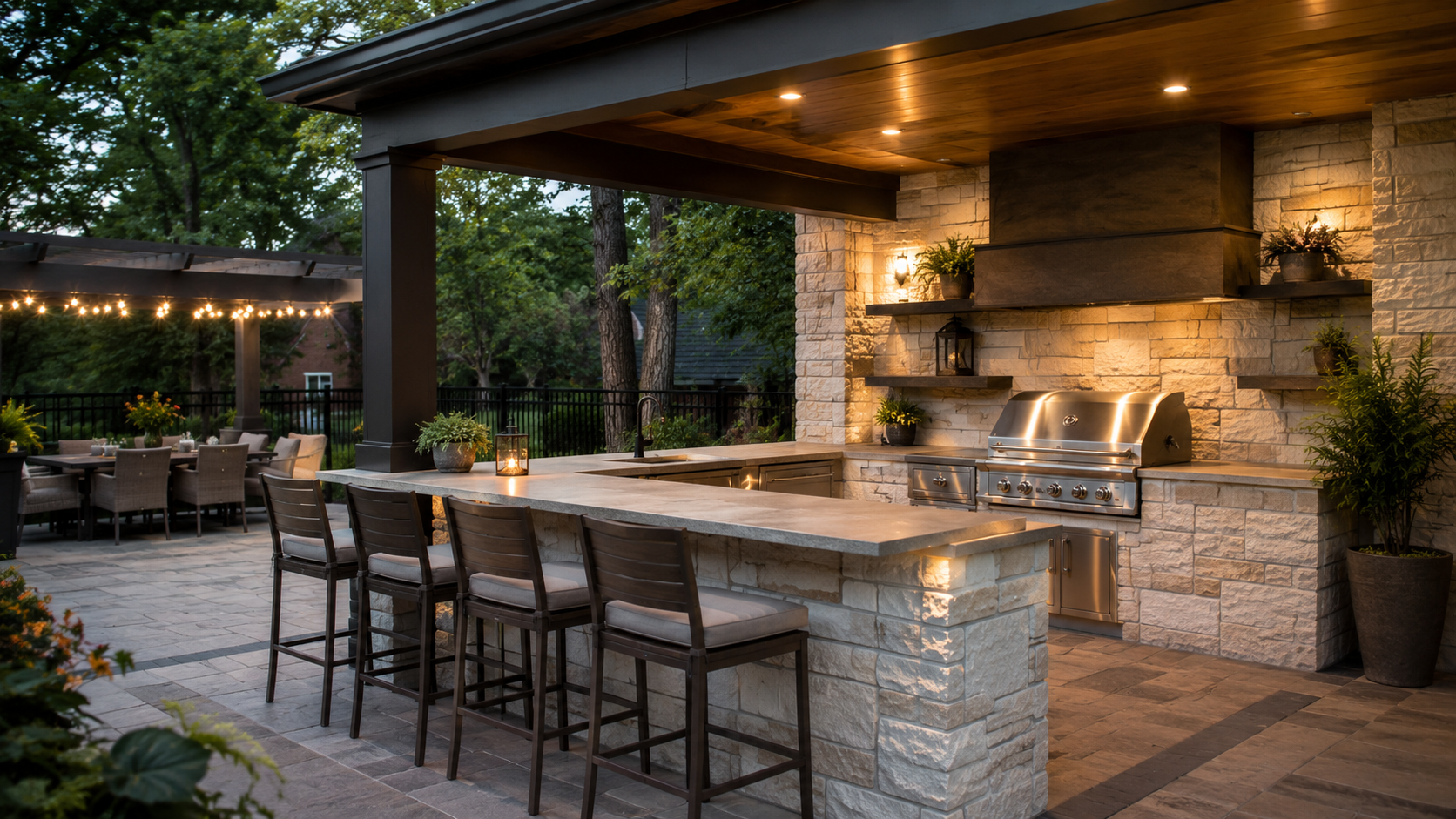
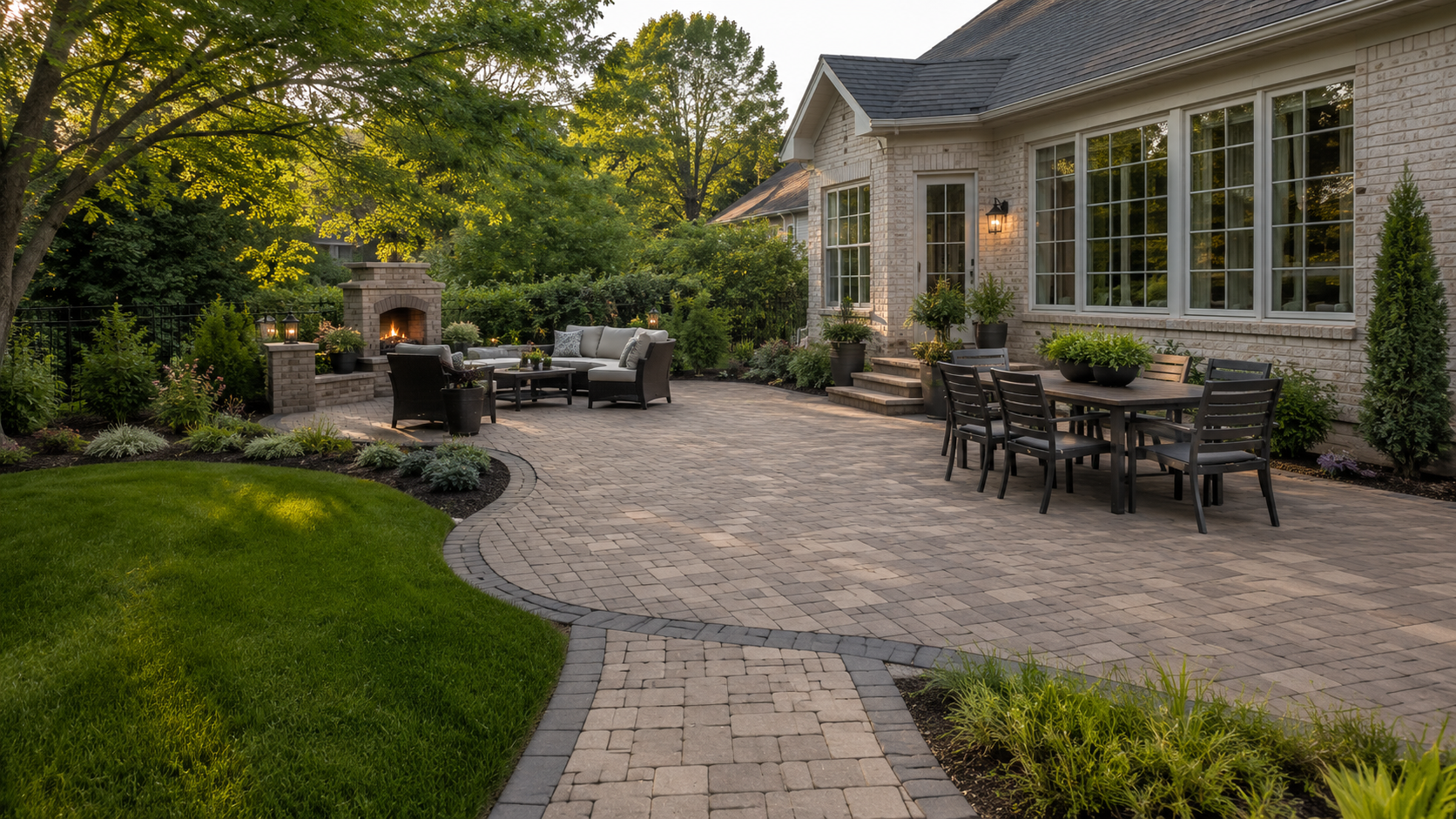
Outdoor living spaces are meant to be enjoyed beyond daylight hours. Patios, seating areas, and outdoor kitchens often become gathering places during evening hours, particularly in warmer months.
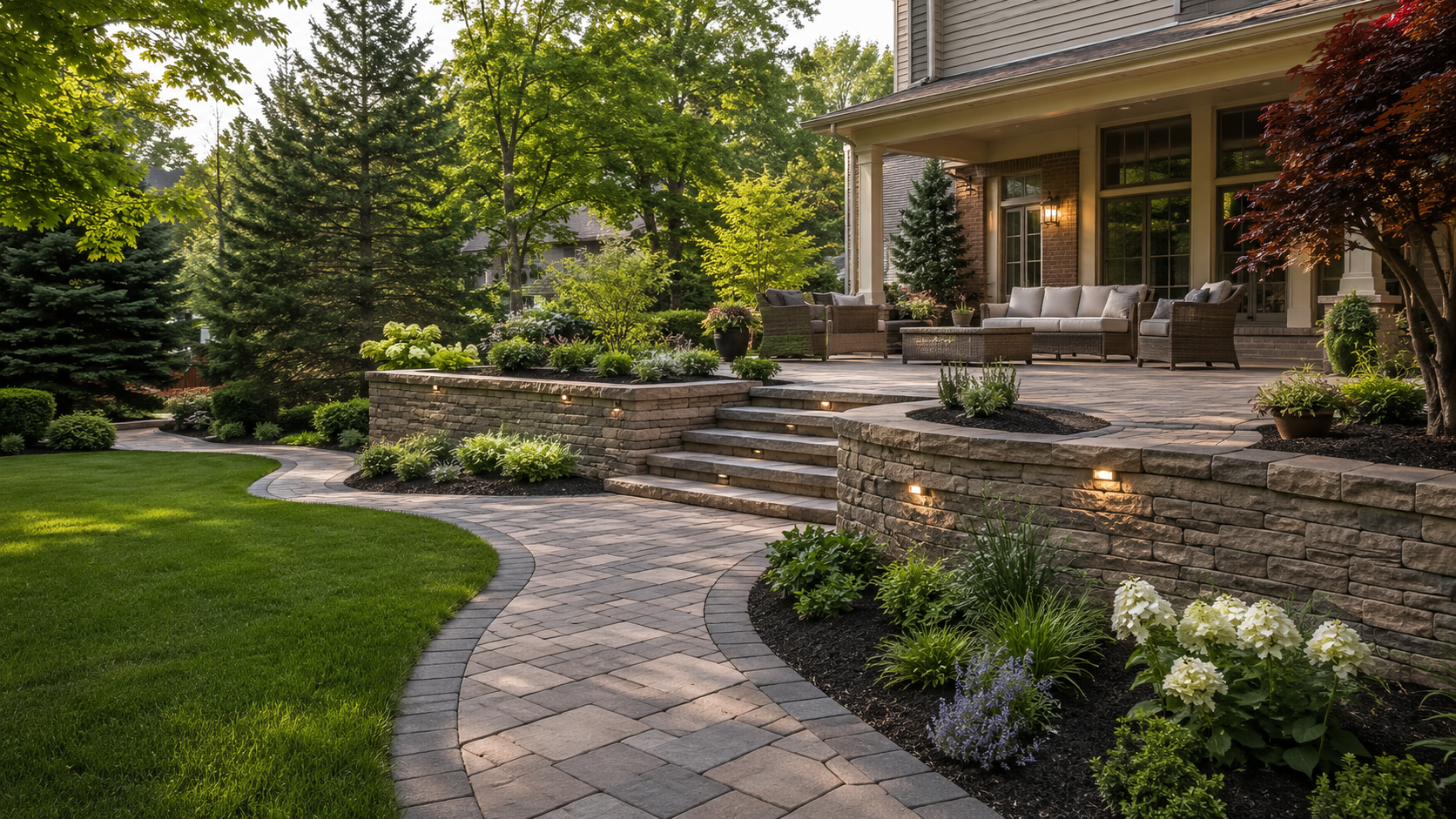
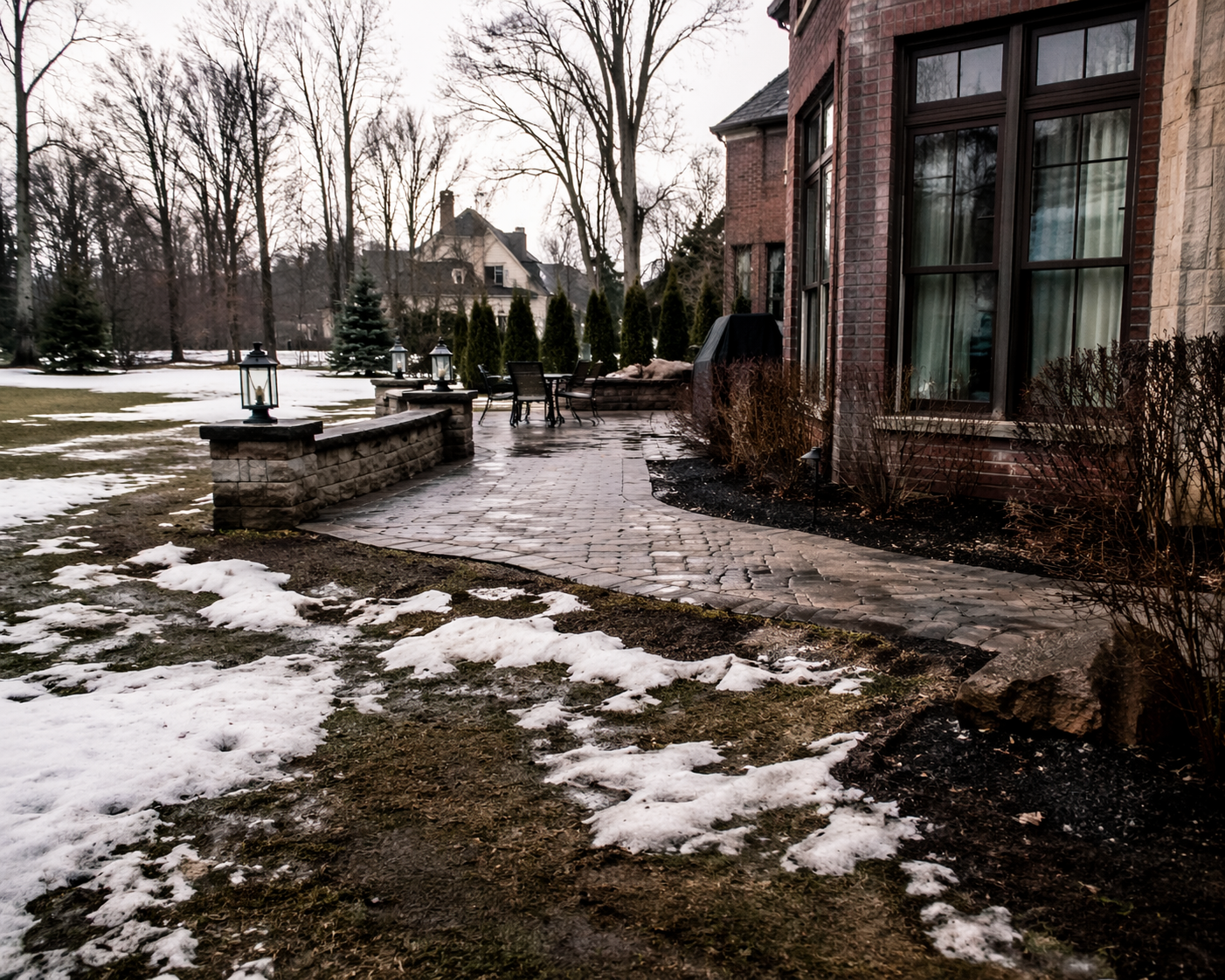
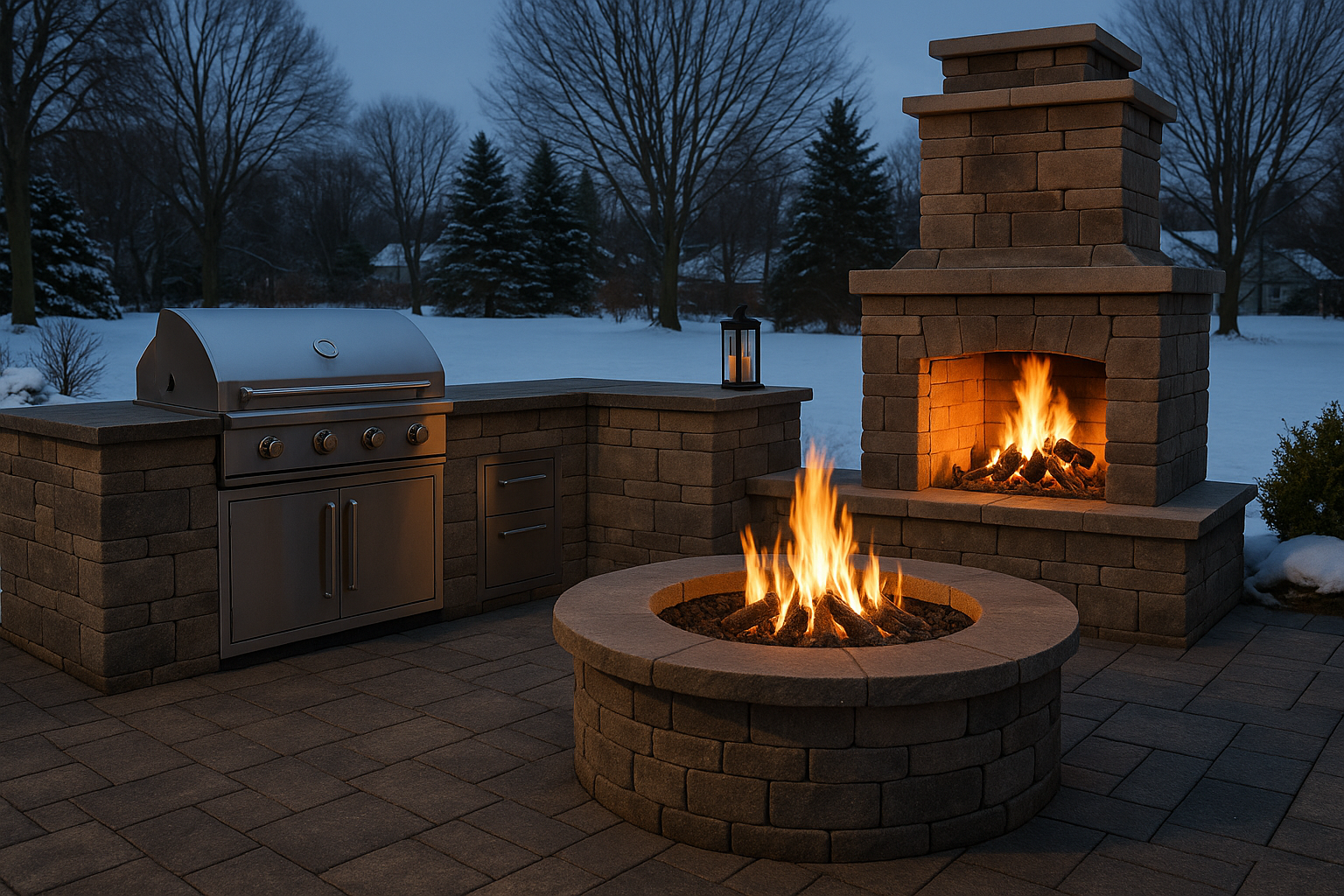
Lighting allows these areas to remain functional long after sunset. When integrated into luxury hardscapes, lighting fixtures can be embedded within walls, steps, or seating features to provide subtle illumination without disrupting the overall design.
The result is a space that feels welcoming and usable well into the evening.
The Core Principles of Effective Landscape Lighting Design
Layered Lighting Instead of a Single Light Source
Professional lighting design rarely relies on one type of fixture. Instead, multiple layers of light are used to create balance and depth.
Ambient lighting provides general illumination across an area. Task lighting focuses on functional zones such as pathways or seating areas. Accent lighting highlights specific features like trees or stonework.
Together, these layers create a balanced nighttime environment where no single element overwhelms the space.
Balancing Visibility With Subtlety
One of the most common mistakes in outdoor lighting is using fixtures that are too bright. Excessive brightness can produce glare and diminish the natural character of the landscape.
Well-designed lighting remains subtle. Fixtures are often concealed within planting beds or architectural elements so the light source itself is not visible. The goal is to illuminate surfaces and pathways while preserving the calm atmosphere of the outdoor space.
Designing Lighting Around Landscape Structure
Lighting works best when it complements the physical layout of the property. Walkways, patios, and retaining walls naturally guide where fixtures should be placed.
In many projects, lighting is incorporated during hardscape design so that fixtures can be integrated directly into structural features. This approach produces a cleaner, more cohesive result than retrofitting lights after construction is complete.
Where Landscape Lighting Creates the Most Impact
Entryways and Front Walkways
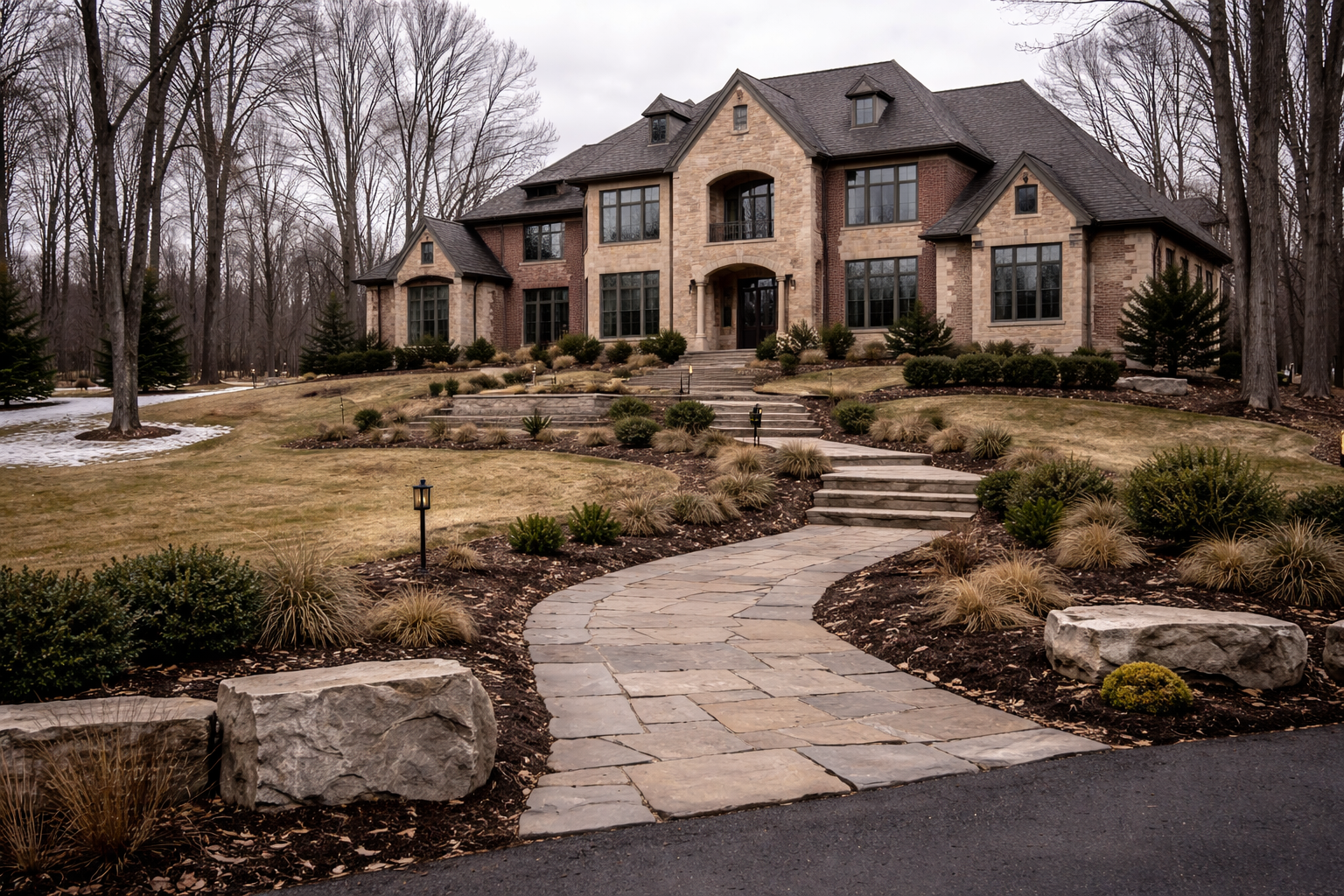
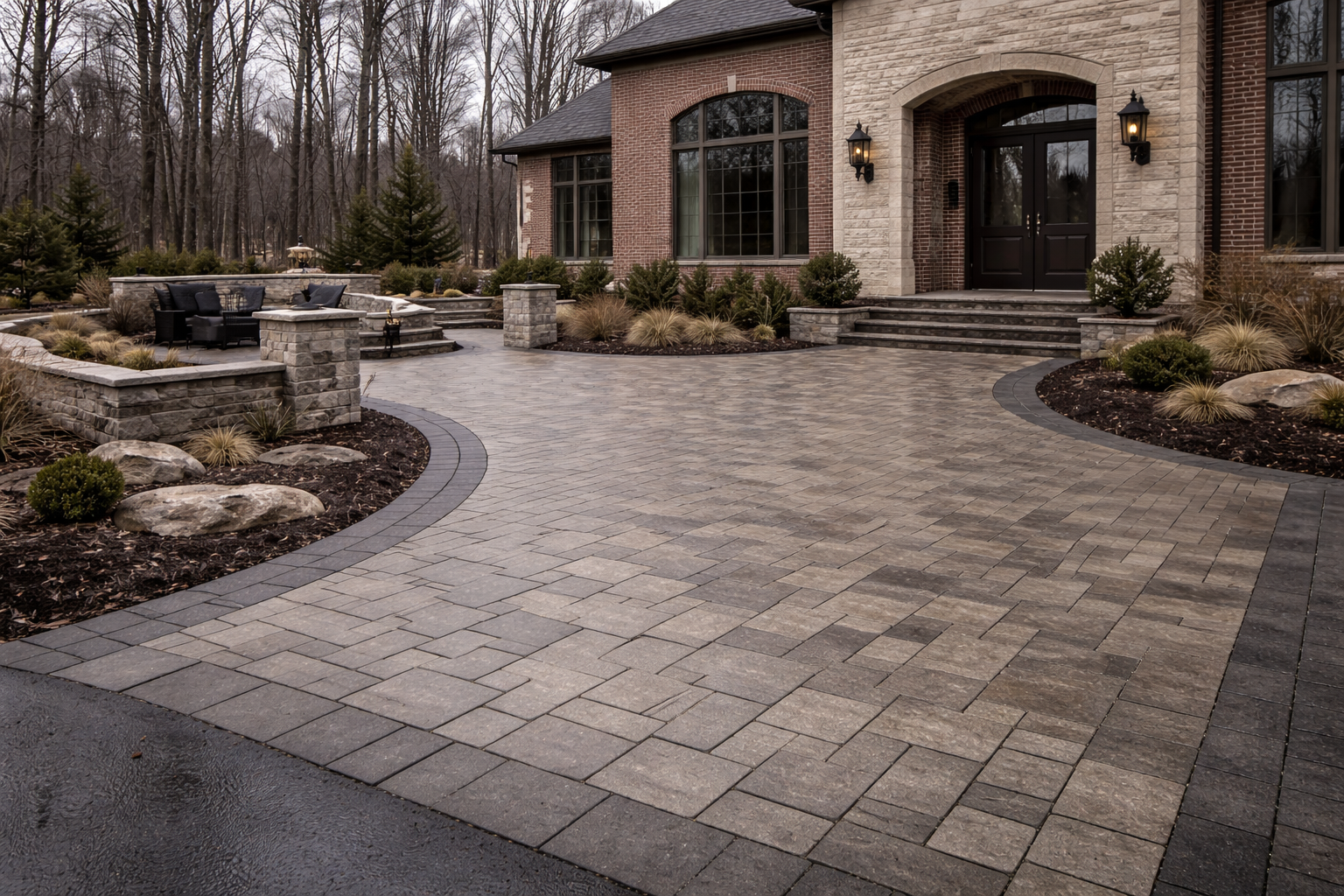
The front entry of a home is often the most important area for lighting. Soft illumination along walkways helps visitors approach the home safely while highlighting architectural details around the front door.
Well-placed lighting also improves curb appeal by giving the property a welcoming presence after dark.
Driveways and Property Edges
Driveways benefit from subtle lighting that improves visibility without distracting drivers. Fixtures placed along edges or near transitions between surfaces help define the driveway while maintaining a balanced appearance.
Lighting can also be used to outline property boundaries, making the landscape feel more structured at night.
Trees, Planting Beds, and Garden Features
Uplighting is often used to highlight mature trees and large planting beds. When light is directed upward along a tree trunk, the branches create soft shadows that add dimension to the landscape.
Planting beds can also be illuminated gently to create depth and visual layering throughout the yard.
Patios and Outdoor Living Areas
Outdoor gathering spaces require lighting that supports both visibility and comfort. Seating areas benefit from soft ambient light, while task lighting may be added near cooking or dining spaces.
In many
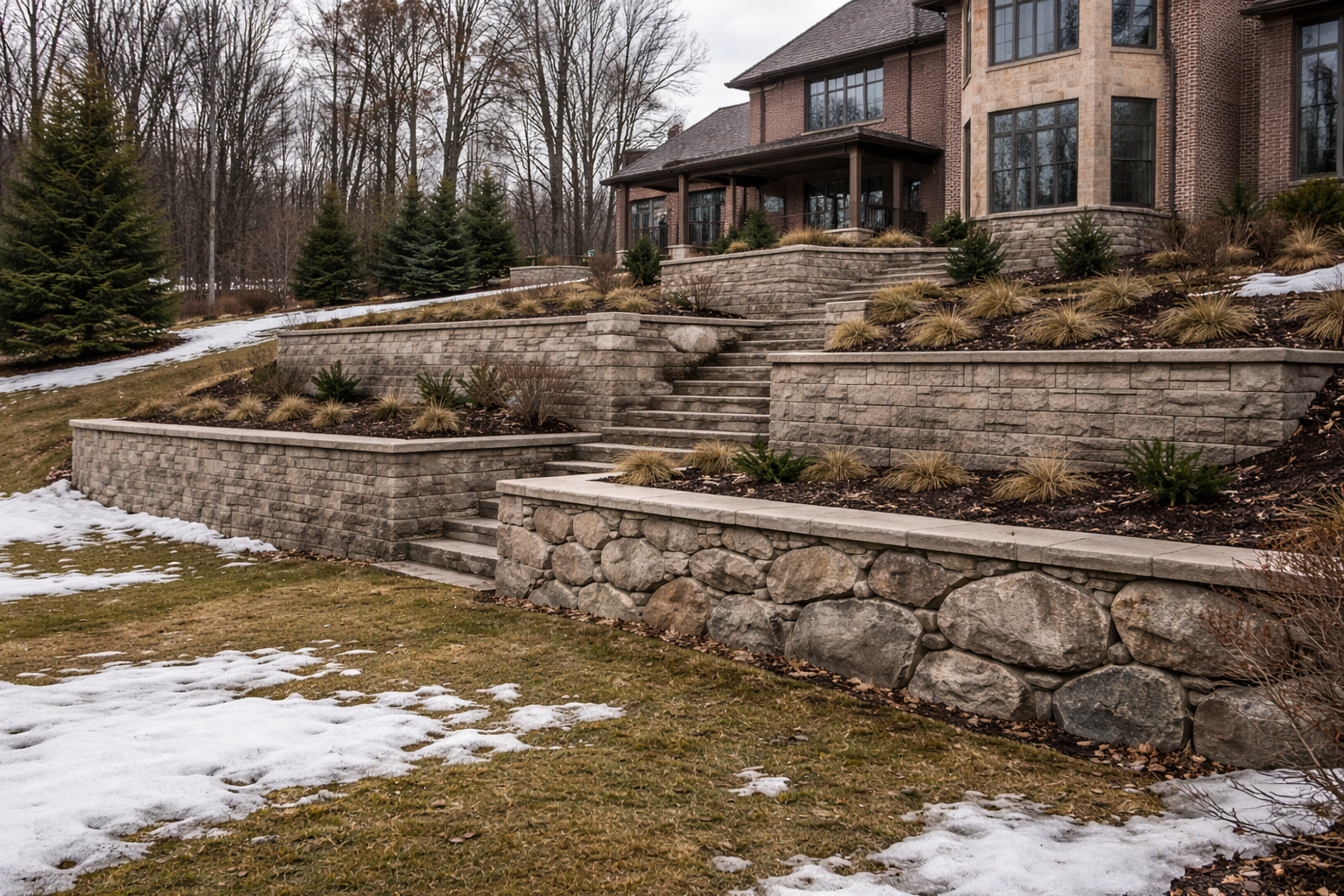
luxury hardscapes, lighting fixtures are built directly into retaining walls or steps, allowing the space to remain well lit without introducing visible fixtures.

Lighting Techniques Used in Professional Landscape Design
Path Lighting
Path lights are designed to illuminate walkways while maintaining a low visual profile. These fixtures are typically positioned at intervals along paths so that the entire route remains visible without appearing overly bright.
Uplighting and Downlighting
Uplighting directs light upward from the ground, often used to highlight trees or architectural details. Downlighting, by contrast, directs light downward from elevated positions such as tree branches or structures.
Both techniques add depth and dimension to nighttime landscapes.
Wall and Step Lighting
Step lighting is especially valuable in areas with elevation changes. By illuminating the edge of each step, these fixtures improve safety while maintaining a subtle appearance.
Wall lighting works similarly, highlighting the texture of stone or masonry surfaces.
Accent Lighting for Luxury Hardscapes
Accent lighting highlights specific landscape features such as retaining walls, patios, or outdoor kitchens. In many cases, these fixtures are incorporated directly into luxury hardscapes to emphasize architectural details and improve nighttime usability.
Designing Lighting Systems for Michigan Weather Conditions
Choosing Fixtures That Withstand Freeze-Thaw Cycles
Michigan’s climate places unique demands on outdoor lighting systems. Freeze-thaw cycles can cause expansion and contraction that affects both fixtures and wiring.
Durable materials such as brass or high-grade aluminum tend to perform well in these conditions.
Protecting Wiring and Electrical Components
Underground wiring must be carefully installed to prevent moisture infiltration. Professional installation ensures that connections remain protected from snow, rain, and temperature changes.
Planning for Snow and Seasonal Landscape Changes
Snow accumulation can temporarily alter how light spreads across the landscape. Fixtures must be placed so they remain effective even when snow covers portions of the ground.
This consideration helps maintain visibility throughout the winter months.
Integrating Lighting Into Residential Landscaping Projects
Why Lighting Should Be Planned During Landscape Design
Lighting systems are easiest to install when they are included in the early stages of a project. Planning lighting during the design phase allows fixtures to be placed where they will be most effective.
It also allows wiring to be installed before patios or walkways are completed.
Coordinating Lighting With Hardscape and Planting Layouts
Lighting should complement the physical elements of the landscape rather than compete with them. By coordinating fixture placement with planting beds and structural features, designers can create a more unified appearance.
This coordination often occurs during hardscape design planning.
Creating Cohesion Across the Entire Landscape
A cohesive lighting system connects different parts of the property. Walkways, patios, and garden areas should feel visually linked rather than isolated.
Thoughtful planning ensures that the entire yard feels balanced after dark.
Common Landscape Lighting Mistakes Homeowners Make
Overlighting the Property
Too many fixtures can create harsh illumination that overwhelms the landscape. Subtle lighting often produces a more refined result.
Poor Fixture Placement
Fixtures placed in the wrong location can create glare or uneven lighting. Professional planning helps ensure that each fixture serves a specific purpose.
Ignoring Maintenance and System Longevity
Lighting systems require occasional adjustments and maintenance. Accessible placement and durable materials help extend the lifespan of the system.
Why Professional Planning Matters
Homeowners seeking reliable results often benefit from working with experienced providers offering landscaping services detroit homeowners trust for long-term landscape planning.
When Professional Landscape Lighting Design Makes the Biggest Difference
Evaluating the Property Before Installing Fixtures
A professional lighting plan begins with evaluating the property after sunset. This assessment reveals which areas require illumination and which should remain darker for contrast.
Designing Lighting That Supports the Landscape Layout
Lighting should follow the natural structure of the property. By aligning fixtures with walkways, patios, and architectural features, the lighting system enhances the overall design.
Choosing Contractors Experienced in Detroit Landscaping
Working with contractors familiar with detroit landscaping conditions helps ensure lighting systems are designed to perform well in local climate conditions.
Planning a Landscape Lighting System That Lasts
Selecting the Right Fixture Types
Different areas of the landscape require different fixture styles. Path lights, accent lights, and step lights each serve specific purposes within the design.
Planning for Long-Term Maintenance
Lighting systems should allow for easy adjustments and occasional maintenance. Proper installation helps reduce the need for frequent repairs.
Creating a Landscape That Looks as Good at Night as It Does During the Day
The most successful lighting systems complement the daytime appearance of the landscape. When integrated into broader residential landscaping planning, lighting enhances the property without dominating it.
Bringing Your Landscape to Life After Sunset
If your property becomes difficult to navigate after dark or lacks visual interest at night, landscape lighting may be worth exploring. Identifying areas that feel too dark or disconnected can provide a starting point for improvement.
Professional lighting design evaluates the entire property to determine where illumination will have the greatest impact. By integrating lighting into existing or planned outdoor features, homeowners can create landscapes that remain functional and visually appealing after sunset.
Frequently Asked Questions
Is landscape lighting primarily decorative or functional?
It serves both purposes. Lighting improves safety along walkways and entrances while also highlighting architectural features and landscape elements.
Can lighting be added after landscaping is complete?
Yes, although installation is often easier when lighting is planned during landscape design. Early planning allows wiring and fixtures to be integrated more efficiently.
Will outdoor lighting increase energy use significantly?
Modern systems typically use energy-efficient LED fixtures, which consume very little electricity compared to traditional lighting.
How long do landscape lighting systems typically last?
When installed properly with durable materials, fixtures and wiring can last many years with minimal maintenance.
Is professional design necessary for landscape lighting?
Professional planning helps ensure the lighting system improves both safety and aesthetics without creating glare or uneven illumination.