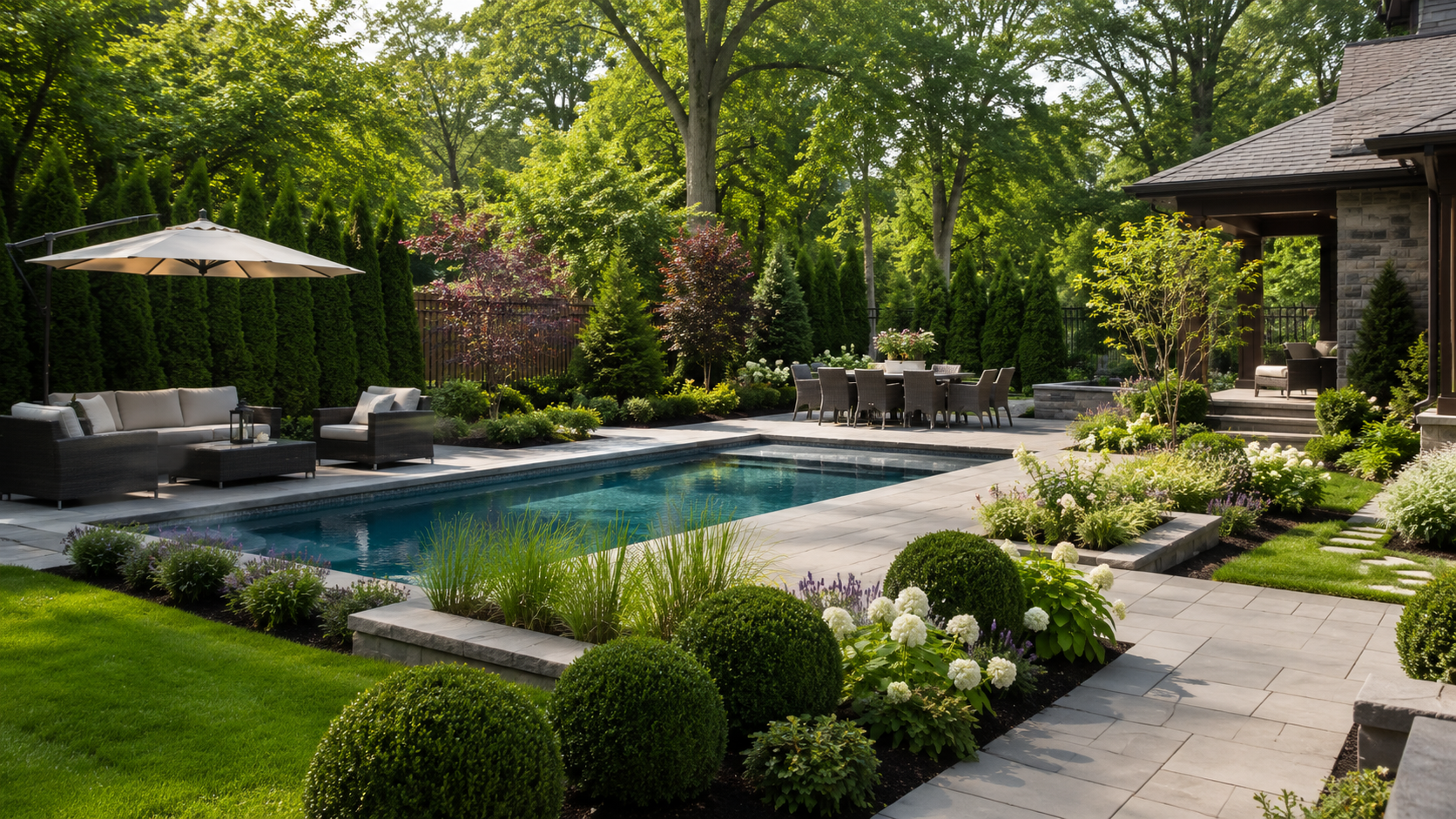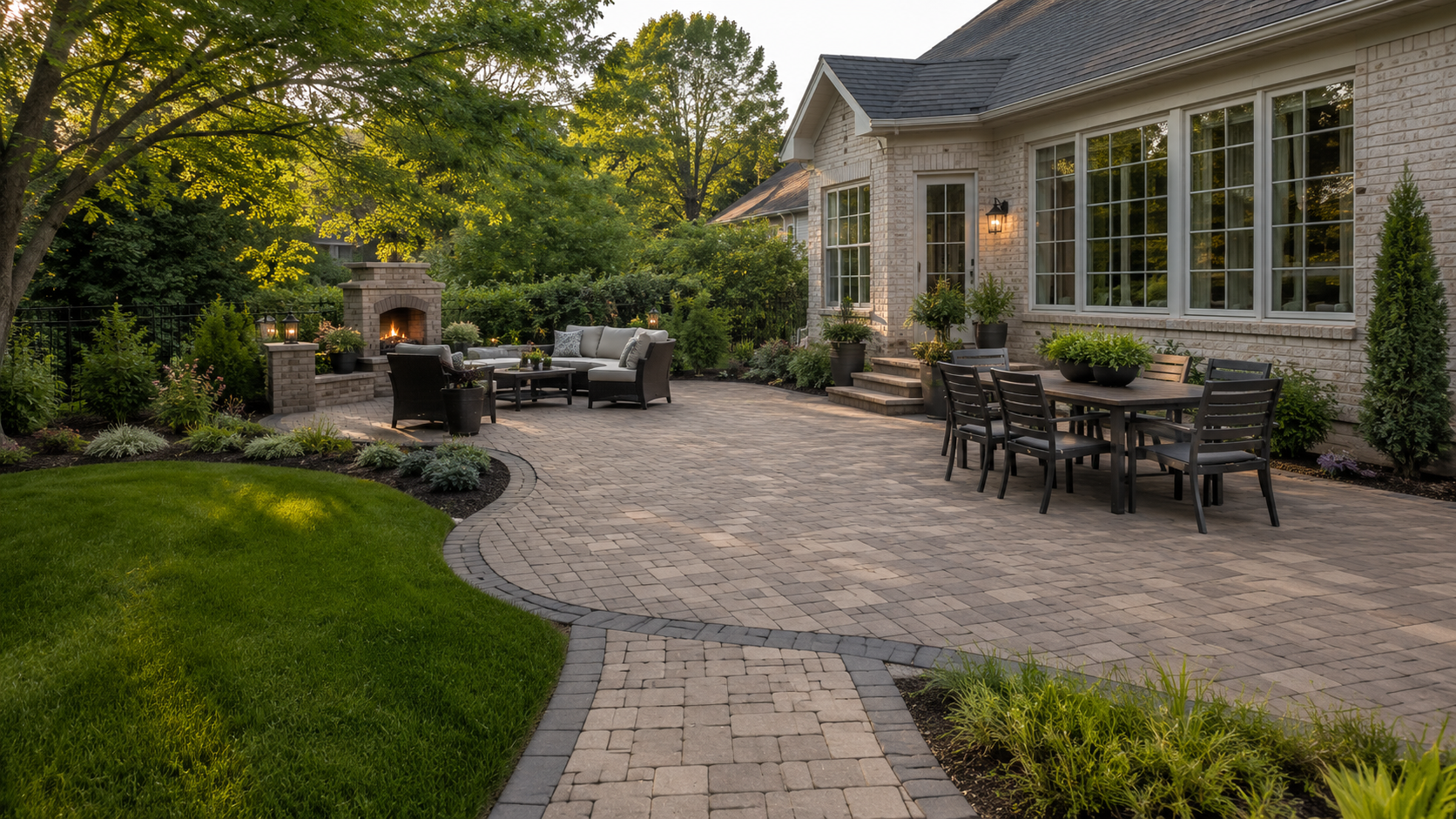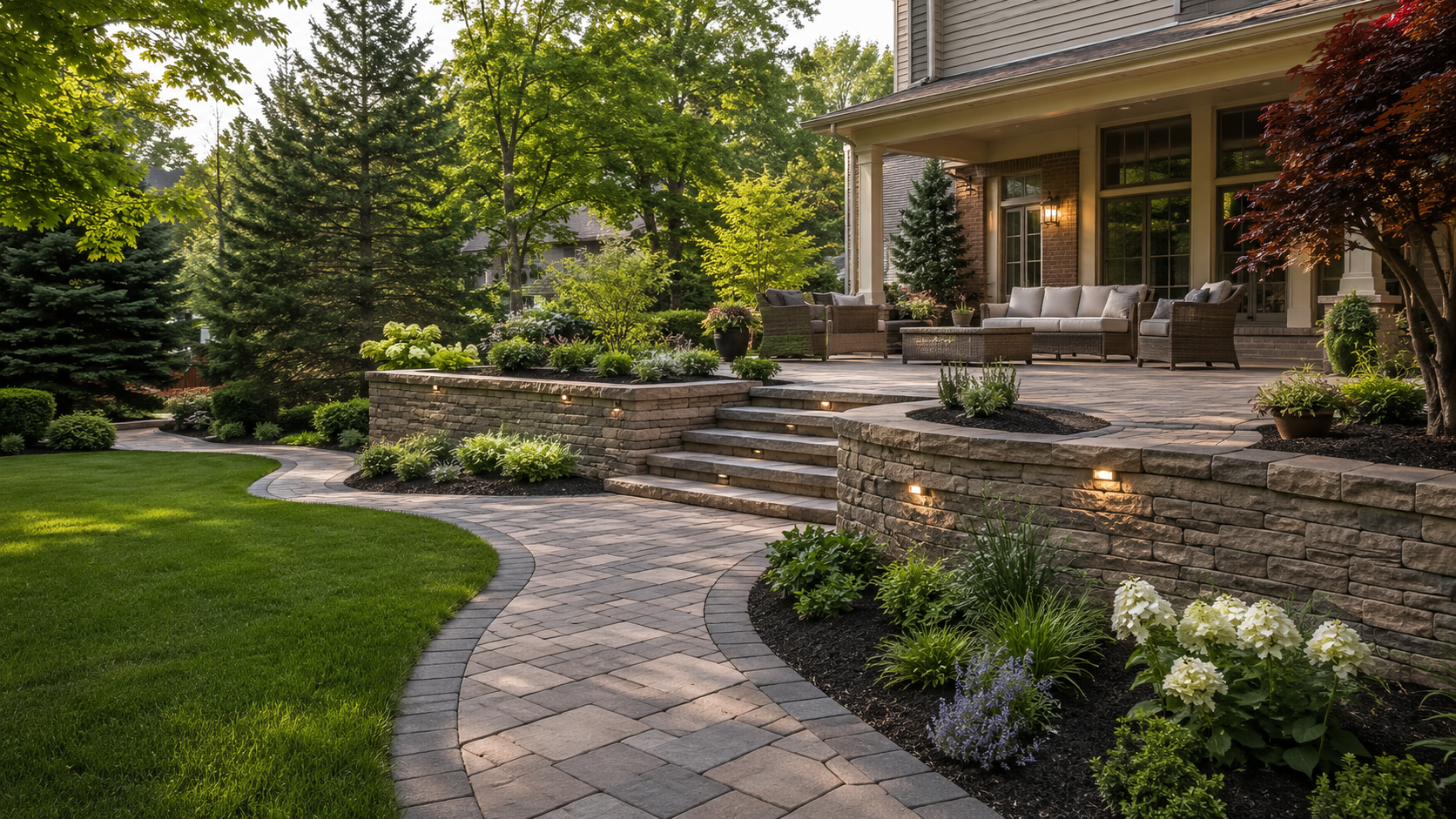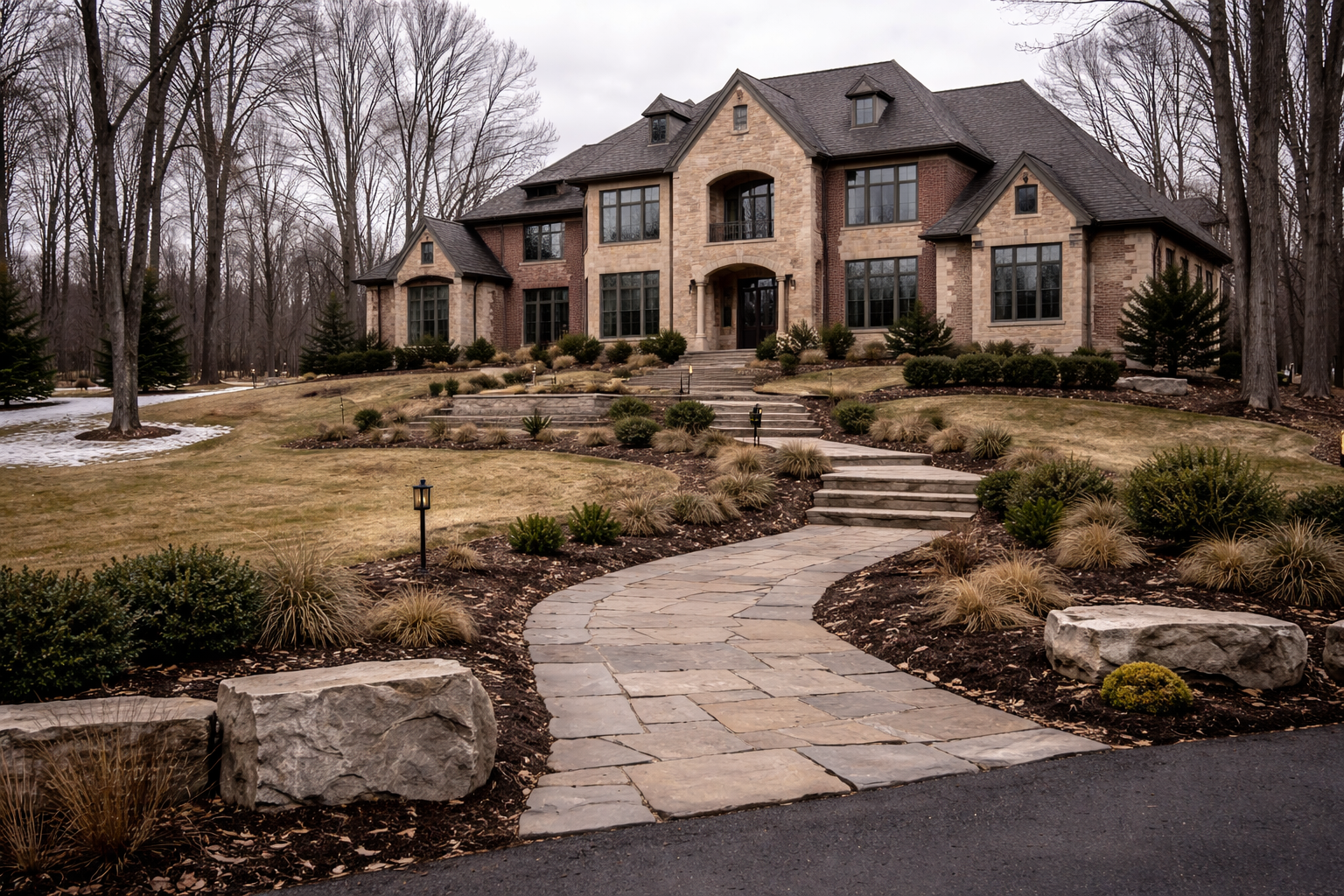
What Hardscape Projects Actually Cost in Metro Detroit: Patios, Driveways, and Retaining Walls
Homeowners usually start with the same question: how much is this actually going to cost? The frustrating part is that most online answers are too broad to be useful. National cost averages flatten everything into a generic range, but a hardscape project in Metro Detroit is shaped by conditions that those numbers rarely capture. Clay-heavy soil, freeze-thaw movement, drainage demands, access limitations, and local labor standards all influence the final price.
That is why patio, driveway, and retaining wall costs can vary so widely even when two projects look similar at first glance. A clean, level site with simple access and straightforward materials will never price the same way as a sloped yard with drainage issues, tighter access, and a more complex design. The surface material is only one part of the cost. In many cases, the real difference is below grade.
This article breaks down what drives the cost of hardscape work in Metro Detroit, with a focus on patios, driveways, and retaining walls. The goal is not to give a fake flat number. It is to help homeowners understand what they are paying for, why quotes vary, and how to tell the difference between a complete proposal and one that only looks less expensive on paper. If you are pricing hardscape design work for your property, a better understanding of scope will help you make better decisions from the start.
Why Metro Detroit Hardscape Costs Are Different From the Numbers Homeowners See Online
One of the biggest problems with online pricing articles is that they treat all markets as if they behave the same way. They do not. A hardscape project in a warm, dry climate can be built under very different conditions than one in Southeast Michigan. That difference shows up in both process and price.
Michigan Soil and Freeze-Thaw Change the Cost Structure
Metro Detroit properties often sit on soils that hold moisture and move seasonally. In some cases, that means deeper excavation, heavier base work, more careful compaction, or added drainage corrections before the visible installation even begins. A project that looks simple at the surface may require more structural preparation underneath than a homeowner expects.
Freeze-thaw also raises the standard. It is not enough for a patio or driveway to look good when it is first installed. It has to remain stable through repeated seasonal movement. That means the cost of the build includes what it takes to give the project a real chance of lasting in Michigan conditions.
Hardscape Pricing Is About the Full System, Not Just the Surface Material
Homeowners often focus first on whether they want concrete pavers, natural stone, or a particular finish. That matters, but the material itself is only one layer of the project. The total number also reflects removal, excavation, grading, base preparation, drainage handling, edge restraint, cuts, transitions, and finish work.
This is why two proposals that use similar materials can still vary dramatically in price. One may be pricing the full system. The other may be pricing only the visible layer.
Why Generic Cost Ranges Often Mislead Homeowners
A wide national range may technically include what you end up paying, but it does not explain why. It does not tell you whether the price assumes a stable site, minimal excavation, easy access, no drainage correction, or a lower standard of build. That is why local pricing context matters more than generic averages.
What Homeowners Are Actually Paying For in a Hardscape Project
Before breaking out patios, driveways, and retaining walls individually, it helps to understand the major cost categories that show up in most projects.
Site Preparation and Excavation
The project starts with the site, not the pavers. Existing material may need to be removed. Soil may need to be excavated to proper depth. Grade may need to be corrected before the new work can be built. If access is limited, labor may increase because equipment use becomes harder or less efficient.
This stage often determines whether the final surface is being installed on a stable foundation or on compromised ground.
Base Work, Drainage, and Structural Stability
A quality hardscape is built from the ground up. That means aggregate base, compaction, and water management are not optional details. They are the system that supports the finished surface. In a climate like Michigan, where movement and saturation are constant pressures, this part of the project is often what separates long-term performance from early failure.
Materials, Layout Complexity, and Finish Work
Once the site is ready, material and layout choices shape the next phase of cost. Straightforward layouts are faster to build than curves, multiple levels, or heavily detailed transitions. Borders, steps, seat walls, lighting allowances, and specialty finishes all add labor and precision requirements. This is where hardscape design directly affects price, because better design can either simplify construction or make it significantly more complex.
Patio Costs in Metro Detroit
Patios vary more in cost than many homeowners expect because patio pricing is influenced by much more than square footage.
What Drives Patio Pricing More Than Homeowners Expect
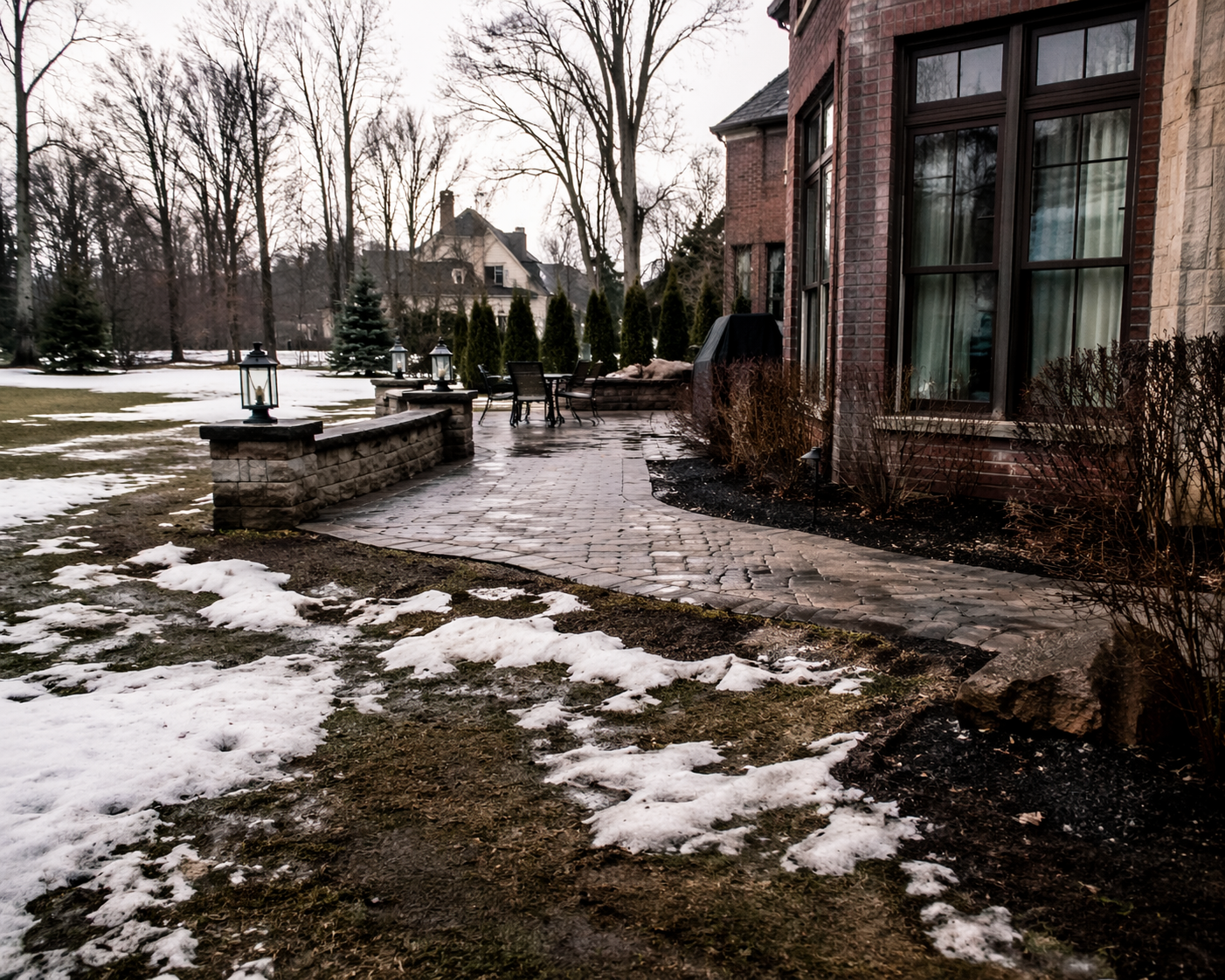
A patio’s cost is shaped by site conditions, layout, access, base requirements, and drainage needs. A level backyard with open access is a different project than a sloped yard behind a narrow gate. Add elevation changes, door threshold coordination, step transitions, or runoff correction, and the number moves quickly.
Size matters, but it is not the only thing that matters. Small patios can still be expensive if the site is difficult or if the layout demands more detail work.
Material Choice and Its Impact on the Final Number
Material selection is one of the most visible pricing variables. Standard manufactured pavers will not cost the same as premium pavers, and neither will price like natural stone. The choice affects both material cost and labor. Some materials require more cutting, tighter alignment, or greater care during installation.
This is where brick paver patios often enter the conversation. Homeowners are not just comparing color or pattern. They are comparing systems, finishes, and long-term performance. The more refined the material choice, the more the project may ask from both budget and installation quality.
Why a Simple Patio and a Complex Patio Price Very Differently
Two patios with similar square footage may still land in very different budget ranges. A clean rectangular patio with open access and stable grade is fundamentally different from a patio with curves, steps, multiple elevations, integrated borders, and transitions to other site features. Design decisions add labor even when the finished space does not look dramatically larger.
Patio Construction Costs Are Not Just About Square Footage
This is one of the most important points homeowners miss. Patio construction is not purely linear. There are fixed costs that exist whether the patio is modest or expansive. Mobilization, excavation setup, base preparation, and certain labor steps do not disappear just because the project is smaller. That is one reason cost-per-square-foot thinking can be misleading.
Driveway Costs in Metro Detroit
Driveways are usually more structurally demanding than patios, which is why they often cost more per square foot.
Why Driveways Require More Structural Build Than Patios
A patio is built for foot traffic and outdoor use. A driveway is built to carry vehicle load repeatedly. That difference changes the base requirements, the stress on the surface, and the tolerance for failure. If a driveway shifts, settles, or spreads, the consequences are more immediate and more expensive to fix.
That is why proper driveway work is not simply patio work in a different shape. It is a different structural category.
Material and Layout Variables That Affect Driveway Pricing
Driveway width, length, curves, transitions, apron treatment, and border design all affect the number. Wider areas require more material and more base. More complex geometry increases cuts and labor. Decorative features can elevate the appearance, but they also add cost.
This is where driveway pavers become a meaningful keyword and a real budgeting question. The homeowner is not only paying for the paver itself. They are paying for a system that needs to handle weight, movement, and exposure over time.
What Lower Driveway Quotes Often Leave Out
A lower quote may reflect a more basic material choice, but it may also signal omitted scope. Weak edge restraint, shallow base work, vague drainage handling, or poorly defined structural assumptions often show up in cheaper bids. The quote may still sound complete to the homeowner, but the missing detail is often where the future failure begins.
Retaining Wall Costs in Metro Detroit
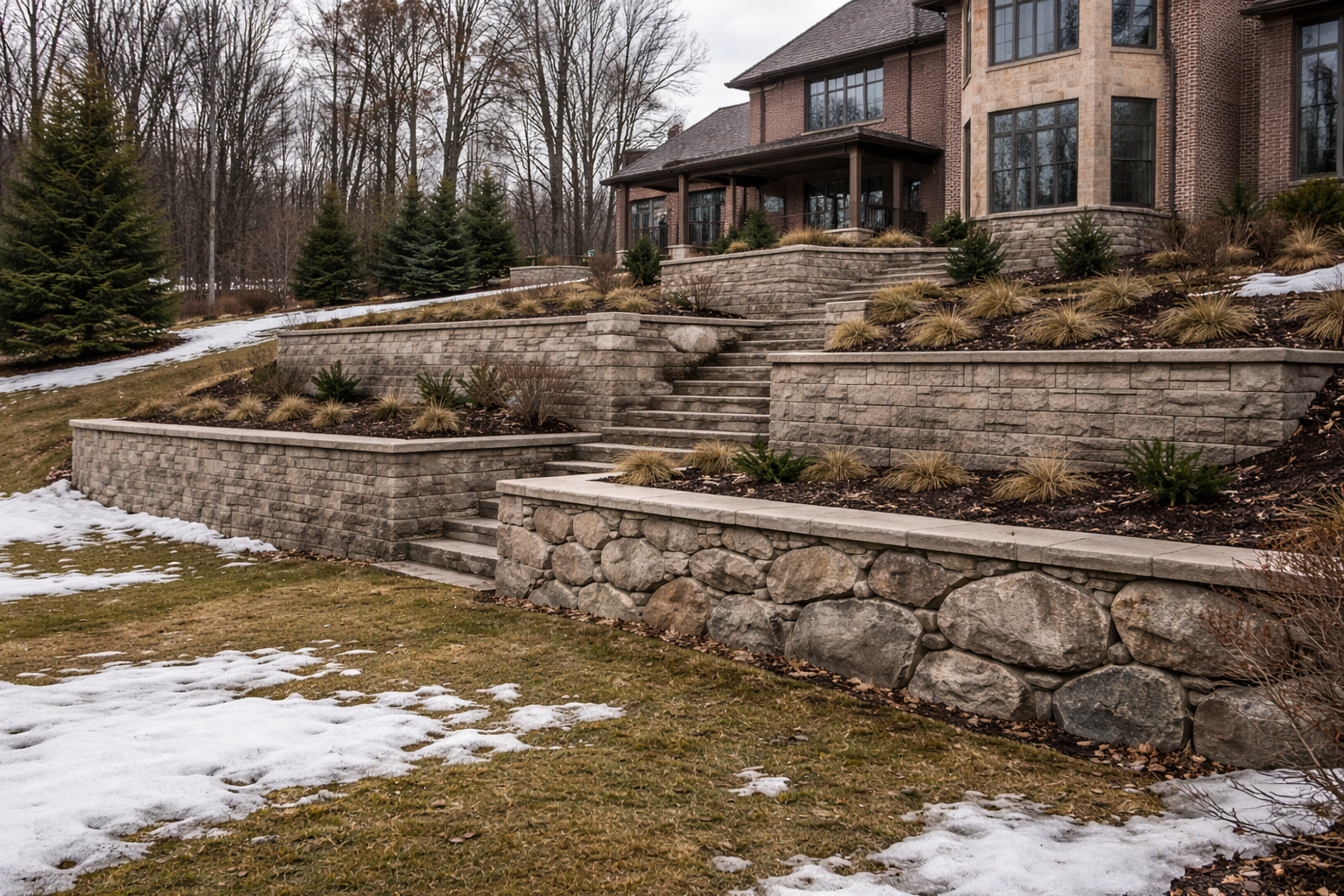
Retaining walls are among the most site-specific hardscape categories because their cost is tied directly to what the site is asking them to do.
Why Retaining Wall Pricing Is Highly Site-Specific
A wall that stabilizes a modest grade break on a clean site is not the same as a wall that must hold back saturated soil, support a future patio, or solve a larger drainage problem. Height matters, but so do wall length, access, drainage behind the wall, and integration with adjacent features.
This is why retaining wall pricing is difficult to simplify. The same material can price very differently from one property to the next.
Material Systems and Cost Variation
Segmental block systems, natural stone walls, and boulder walls all bring different cost structures. Some are selected primarily for structural efficiency. Others are chosen because the visual language of the property requires a more natural or refined material. In either case, the wall must still perform. A premium-looking wall that is structurally underbuilt is still a bad investment.
Engineering, Drainage, and Why Structural Walls Cost More Than Decorative Ones
A true retaining wall often requires more excavation, drainage detail, reinforcement, and planning than homeowners expect. That is one reason a structural wall costs more than a decorative garden edge. The project is not just about appearance. It is about load, pressure, and long-term stability.
Hidden Cost Drivers That Change Hardscape Budgets Fast
Some of the most important pricing variables are not visible until the project is evaluated on site.
Access Limitations and Site Logistics
Narrow side yards, fencing, existing trees, and difficult equipment access all change labor. A project that could be machine-assisted on one property may require much more hand work on another. That difference affects both time and price.
Existing Drainage Problems
If a patio or driveway project reveals standing water, poor runoff routing, or saturated subgrade, the site may need drainage correction before installation can move forward. Homeowners are often surprised when this changes the budget, but skipping the correction usually means building over a known problem.
Unplanned Structural Issues Below the Surface
Older properties can hide buried debris, utility conflicts, unstable soils, or remnants of previous construction. These conditions are not always predictable before excavation begins. When they appear, they often require scope adjustments that affect the final number.
How to Read a Hardscape Quote Without Guessing
A proposal should not just tell you what the project costs. It should help you understand what is included and why.
What a Strong Proposal Should Clarify
A strong hardscape proposal should explain material scope, base assumptions, drainage scope, structural features, and finish details. It should show whether the contractor is pricing a full build or only the visible portion. It should also clarify where design decisions affect labor and cost.
Why Two Quotes Can Be Far Apart on the Same Project
Homeowners often assume that if two proposals describe the same patio or driveway, they must be pricing the same work. That is not always true. One quote may include drainage correction, deeper excavation, or more complete finish detailing. Another may omit those things without making the omission obvious.
What Vague Bids Usually Mean
A vague bid usually means one of two things: either the project has not been thought through, or the scope is being kept loose so the final number can shift later. Neither is ideal. The better the quote, the easier it is to compare options with confidence.
How to Prioritize a Hardscape Budget When You Cannot Build Everything at Once
Many homeowners are planning more than one outdoor improvement at the same time. The question becomes how to stage the work intelligently.
What Should Be Built First
If the site has structural or drainage issues, those should usually come first. If one feature supports another, the supporting element should be built before the finish element. A retaining wall that creates the platform for a patio is a good example. The sequence matters.
What Can Be Phased Without Creating Rework
Some projects can be split into phases successfully, but only if they are planned that way from the beginning. A good plan allows future additions without tearing out completed work. A poor phasing strategy often creates duplication, rework, and higher long-term cost.
Why Design Planning Protects Budget Over Time
This is one of the strongest arguments for thoughtful hardscape design before construction begins. It helps homeowners prioritize correctly, understand dependencies, and make better decisions about what to build now versus later.
A Better Way to Think About Hardscape Cost in Metro Detroit
The most useful way to think about hardscape cost is not as a flat number per square foot. It is as a function of site conditions, structural requirements, material choices, and build quality. That is why online pricing ranges are often too shallow to help, and why local, project-specific evaluation matters more.
A patio, driveway, or retaining wall is not just a surface purchase. It is a built system. In Metro Detroit, that system has to hold up to soil movement, water, and winter stress. The question is not only what it costs to install. It is what it costs to install correctly. If your plans also include an outdoor kitchen or fire feature, our guide to outdoor kitchens and fire features in Michigan walks through the planning decisions that shape project scope.
Hardscape Cost Questions Metro Detroit Homeowners Ask Before Requesting a Quote
Why do patio quotes vary so much in Metro Detroit?
They usually vary because the site conditions, material assumptions, drainage needs, and build standards are different. Two patios can look similar in concept but require very different levels of work below the surface.
Are driveway pavers more expensive than concrete?
They often are, especially when the full structural build is priced correctly. The right comparison is not only surface cost but also performance, repairability, appearance, and long-term value.
What makes retaining wall pricing so site-specific?
Wall height, access, drainage, soil pressure, reinforcement, and whether the wall supports another feature all influence the cost. A retaining wall is one of the least generic hardscape categories.
How do I know if a quote is missing important structural work?
Look for vague language around base work, drainage, edge restraint, material specification, and structural scope. If those details are not clear, the number may be incomplete.
Can I phase a patio, driveway, or retaining wall project over time?
Yes, but phasing works best when it is planned in advance. A strong design plan helps ensure that future work can be added without undoing what was already built.