Landscaping in Bloomfield Hills: What High-End Properties Require From Design, Materials, and Site Planning
Bloomfield Hills is not just another suburban landscaping market. The expectations are different, the properties are different, and the margin for generic work is much smaller. Larger lots, established trees, complex grade conditions, and architecturally significant homes all raise the standard. A landscape that might feel acceptable on a typical residential lot can look underscaled, disconnected, or poorly planned on a premium property in Oakland County.
That is why strong landscape work in Bloomfield Hills begins with site planning, not just styling. A successful project has to respond to the scale of the lot, the architecture of the home, the way water moves across the property, and the long-term performance of materials in Michigan conditions. It also has to hold up visually in every season, not just when everything is green and freshly installed.
For homeowners considering
luxury landscaping, that distinction matters. The goal is not simply to add more features or spend more money. The goal is to make better decisions earlier, so the finished work feels appropriate to the property, functions correctly over time, and supports the quality of the home rather than competing with it.
What Makes Bloomfield Hills Landscaping Different From a Standard Residential Project
The first difference is scale. Many Bloomfield Hills properties have longer driveways, wider setbacks, more mature canopy, and larger view corridors than a typical Metro Detroit lot. That changes how landscape design needs to be approached. Smaller gestures disappear. Materials that look acceptable on a compact site may feel underwhelming or out of place on a larger estate property.
The second difference is architectural context. In this market, the home usually sets a stronger visual tone. Whether the house is traditional, transitional, mid-century, or more contemporary, the landscape has to relate to it. If it does not, the disconnect is obvious. Planting style, hardscape material, transitions, and even edge detailing need to feel like they belong to the same property rather than like separate decisions made in isolation.
The third difference is technical. High-end properties in Bloomfield Hills often involve site variables that increase the planning requirements before any work begins. Mature trees create root zone sensitivities. Grade changes affect drainage and usable space. Existing estate features, older infrastructure, and broader property footprints all mean that the planning phase needs to be more disciplined from the start.
That is why
high-end landscaping in this market is not defined only by budget or plant count. It is defined by the level of site understanding behind the work.
Why Site Planning Comes Before Planting, Patios, or Aesthetic Upgrades
One of the fastest ways to weaken a premium landscape project is to start with the visible layer before understanding the site beneath it. In Bloomfield Hills, that usually leads to one of three problems: drainage issues that were not mapped early, grade relationships that were underestimated, or existing trees and root systems that were treated as secondary concerns.
Drainage Patterns Need to Be Understood Before Design Begins
Water movement should be one of the first things evaluated on a property. A landscape may look dry and manageable by mid-summer while still having drainage problems that show up every spring or after major storms. On larger or more established lots, runoff patterns are often shaped by decades of settling, tree roots, old grading decisions, and existing hardscape. If those conditions are not understood before design begins, the new work may be forcing itself onto a system that is already under pressure.
That matters because premium landscape elements do not perform well when drainage is treated as an afterthought. Planting beds erode, turf areas stay inconsistent, and hardscape surfaces begin to reveal problems over time.
Mature Trees and Root Zones Affect More Than Homeowners Expect
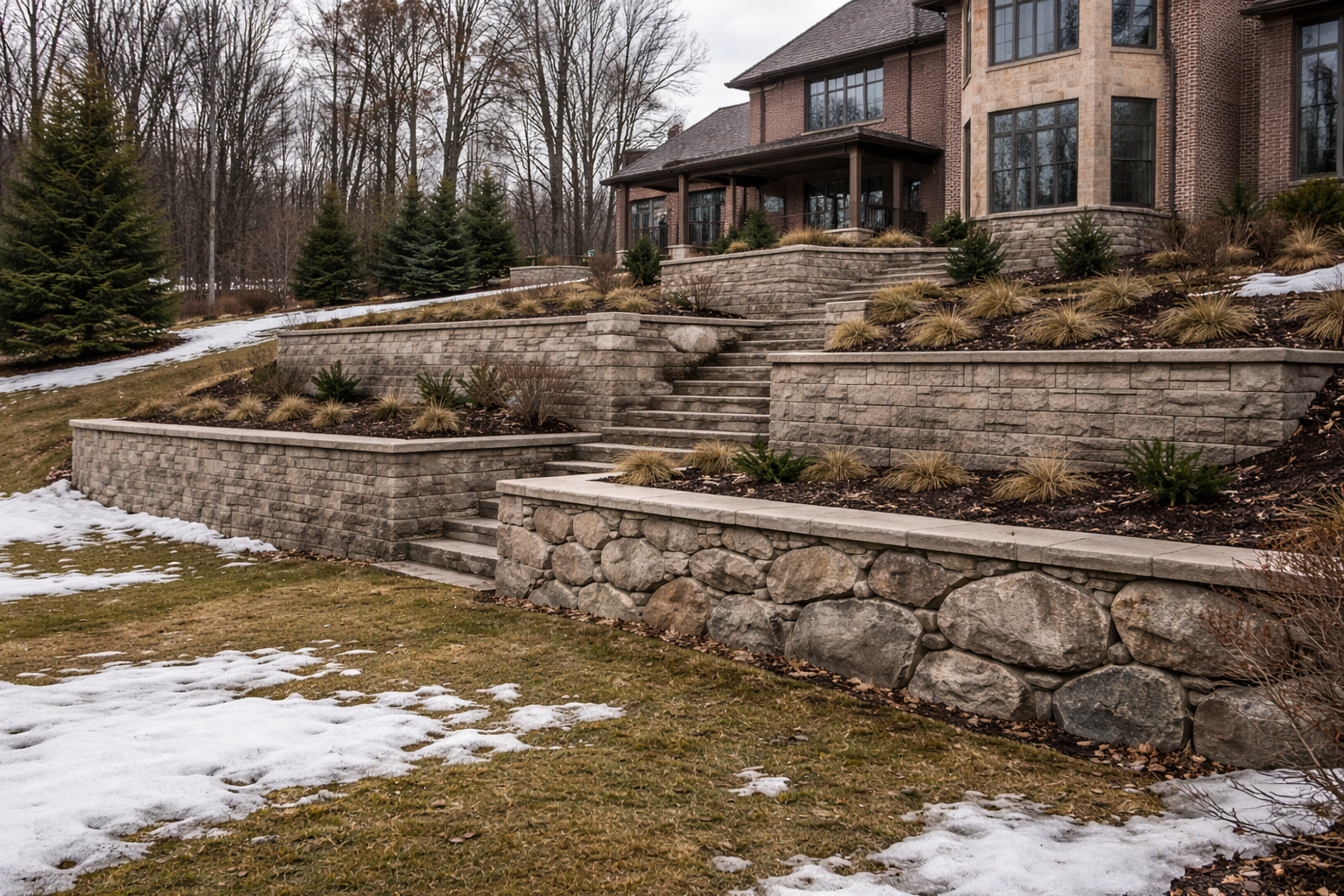
On many Bloomfield Hills properties, the mature canopy is one of the landscape’s strongest assets. It also creates real planning constraints. Grade changes around root zones, aggressive excavation, and poorly placed hardscape elements can compromise tree health long before the homeowner sees obvious decline.
A professional site review should take those root zones seriously, especially when the design includes walls, patios, or significant planting bed changes. Protecting the maturity of the property is part of what distinguishes thoughtful work from generic work.
Existing Hardscape, Access, and Utilities Must Be Mapped Early
Larger or more established properties often have access limitations, legacy infrastructure, or existing site elements that influence what can be built and how. Walks, driveways, drainage lines, utility conflicts, and older construction all shape the real options available on the site. This is why planning for luxury landscaping has to begin with what the property is already doing, not just what the homeowner wants to add. If you are planning a landscape design for a Bloomfield Hills property, our landscape design service starts with the whole site before anything is built.
The Design Standards High-End Properties Actually Require
A premium landscape should not feel busy, overbuilt, or disconnected from the house. The best work in Bloomfield Hills usually feels composed. It reflects a strong understanding of scale, proportion, and restraint.
Proportion and Scale Matter More on Large or Complex Lots
A large property needs more than isolated upgrades. A small patio, a few ornamental shrubs, and a decorative bed border may technically improve the space, but they often fail to read at the right scale from the house or from key approach views. On a larger lot, the structure of the landscape matters more. View corridors, planting massing, circulation routes, and hardscape anchors all need to work together so the property feels intentional rather than pieced together.
The Landscape Should Support the Architecture, Not Compete With It
Good design in this market begins with the home. The materials, forms, and planting style should reinforce the architecture, not distract from it. A traditional stone home may call for a very different landscape language than a more contemporary structure. When the site and the house are speaking in different visual directions, the result often feels expensive but unresolved.
This is where
high-end landscaping is often misunderstood. The result should not be louder. It should be more coherent.
Four-Season Structure Is Not Optional in Southeast Michigan
A premium property should still look composed in winter. That means the design cannot rely entirely on summer bloom or leaf texture. Evergreen structure, hardscape form, bark and branch character, grading, and visual order all matter once the growing season fades. In Bloomfield Hills, where curb appeal and property presence matter year-round, this is not a bonus. It is part of the baseline.
Good Design Solves Use, Not Just Appearance
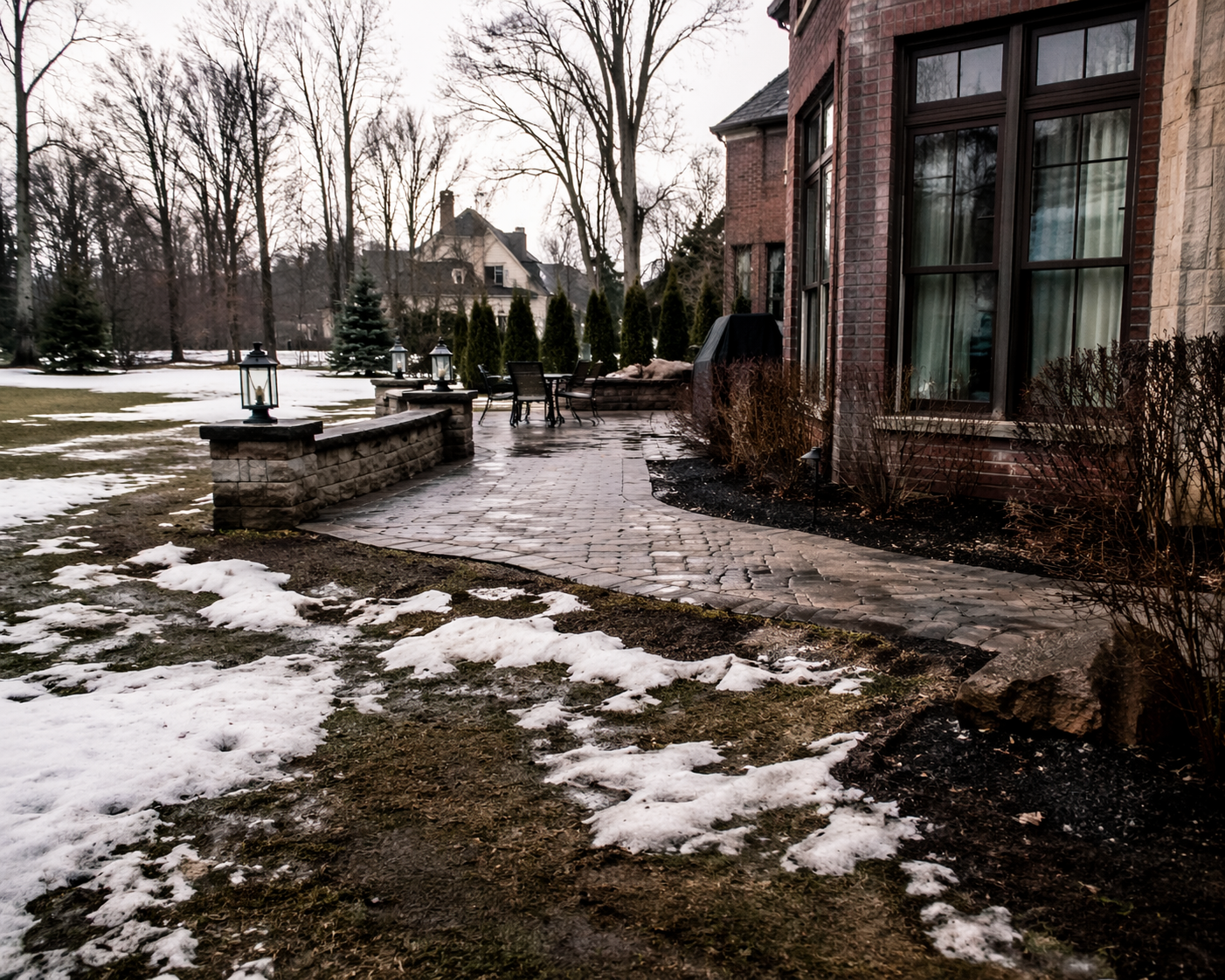
A strong landscape plan does more than frame the home nicely. It solves how people move, gather, arrive, and experience the property. Circulation should feel natural. Outdoor spaces should connect logically. Privacy and openness should be balanced intentionally. Good design makes the site easier to use, not just easier to photograph.
Material Decisions That Separate Premium Work From Generic Work
Material quality is not only about cost. It is about appropriateness, durability, and the way details hold up visually over time.
Hardscape Materials Need to Match Both Climate and Architecture
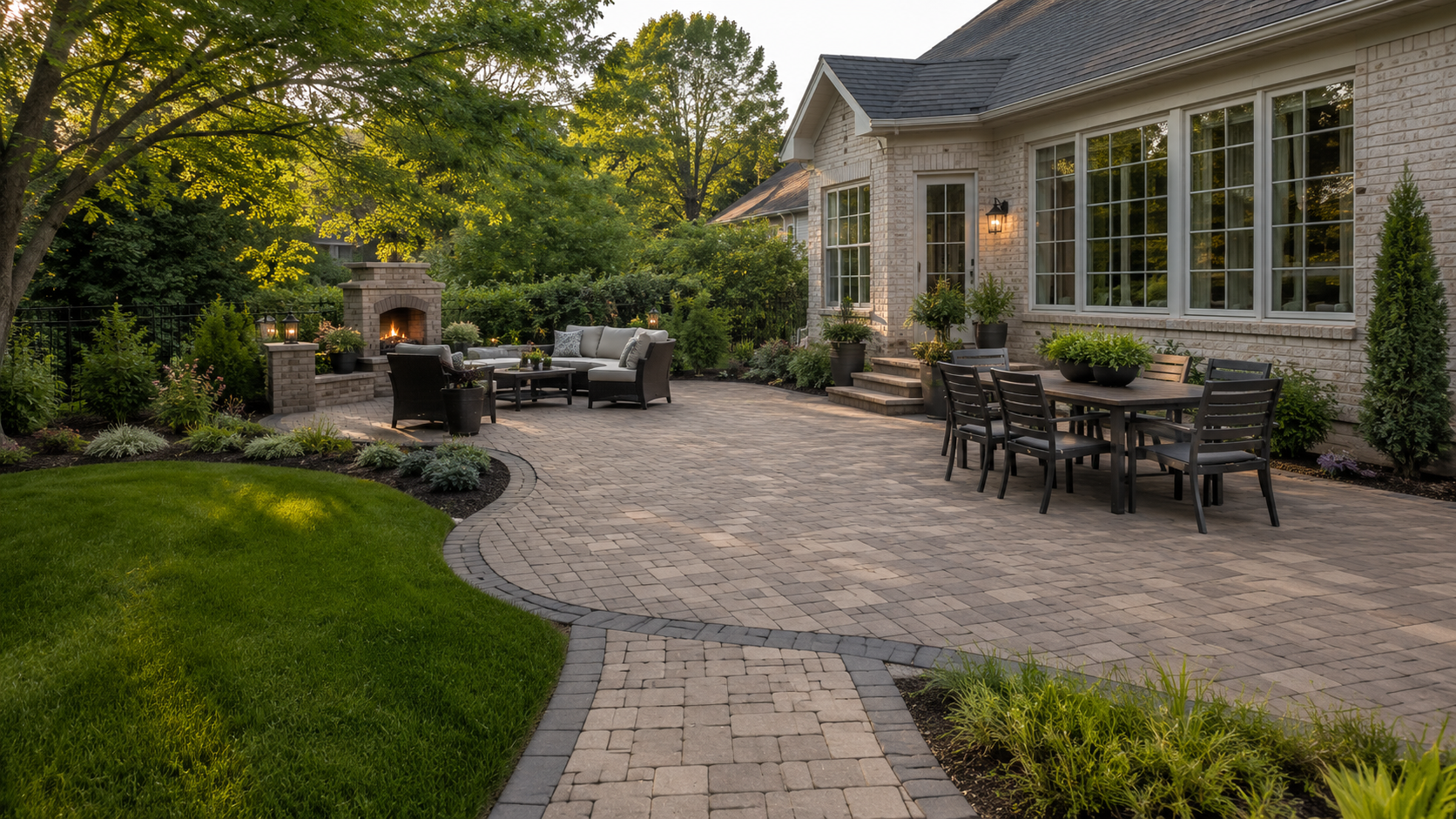
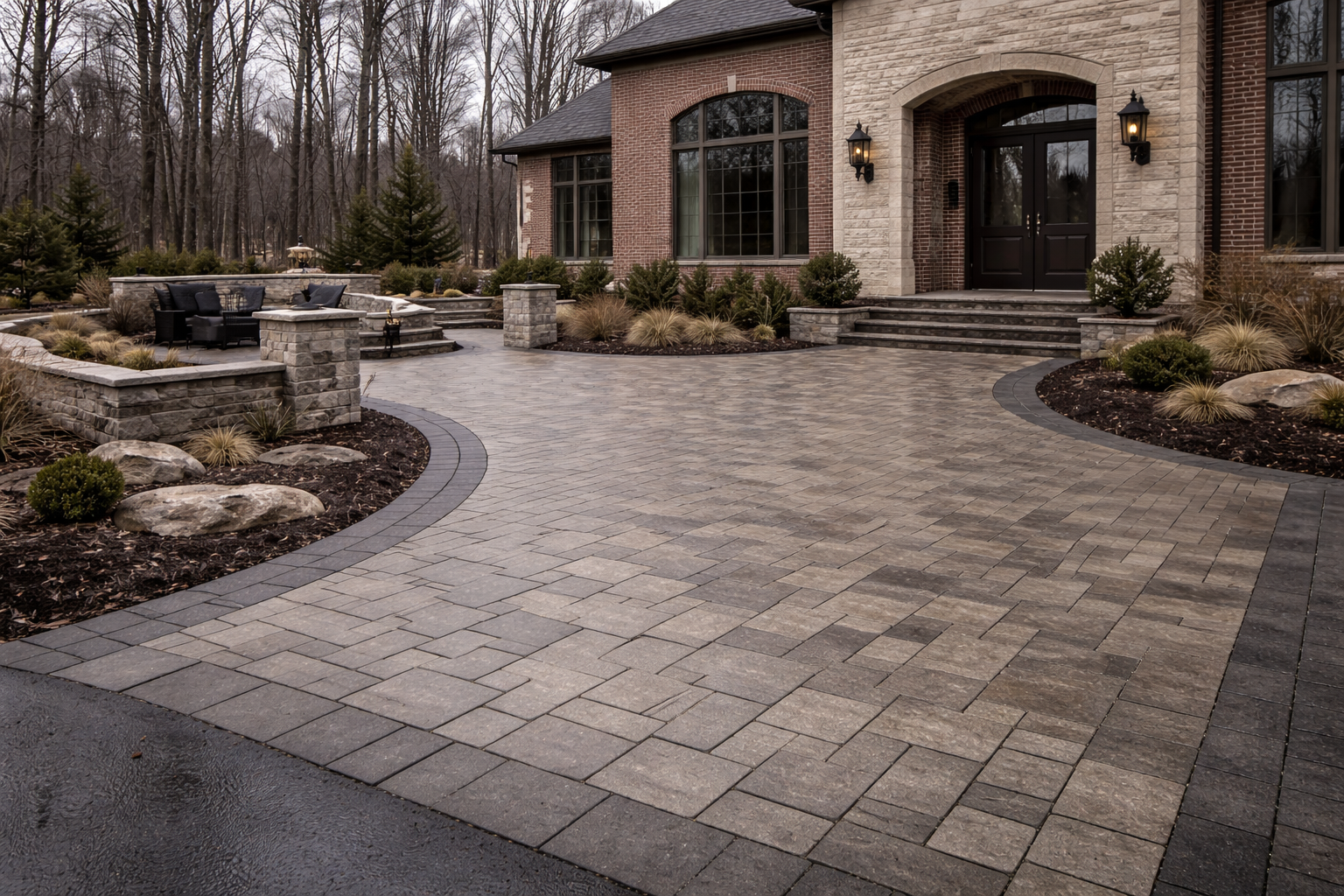
In a place like Bloomfield Hills, the material conversation is usually more demanding than on a standard suburban project. The hardscape has to survive Michigan freeze-thaw conditions, but it also has to feel right next to the architecture. Natural stone may be the correct choice on one property. A carefully selected manufactured product may perform beautifully on another. The right answer depends on both the house and the site.
This is where
luxury hardscapes should be approached with discipline. Premium does not automatically mean the most expensive material in the catalog. It means the right material for the property, installed to a standard that supports long-term performance.
Surface Transitions, Edges, and Finish Details Matter More at This Level
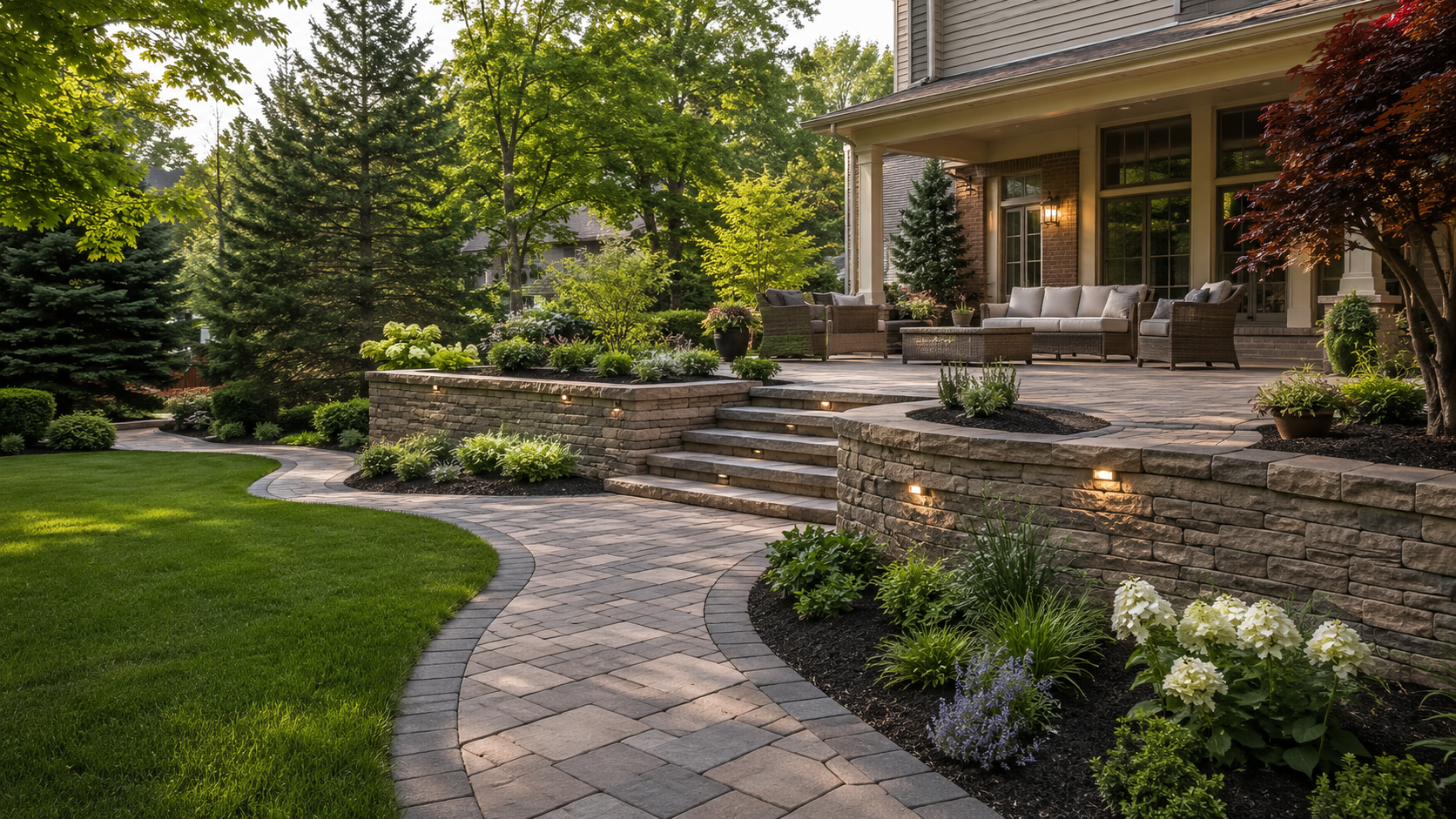
On high-end properties, the details are more visible. Not just because the homeowner notices them, but because the scale and openness of the site reveal inconsistency quickly. Bed edges, coping profiles, wall caps, step transitions, and material breaks all contribute to whether the project feels refined or merely assembled. A premium property rarely looks premium because of one large feature alone. It looks premium because the details do not fall apart under closer review.
Planting Palettes Must Be Chosen for Site Reality, Not Renderings
A planting plan that ignores shade, clay soil, root competition, seasonal exposure, and long-term growth habits is a plan that will age poorly. Bloomfield Hills properties often have more mature canopy and more variation in light conditions than homeowners initially realize. Plant selections should be based on what will actually perform on the site, not on what looked attractive in a rendering or a nursery row.
Premium Properties Reveal Weak Material Decisions Quickly
Cheap-looking materials, inconsistent finish quality, or shortcuts in transition work tend to stand out more sharply on high-value properties. That is because the surrounding architecture and landscape context set a higher standard. What might pass unnoticed on a smaller or less formal site tends to feel obviously wrong here.
Outdoor Living, Entertaining, and Property Use in Bloomfield Hills
Many homeowners in Bloomfield Hills are not only thinking about planting and curb appeal. They are thinking about how the property functions over time. That usually includes outdoor living areas, gathering spaces, privacy strategies, and a more cohesive relationship between the house and the site.
Outdoor Space Should Be Planned as Part of the Site, Not Added Later
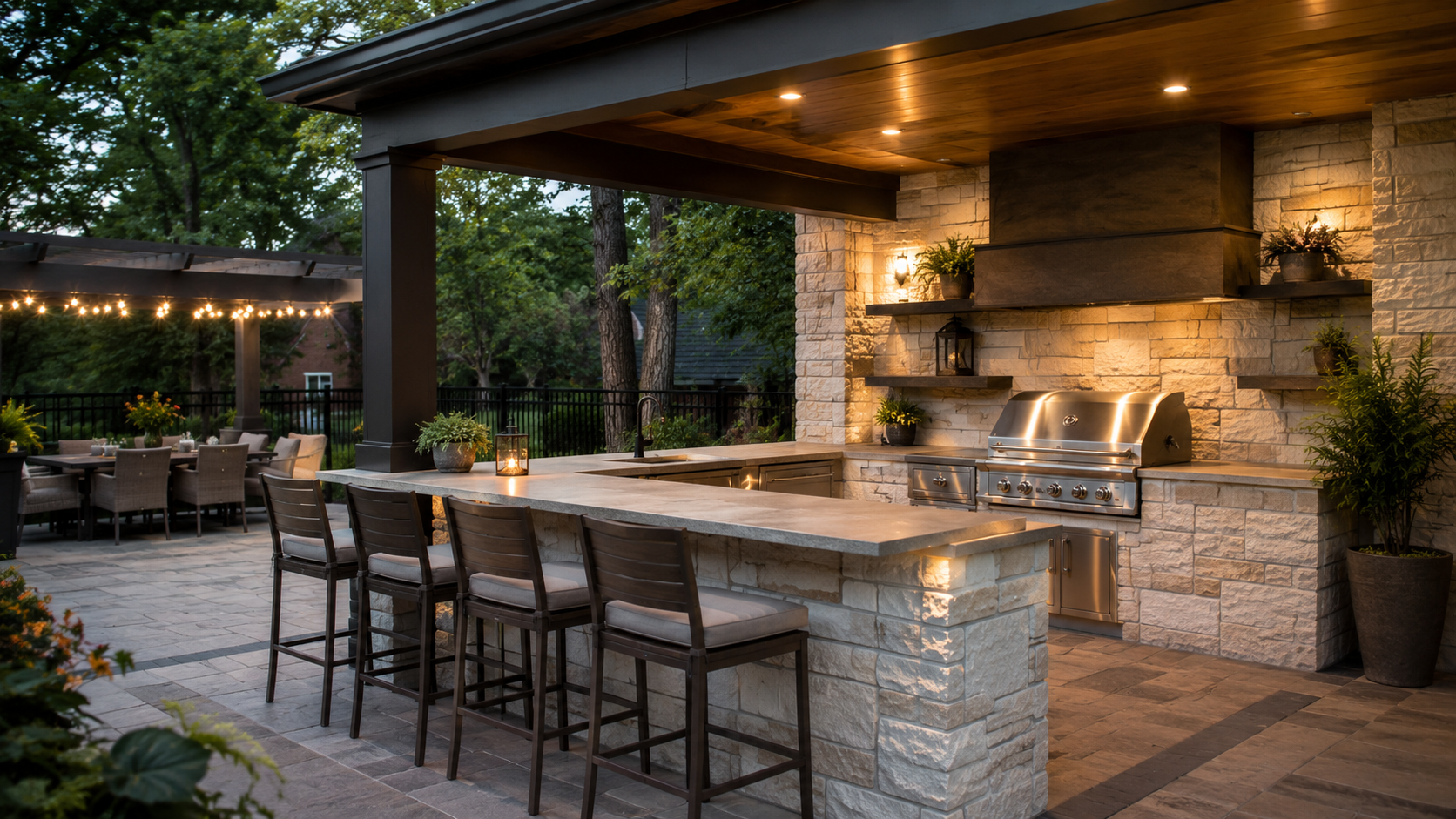
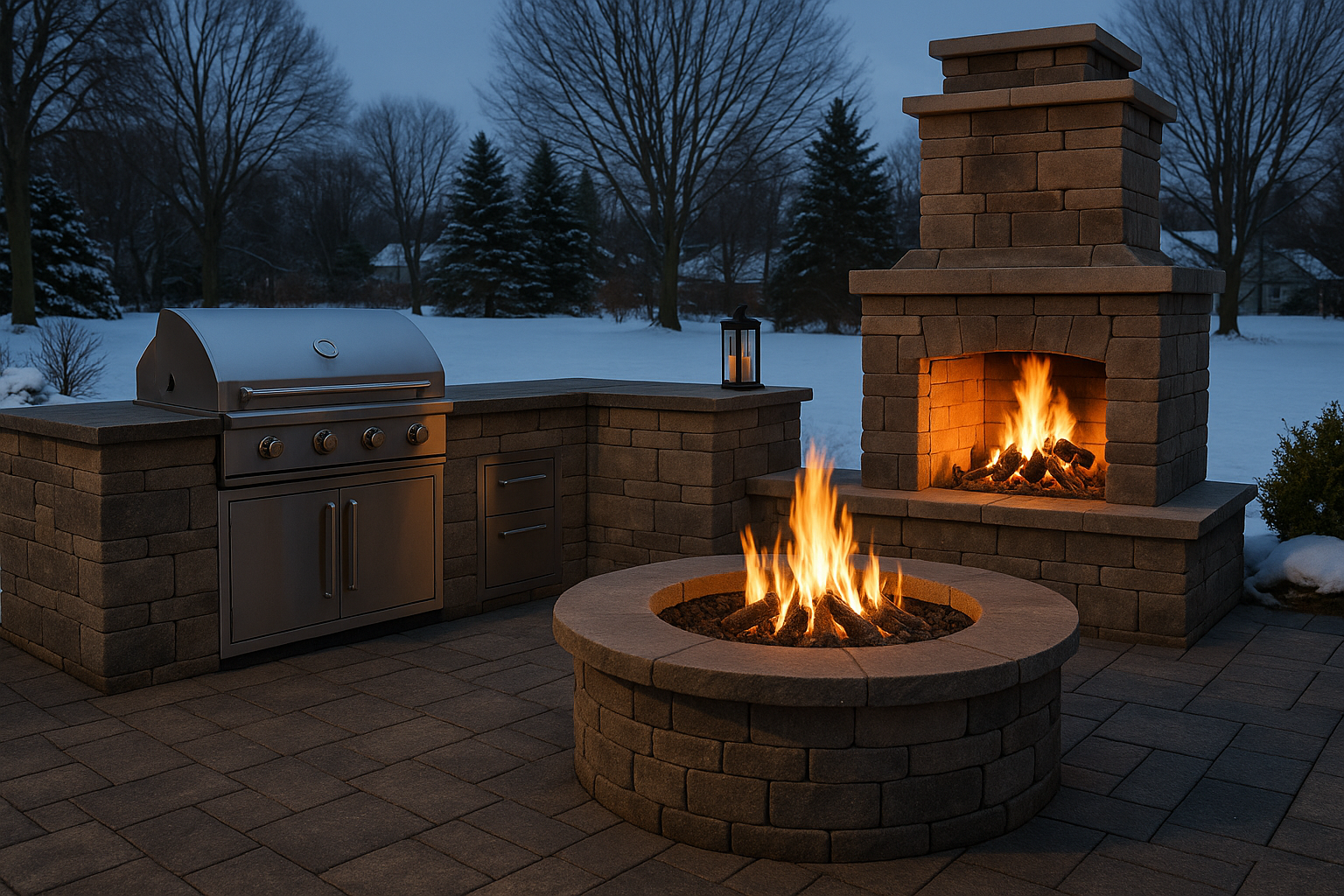
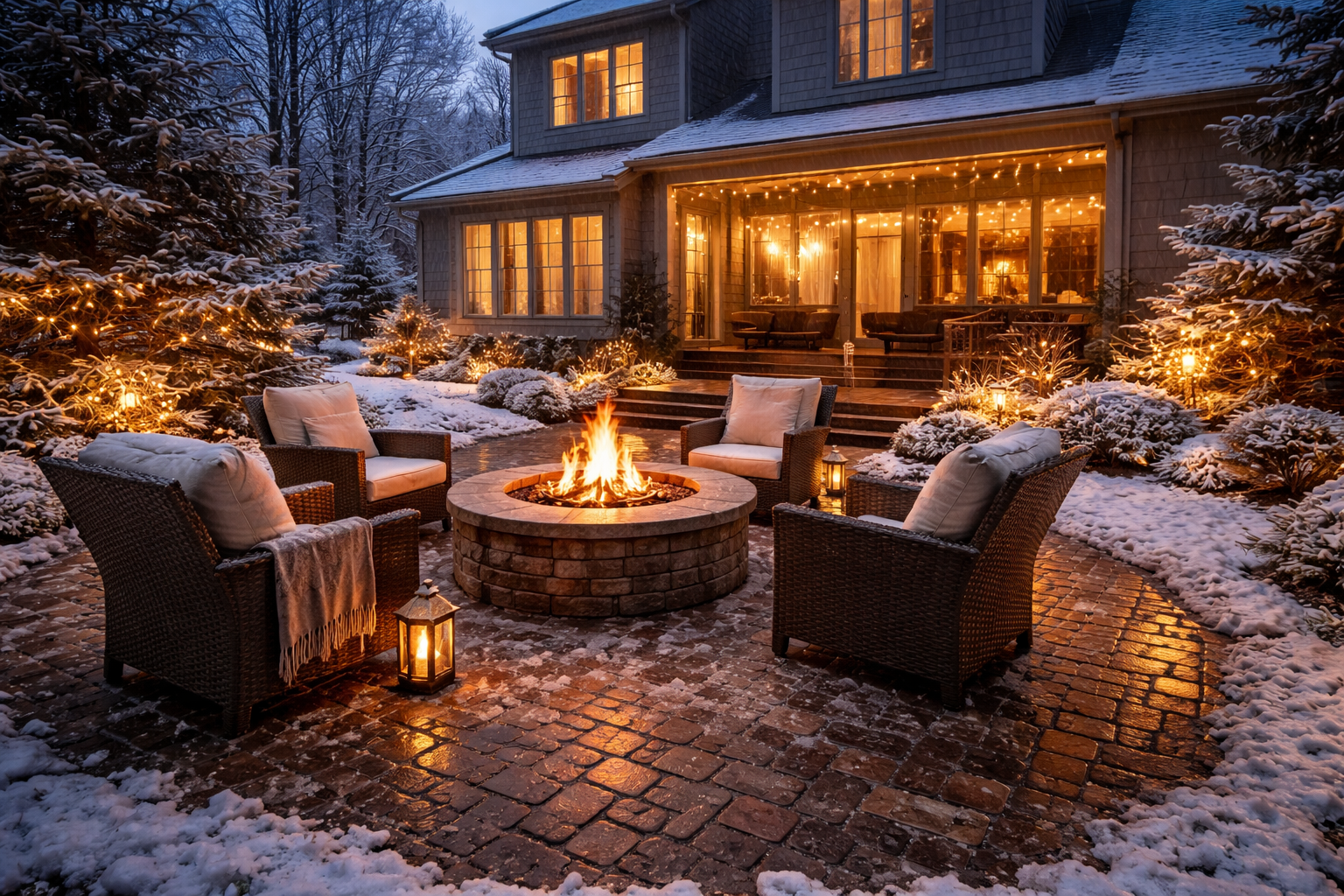
Patios, outdoor kitchens, seating areas, fire features, and lighting should not be treated as unrelated add-ons. They work best when they are part of the site logic from the beginning. That means their placement should respond to circulation, grade, views, and drainage, not just to where there appears to be open space.
Privacy, Views, and Circulation Need to Work Together
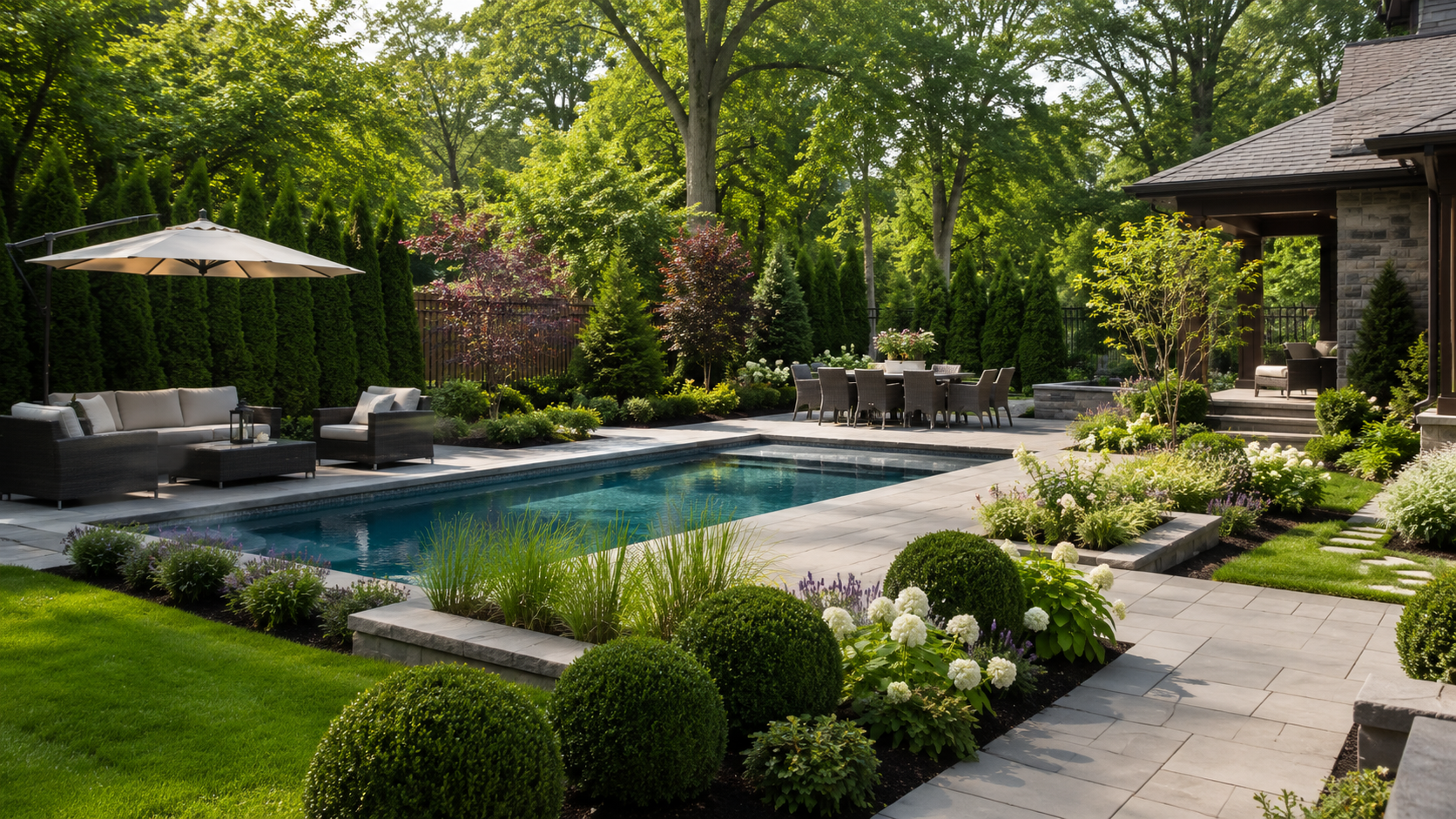
Premium properties often need to do several things at once. They need to maintain privacy, preserve sightlines, and support movement across larger outdoor areas. A good design balances those goals rather than letting one dominate everything else. Screening should feel intentional, not defensive. Open areas should feel framed, not exposed. The site should guide movement calmly.
Entertaining Spaces Need Structural Support, Not Just Furniture
An outdoor room is not defined by chairs alone. It depends on stable grade, proper hardscape, thoughtful lighting, drainage, and material choices that support repeated use. That is why luxury hardscapes often become part of larger entertaining environments. They create the framework that makes outdoor use feel natural and durable rather than temporary.
The Planning Phase High-End Landscape Projects Cannot Skip
The more complex the property, the less room there is for improvisation once work begins.
Site Review Comes Before Scope
A serious project should begin with an actual site review. That means walking the property, studying grade changes, observing drainage paths, identifying mature tree sensitivities, and noting existing conditions that will shape the design. Scope should come after that review, not before it.
Design and Installation Need to Be Connected
One of the biggest failures in complex landscape work happens when design and build are disconnected. A beautiful plan that does not account for real site conditions becomes expensive to correct in the field. On the other hand, an installation process without real design discipline often produces a result that feels fragmented. A strong luxury landscape company should be able to think through both sides of that equation.
Phasing Large Projects Requires Real Sequencing
Many Bloomfield Hills projects are completed in phases. That is normal. But phasing only works well when the long-term plan is understood from the start. Otherwise, work completed in one phase may need to be torn apart or adjusted later. Good planning protects the budget by making sure each phase supports the next.
What to Look for When Hiring a Contractor for a Bloomfield Hills Property
Contractor selection on a premium property should go beyond portfolio highlights and polished before-and-after photos.
Ask About Site Planning, Not Just Installation
A contractor should be able to explain how they assess drainage, grade, access, and site constraints before recommending scope. If the conversation starts and ends with what looks nice, it may not be the right fit for a complex property.
Look for Work That Matches the Market
Not every attractive project demonstrates the same level of planning or execution. The best indicator is whether the contractor has completed work on properties of similar scale, complexity, and architectural quality. A premium market demands more than occasional exposure to premium work.
Process, Materials, and Communication Matter More on Complex Properties
Larger or more intricate projects require clearer communication, stronger sequencing, and better material discipline. That matters because the cost of confusion is higher when a site is large, the design is layered, and multiple elements are being coordinated.
A Better Standard for Landscaping in Bloomfield Hills
Strong landscape work in Bloomfield Hills is not about excess. It is about discipline. Better site planning. Better material decisions. Better alignment between the property, the architecture, and the way the space is actually used. The best results usually feel calm, resolved, and durable rather than crowded or overly styled.
For homeowners considering
luxury landscaping, that is the standard worth aiming for. Not just more features, but a better relationship between design, materials, and site logic from the beginning.
Bloomfield Hills Landscaping Questions Homeowners Ask Before Starting a Project
Why do Bloomfield Hills landscape projects usually require more planning?
Because the properties are often larger, more complex, and more sensitive to drainage, grade, mature trees, and architectural consistency than a standard residential lot.
What materials hold up best on high-end properties in Michigan?
The best materials are the ones that fit both the house and the climate. Natural stone, premium pavers, and properly detailed hardscape systems can all perform well when they are selected and installed correctly for Michigan conditions.
How important is drainage on a premium landscape project?
It is critical. Drainage problems affect planting health, hardscape performance, grade stability, and the long-term success of the entire landscape.
Can a large landscape project be phased over time?
Yes, but it should be phased strategically. The long-term plan needs to be clear before the first phase begins so later work supports what was already built.
What should I ask before hiring a contractor for a Bloomfield Hills property?
Ask about site planning, drainage review, local project experience, material recommendations, and how the contractor handles design and installation coordination on complex properties.