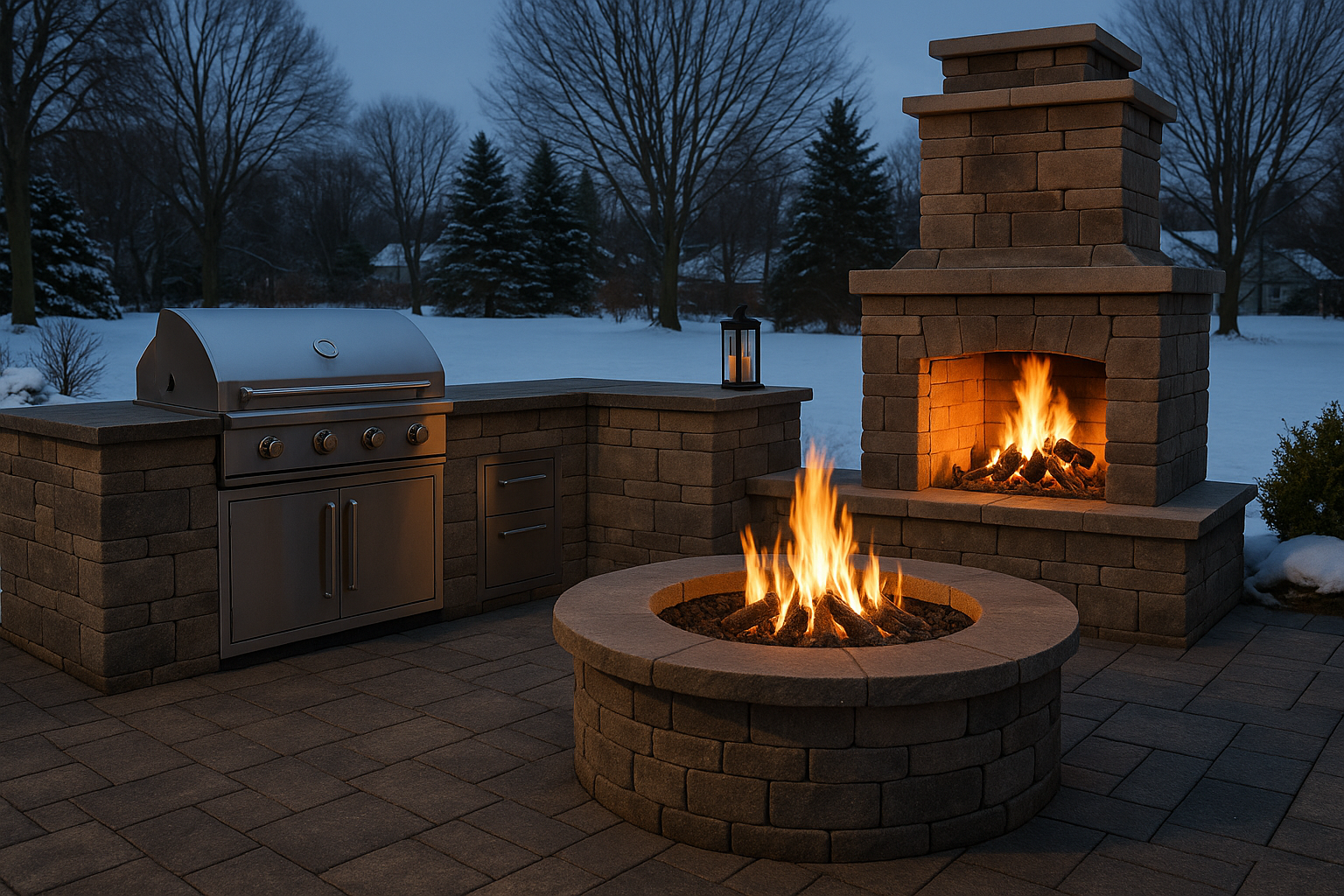
Landscape Installation Timeline: From Design to Final Walkthrough (What Happens When)
Homeowners don’t usually fear the work itself. They fear the uncertainty around it.
“How long will my yard be torn up?” “When do I have to choose materials?” “What happens if the weather turns?” “Will the crew disappear for weeks?” Those questions are reasonable. A landscape installation is not a single task, it’s a sequence of decisions, deliveries, and build steps that only feels chaotic when no one explains the order.
This guide lays out the real timeline from first conversation to final walkthrough. It’s written to reduce buyer anxiety without overpromising. You’ll see what happens when, what you control, what you don’t, and where most timelines get stretched. If you want a schedule that’s tailored to your property and priorities, the fastest path is a quote built around a clear scope.
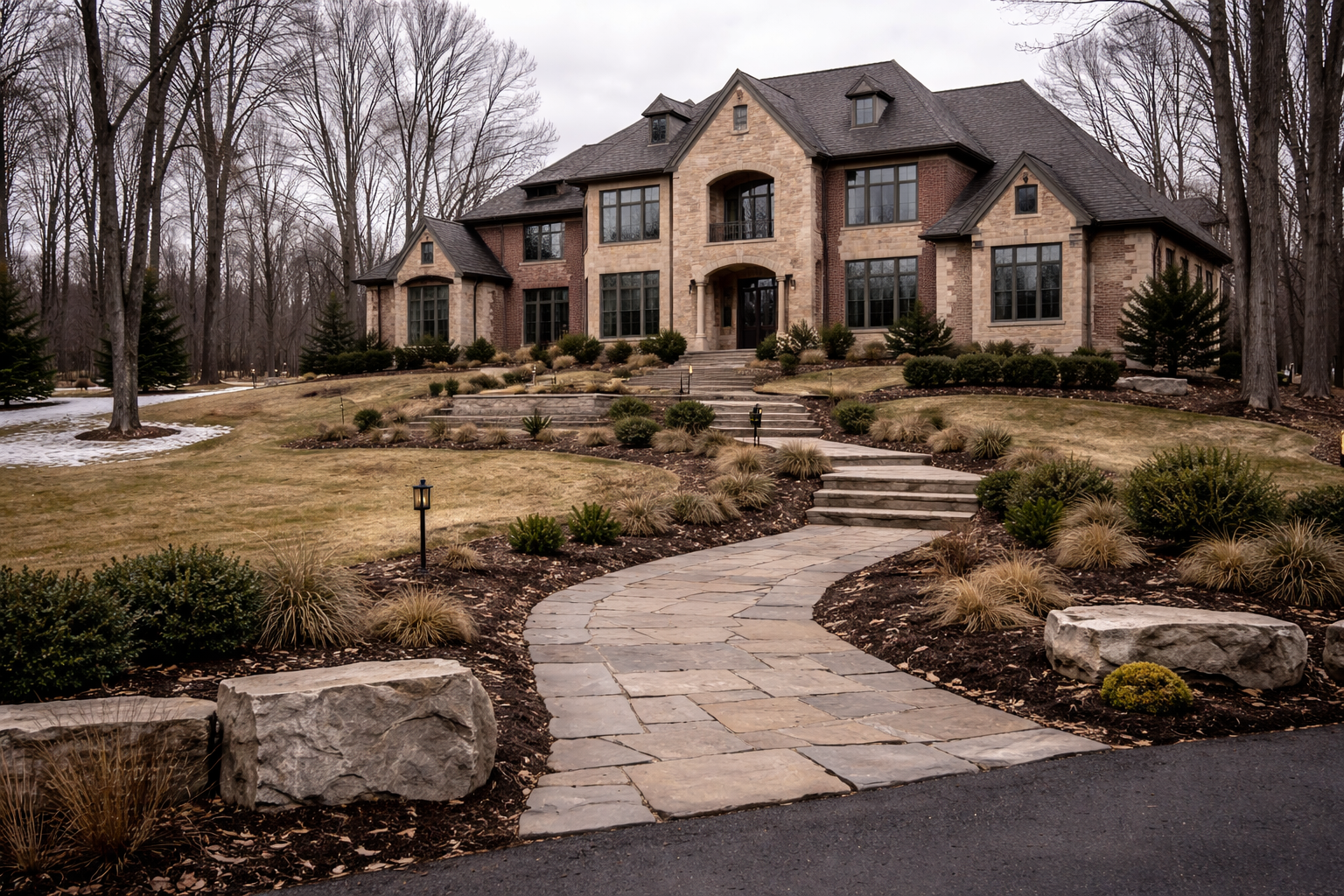
Residential Landscaping in Detroit
Timeline overview: the big picture in plain terms
Most projects follow the same core rhythm:
- Discovery and site assessment (understanding the property and your goals)
- Design (turning priorities into a buildable plan)
- Selections and approvals (locking the choices that affect cost and schedule)
- Scheduling and logistics (coordinating crews, materials, and site readiness)
- Site prep (removal, grading, drainage prep, and staging)
- Build and install (hardscape/structure first, then planting and finish work)
- Final walkthrough (verification, adjustments, cleanup, and next steps)
What changes project-to-project is not the existence of these phases, it’s their duration. Timelines are affected by scope, access, existing conditions (especially drainage and grades), weather windows, material lead times, and how quickly approvals and decisions happen.
The goal of this post is not to give you one number that pretends every property is the same. It’s to make the process predictable so you can plan around it and protect quality.
Phase 1 — Discovery & site assessment: what you’ll be asked and why
The first phase is about clarity. A professional crew isn’t trying to “sell you on something.” They are trying to understand the property constraints and the outcome you’re actually paying for.
A typical discovery conversation covers:
- How you live outside. Do you entertain? Do you want an easy-care front yard? Are kids or pets using the space daily?
- What you dislike today. Is it drainage, lack of privacy, messy transitions, or a yard that feels unfinished?
- What success looks like. Better curb appeal, a backyard that functions, or a full property transformation.
During the site assessment, teams look at things that quietly control schedule and build complexity:
- Access for equipment and materials
- Existing grades and obvious water flow patterns
- Areas that may need drainage correction
- Existing structures and surfaces that affect tie-ins
- Utilities and the need for marking before digging
This is also where good residential landscaping starts. The most expensive mistakes often come from building without understanding the site.
What you can do to keep this phase efficient:
- Be honest about budget range and priorities
- Decide what is non-negotiable vs. “nice to have”
- Share practical constraints (pets, gates, parking, work hours)
When discovery is thorough, the rest of the timeline becomes far easier to manage.
Phase 2 — Design: where the timeline is won or lost
Design isn’t a decorative add-on. It’s how you avoid paying for rework.
A strong design phase answers questions before a shovel touches dirt:
- What’s the layout?
- What is the main path of movement through the property?
- Where does water go?
- What materials and edges create a coherent look?
- Which elements must be built first to support the rest?
Good design is also where you define the tradeoffs. If you want clean geometry and long sightlines, that affects grading choices. If you want a softer, layered look, that affects planting structure and maintenance expectations.
It’s common for buyers to rush this phase because they want to “start.” The problem is that rushing design usually causes slowdowns later, when the crew hits a decision that should have been settled weeks earlier.
This phase is where a buyer can best evaluate professionalism. Quality landscaping services should explain not only what they propose, but why that plan fits your site and goals.
Keeping revisions productive
Revisions are normal. Endless revisions are avoidable.
A productive approach:
- Give feedback in terms of outcomes (“I want a more formal entry”) rather than random changes (“add more plants”).
- Approve the layout and major geometry first.
- Lock key materials and transitions next.
- Leave fine plant tweaks for last.
When the “big moves” are approved early, design becomes a direct path to scheduling instead of a loop. The design stage is covered in more detail on our landscape design page.
Phase 3 — Selections: decision deadlines that prevent delays
Selections are where timelines quietly stretch. Not because clients make “bad choices,” but because many choices have lead times and dependencies.
Typical selections that affect schedule:
- Primary hardscape material and finish
- Major planting sizes and quantities
- Lighting approach (if included)
- Border and edging details
- Any specialty items that must be ordered
A professional team will help you focus on the decisions that matter now versus later. The objective is not to pressure you, it’s to prevent a build from pausing midstream because one key item wasn’t locked.
This phase is also where “alternates” save time. A responsible team will usually identify a few acceptable substitutes early so that if an item becomes delayed, the project does not collapse.
This is part of what people mean by landscape company services: not just the physical work, but the planning discipline that keeps the job moving without sacrificing quality.
Phase 4 — Scheduling: what actually determines your start date
Scheduling is logistics plus reality.
Your start date is influenced by:
- The size and complexity of the scope
- Crew availability and trade sequencing
- Weather windows (especially for certain site conditions)
- Utility marking timelines
- Material arrival and staging
Most reputable teams avoid “overbooking” starts because it leads to uneven progress and poor communication. A start date that exists only to make you feel better can be worse than a later start date that comes with consistent momentum.
A good landscape construction company schedules in a way that protects the build sequence. That may include short pauses between phases, but those pauses should be explained and planned.
What you can control:
- Approving design and selections promptly
- Ensuring site access (gates, parking, pet plans)
- Making sure decision-makers are available when needed
What you cannot control:
- Weather disruptions
- Supplier delays on specialty items
- Utility marking timelines
The value of clear scheduling is not speed for its own sake. It is predictability.
Phase 5 — Site prep: the part that looks messy but protects the result
Site prep is where the yard starts to look worse before it looks better. That can be unsettling if you don’t know what you’re seeing.
Site prep typically includes:
- Demolition or removal of existing elements
- Rough grading and soil shaping
- Staging areas for materials and equipment
- Early drainage corrections (where needed)
This phase is less about aesthetics and more about creating a stable foundation for everything that follows. When site prep is done well, later phases move faster because crews aren’t fighting the ground.
If you are doing a significant landscape installation, site prep is where quality quietly shows up.
Phase 6 — Construction & installation: what happens day-to-day
Once the build begins, the job becomes a sequence of dependent steps. The order matters.
A common sequence looks like this:
- Structure and hardscape first (anything that sets elevations or geometry)
- Major grading adjustments and tie-ins
- Irrigation or conduit work (if included)
- Planting and soil refinement
- Finish details (mulch, edging, cleanup, final touches)
What you should expect from communication
Professional teams typically set expectations for how updates happen. That might be daily check-ins, scheduled milestone conversations, or written updates when change orders or decisions are needed.
The best outcomes come from aligned expectations:
- You know what the crew is doing this week.
- You know when you will be asked to approve a change.
- You know what “done” means for each phase.
This is where good landscaping services feel different from generic labor. The work is coordinated, not improvised.
Inspections and hold points
Some phases require pauses: utility marking, deliveries, weather conditions that make certain work unwise, or the need to let a base settle before continuing. A pause can be responsible when it prevents long-term issues.
The key is transparency. If a delay is unavoidable, you should be told why and what happens next.
Phase 7 — Final walkthrough: what gets checked before you sign off
A final walkthrough isn’t a victory lap. It’s quality control.
A strong walkthrough checks:
- Grades and visible water flow direction
- Transitions where surfaces meet steps, drives, or thresholds
- Edges and alignment of installed elements
- Plant placement and general health at install
- Cleanup, haul-away, and site finish
- Any care guidance and immediate next steps
If something needs adjustment, this is the right moment to document it and schedule the fix. A professional team wants the walkthrough to end with confidence, not ambiguity.
This is also where clients tend to feel the value of
residential landscaping done with discipline: the property feels intentional, complete, and easy to live with.
Common delays: what’s normal, what’s avoidable, and how to reduce risk
Delays happen. The question is whether they are predictable and handled properly.
Avoidable delays (the ones you can control)
- Late decisions. If key selections aren’t finalized, scheduling can’t be reliable.
- Scope drift. Adding major elements midstream can require redesign and rescheduling.
- Access issues. Locked gates, pets without a plan, or blocked staging areas slow work.
- Unclear decision-maker. If approvals require tracking down multiple people, timelines stretch.
How to reduce these:
- Agree on priorities early.
- Use decision deadlines.
- Approve alternates in advance.
- Keep communication clean: one decision-maker whenever possible.
Unavoidable delays (the ones you plan for)
- Weather. Certain work should not be forced.
- Supply delays. Some materials and plant sizes have variable availability.
- Utility marking and inspections. Timing is not always under the contractor’s control.
A well-run job doesn’t pretend these risks don’t exist. It plans around them.
This is why a realistic schedule matters. The goal is not to promise a perfect timeline. The goal is to deliver a durable result without cutting corners.
What a typical timeline looks like (by project type)
Even though every site differs, most projects fall into recognizable categories.
1) Small refresh
Often includes limited planting updates, minor grading touch-ups, and targeted improvements. These projects typically move faster because fewer dependencies exist.
2) Medium upgrade
May include reworked beds, more significant grading, material selections, and a more structured plan. Timelines vary depending on scope and lead times.
3) Full build or phased work
A full build involves more steps, more coordination, and a greater need for clear approvals. Phasing can be smart, but it only works when the phases are guided by one cohesive plan.
If you want a quote that includes a realistic timeline for your property, the best next step is a site-specific assessment rather than a generic promise.
FAQs
How long does a project take from first call to final walkthrough?
It depends on scope, site conditions, and lead times. What you can expect is a consistent sequence: discovery, design, selections, scheduling, site prep, build, and final walkthrough. A clear scope and timely decisions are the biggest factors you control.
What decisions do I need to make before work starts?
The decisions that affect schedule are usually the big ones: layout approval, primary materials, and any specialty items with lead times. A good team will separate urgent decisions from details that can be refined later.
What causes most delays?
The most common causes are weather disruptions, material availability, utility marking timelines, and late changes to scope. Some are predictable; the avoidable ones usually come from unclear decisions and shifting priorities midstream.
Can work be phased to spread out investment?
Yes, but only when the phases are planned as one system. Phasing works when the design ensures each step looks complete and supports the final result.
What should I expect from communication during the build?
You should expect clarity on what happens next, when decisions are needed, and how changes are documented. Professional landscape company services include coordination and communication that prevents confusion from turning into delays.
When is the best time to start planning?
Earlier than most people think. If you start planning before you need the work, you gain time for design, selections, and scheduling without rushing decisions.
The next step: replace uncertainty with a plan you can actually schedule around
A well-managed timeline is not about rushing. It’s about sequence, clarity, and follow-through.
The strongest projects are the ones where design is settled before scheduling, selections are made before ordering, and site prep is treated as the foundation for quality, not as an inconvenience to push through. When that happens, the property doesn’t just look better at the end. The process itself feels calmer because you know what’s happening and why.
If you want a plan built around your property, not a generic estimate, get a quote. If you prefer to talk through your goals and constraints directly, call now.