Luxury Landscape in Detroit: A Design-First Playbook for High-End Curb Appeal
If you’ve been looking at projects labeled “luxury,” you’ve probably noticed the word gets used as a shortcut. It’s stamped on photos, tucked into proposals, and treated like a finish you can buy. But when a property looks genuinely elevated in person, it’s rarely because someone piled on features. It’s because the choices were disciplined: the layout makes sense, the proportions feel right, the materials belong together, and the whole plan accounts for the way Detroit weather actually treats outdoor work.
This guide is written for homeowners who want to invest once and be proud of what they see every time they pull in the driveway. It will help you define what a luxury landscape really is, how design decisions create curb appeal that reads as confident, not busy, and how to avoid common planning mistakes that lead to expensive rework.
If you want a clear plan before you commit to install decisions, request a design consult.
What “Luxury” Means in a Detroit Yard (And What It Doesn’t)
Luxury is not a price tag. It’s a standard. It shows up in how a space is organized, how the eye moves through it, and how well the project holds its shape through real use.
A high-end yard usually shares a few traits:
- A deliberate entry sequence. The approach to the front door feels guided. You can tell where to go without being told.
- A coherent palette. Materials and forms repeat in a controlled way. Nothing looks “added later.”
- Restraint. Instead of ten competing ideas, you get three good decisions executed cleanly.
- Finish quality. Edges are crisp. Transitions are intentional. Details feel aligned, not improvised.
What luxury is not: a checklist of upgrades, an overly complicated planting scheme, or a yard stuffed with “statement” features that fight each other for attention.
The goal is a space that feels calm and expensive because it’s composed, not because it’s loud.
The Design-First Principles That Create Curb Appeal That Lasts
When a yard looks “off,” it’s usually not because someone picked the wrong plant. It’s because the design principles weren’t handled early, before the surfaces, before the lighting, before the planting plan.
Proportion: The Fastest Way to Make a Yard Feel Expensive
Proportion is the relationship between elements: walkway width to entry size, bed depth to façade height, planting mass to lot scale. A common mistake is undersizing everything. Narrow paths and shallow beds can make a property look tentative, even if the materials are nice.
Luxury design tends to scale elements to the home, not the budget line item. That doesn’t always mean bigger, it means correct. The yard should feel like it was drawn for the architecture rather than squeezed into the leftover space.
Sightlines: What the Eye Notices Before You Do
Stand at the curb. Then stand at the sidewalk. Then halfway up the path. At each point, ask what the eye lands on first.
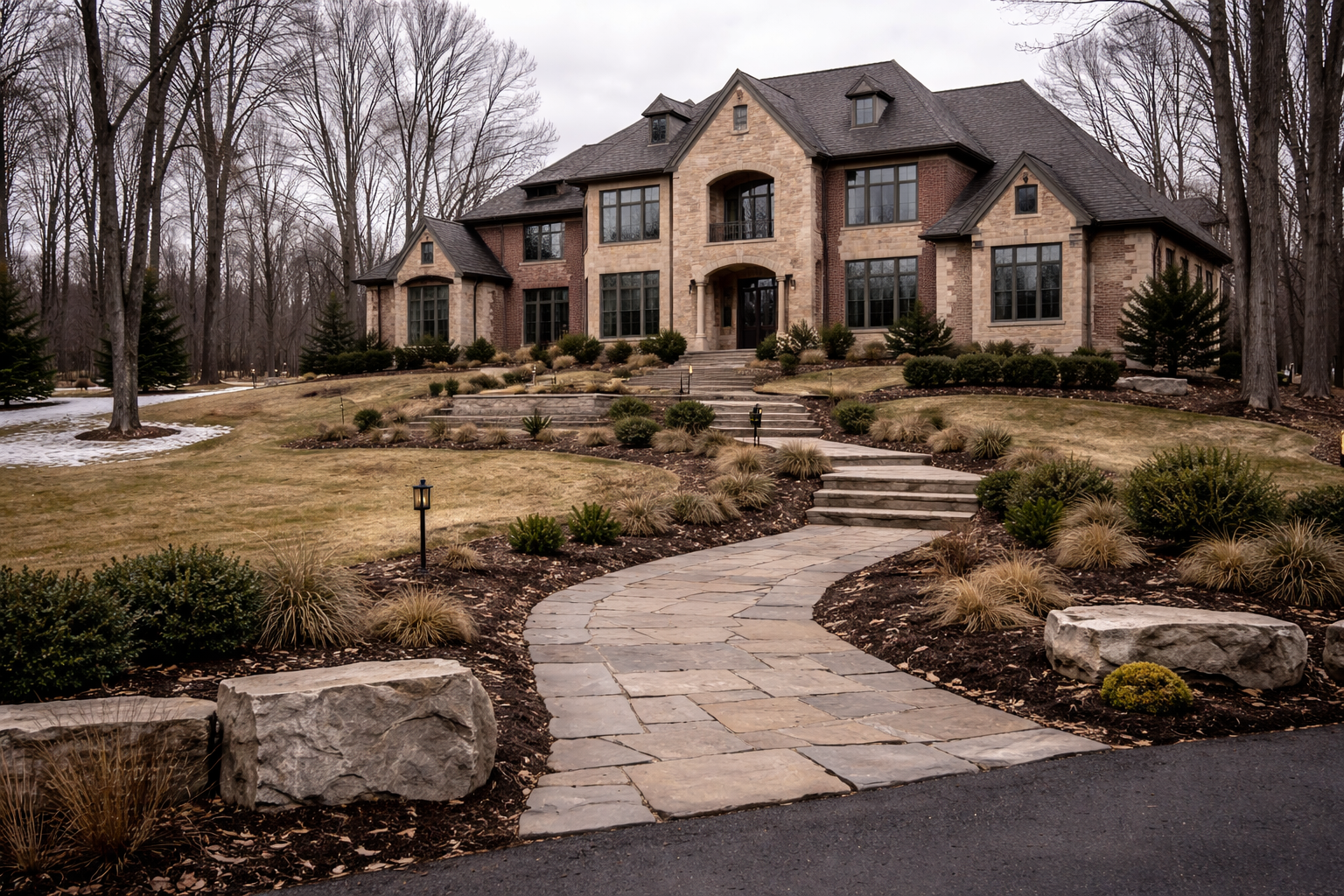
In high-end landscaping, sightlines are intentional: the geometry leads you toward the entry, the planting supports the structure, and focal points are placed where they have room to work. You don’t want the eye ricocheting between random features.
Restraint: Fewer Decisions, Better Executed
The most convincing yards are edited. They repeat forms and materials in a way that feels consistent and architectural. That repetition is not boring; it’s what makes the whole property feel unified.
If you’re tempted to add one more material, one more curve, one more feature—pause. Luxury is often the ability to stop at the right time.
A Detroit Reality Check: What Your Landscape Has to Survive
Detroit’s seasons make outdoor work honest. A design that looks great in a mild climate can fail here if it ignores two practical realities: water and movement.
- Freeze-thaw cycles can stress hard surfaces and joints over time. When water gets where it shouldn’t and then expands, small issues become visible issues.
- Snow and ice management affects layout. Where does snow get pushed? Where will meltwater go? How do surfaces behave under salt and grit?
- Drainage is not a technical afterthought; it’s a design requirement. Poor grading can turn a beautiful plan into a recurring headache.
A strong detroit landscape company will talk about these constraints early because they shape the layout, the surface choices, and the long-term performance of the work.
Layout First, Materials Second: The Planning Order That Prevents Regret
Many projects go sideways because the homeowner shops for materials before the layout is defined. That’s backwards.
A design-first plan moves in this order:
- Define the experience. What should the approach feel like—formal, modern, classic, quiet, dramatic?
- Organize the zones. Entry sequence, walkway path, foundation planting, and any side-yard connections.
- Lock the geometry. Straight lines, gentle arcs, or a controlled mix—chosen to fit the architecture.
- Then choose materials. Once you know the shapes and transitions, surface materials can be selected to support the plan.
If you want to phase a project over time, the same principle applies. Phasing works when it’s guided by one coherent plan. Piecemeal additions almost always show.
If you’d rather avoid guessing and build from a plan you can trust, request a design consult.
The Elements That Make a Landscape Feel High-End Before “Extras” Ever Show Up
A common misconception is that luxury comes from the big-ticket items. In reality, luxury is often built on the parts people overlook—because those parts set the tone.
Walkways and the Entry Sequence
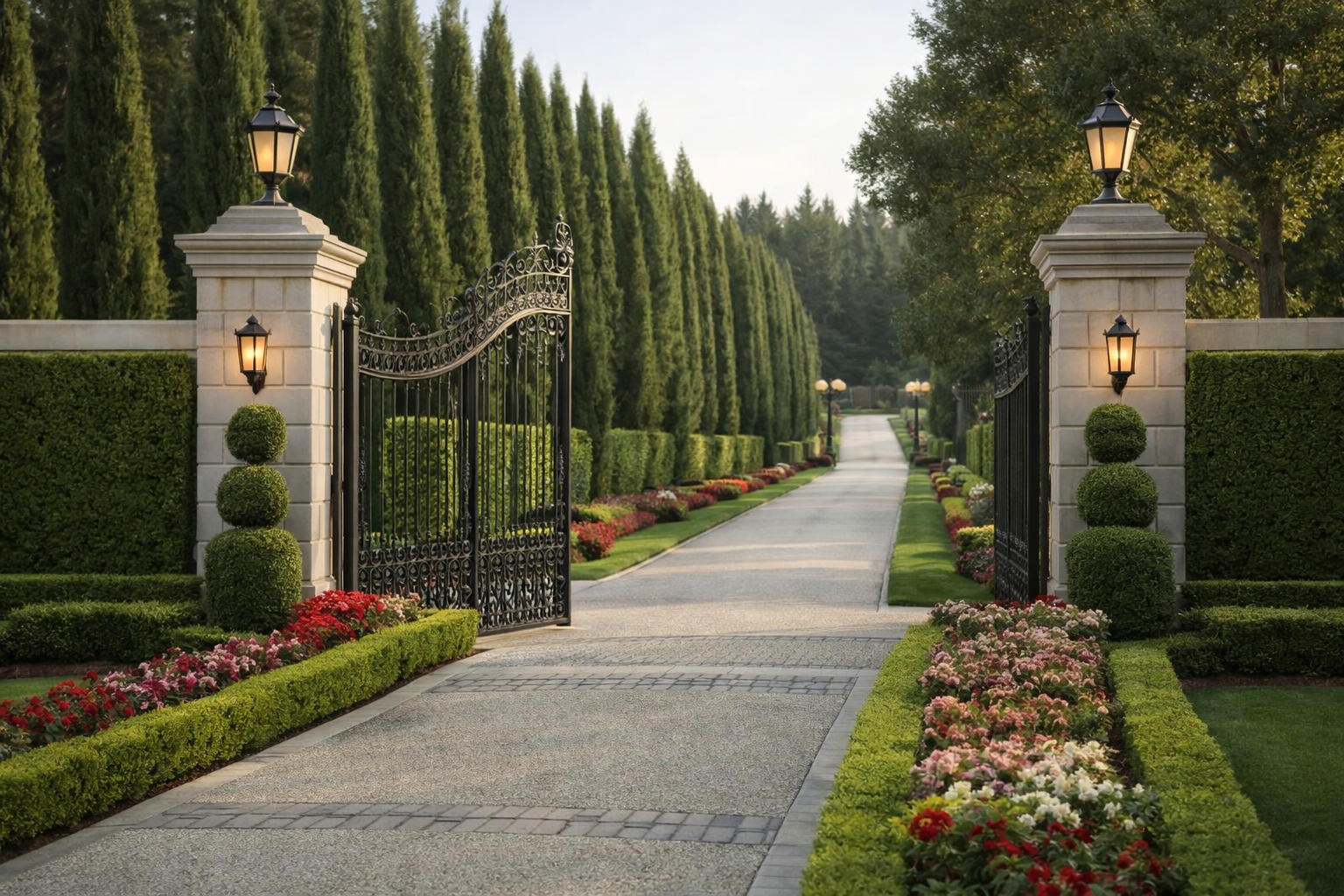
The walkway is not just a path. It’s the first guided experience of the property. A confident approach has adequate width, comfortable transitions, and a clear relationship to the front door.
When walkways feel too narrow, too twisty, or visually disconnected from the home, the whole yard can feel improvised.
Grading and Drainage (The “Invisible” Difference)
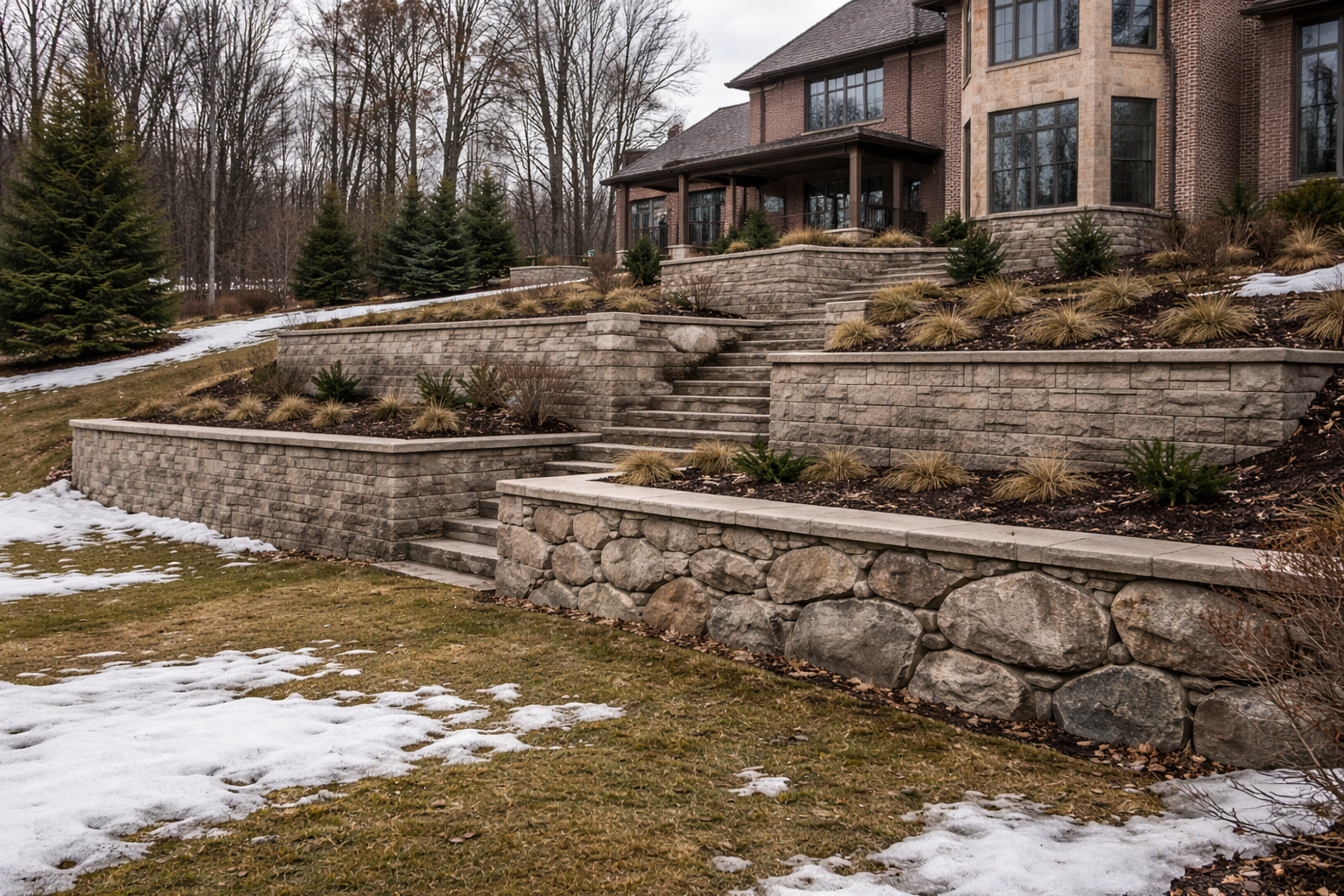
A yard that drains properly usually looks better because water doesn’t carve ruts, pool in low spots, or stress the edges of surfaces. Good grading supports everything else: planting health, surface performance, and maintenance simplicity.
Lighting That Feels Architectural
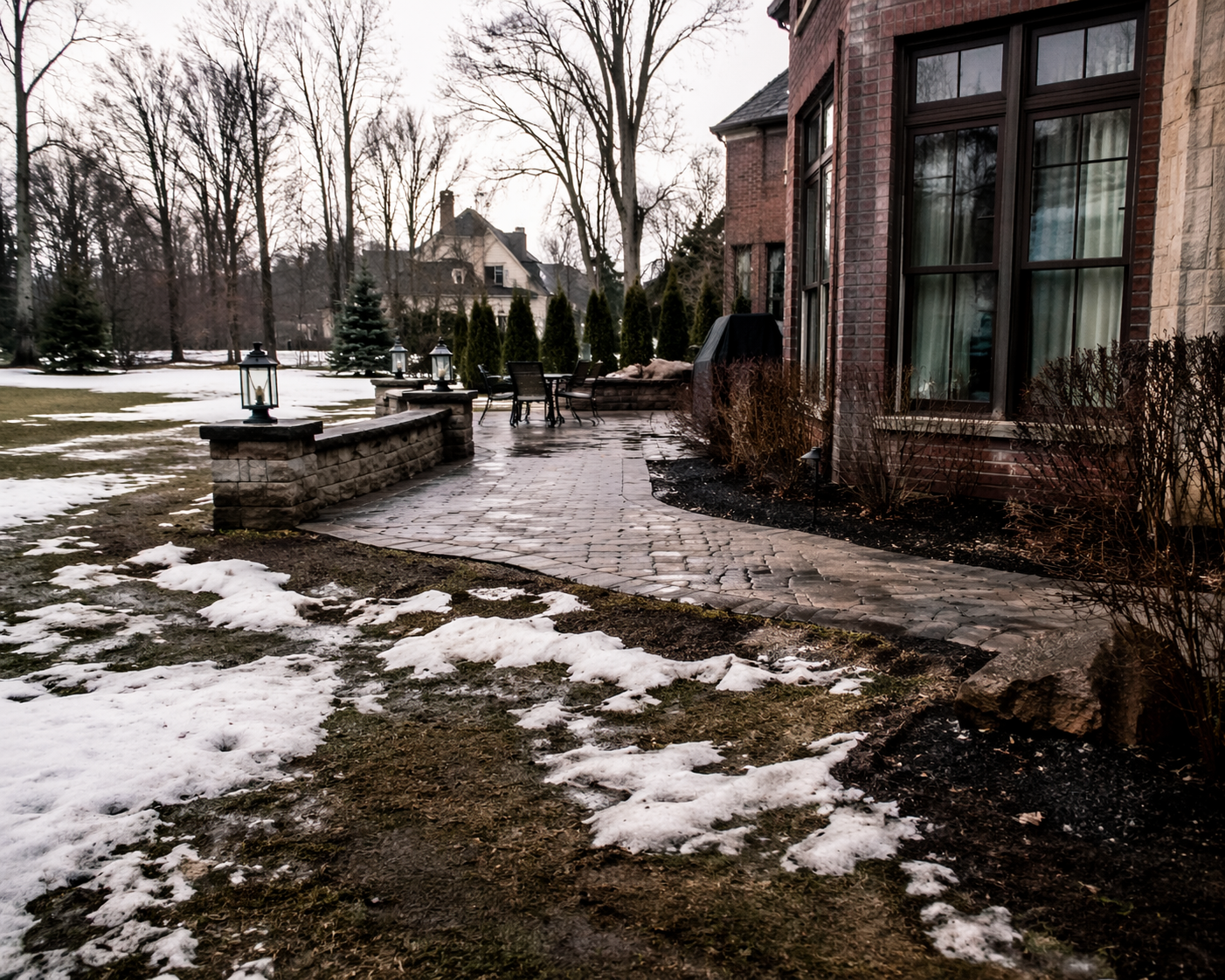
Great outdoor lighting is rarely about brightness. It’s about placement and purpose. Soft, intentional lighting can make a home look more finished, create depth at night, and highlight structure without turning the yard into a showroom.
Planting With Structure Instead of Random Color
A high-end planting plan uses structure, form, layering, repetition, so the yard holds its shape even when nothing is blooming. Color can be used, but it shouldn’t be the only strategy.
Clean Edges and Intentional Transitions
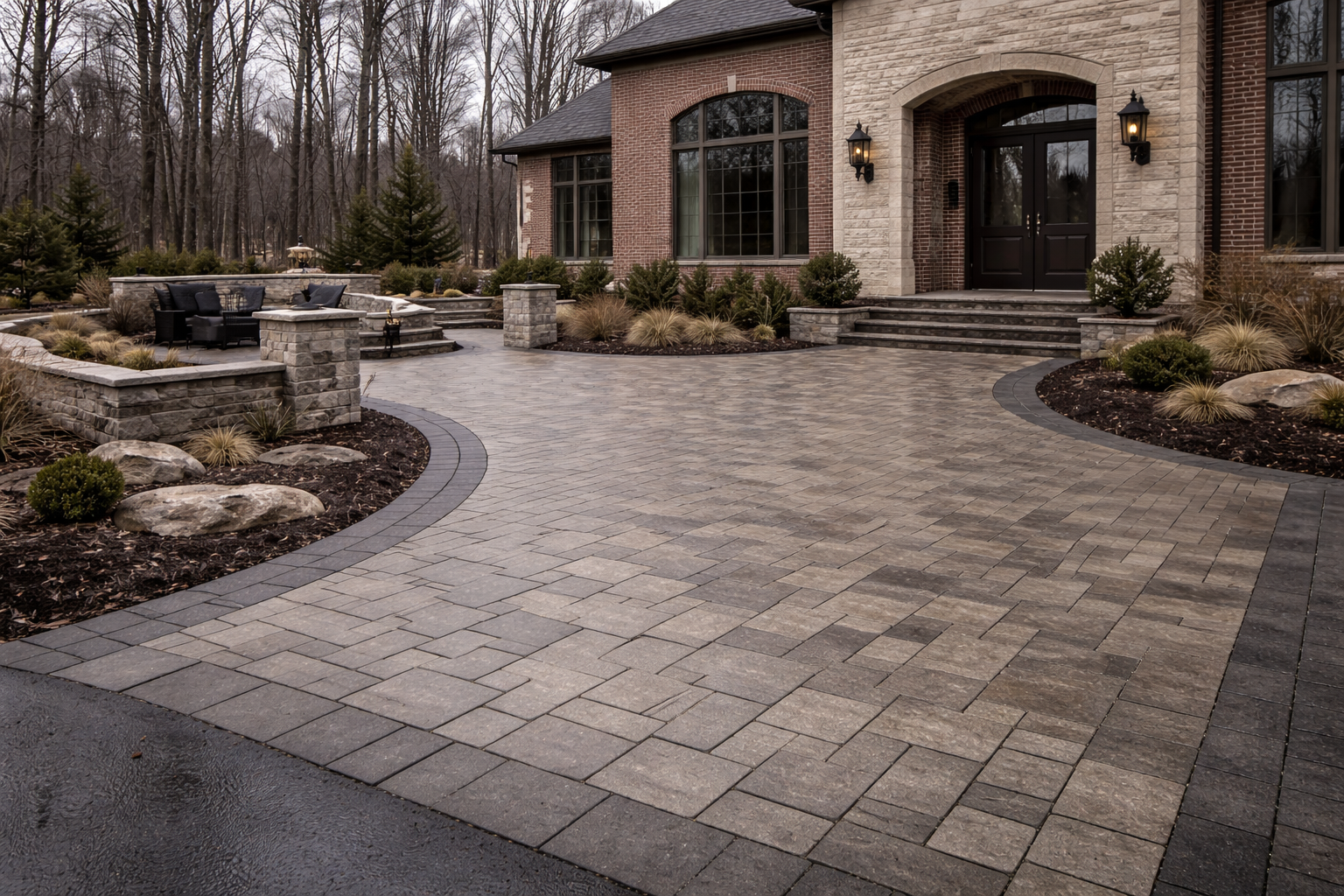
Edges and transitions are where projects show their quality. Crisp lines, consistent alignments, and well-resolved joints are what make a yard feel “finished.”
These are the details that separate true luxury landscaping from something that only looks good in a quick photo.
Materials: How to Choose for Longevity Without Overcomplicating the Plan
Material selection should support the design, not compete with it. The best choice is usually the one that stays visually consistent over time and fits the geometry you’ve chosen.
A practical way to evaluate materials is to think in terms of:
- Consistency. Does it match the tone of the home and the other surfaces?
- Edge integrity. Will it keep clean lines where surfaces meet?
- Texture and traction. Does it make sense for daily use, weather, and foot traffic?
- Maintenance realism. Will it look good under normal upkeep, or does it demand constant attention?
A design-first plan typically reduces material chaos: fewer different surfaces, fewer competing textures, cleaner transitions.
Maintenance Load: The Conversation That Should Happen Before You Fall in Love With the Idea
A yard isn’t luxurious if it only looks great on the one day it’s freshly maintained. Luxury is a space that holds its shape on an average week.
Maintenance load isn’t about avoiding work entirely. It’s about matching the design to your actual schedule.
Here’s a useful way to think about it:
- Low-involvement landscapes rely on strong structure: consistent forms, durable surfaces, planting that doesn’t need constant correction.
- Moderate-involvement landscapes allow for more seasonal detail, additional planting layers, and more refined garden moments.
- High-involvement landscapes can be stunning, but they require time: pruning discipline, seasonal resets, and more frequent attention.
The most confident plans are honest about upkeep from day one. That honesty protects your investment and keeps the result aligned with your life.
A thoughtful luxury landscape is not just beautiful on delivery, it’s designed to stay beautiful without turning your weekends into a chore.
How to Vet the Right Team for a Design-First Project
Choosing who builds your yard matters because outdoor work is a blend of design judgment and execution. The best results come from teams that can carry the idea from concept through install without losing the plot.
What a Real Process Looks Like
A professional process typically includes:
- A clear discovery conversation about priorities and constraints
- A site evaluation that accounts for water movement and practical use
- A design concept that defines layout, geometry, and visual hierarchy
- A plan that clarifies materials, transitions, and the “why” behind choices
- Execution with quality control that protects the design intent
Questions Worth Asking Before You Sign
- How do you prevent a project from feeling piecemeal?
- How do you plan for drainage and snow management?
- Who makes design calls during install if conditions change?
- How do you define “finished” at the end of a project?
A reputable luxury landscape company won’t dodge these questions. They’ll welcome them.
You also want to know whether you’re working with a team that understands local constraints. A reliable detroit landscape company should be comfortable discussing the practical realities that shape durability and upkeep.
Red Flags That Usually Lead to Regret
- Vague scope and vague language (“We’ll figure it out as we go”)
- No clear layout plan before major install decisions
- Too many competing materials and shapes in early concepts
- A rush to install before the design is truly defined
Three Curb-Appeal Scenarios That Help You Picture the End Result
Sometimes the fastest way to clarify “luxury” is to picture a real outcome.
Scenario 1: Classic Home, Entry That Feels Undersold
The home has presence, but the approach doesn’t. The path is narrow, the planting is scattered, and the entry lacks a clear moment.
A design-first solution strengthens the approach: a more confident walkway width, a calmer material palette, and planting that frames the entry instead of competing with it. The result isn’t louder, it’s more certain.
Scenario 2: Modern Home, Too Many Ideas at Once
The home is clean and architectural, but the yard is busy: multiple materials, too many curves, and features that fight the geometry.
The solution is restraint. A simpler layout with fewer materials, repeated forms, and lighting that supports structure at night. The goal is not minimalism for its own sake, it’s coherence.
Scenario 3: Larger Lot, No Structure to Hold the Space Together
A bigger front yard can feel empty or random without anchors. Small planting beds “float” in space and don’t relate to the home.
The solution is to establish structure: deeper planting masses, clearer edges, and a layout that creates intentional zones. This is where design-first thinking changes the entire perception of scale.
A Practical Checklist Before You Invest
Before you commit to surfaces, features, or planting orders, walk through this checklist:
- Do we have a unified layout, not just a list of upgrades?
- Does the approach to the entry feel intentional from curb to door?
- Are we using a controlled palette of materials and forms?
- Have we addressed water movement and drainage in the plan?
- Will this still look good on an average maintenance week?
If you can answer these confidently, you’re far less likely to end up with a yard that feels expensive but incomplete.
Residential Landscaping in Detroit
FAQs
What makes a luxury landscape different from standard landscaping?
A luxury landscape is defined by design discipline: coherent layout, correct scale, and a controlled palette of forms and materials. It looks intentional from multiple viewpoints, not just one photo angle. It also accounts for real-life upkeep, so it stays composed under normal maintenance.
How do I choose the right luxury landscape company?
Start by asking how they define and protect design intent. You want a team with a clear process: discovery, concept, plan, and execution with quality control. A credible luxury landscape company should be able to explain why choices are made, not just what choices are offered.
Does luxury landscaping require constant upkeep?
Not necessarily. Luxury landscaping can be designed to fit your schedule if maintenance load is discussed early and built into the plan. The key is structure, clean geometry, coherent planting strategy, and materials that don’t demand constant correction to look finished.
What design choices create a high-end look without making the yard feel busy?
Restraint is the fastest path to a high-end result. Keep material variety under control, repeat forms instead of mixing too many, and prioritize a clear entry sequence. When the eye knows where to go, the yard feels calm and confident.
When should I involve a detroit landscape company—before or after I pick materials?
Before. The layout and geometry should come first so materials can support the plan instead of driving it. A detroit landscape company that works design-first can help prevent piecemeal decisions that look inconsistent over time.
The Next Step: Start With Design, Not Guesswork
If you’re investing in curb appeal, the smartest move is to start with a plan that holds together, visually and practically. The homes that look truly elevated aren’t the ones with the most features. They’re the ones where the layout is confident, the proportions fit the architecture, the transitions are clean, and the maintenance expectations are realistic.
If you want a clear direction for your property, one that respects Detroit conditions and avoids expensive second-guessing, request a design consult. You’ll get clarity on what to do, what to avoid, and how to build a result that looks finished for years.