Pool Landscaping Ideas for Metro Detroit Backyards: How to Design Around a Pool
The best pool landscaping ideas come from designing the area around the pool as one connected plan, not from a list of features added one at a time. The plants, hardscape edges, seating zones, shade, lighting, and transitions all work together when they are decided together. For Metro Detroit homeowners, that thinking is what separates a pool surround that feels intentional from one that feels assembled. The pool should remain the focal point, with the surrounding design supporting it instead of competing for attention.
What Poolside Landscaping Should Actually Accomplish
A pool area is a designed zone, not a deck with plants. Good poolside landscaping has to do three things at once: support how the household actually uses the pool, look intentional from the house and the deck, and connect cleanly to the rest of the yard. Strong pool landscaping ideas come from planning logic, not from product lists.
The way the household uses the pool drives many of the early decisions. A pool used for laps and quiet mornings has a different surround than one used for weekend gatherings. The landscape should fit the use.
Looking intentional is the second test. A pool surrounded by mismatched plants and abrupt edges reads as unfinished, even when each piece is high quality. A surround that reads as composed comes from restraint and repetition.
Connection to the rest of the yard is the third. A pool that feels separate from the home and the broader landscape becomes an isolated feature instead of part of the setting. Good poolside landscaping in Metro Detroit starts there.
How to Landscape Around a Pool Without Overcrowding the Space
Restraint is the most important design tool when landscaping around a pool. The pool is the focal point. Everything around it should support the water, not compete with it. Too many materials, too many plant types, or too many features near the pool quickly turn a calm space into a busy one.
The eye should be able to rest. A pool surround with one or two material families, simple planting beds, and clean transitions almost always reads as more refined than one packed with details.
Plants and features should be placed with purpose, not simply wherever space is available. Filling every corner near a pool can shrink the apparent size of the area and crowd circulation lanes. Leaving room around the pool reads as confident, not unfinished.
Designing Zones and Circulation Around the Pool
A pool surround works best when its space is organized into zones. Naming the zones first makes layout and placement easier, because each zone has a job and a footprint. The result is a pool area that feels like a sequence of usable places, not one undefined deck.
The sunbathing zone usually sits on the side of the pool with the best light. It needs comfortable space for lounges and a clean relationship to the water.
The lounge zone is the conversation area. It organizes around a focal point: a fire element, a view across the pool, or a planting feature. The footprint and the traffic around it should be planned together.
Dining or gathering zones can sit alongside the lounge or across from it. The zone needs room for furniture and clear lanes to the kitchen door.
Transition zones connect the pool area to the rest of the yard. Strong design treats those transitions as zones, not afterthoughts.
The path from the house to the pool, and around the pool, is the most important circulation line. It should not require people to weave through furniture to reach a seat.
Planting Choices and Placement Around a Pool
Planting around a pool starts with placement before plant selection. The best swimming pool landscaping ideas treat planting beds as a design layer that softens the pool edge, frames key views, supports privacy where it is needed, and avoids crowding the deck. Where plants go matters more than which exact plants they are.
Plants near a pool should be chosen for qualities, not catalog names. Low-debris habits keep the pool cleaner. Structural form gives the surround visual weight without taking up much footprint.
Scale and proportion matter as much as plant choice. Oversized plants can shrink a pool area. Plants placed too close to the deck can crowd circulation or drop debris where it is hardest to clean.
The strongest pool plantings feel composed rather than collected. A few well-placed plant groups, used with repetition, almost always read as more designed than scattered specimen plants. The pool stays the focal point, and the planting supports it.
Privacy, Shade, and Comfort as Design Layers
Privacy, shade, and comfort are best planned as layered design, not single solutions. A tall fence on one side often is not the answer. A more refined plan uses layered elements: planting at different heights, structural features in select spots, shade where seating actually needs it, and sightline planning that blocks what should be blocked without enclosing the space.
Privacy layers can mix evergreen structure, mid-height planting, and occasional architectural elements. The goal is to break sightlines from neighboring windows or street views without turning the pool area into a walled room.
Shade should follow the zones. The lounge and dining areas usually need it more than the sunbathing zone. Permanent structures, mature trees, or thoughtfully placed plant groups can all play that role.
Comfort is the test of whether the design works. A pool area that looks beautiful but feels exposed will not get used the way the homeowner imagined. For deeper guidance, a broader poolside landscaping guide walks through more of the experience side.
Hardscape Edges, Walkways, and Transitions
Hardscape around a pool is a series of design decisions, not just surface choices. The pool edge, deck edge, walkway approach, lawn line, and transitions between seating zones all influence how the space reads. When those decisions are coordinated, the surround feels intentional.
The pool edge sets the geometry. A clean edge with a coordinated deck reads as composed. A busy edge with several material changes can make the pool look smaller than it is.
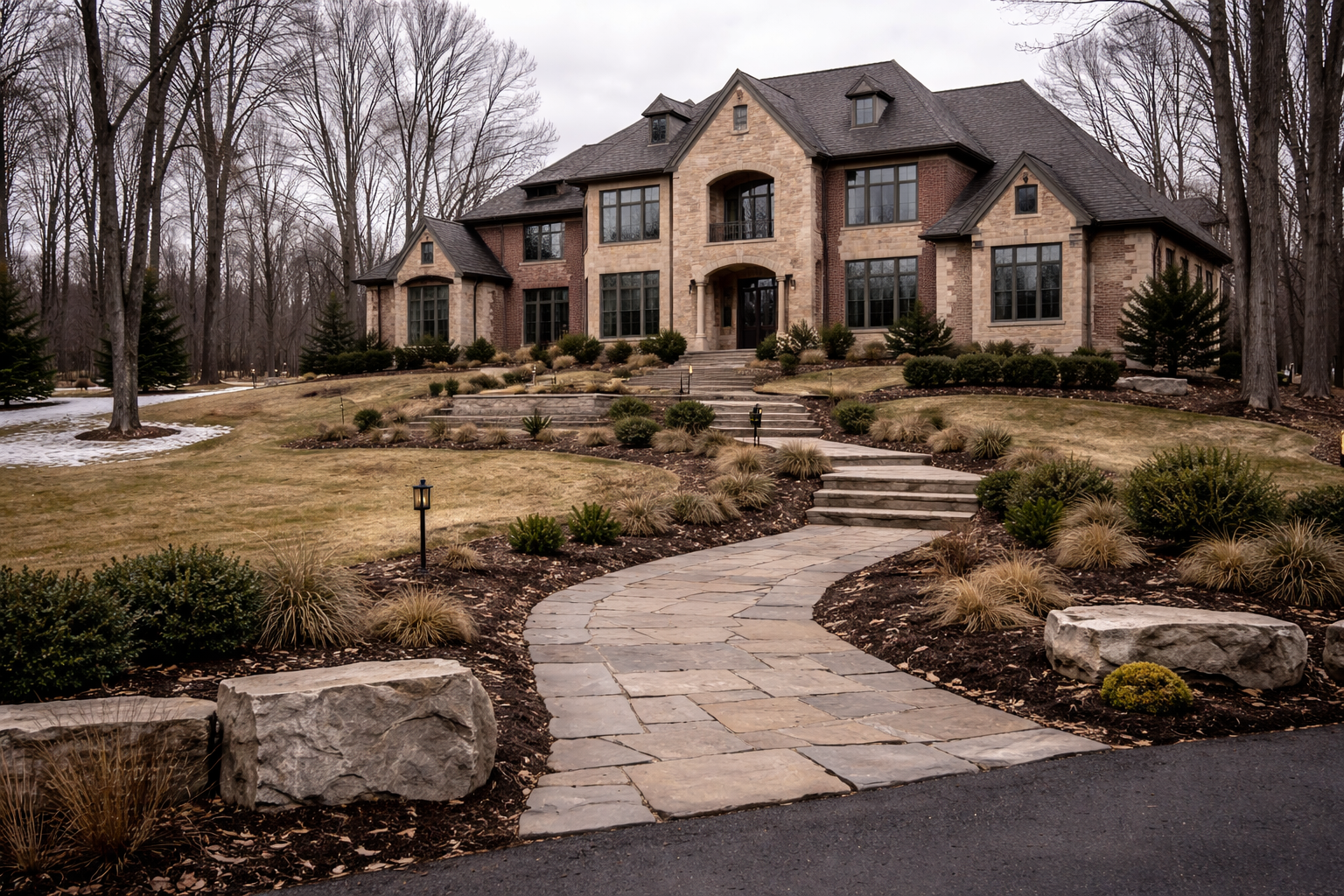
Walkways should meet the pool area at a deliberate point. A walkway from the house, the side yard, or a future feature should land where it makes sense for circulation, not where there is empty space.
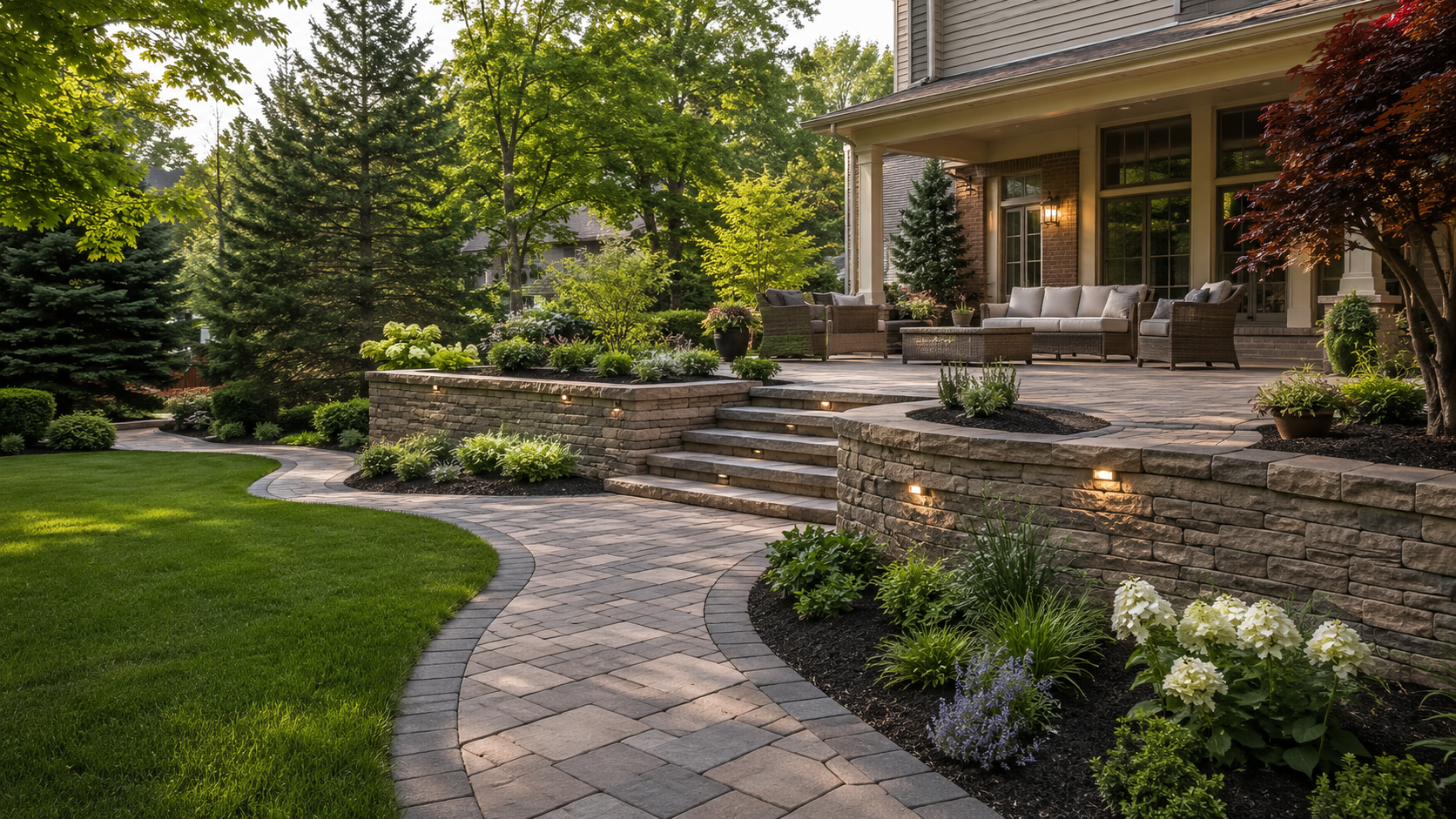
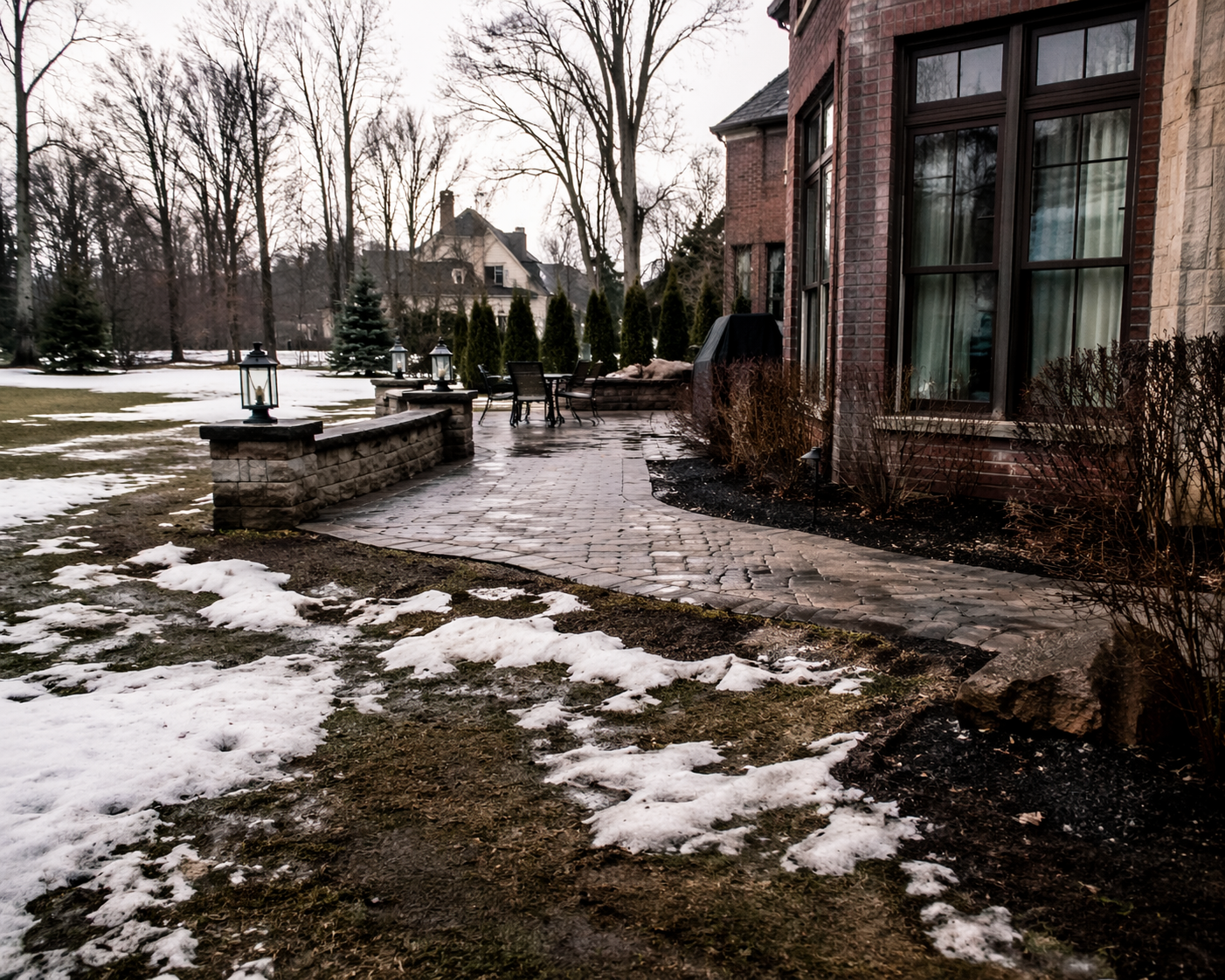
Transitions to the lawn or planting beds should be planned as design moments. The way a deck meets the grass, the way a step lands on the deck, and the way a path joins the pool area influence whether the design reads as one piece.
Material Cohesion Around Pool Areas
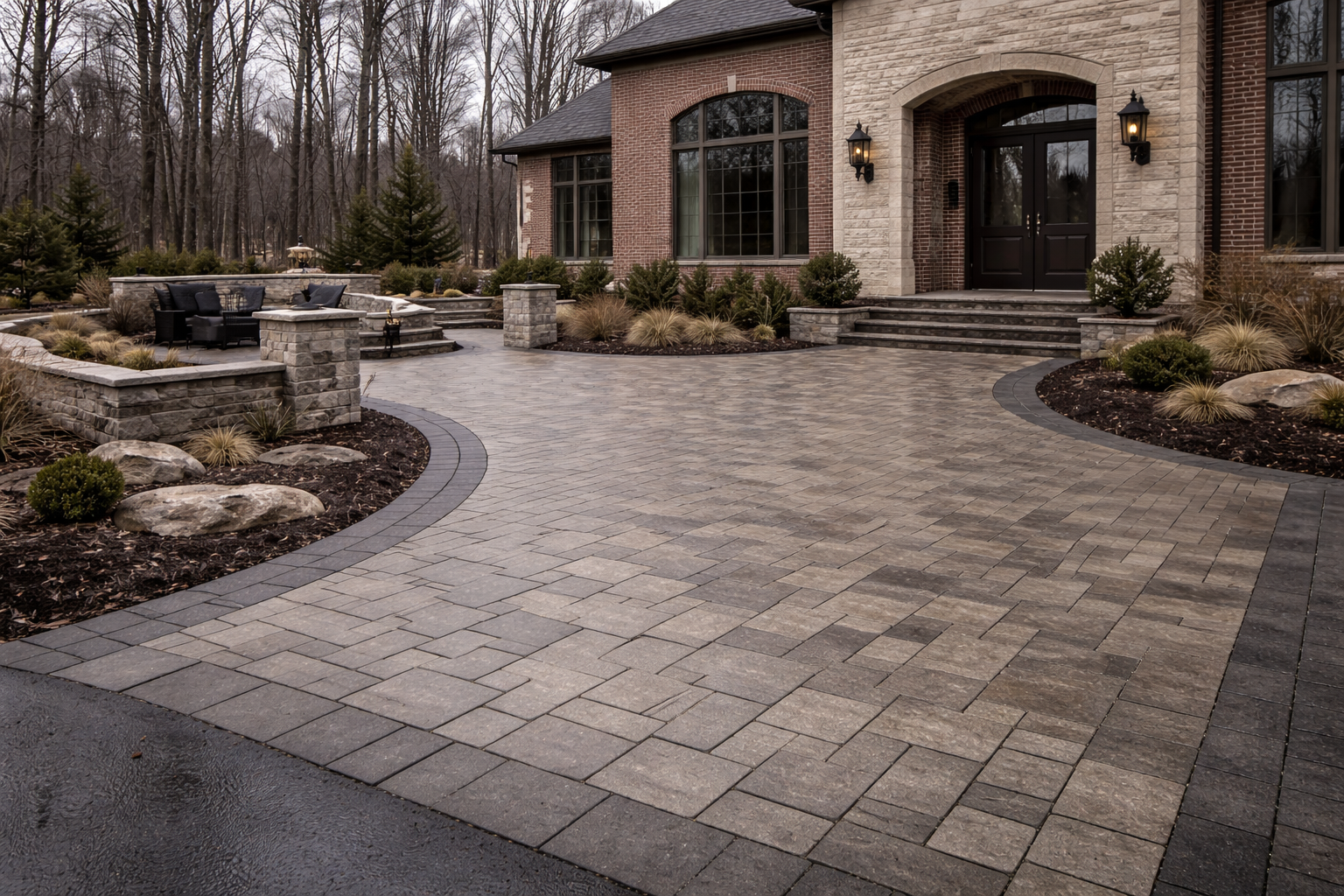
The materials around a pool should relate to each other, to the home, and to the rest of the landscape. The deck, the pool coping, the walkway, and the lounge or dining surfaces all live in the same view. A coordinated palette across those elements makes the pool area feel designed. Disconnected materials make it feel pieced together.
Restraint is the discipline that holds material cohesion together. Fewer materials, used well, almost always read as more refined than several materials chosen for their individual appeal. Repetition gives the design rhythm.
Cohesion also means thinking about the pool area in the context of the home. The brick, stone, siding, and roof colors of the house all influence which materials feel right around the water.
For homeowners planning the pool and the surrounding yard as one full project, this is also where landscape design for pool overlaps with full backyard planning.
Pool Lighting as One Design Layer
Pool lighting should be planned as a design layer, not added at the end. The placement of light around the pool, the edges, and the surrounding zones should be considered with the landscape so the lit space reads as intentional after dark. Lighting is one layer in the design, not the discipline itself.
At the planning level, the questions are simple. Where should attention go after dark? Which paths need to be visible? Where is ambient light helpful, and where is glare a problem near the water?
The deeper lighting plan belongs in its own focused guide. For homeowners who want a closer look, professional landscape lighting design covers it in depth.
How the Pool Area Connects to the Rest of the Backyard
The pool zone should not feel like an island. The strongest pool landscaping ideas treat the area around the pool as one part of a larger backyard plan, with intentional connections to the lawn, garden areas, outdoor living zones, and any future features.
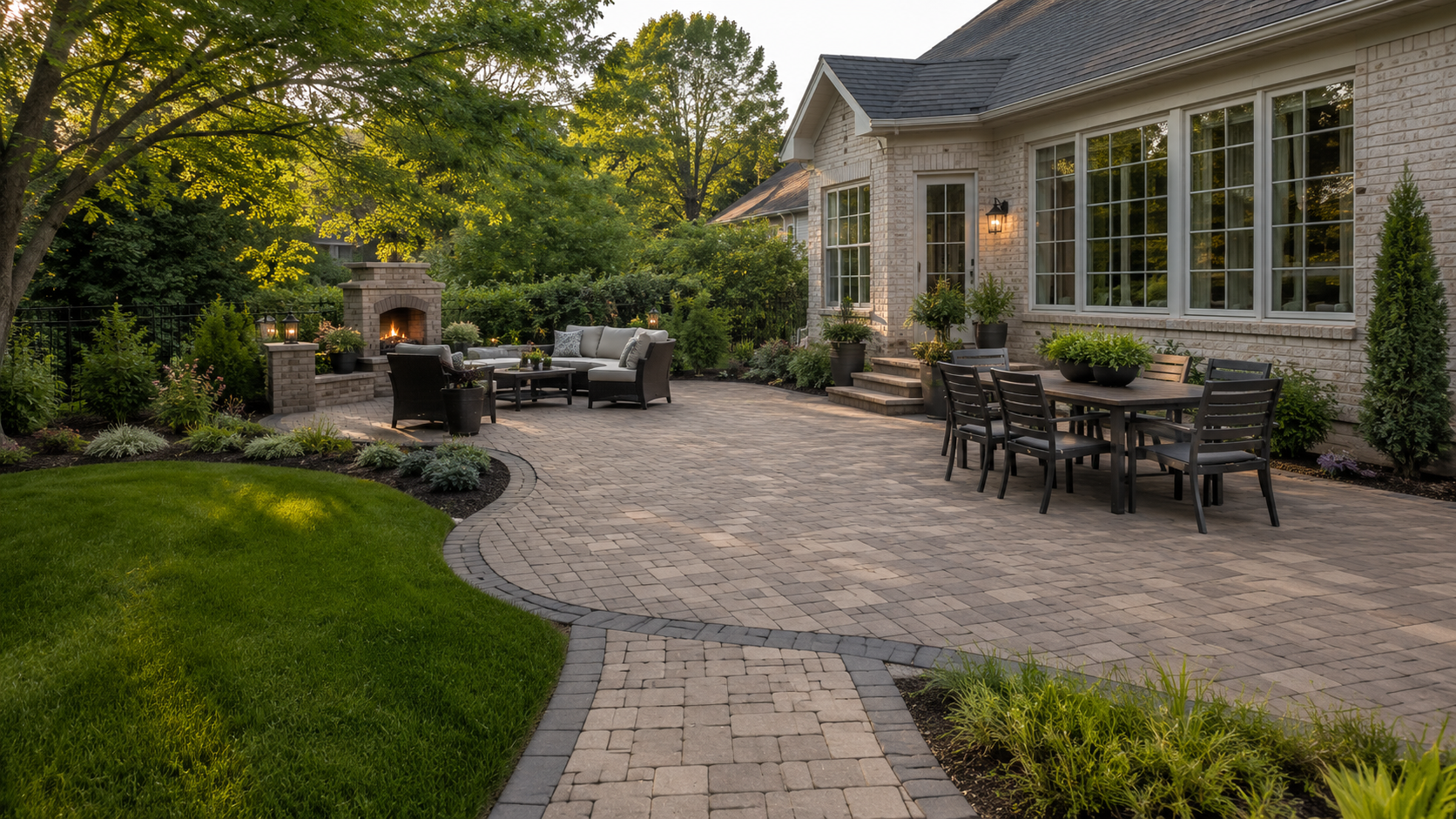
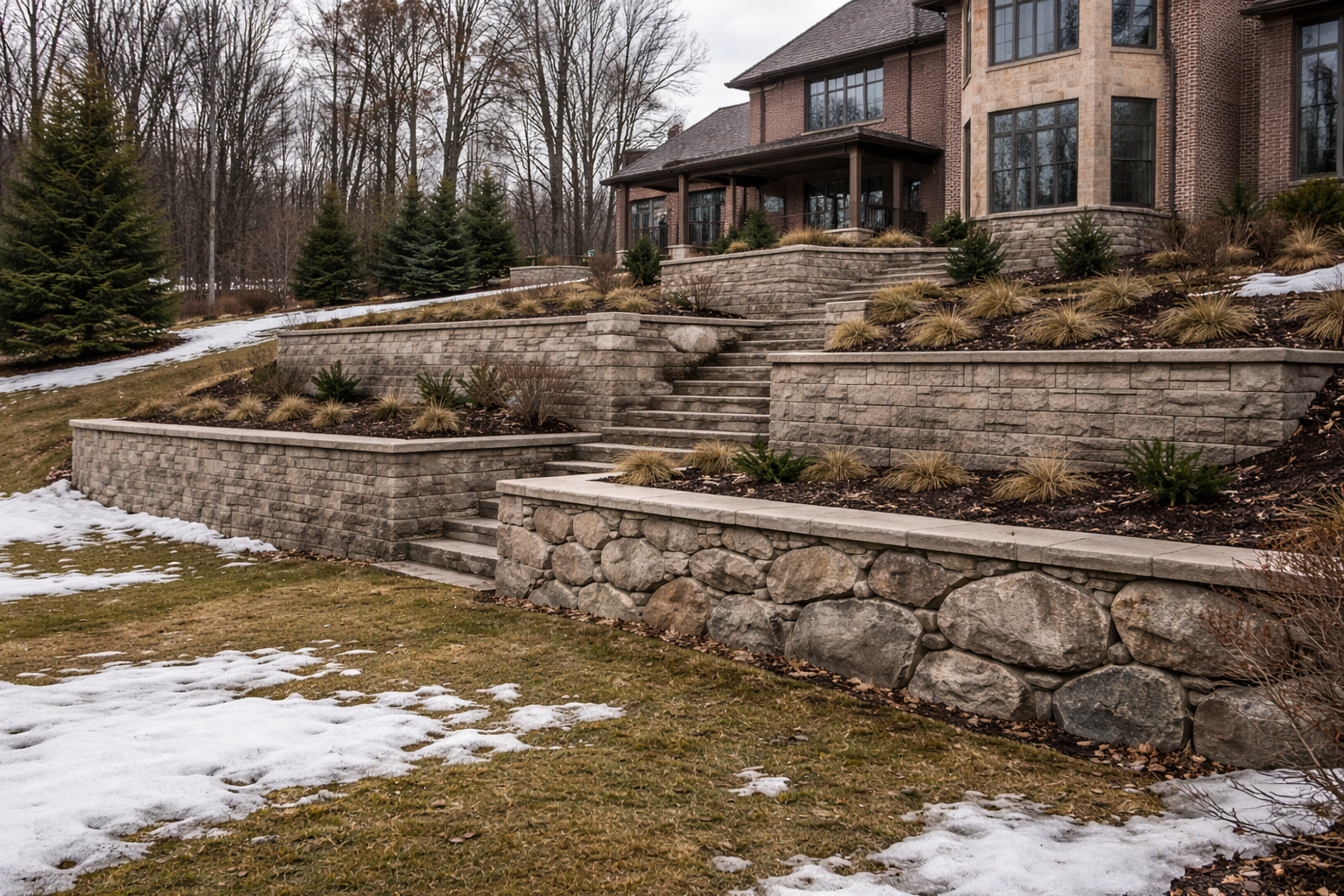
Transitions are where the connection happens. The way the pool deck meets the lawn, the path from a patio to the pool, and the line between planting beds and hardscape influence whether the yard reads as one composed space.
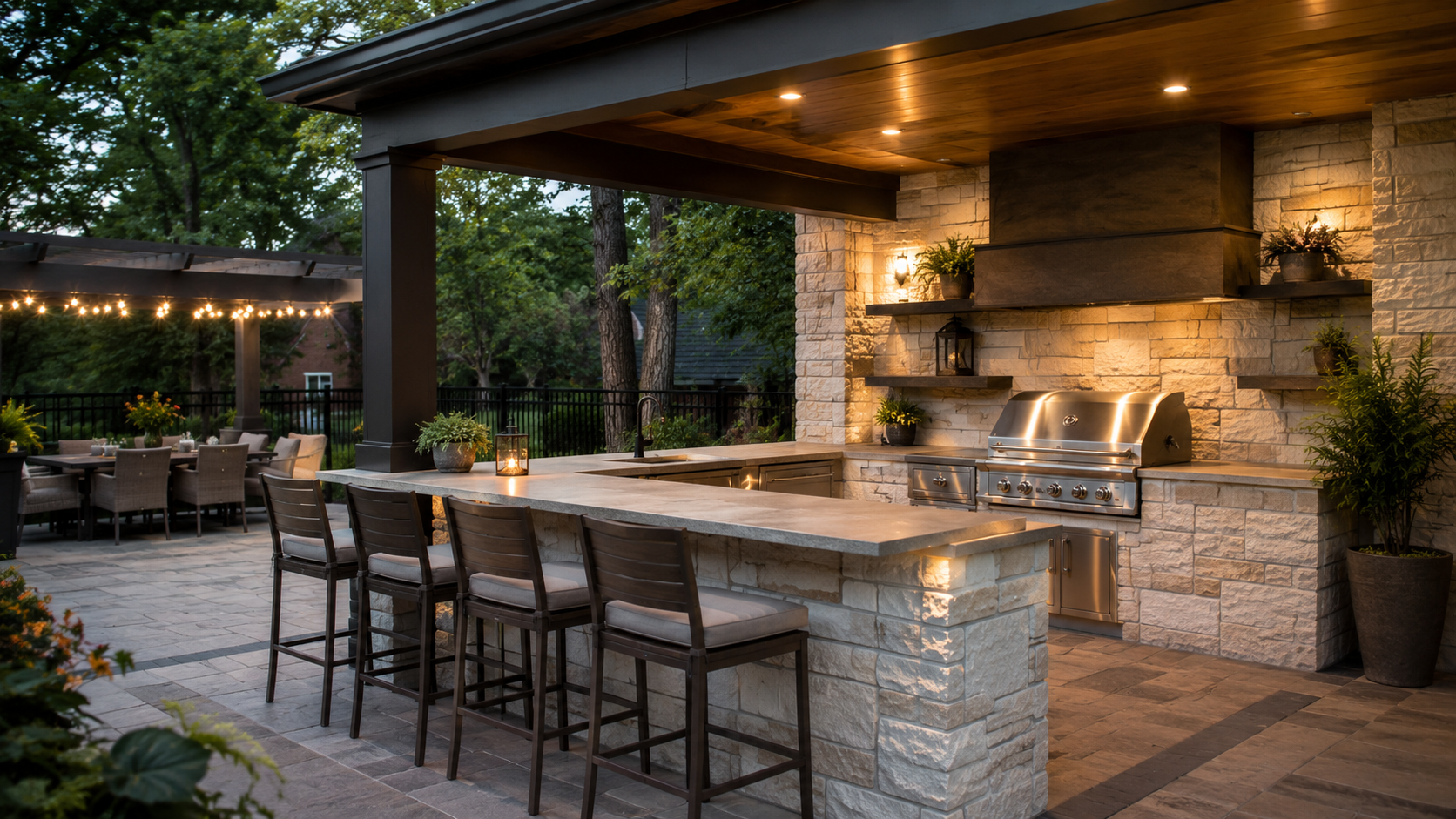
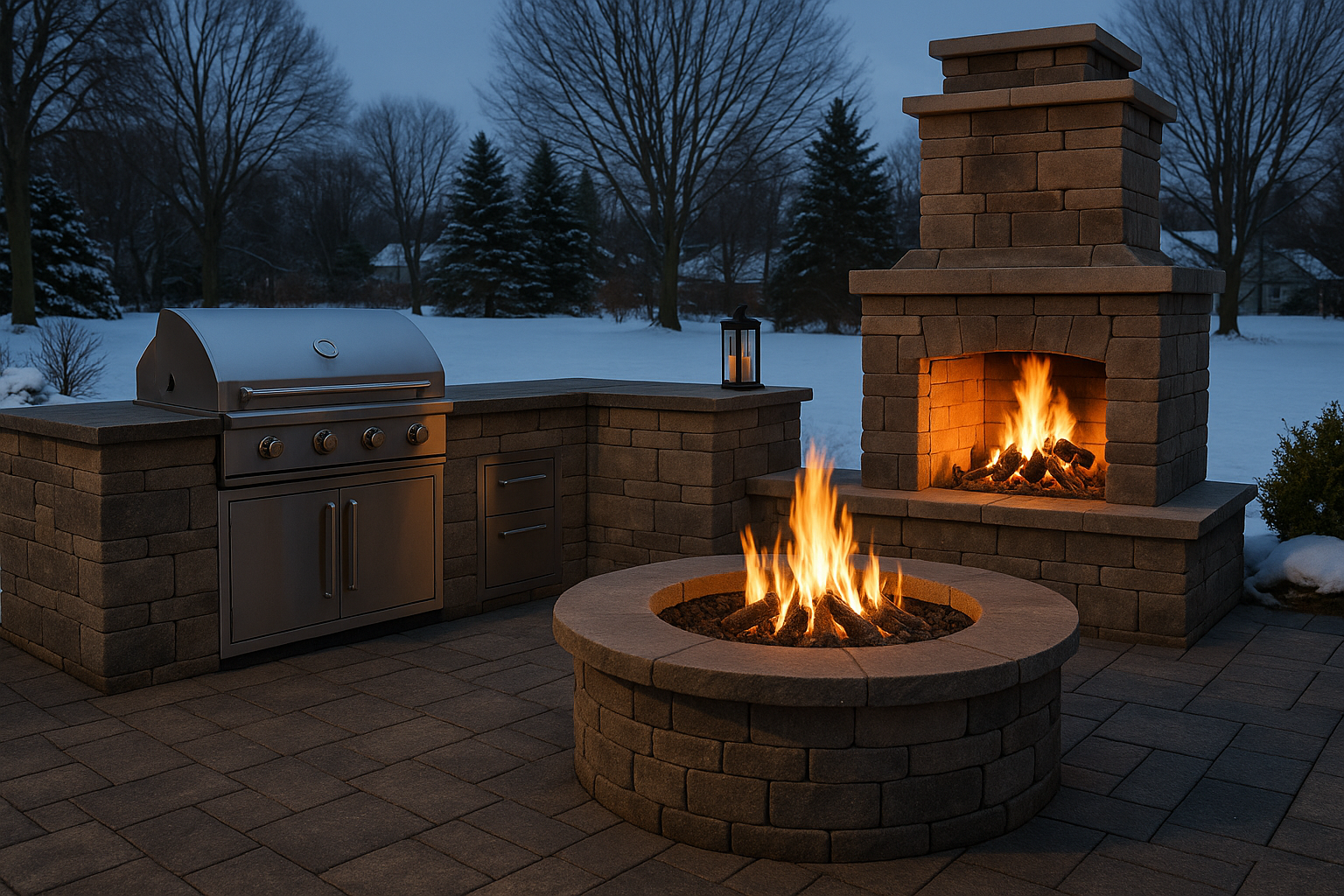
Future features should be anticipated at the design stage. Outdoor kitchens or fire features may not be part of today's project, but the pool area can be designed so they fit cleanly when they arrive.
For homeowners planning the pool and full backyard as one larger design, luxury pool and full backyard build planning can help frame the bigger project. For the whole-yard view, the broader backyard transformation plan shows how the larger picture comes together.
Pool Landscaping Mistakes to Avoid
Most pool surround problems start as design problems. The same mistakes show up again and again, and they are easiest to prevent when planning is taken seriously. Knowing the common pitfalls helps a homeowner ask better questions before any work begins.
Overcrowding the pool surround is the most common. Filling every corner near the water makes the space feel smaller and reads as visually busy.
Picking plants before planning placement is another. Strong pool landscaping ideas start with where plant groups belong, not which species look nice in a catalog.
Designing privacy and shade as afterthoughts shows up the first time the household tries to use the pool area. Both should be planned as design layers.
Materials that fight the home or the pool tend to look that way for years. A coordinated palette is the easier and better choice.
Treating the pool area as separate from the rest of the yard reads as a pool dropped in instead of part of the property.
Adding lighting last is similar. Lighting designed with the landscape performs better than lighting added after the build.
Trying to solve everything with decorative features rather than planning the space is the most expensive version of these mistakes.
Pool Landscaping FAQs for Metro Detroit Homeowners
What should I consider when landscaping around a pool? Start with how the pool will be used and how the area should feel. From there, plan zones, planting placement, hardscape edges, seating, shade, privacy, and lighting as a design layer. The goal is one connected plan.
What are good pool landscaping ideas for a backyard? Strong ideas come from planning logic. Organize zones around the pool, use restrained planting, design intentional edges, and layer privacy and shade. The pool stays the focal point, and the design around it supports the water.
What plants work well around a swimming pool? Choose plants for qualities, not catalog names. Look for low debris, structural form, and a scale that fits the deck. Placement matters more than species, because the right plant in the wrong spot still crowds the pool.
How do I create privacy around a pool? Privacy works best as layered design, not one tall hedge. Mix planting at different heights, structural features in select spots, and sightline planning that blocks the views that matter without enclosing the space.
How should walkways and seating areas connect to the pool? Both should be planned, not placed. A walkway should meet the pool area at a deliberate point, and seating should sit relative to sun, shade, and circulation.
How does landscape design for a pool affect the rest of the backyard? The pool area sets the tone for everything around it. When it is designed as part of the larger landscape, transitions, materials, and sightlines tie the whole property together.
When should Metro Detroit homeowners start planning poolside landscaping? Earlier than most expect. May and early summer are active planning months. Design takes time, and installation has lead times. Starting early is what makes a summer-ready pool area realistic.
Planning Pool Landscaping This Summer? Start With the Design
May and early summer are active planning months in Metro Detroit. Homeowners are looking ahead to pool season and the kinds of afternoons and evenings outside that make a pool worth having. The pool areas that land cleanly before peak summer are almost always the ones where the landscape design was settled early.
If you are thinking about the area around your pool as a designed zone rather than a deck with plants, the right place to begin is with the plan.
When you are ready to plan a pool area that supports the way you want to live outside, schedule a poolside landscaping consultation. The right conversation turns separate ideas into one complete poolside plan.