Landscape Designer vs Landscape Architect vs Landscaper: Who to Hire
A landscape designer typically plans how a property works and looks, a landscape architect is a profession licensed by the state, and a landscaper often installs or maintains the work, but the lines blur. Michigan reserves the title "landscape architect" for licensed people and leaves titles such as "landscape designer" and "landscape contractor" open, so a company's name for itself does not tell you who will draw the plan, who will build it or which licenses cover which parts. For a small planting refresh, more than one kind of provider can fit. For larger work, the more useful question is who is responsible for what. This guide explains the roles, where other licensed trades and local rules can come in, and what to ask before you hire.
Landscape designer vs landscape architect vs landscaper
Landscape designer
A landscape designer plans how a property works and looks: layout, planting, materials and how the pieces connect. Some work alone, some in a design firm and some in a company that also builds. The Association of Professional Landscape Designers (APLD) describes landscape designers as professionals who use design education and horticultural knowledge. APLD also offers the Certified Professional Landscape Designer (CPLD), a professional credential from APLD, not a state license.
Landscape architect
In Michigan, landscape architecture is a licensed profession. According to Michigan's Department of Licensing and Regulatory Affairs (LARA), the state regulates the practice of landscape architecture, which it describes as professional services such as planning, design and field observation connected with developing land, including ground cover and planting, drainage and erosion. LARA's licensing guide says the license allows the licensee to engage in the unrestricted practice of landscape architecture. To become licensed, a person meets the state's education and experience requirements and passes an examination; LARA's licensing guide names the national Landscape Architect Registration Examination (LARE), which is run by CLARB.
Whether the design of a particular yard falls within licensed practice is a question for LARA or a Michigan attorney, not this guide.
Landscaper
"Landscaper" has no single definition. The US Bureau of Labor Statistics (BLS) groups the work under grounds maintenance workers. It describes landscaping workers as people who plant and maintain vegetation, some of whom grade and install lawns or build walkways, patios and decks, while others help install lighting or sprinkler systems. BLS also says these workers typically do not need a formal educational credential and are trained on the job, so a title alone says little about a company's experience; ask about it directly. In practice the word covers a crew that mows weekly and a company that builds patios and plants a full design.
Design-build
In design-build, one team designs and builds. The other common arrangement is a separate designer and installer; the two are compared further down.
Why the names tell you little
Michigan's licensing law leaves "landscape designer," "landscape contractor" and "landscape gardener" open as titles and says it does not stop people from offering services under those titles. In practice a company that calls itself a designer may also build, and one that calls itself a landscape contractor may also offer design work, so the name alone does not tell you who does what.
"Design" is also used loosely. It can mean a hand sketch of a planting bed or a full set of drawings with materials and grades. Two proposals that both say "design included" can mean very different things.
Other licensed trades and local rules that can touch a project
A landscape project can involve people who hold licenses in other trades, whatever the company calls itself. Examples include certain electrical connections and applying pesticides. Michigan's electrical contractor law lists exceptions for certain lawn irrigation and landscape lighting equipment, but permanent wired connections over 30 volts are treated differently, so ask who handles the power hookup. Michigan's Department of Agriculture and Rural Development (MDARD) runs state registration and certification programs for commercial pesticide applicators, so ask about them if lawn treatments are part of an offer.
A person acting as the contractor on a home project may also need a residential builder or maintenance-and-alteration license unless an exemption applies. Ask the company about its license and what it covers.
Local rules are a separate layer. Whether a patio, deck, wall, fence or pool needs a permit depends on size, height and your local rules, so check with your township or city building department before work starts. A permit exemption does not mean the work can ignore the building code or local ordinances, and code editions change, so be wary of rules of thumb. If your building department asks for drawings prepared by a licensed professional, ask them which kind of professional they mean. It will shape who you hire.
Which provider may fit your project
These are starting points, not rules, and many providers cover more than one role. If you are unsure, start with one question: who is responsible when the drawing and the ground disagree?
- A planting refresh or small bed work.
A landscape designer, a landscaping company that plans plantings, or a landscaper working from your own list can fit. Work like this often involves fewer outside trades or permits, but irrigation or lighting changes can bring them in.
- A whole-property plan.
Patios, planting, grading and drainage affect each other, so someone has to hold the whole picture. A landscape designer, a landscape architect or a design-build company often suits this.
- A taller retaining wall or a large change in grade.
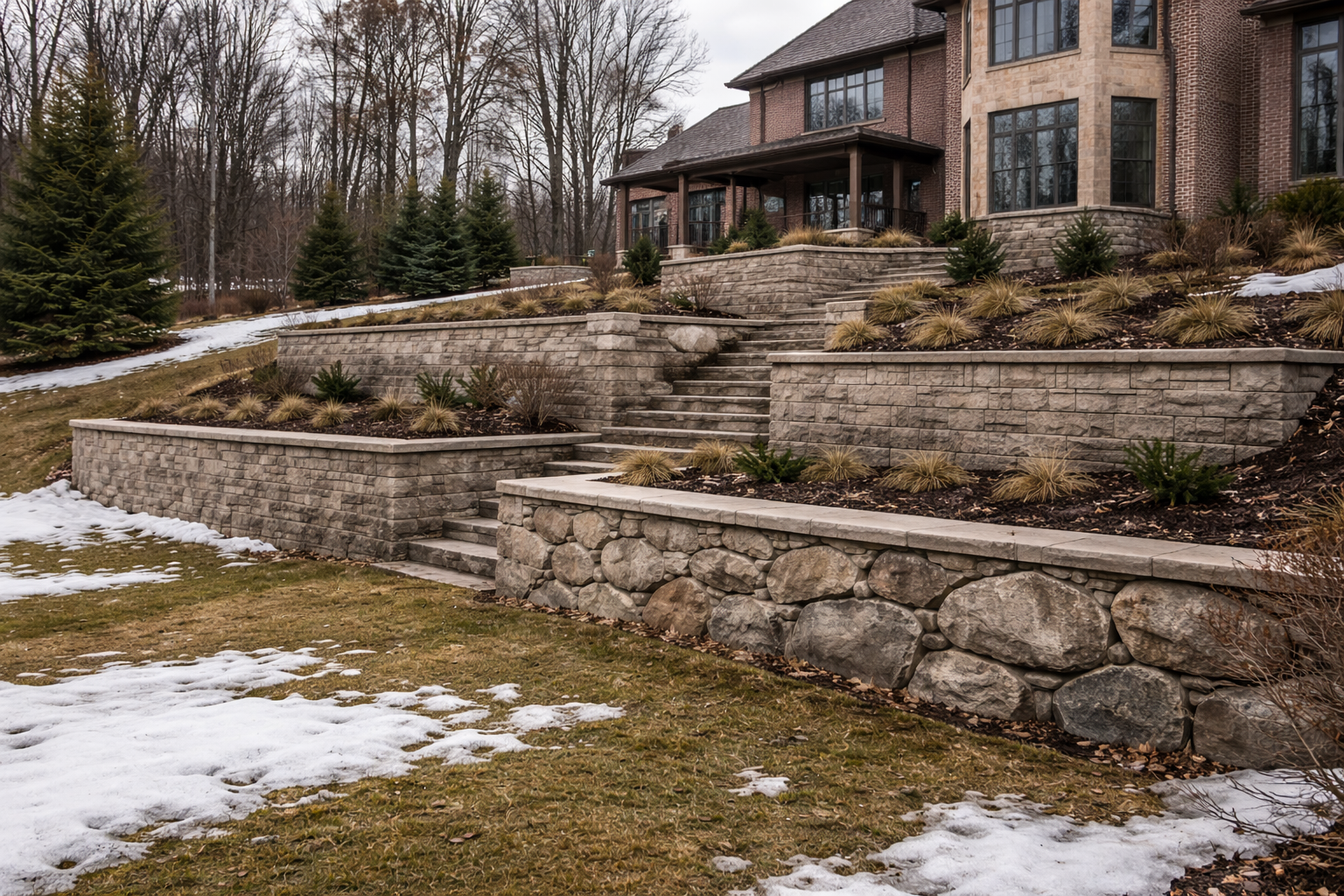
Taller walls, walls holding back a driveway, a structure or a steep slope, and large changes in grade can need a different level of design and review, and local requirements vary between communities. Ask your building department what it requires, and ask the provider who is responsible for that review.
- A project where a local office or an engineer asks for formal drawings.
Ask the office or engineer what kind of professional must prepare them. Then ask whoever will build whether they have worked from drawings prepared by someone else, and who decides what happens when the site does not match the paper.
- Installing from a finished plan.
A landscaper or landscape contractor can fit. Ask whether they will price the drawings as drawn, how they handle conditions the plan did not anticipate, and who you call about changes.
- Ongoing upkeep. A grounds maintenance company or landscaper can fit.
Design-build, or a separate designer and installer
Neither arrangement is better in general; these are the common trade-offs.
What design-build offers.
Fewer handoffs, and the people who drew the plan are the people building it. One party answers when the drawing and the ground disagree. You also deal with one contract and one contact.
What you give up with design-build.
The plan and the price come from the same company, so independent review is less built in, and proposals are harder to compare.
What a separate designer and installer offers.
A design that does not depend on who builds it. You can ask several installers to bid on the same drawings and compare like with like, and a designer who is not the builder may be able to review the work for you.
What you take on with a separate designer and installer.
More handoffs and more coordination on your side. If drawing and site disagree, responsibility can fall between two companies, and bids above budget can mean a revised design.
The better fit depends on project size, how much coordination you want to take on and how much you value independent bids.
Questions to ask any provider
- Who designs, and who builds?
Is it the same people, a subcontractor or another company?
- What does the design include, and what do I receive?
Hand sketches, scaled drawings, a planting list, material specifications, renderings?
- Who coordinates other trades?
- Who applies for any permit, and who is responsible if something is missed?
- Which licenses apply to the work you are proposing, who holds them, and can you show me?
- How are changes handled? Is each change written down, with its effect on cost and timing agreed before the work goes ahead?
Ask for references, a written contract and more than one written estimate as well. When you are ready to talk to someone, our guide to preparing for a landscape design consultation
covers what to gather first.
How Rohto works
Rohto Landscaping is based in West Bloomfield and works with homeowners across Oakland County, Metro Detroit and Southeast Michigan. The same team that plans your landscape builds it, and that team is accountable for both. The first conversation is a free phone call about your property, what you would like to change and the budget you have in mind; we then walk the property with you. Where a project needs design, we provide design drawings and renderings, with material and plant choices explained. Not every project needs them. The steps are laid out on the Landscape Design page, and the order of work from the first conversation to the final walkthrough is in our installation timeline guide. Our hardscape page has a retaining wall section that covers taller walls and large grade changes.
Frequently Asked Questions
Do I need a landscape architect for a backyard?
Michigan reserves the title "landscape architect" for licensed people. This guide cannot say whether a particular yard falls within the licensed practice; LARA, which administers the license, is the place to start. Your local building department can tell you whether a permit or drawings by a licensed professional are required, so ask both.
Can a landscape designer install what they design?
Sometimes. Some designers also build, some work with installers and some only draw plans. Ask who builds and which licenses cover the trade work.
What is the difference between a landscaper and a landscape designer?
A landscape designer typically plans how the property works and looks; a landscaper typically installs or maintains it. Many companies do both, so ask what the company does itself and what it subcontracts.
What does design-build mean?
One company or team is responsible for both the design and the construction, so you deal with one party from the first drawing to the finished work. The alternative is a separate designer and installer.
Is a certified designer the same as a licensed landscape architect?
No. A credential such as APLD's CPLD is professional recognition for designers, not a state license. A landscape architect license is issued by the state to people who meet its education and experience requirements and pass an examination.
Next Step
Read how the process works on the Landscape Design page. If you are planning a design or a larger change and want to share the full picture of your property, start the Design Questionnaire. If you have a quick question, a smaller project or are not sure what you need, call 248-205-8723, Monday to Friday, 9:00 AM to 5:00 PM Eastern, or send a short message through the contact page.