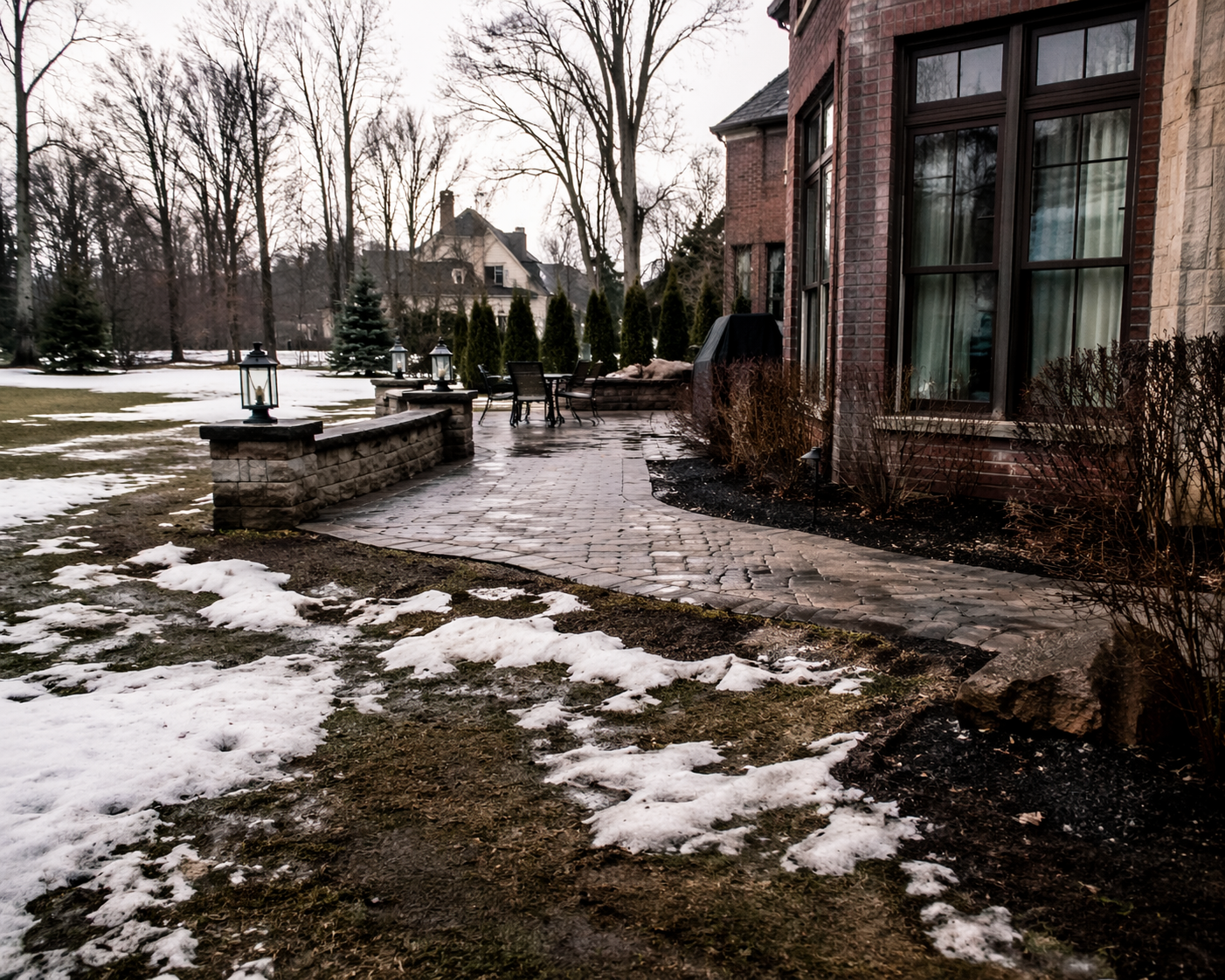
Sloped Yard Landscaping in Oakland County: Use, Safety and Options
A sloped yard changes more than the view. It decides where you can comfortably stand, how safely you get from the driveway to the door in winter, whether you can mow it, and how well plants hold the soil. Some sloped yards do not need a wall: some need steps and a better path, some need the right plants, and some need water directed elsewhere. The useful first step is working out what the slope is stopping you from doing, and this guide is built around that.
What a Slope Does to Everyday Use
Most people notice a slope through its limits. The back lawn is too tilted for chairs or a play area, and the front lawn is the part you would rather not mow.
Three questions sort most of it out, and they come before any material is chosen:
- Where do you want to be?
A place to sit, grill, garden or play needs reasonably level ground, so a slope often forces a choice between leveling a spot and putting the space somewhere else on the lot.
- How do you get there?
A route that works in July feels different with wet leaves, ice or an armful of groceries.
- What does the slope send downhill? Water, mulch, soil and seed move in the direction the ground tilts.
Getting Around: Steps, Paths and Winter Footing
On a grade, a path is both a route and a safety feature. A few general principles:
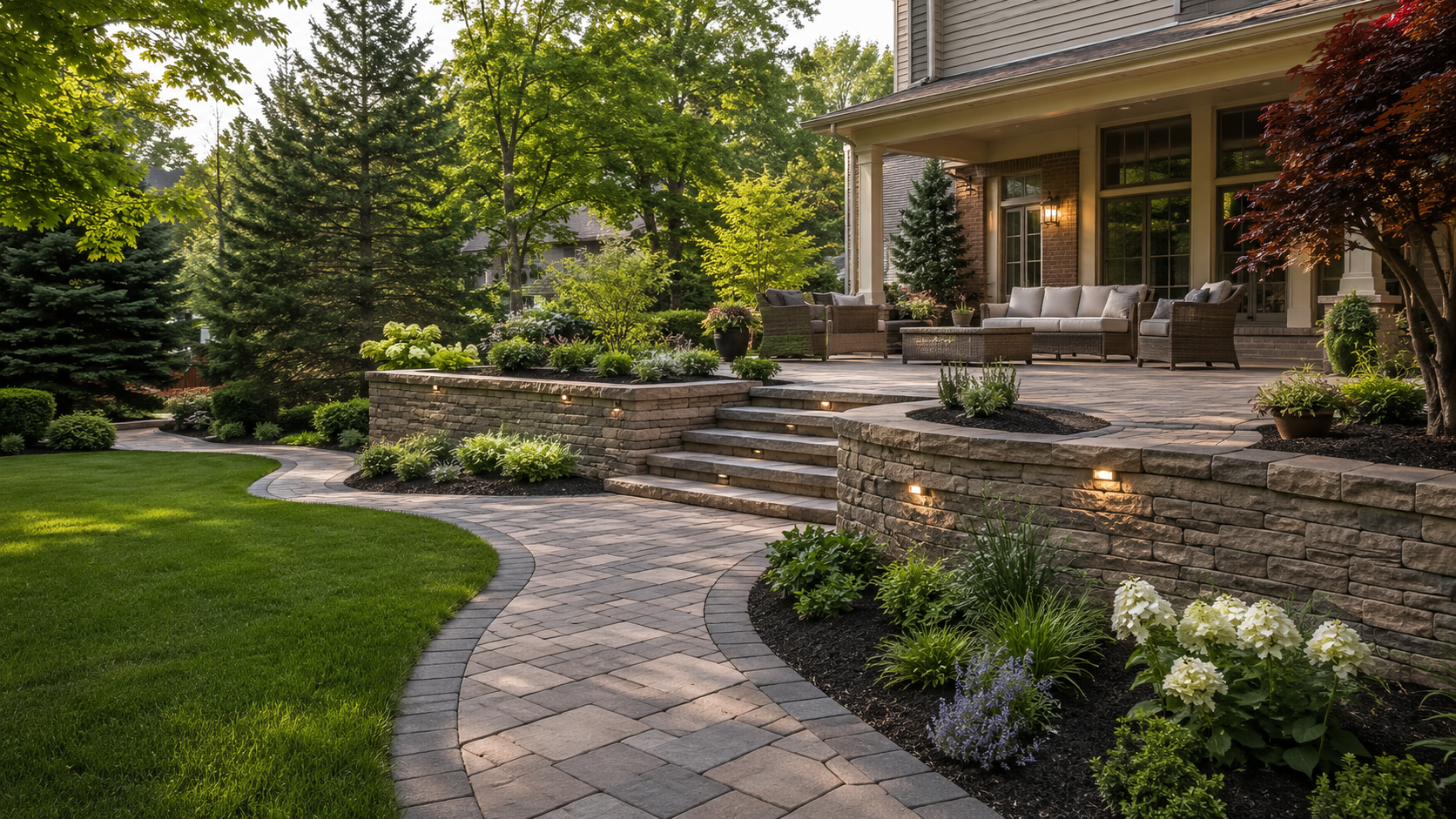
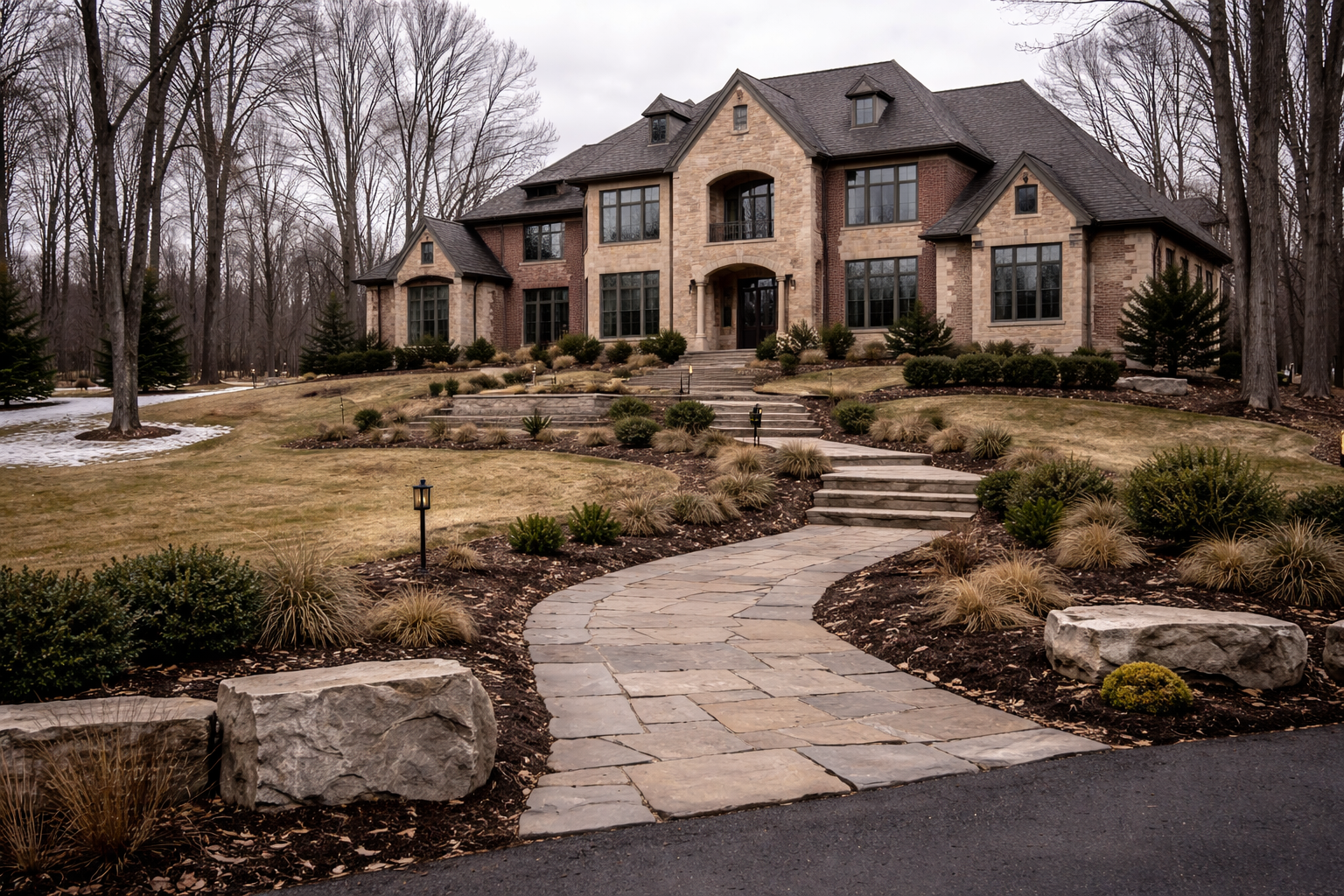
- A path that crosses a slope at a gentle angle, or zigzags, is usually easier to walk than one that goes straight up the slope.
- Steps are easier to use when each one matches the others in height and depth.
- Light along paths and steps helps, because changes in level are harder to see on a grade.
Winter changes how a slope works. Ice tends to form where water crosses a walk and refreezes, and snow has to go somewhere when you clear it. Think about where meltwater will run and where shoveled snow will pile before settling on a layout. Steps, paths and planting beds all mean digging, and MISS DIG's FAQ
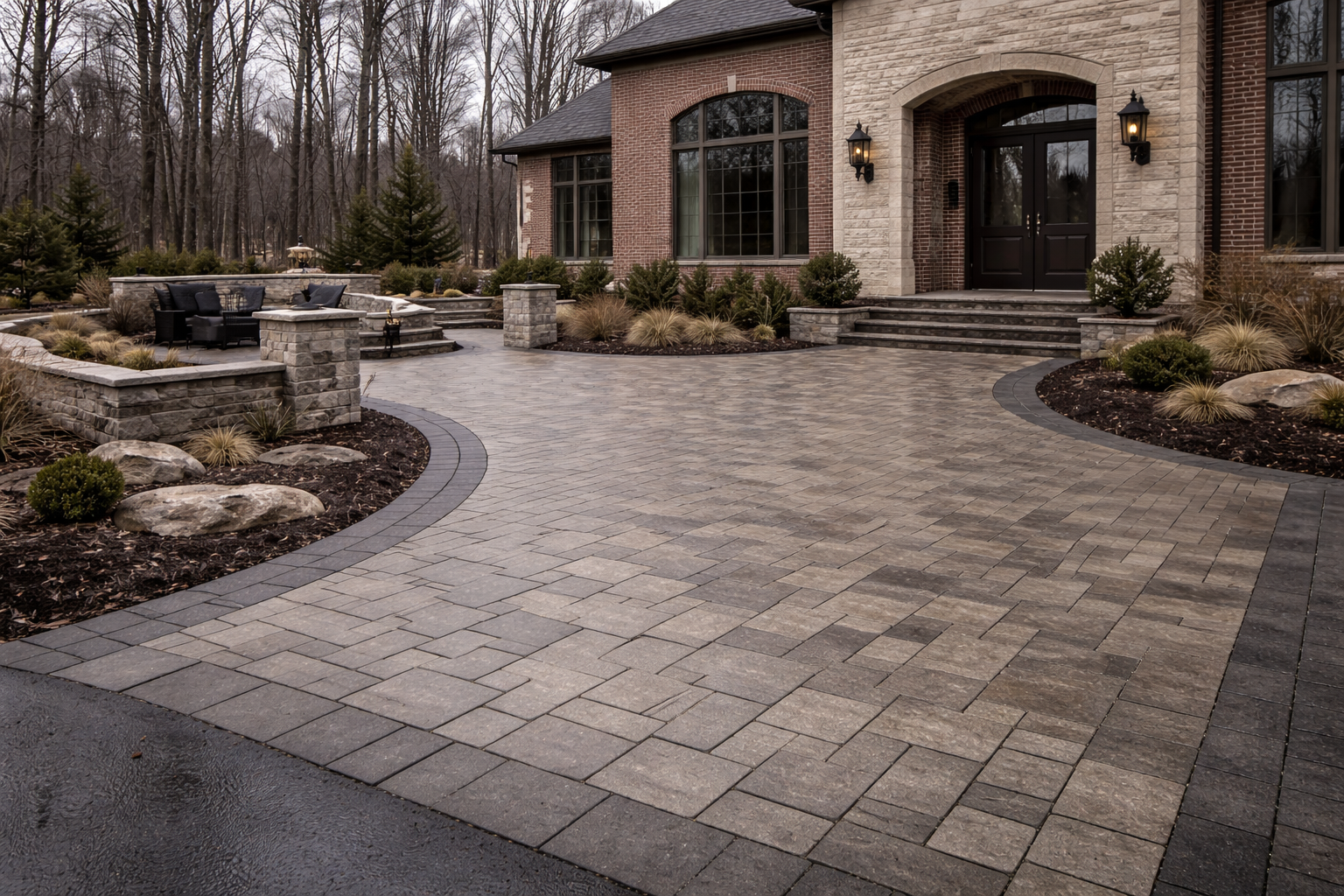
says to contact them at least 3 business days before a project. The call is free. Whoever does the excavation is responsible for contacting MISS DIG: you if you are digging, the contractor if a contractor is. The notice period alone is not permission to begin: check the ticket's responses on or after the start date, and dig only when every response is marked or no conflict. If a response is anything else, call MISS DIG before you dig. Our paver driveway page
lists slopes that affect safety or snow removal among the things we check on a driveway.
Mowing a Slope
Mowing is a real safety issue on a slope. Start with your mower's manual and the maximum slope on its label. If the label gives none, OSHA's riding-mower guidance says to avoid slopes steeper than 15 degrees, about a 27 percent grade. Iowa State University Extension considers slopes of roughly 30 percent (1:3) or steeper too steep to mow and suggests plants other than turf there.
If you find yourself bracing as you mow, that is a sign to consider a different surface on that part of the yard.
Erosion and Runoff in Plain Terms
Water moves downhill, and the steeper the ground, the more easily surface soil moves with it. Iowa State Extension describes slopes as highly prone to erosion, especially where plant roots are not holding the soil. On a slope, water can also run downhill before it soaks in, which makes watering harder.
Bare patches, thin turf, a downspout emptying onto the hillside and a hard surface above the slope are common places for trouble to start. Where the water should end up is a drainage question: see the grading and drainage section of our hardscape page
and our yard drainage guide. Much of this area also sits on clay-heavy soil that holds water and shifts as it freezes and thaws, which our soil guide
explains.
Michigan's soil erosion and sedimentation control rules (Part 91) can apply to larger earth changes or work near lakes, streams, wetlands or drains; Oakland County's Water Resources Commissioner
describes the program. Ask your local enforcing agency whether anything applies to your lot before you disturb much ground.
Planting to Hold Soil
Plants are often the simplest fix on a slope, because roots and cover hold soil in place. Iowa State's guidance points to:
- Ground covers, grasses and native plants, which cover the soil surface well.
- Layers.
A mix of sizes and root types, such as ground covers under shrubs and trees, spreads the force of rain and holds soil at different depths.
- Planting along the contour, across the slope, which helps slow water.
- Coarse, natural mulch
such as shredded bark or leaf mold, which is less likely to wash downhill than bark chips or river rock.
- Plants suited to the site's light and moisture.
Iowa State notes that many slopes are well drained, so drought-tolerant plants are often a good choice.
- Low-maintenance plants, since working on a steep hill is difficult.
New plantings are fragile until they establish. Iowa State suggests temporary help such as erosion blankets pinned to the soil or a fast-growing annual cover crop. For ideas on the planting side, see our garden landscaping page.
Front Slopes and Back Slopes
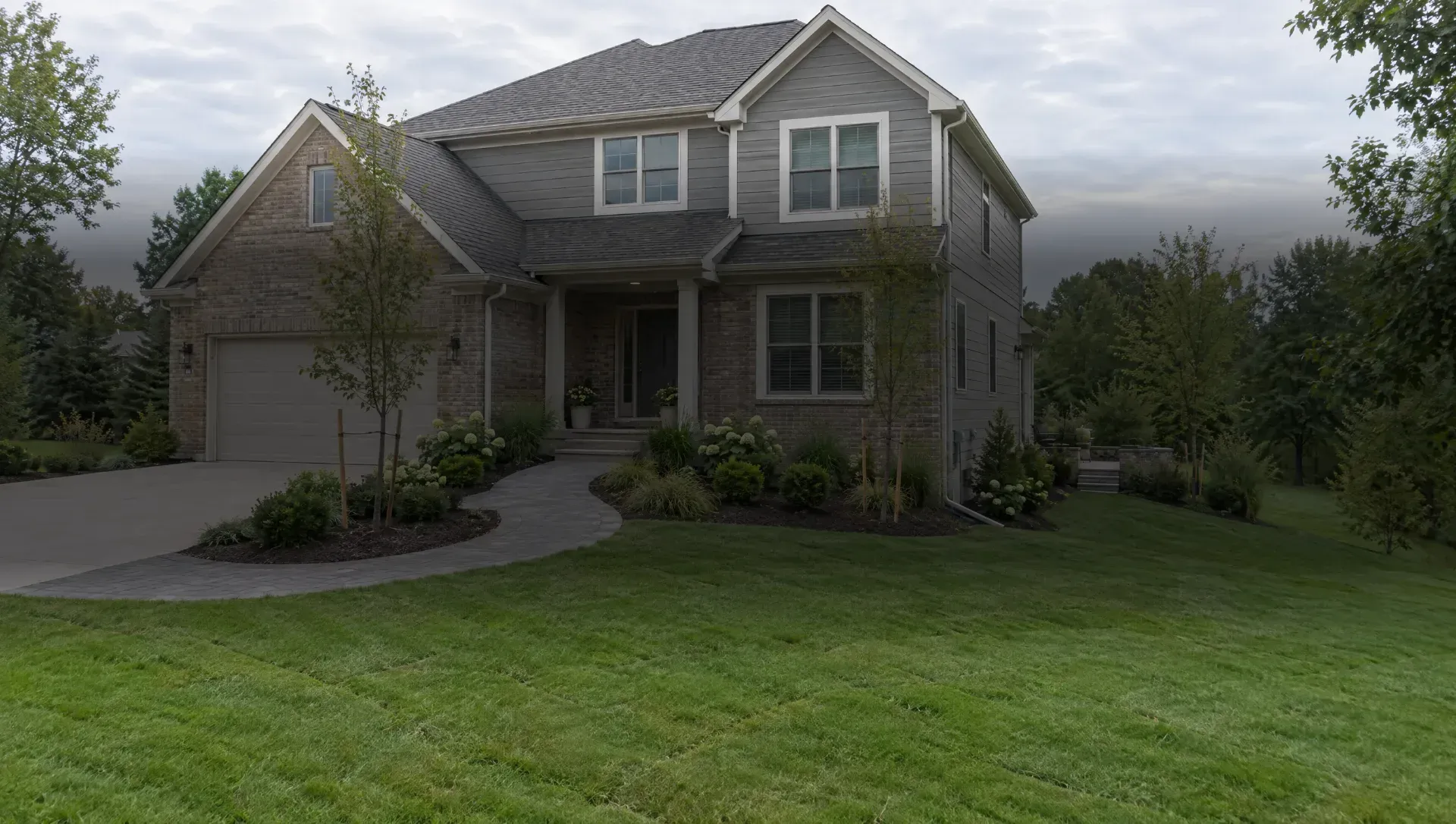
A front slope is about arrival: how you reach the door, where guests walk after dark, how water leaves the driveway and where plowed or shoveled snow goes. The spots where the driveway meets the street and the walk meets the door deserve the closest look, especially where ice and snow are common. The driveway page linked above is the place to start if the driveway itself is the problem.
A back slope
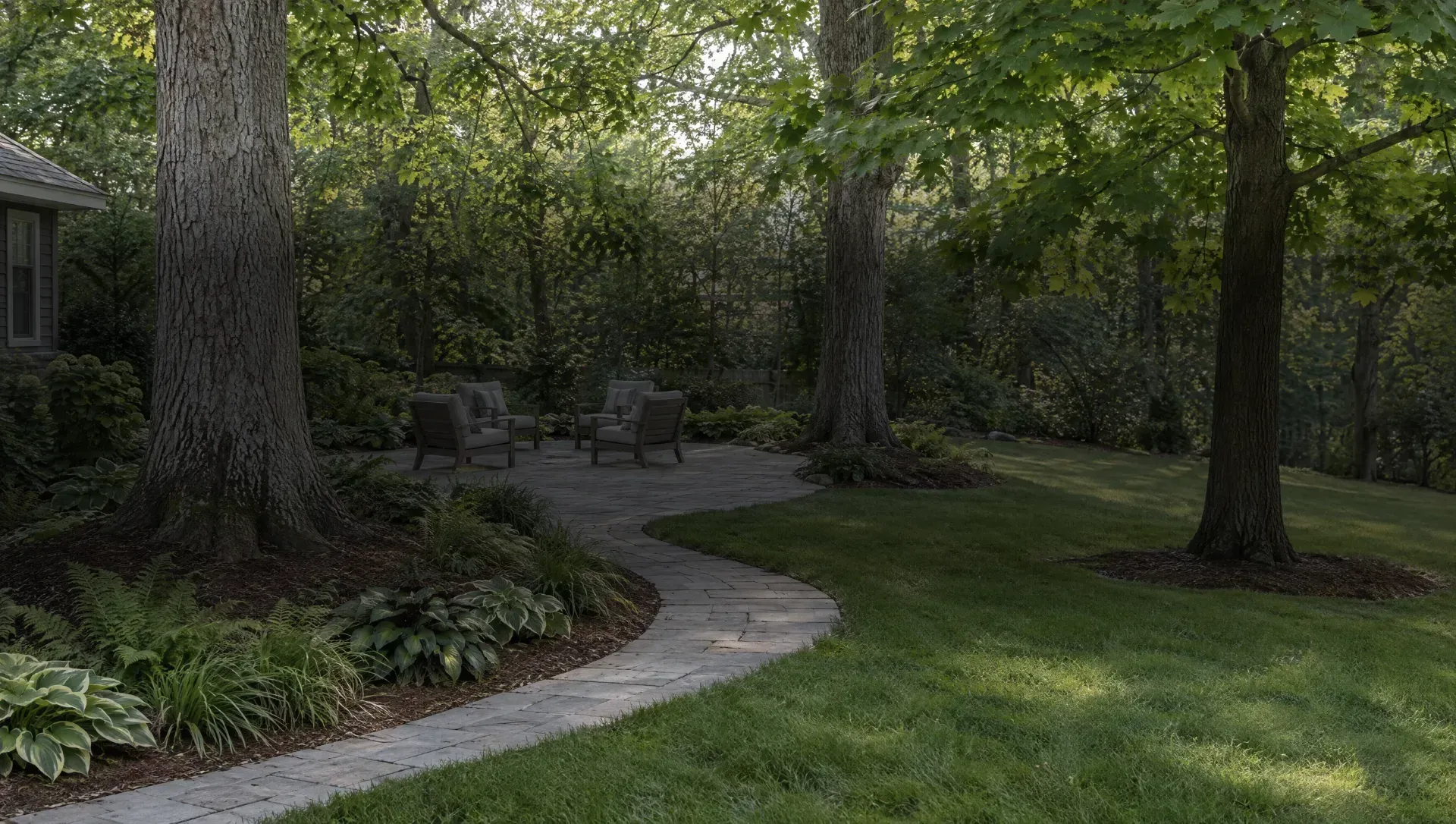
is about use: whether there is a flat enough place for a patio, dining area, play space or garden, and how the yard feels from the house. Trees already on the slope are part of that picture, and our guide to landscaping around mature trees
covers what to weigh around them.
Both at once
is common. A change in one yard can alter where water leaves the other, so it helps to plan the whole property together.
How to Roughly Measure Your Slope
Slope is rise over run, written as a ratio or a percentage. The University of Wisconsin-Madison Arboretum describes a simple method from a rain-garden activity:
Before you push a stake into the ground, follow the MISS DIG reminder above: stakes may count as digging, and if you are not sure, ask MISS DIG before you start.
- Push a stake into the ground at the uphill end of the stretch you want to measure, and a second stake 10 feet downhill.
- Tie a string to the base of the uphill stake, at ground level, run it to the downhill stake, and slide it up or down that stake until a line level shows it is level.
- Measure from the string to the ground at the downhill stake, in inches.
- Divide that number by 120 (the 10-foot run in inches) and multiply by 100.
A 12-inch drop works out to a 10 percent slope, and a 24-inch drop to 20 percent. Measure a few spots, because a slope can change from one part of the yard to the next, and write down which part each number belongs to.
Iowa State Extension describes under about 5 percent as gentle, about 8 to 16 percent as moderately steep and 20 percent or more as steep. A number is useful mainly for describing your slope to a designer.
Four Ways a Slope Gets Handled
Most sloped yards come down to some mix of these:
- Regrade and redirect water.
This fits when the main problem is where water goes.
- Plant to hold soil.
This fits when the ground is stable but bare or eroding at the surface.
- Steps, paths and level areas.
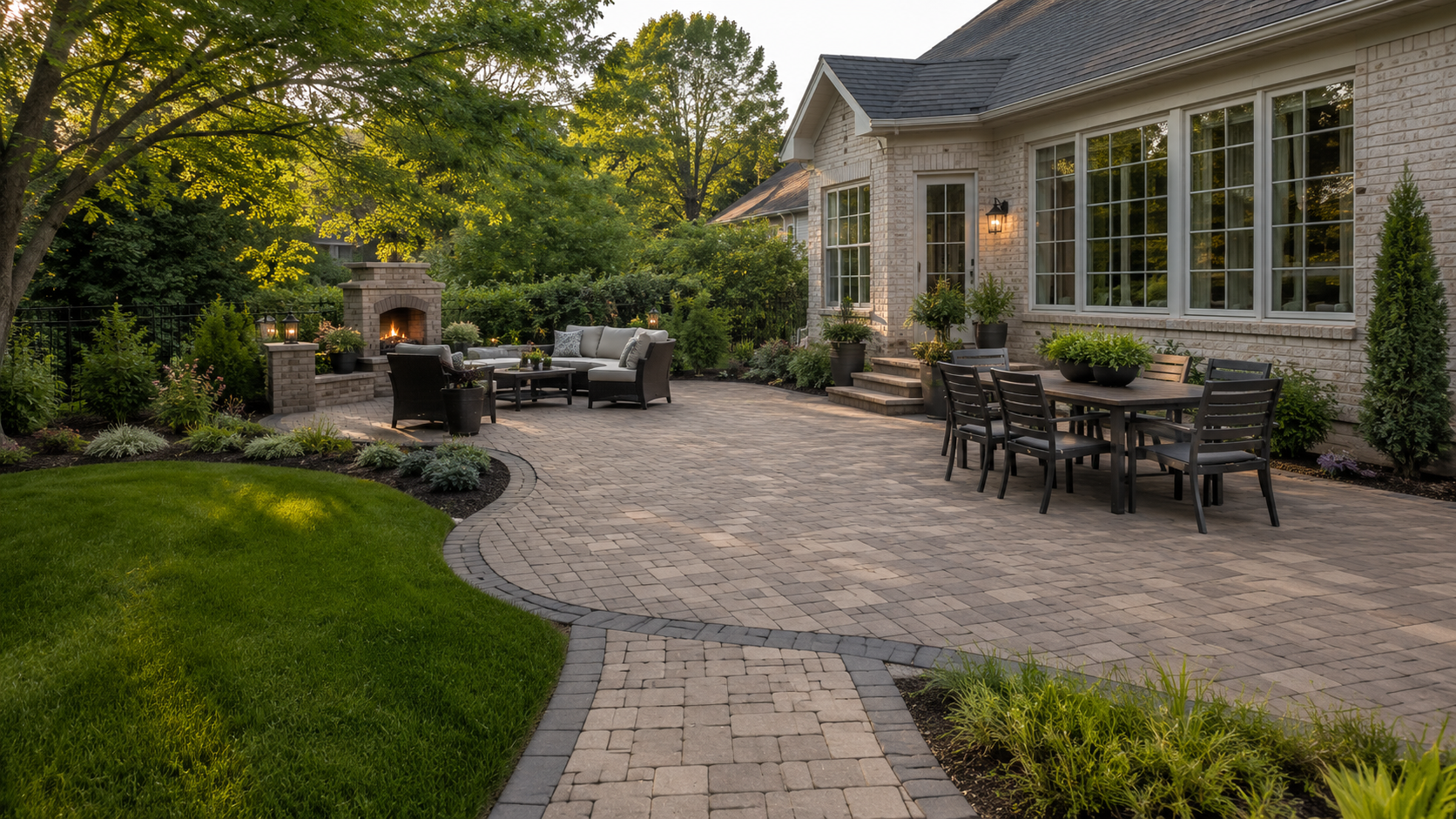
This fits when the problem is getting around or finding a place to sit.
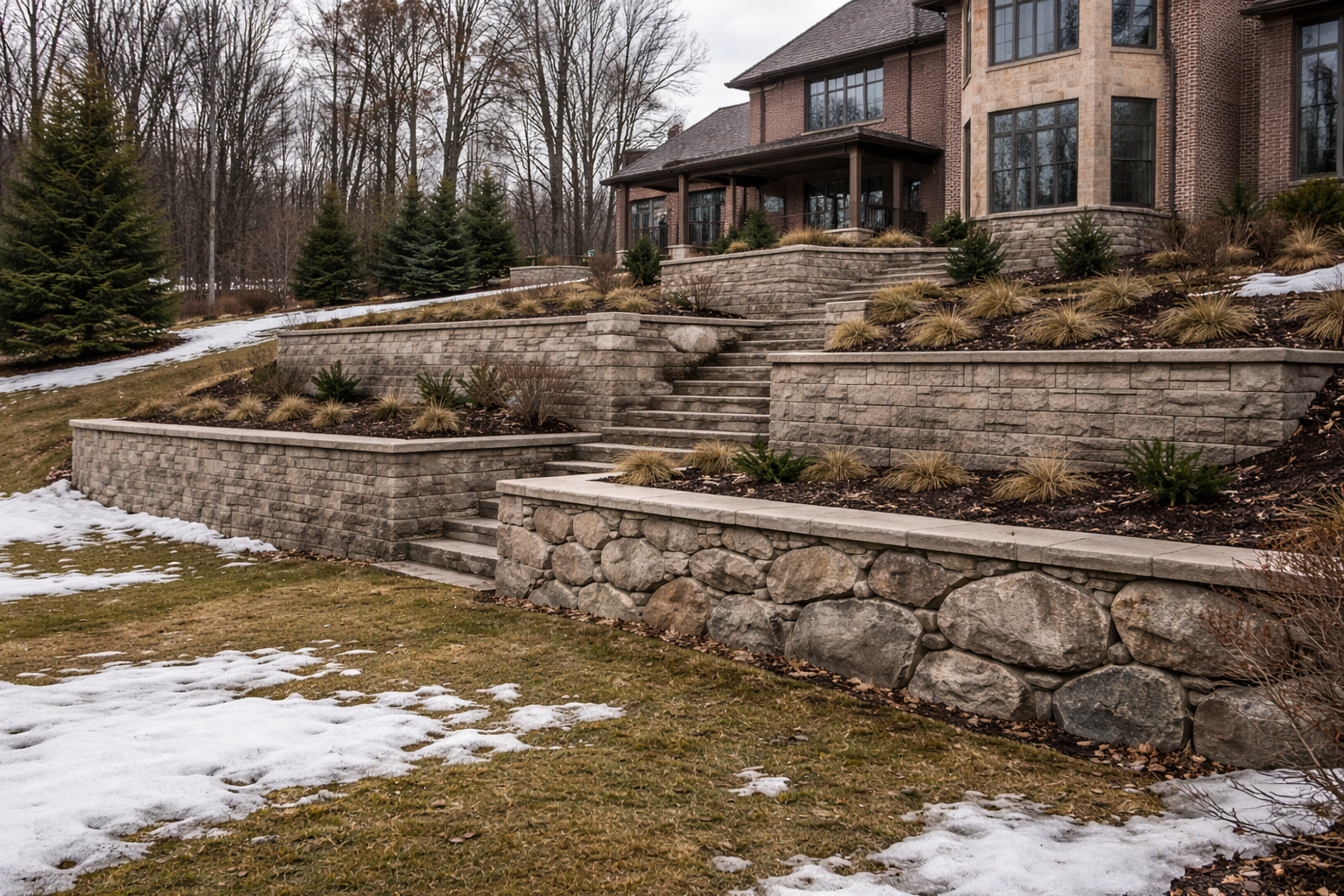
- A wall. This fits only when the grade itself calls for it.
Which one applies depends on the whole site, and the design weighs them together. If your home is newly built, our new construction guide
covers how fresh grading changes the picture.
Where a Wall Fits
Our retaining walls section explains how we approach walls. For more on cost and when one is the right answer, see what retaining walls cost and when you need one and how retaining walls are designed and built for Michigan sites.
What We Look At When We Walk the Property
We start by walking the property with you. On a sloped lot we pay attention to how the ground falls, how water moves after a heavy rain, which trees are worth keeping, and how the house, drive and yard relate. We also ask how you want to use the space, because that often matters more than the number on the slope.
The first conversation is free and happens by phone. Walking the property with you is the next step. We are based in West Bloomfield and serve Oakland County, Metro Detroit and Southeast Michigan.
What to Have Ready
- Your address and which areas are involved: front, back, side, driveway or entrance.
- What the slope stops you doing.
- Photos of the slope.
- Current site conditions, including "Sloped yard," drainage issues and mature trees.
- A property survey, if you have one.
- Any limits on getting machinery into the area.
- HOA or neighborhood restrictions, if any.
Frequently Asked Questions
Do I have to decide on a wall before I call?
No. Describe what the slope keeps you from doing, and the options can be talked through from there.
What if equipment cannot easily reach the slope?
Say so when you call. The Design Questionnaire asks about any limits on getting heavy machinery into parts of the property, so it is worth having that in mind.
Does a gentle slope still matter for planning?
It can. Even a gentle grade can decide where water runs and where a level seating area fits.
Do you build what you design?
Yes. The same team designs and installs, including steps, walkways and walls as part of our hardscape work.
Can the work be done in stages?
Yes. A design can be installed all at once or in stages, and each stage follows the same plan.
Next Step
Our Landscape Design page explains how the process works. If you want to give us the full picture up front, fill out the Design Questionnaire and tick "Sloped yard." For a quick question or a smaller project, call 248-205-8723, Monday to Friday, 9:00 AM to 5:00 PM Eastern. The first conversation is free.