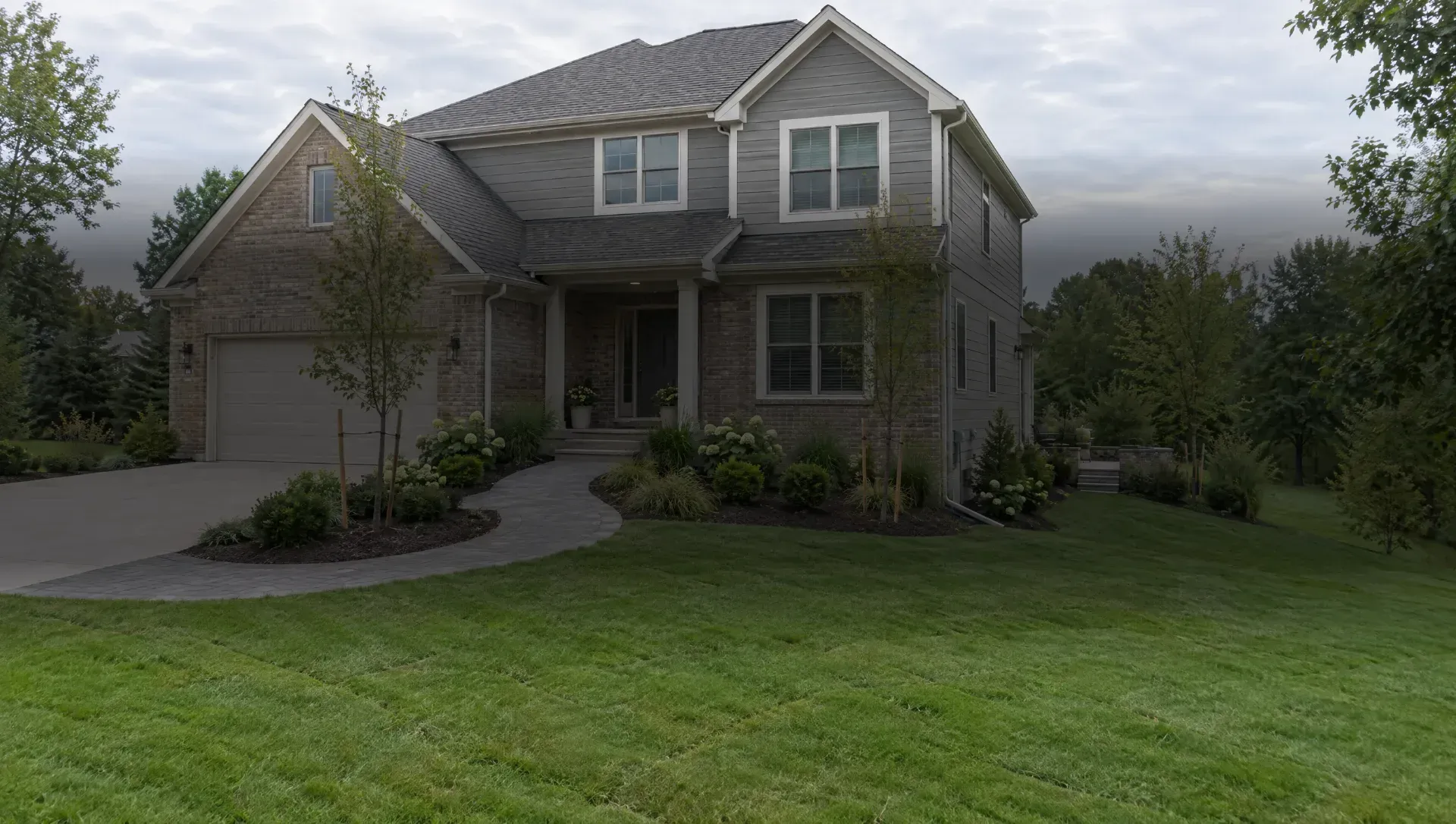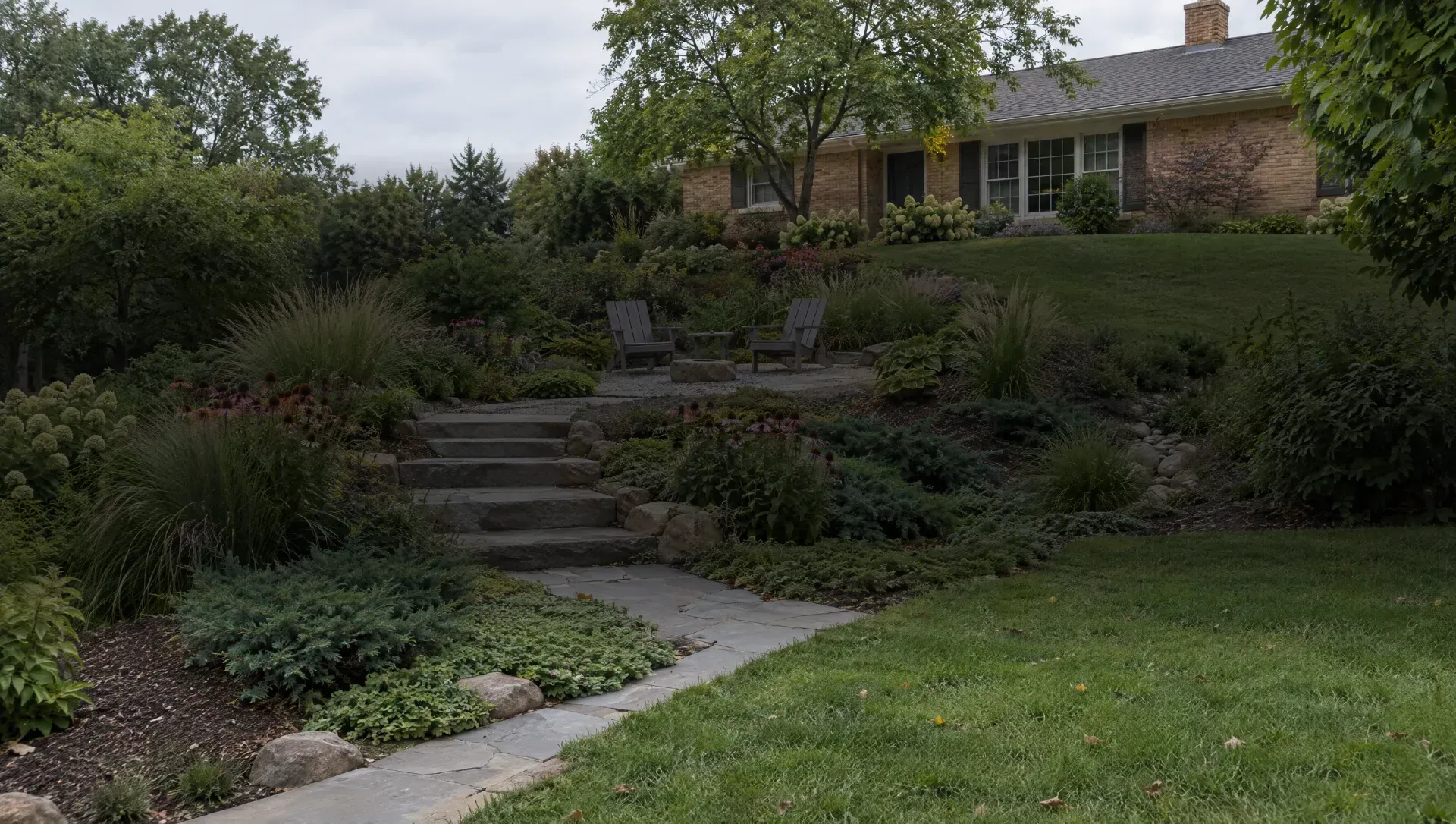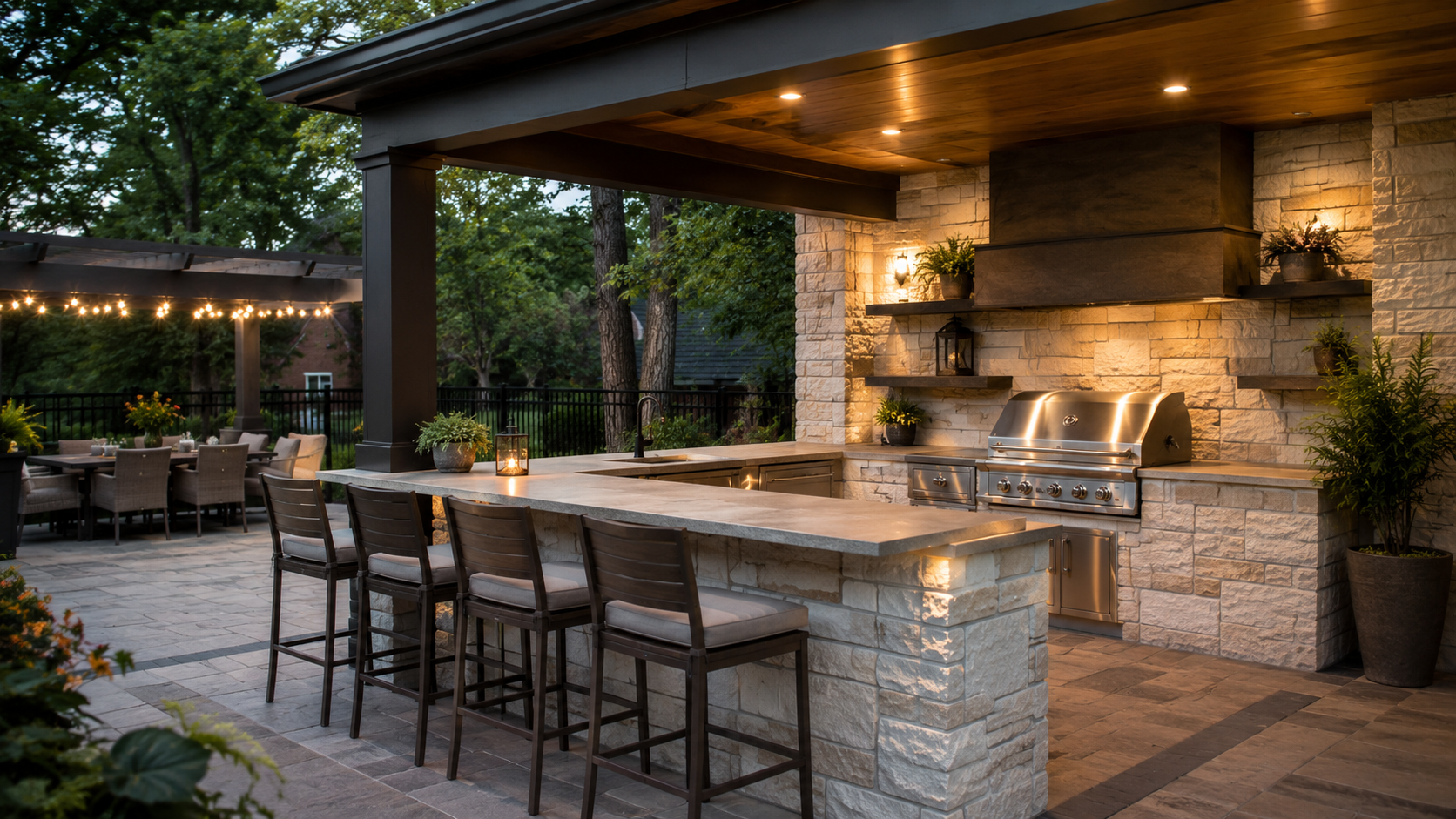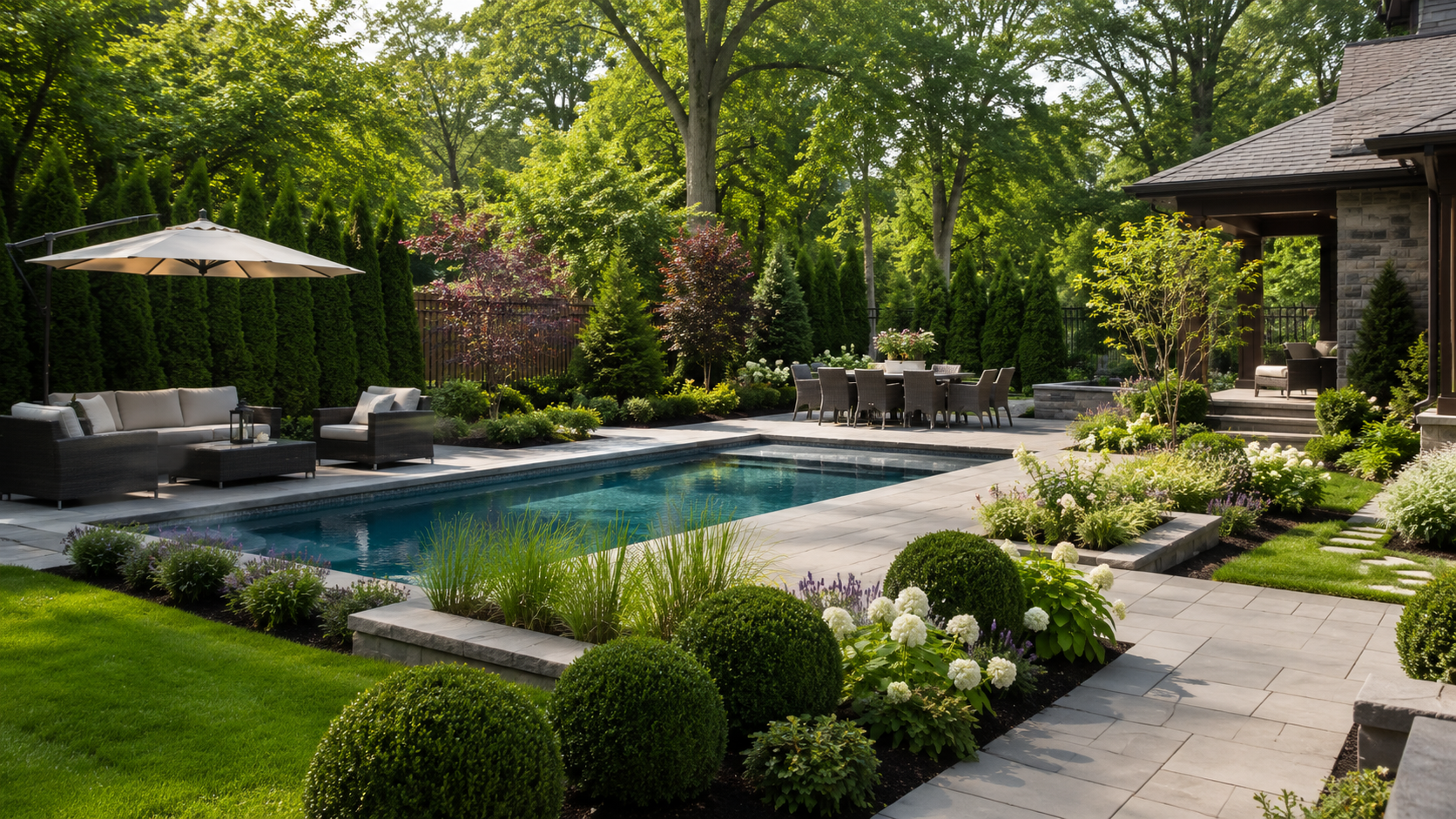
Landscaping and Hardscape Around Mature Trees in Metro Detroit
On a lot with mature trees, the trees often decide where the patio can go. Most of a tree's roots sit in the top foot or so of soil, as University of Vermont Extension describes it, and spread well past the branches, and that is the same ground patios, walks, walls and planting beds disturb when they are built. The practical order is to decide which trees you want to keep, shape the layout around them, then plant for the conditions they create. Whether a tree is healthy, safe or should come out is a question for a certified arborist. Our part is designing and building around the trees that stay.
What Is Under the Ground You Want to Build On
Tree roots extend far beyond the canopy, and most sit in the upper layers of soil. A patio base, a wall footing and a utility trench all happen in that same layer.
Purdue Extension's construction guide
treats the ground under the outermost branches, the dripline, as off limits to project activity, and says more sensitive trees, such as those that grew up in woods, can need a larger protected zone. How large depends on the tree, which makes it a question for a certified arborist, not a number to take from a web page. The way to think about a lot with big trees is that the question is rarely how close the patio can get. It is how much of the root zone a layout disturbs, and whether it can disturb less.
What Harms Roots During Landscape Work
Our post on landscaping in Bloomfield Hills has a short section on why root zones matter on established properties. These are the specifics to plan around.
- Compaction.
Roots are sensitive to compacted soil. Illinois Extension
advises keeping heavy machinery out of tree protection zones, Purdue says to limit vehicle traffic to designated paths and keep materials out of the protected area, and University of Vermont Extension says not to drive, park or store equipment under tree canopies. On a wooded lot, where trucks turn and where pallets of material sit are design questions.
- Grade changes.
Fill over roots can smother them, and lowering the ground can cut them. Purdue warns that as little as 2 inches of fill can potentially cause a tree's death.
- Trenching and excavation. Purdue says severing roots can have a significant impact on tree health, and that roots outside the protected zone that have to be cut should be cut cleanly. Illinois Extension suggests tunneling under roots for utilities. Lighting, irrigation and drain runs are trenches too, so they belong in the same conversation as the patio. Any digging also raises a utility question: MISS DIG's FAQ says to contact them at least 3 business days before a digging project, and the call is free. Whoever does the excavation is responsible for contacting MISS DIG, and the notice period alone is not permission to begin: check the ticket's responses on or after the start date and dig only when every response is marked or no conflict.
No plan can promise roots stay untouched while ground is excavated nearby. A good plan says where digging, fill and equipment will and will not go.
What This Changes for a Patio, Walk, Wall or Planting Bed
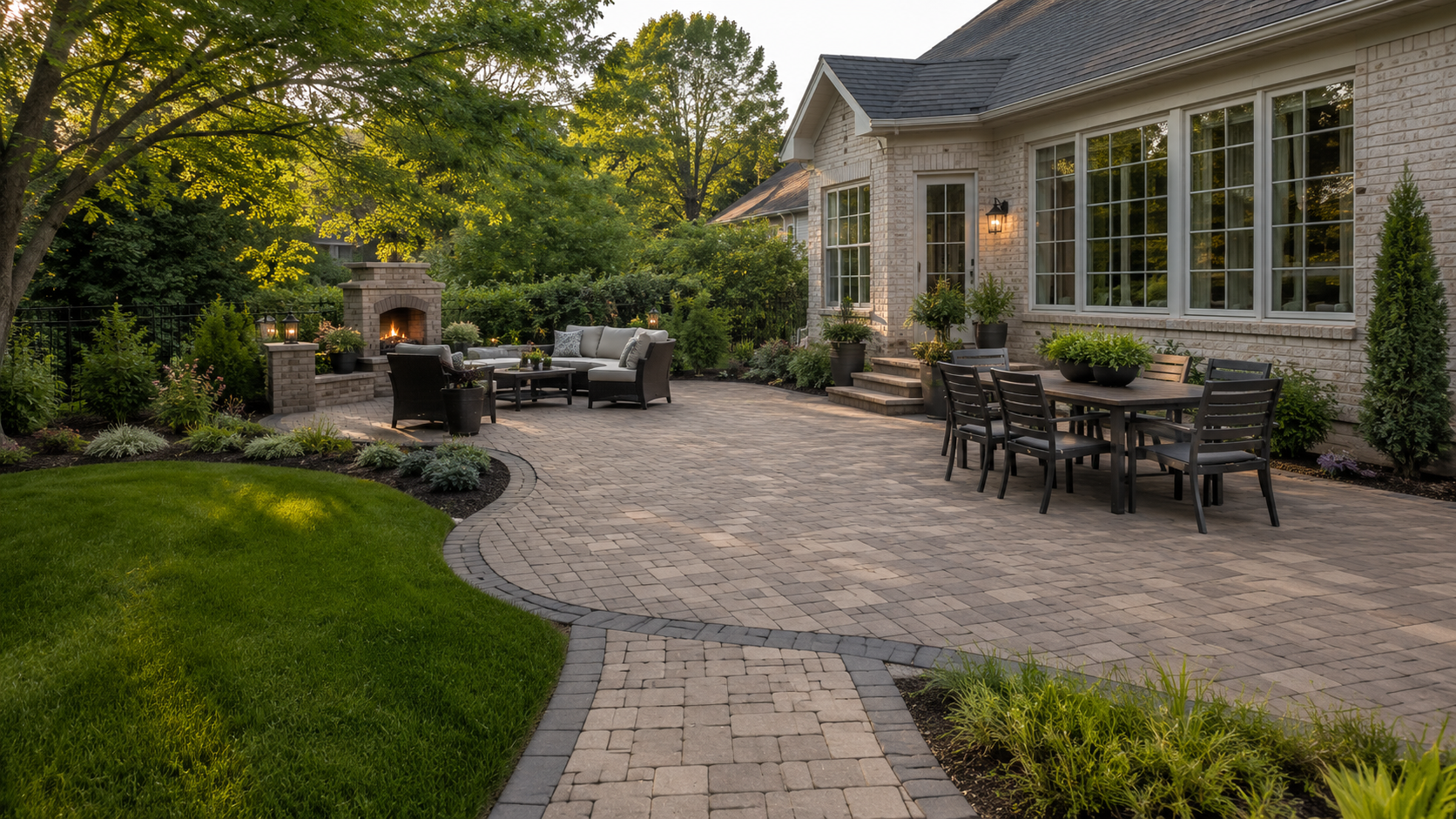
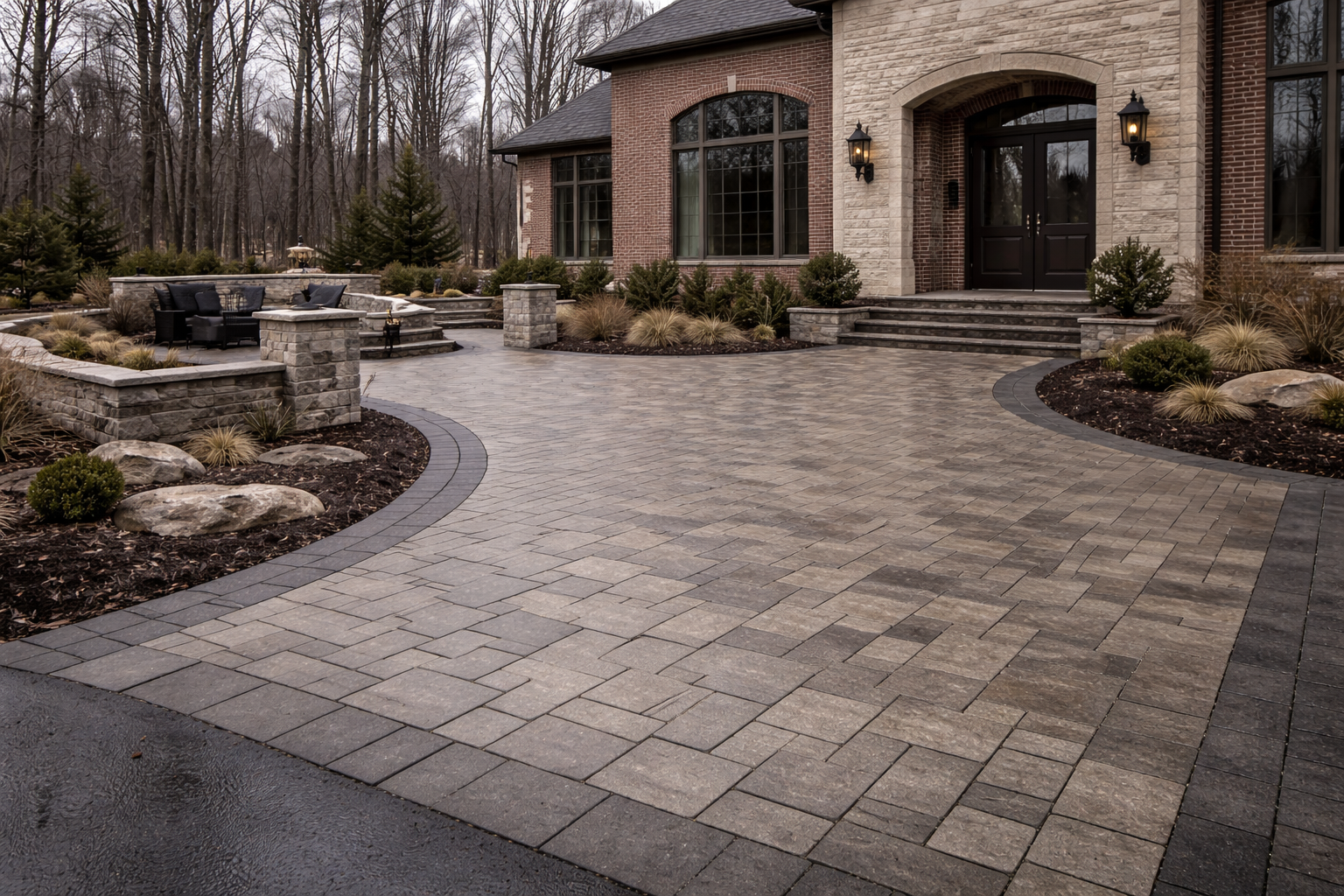
The patio is usually the biggest lever, because it combines the largest footprint with the most excavation. That is why some layouts move the patio, change its shape or shrink it rather than ask the tree to give way. On a lot with mature trees, a good hardscape design responds to what is already there, as in our guide to how hardscape design works as one plan. How close a patio edge can come to a trunk is settled between the design and your arborist.
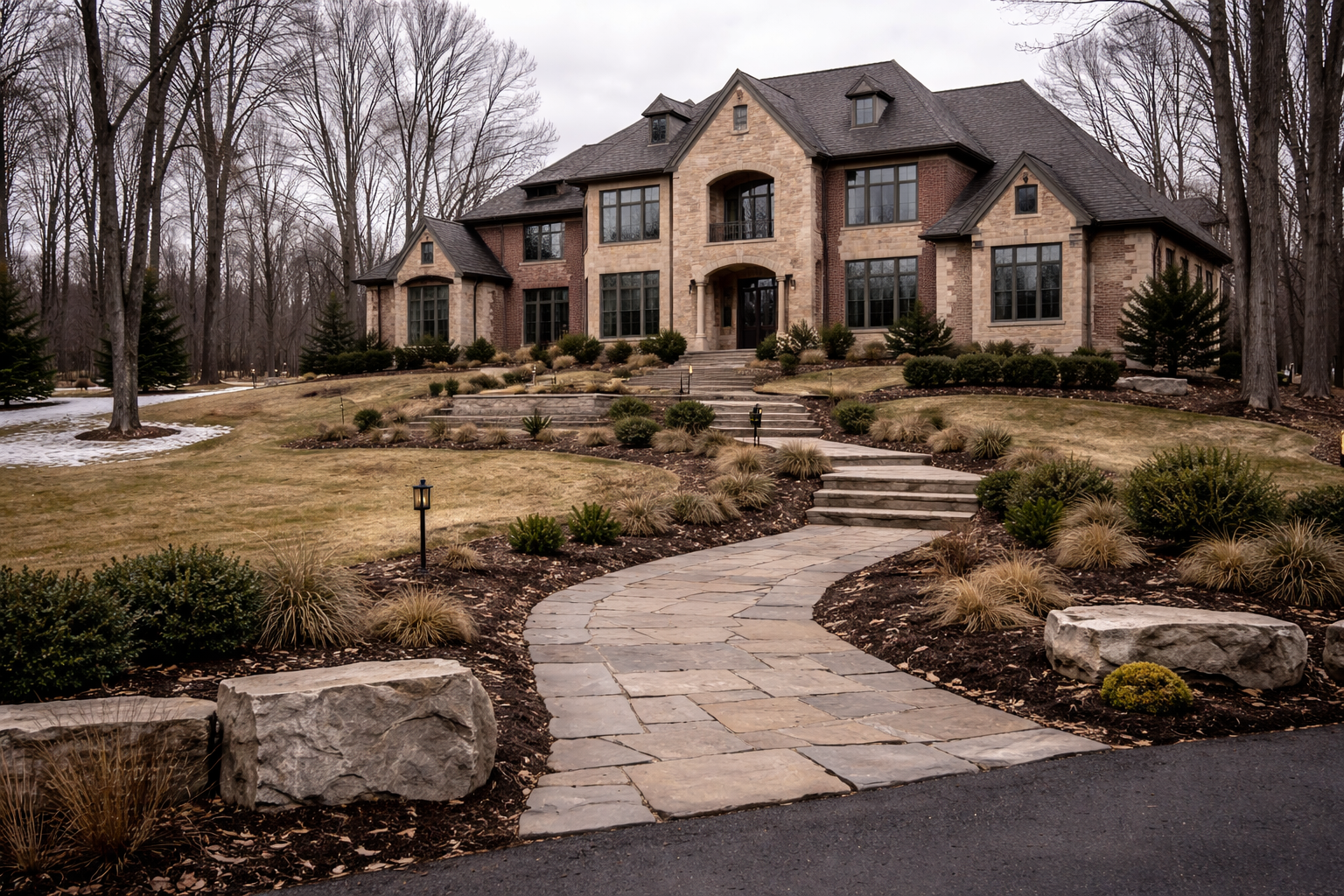
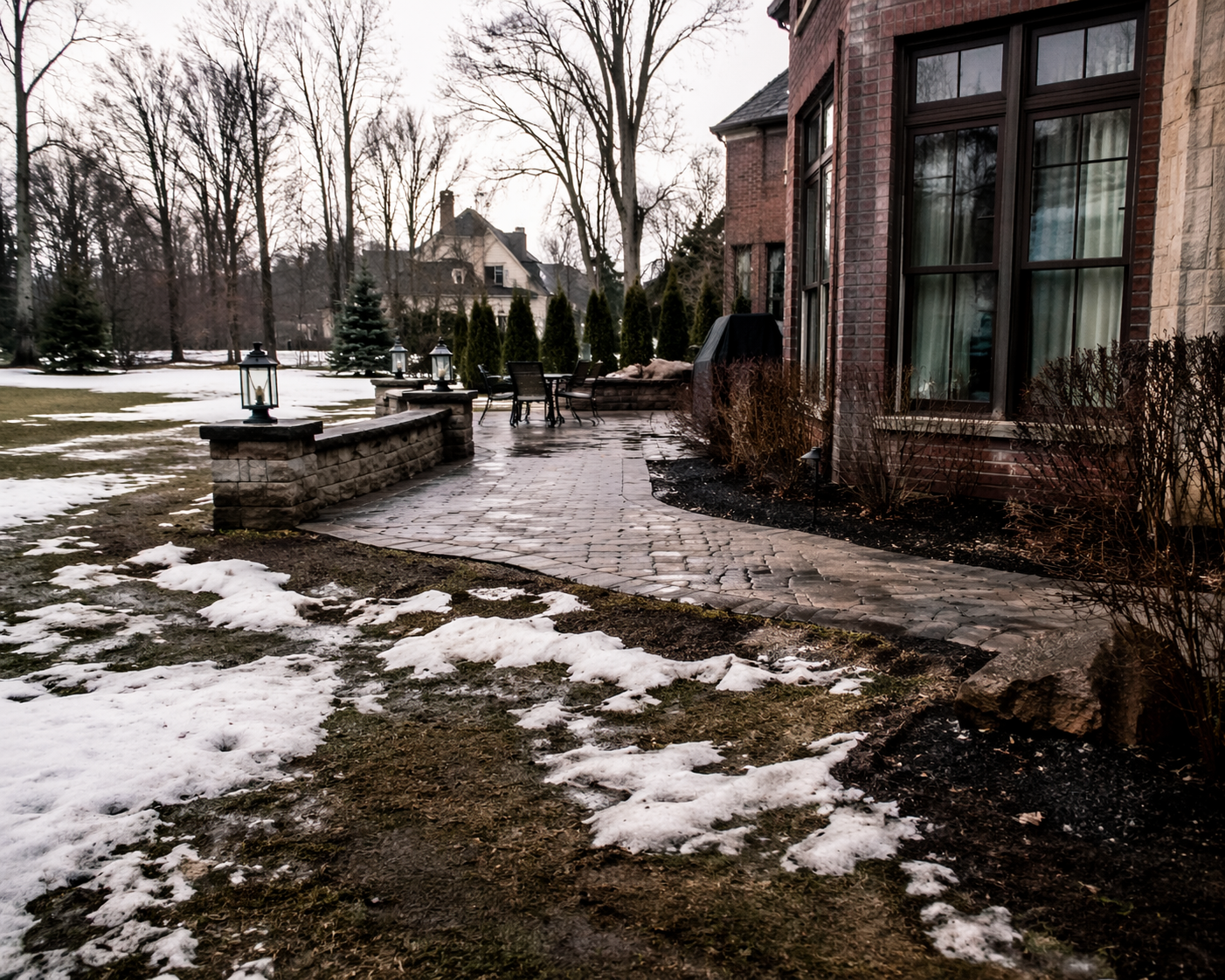
A walk has a smaller footprint and can curve, so it is often easier to route past a trunk than a patio is. It still involves digging and compaction, and steps add a change of level.
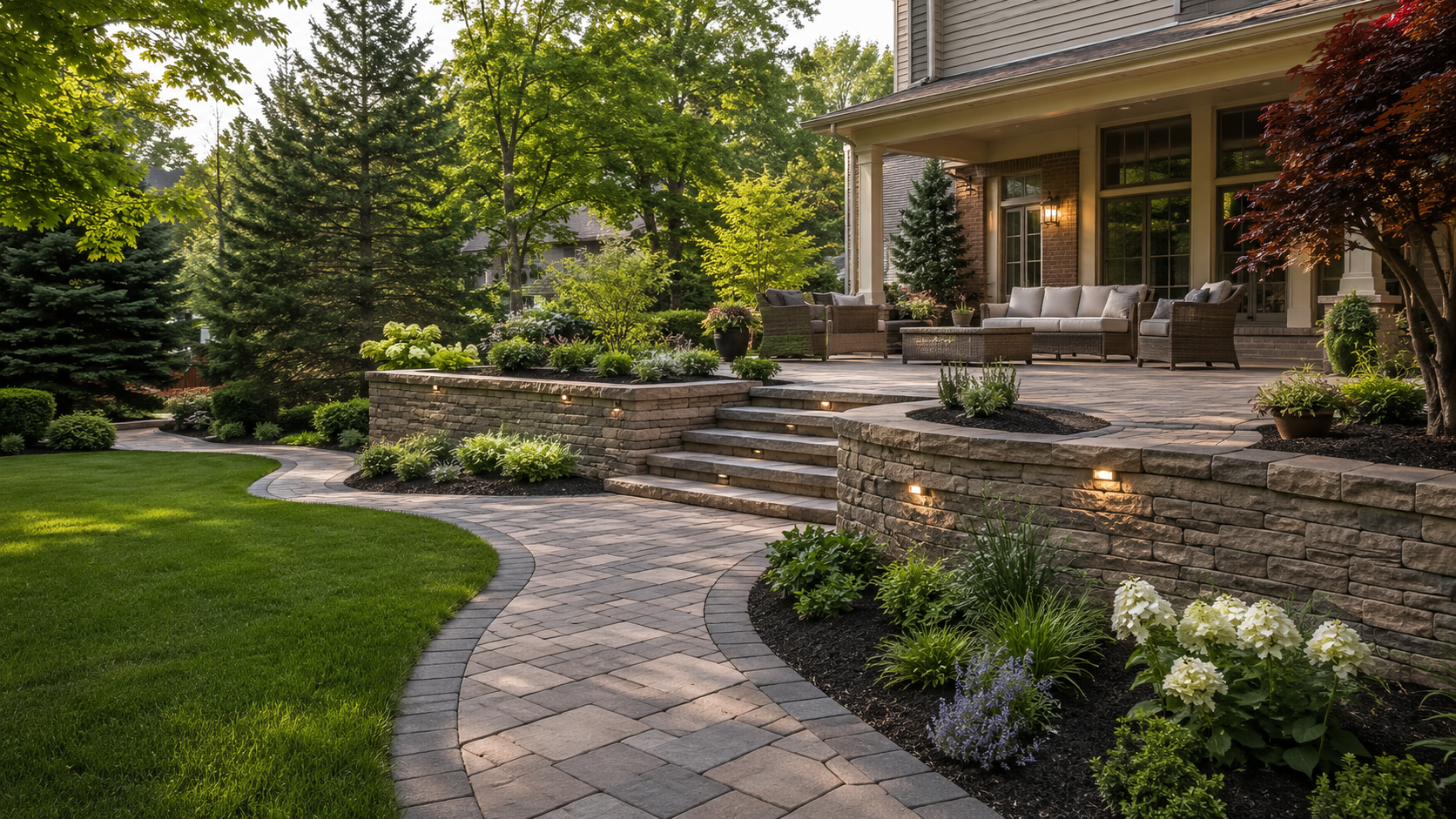
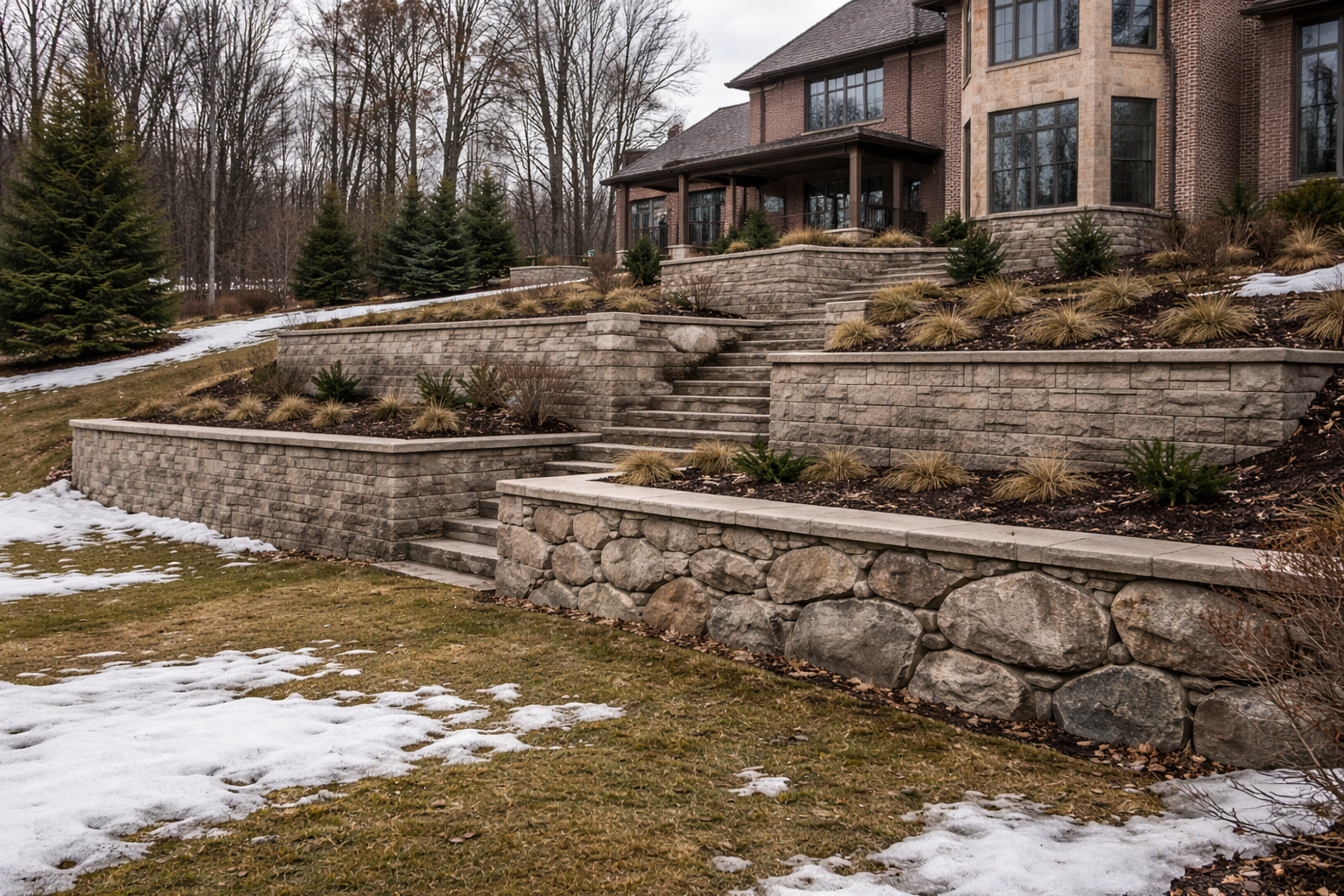
Walls and grade changes combine moving soil with digging for the wall itself. If a wall is on your list near a tree, start with the retaining wall section of our hardscape design and installation page. If the tree stands on a slope, our sloped yard guide
covers how the ground's shape affects use.
Planting beds count too. Adding soil to raise a bed is a grade change, and a new bed that runs up to a trunk is digging in the root zone.
Planting Under and Around Mature Trees
- Light changes through the day and the year.
A bed that is shaded at noon may be bright in the morning or after leaf drop, so look at it at more than one time.
- The tree competes for water.
Our garden landscaping page
lists existing trees that may compete for water or cast shade among the conditions we plan around. Check whether the spot dries out or stays wet.
- Small holes still dig into the root zone.
Every planting hole is a small excavation, so many small holes add up, the same way a trench does.
- Mulch helps, kept off the trunk. Illinois Extension suggests about 2 to 4 inches of mulch around the base of a tree, kept several inches back from the trunk.
Also check whether the soil is heavy clay that holds water and shifts as it freezes and thaws. Our soil guide
explains how that affects plants, including young trees. Many trees are not suited to standing water, and our hardscape page
covers how drainage is planned with the hardscape.
Before Anyone Talks About Removing a Tree
Two questions get tangled together, and it helps to pull them apart.
- Is the tree healthy and safe?
That is a tree health question for a certified arborist.
- Is the tree in the way of what you want? That is a layout question, and moving, reshaping or resizing the project can often answer it. A drawing can move a patio. A removed tree cannot be put back.
Settle the first before the second drives the plan. Purdue recommends involving a certified arborist early and having them approve grade changes near trees.
Timing can matter for oaks. Michigan DNR
asks homeowners not to prune or trim oaks from April 15 to July 15 because of oak wilt, and says winter is the best time to prune oak trees. Ask a certified arborist about timing before any cutting on an oak, since the answer may affect when other work can start.
Questions to bring to that conversation:
- What does the arborist say about the tree's health and structure?
- What would be lost if it came out, such as shade, screening or the shape of the yard in winter?
- Would a smaller or shifted patio, or a different route for the walk, keep it?
- If a tree does come out, what happens to the ground afterward?
What We Look At When We Walk the Property
We start by walking the property with you. On a lot with mature trees, that means looking at which existing trees are worth keeping, where sun and shade fall through the day, how water moves across the lot, and how the house, drive and yard relate. Our Landscape Design page explains the process. Questions worth raising on the walk: which trees matter most to you, and where equipment could reach without crossing the ground under a canopy.
If the trees stand on a new construction lot, our new construction guide
covers what building work can do to the ground around them.
What to Have Ready
- Your address, lot size, and a property survey if it shows where the trees stand.
- "Mature Trees" ticked under Current Site Conditions / Features, plus Patio, Deck, Drainage issues or Sloped yard if they apply.
- Photos of the base of the trees you care about and the areas you want to build.
- Any limits on access for heavy machinery.
- Notes from an arborist, and which trees you most want to keep.
Questions About Trees and Landscape Plans
Can a patio go right up to the dripline?
The dripline is a starting point, not a safe edge. Purdue treats the area under the outermost branches as off limits to project activity and describes a larger protected zone for more sensitive trees. How close is practical depends on the tree, and your arborist and the design settle it together.
Will heavy equipment hurt a tree even if no one digs near it?
It can. Roots are sensitive to compaction, so Illinois Extension advises keeping heavy machinery out of tree protection zones, Purdue says to limit vehicle traffic to designated paths and keep materials out of the protected area, and Vermont Extension says not to park or store equipment under the canopy. Material pallets and parked trucks count too, so plan access and staging with the trees in mind.
Can we work in stages while a tree decision is made?
Often. We design the whole property as one plan, and it can be installed all at once or in stages, each following the same plan. Whether a stage can go ahead depends on where it sits relative to the tree, and we would talk it through with you.
What is a certified arborist?
ISA, the International Society of Arboriculture, describes its Certified Arborist certification as a nongovernmental, voluntary process. Its homeowner page lists removals near new construction, pruning, planting and plant health care among the reasons to hire one.
Next Step
Our Landscape Design page shows how the process works. To give us the full picture up front, fill out the Design Questionnaire and tick "Mature Trees." For a quick question or a smaller project, call 248-205-8723, Monday to Friday, 9:00 AM to 5:00 PM Eastern. The first conversation is free.